
There is something quietly powerful about working with clay. At first glance, it may seem like a simple creative activity, but the experience of shaping clay with your hands can open up something much deeper, both emotionally and physically.
Unlike many forms of creative expression that rely heavily on thinking or planning, clay invites you to work through your senses. It is soft, tactile and responsive. The moment your hands touch it, you begin a direct conversation with the material. You press, shape, roll or squeeze it, and the clay responds immediately.
This physical interaction can be surprisingly grounding. When your hands are engaged in the rhythm of shaping and moulding, your attention naturally moves away from the mind's noise and into the present moment.
The experience becomes less about creating something perfect and more about simply being with the material.
Clay also offers a unique way of expressing emotions that can be difficult to put into words. Sometimes feelings like frustration, sadness, anxiety or confusion live more in the body than in language. Working with clay allows those emotions to move through your hands and into form.
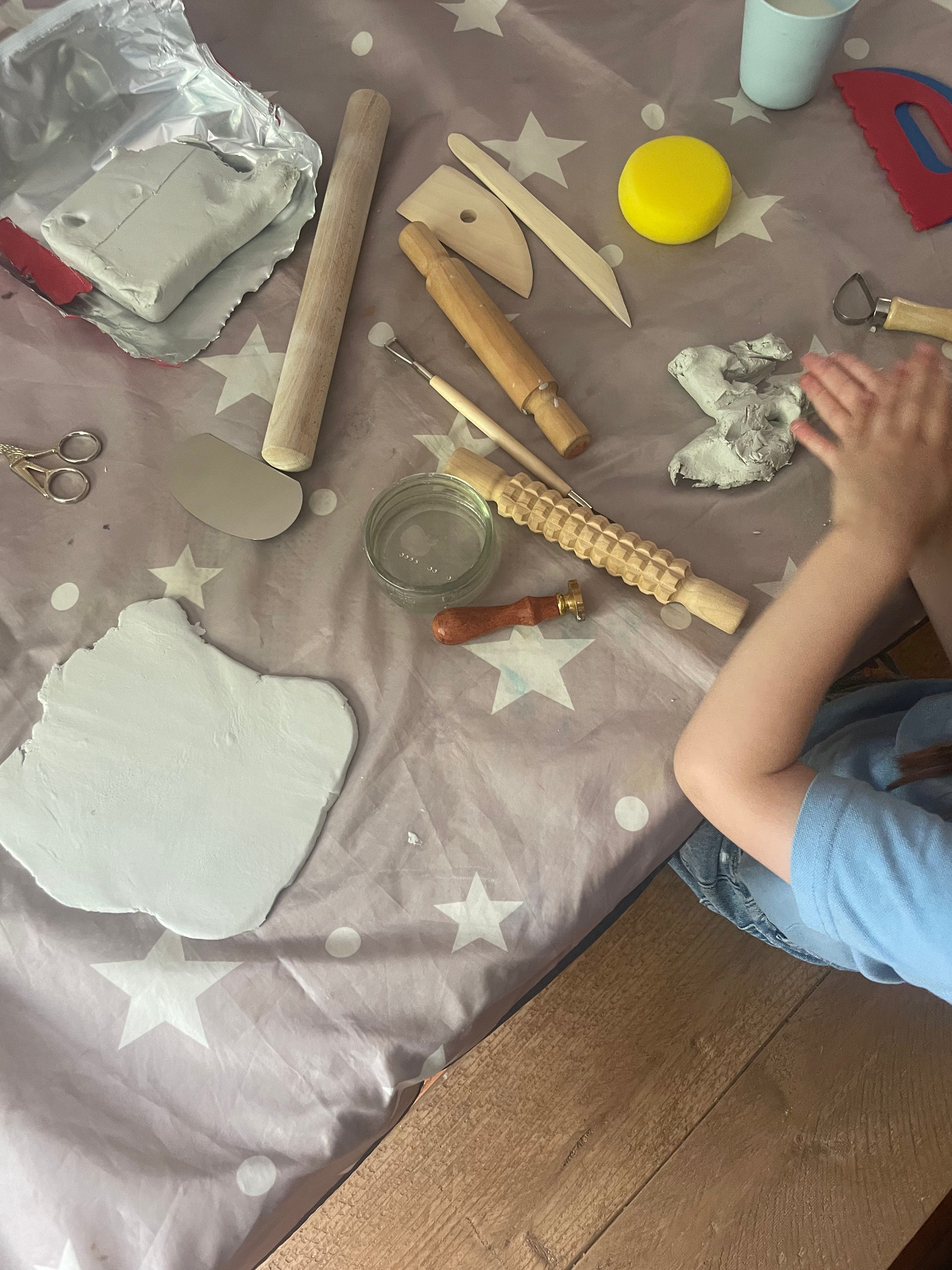
You might notice yourself pressing harder when something feels tense, or slowly smoothing the surface as you begin to relax. Shapes may emerge that reflect something you are feeling internally, even if you cannot immediately explain why.
What makes clay particularly special is that it creates a safe space for this kind of expression. When you form something with clay, the object becomes a kind of container for your thoughts and emotions. Instead of holding everything inside, you can place those feelings into something physical and visible.
This gentle distance often makes reflection easier. Looking at what you have created can sometimes reveal insights about what you have been carrying internally.
Another beautiful aspect of clay is that it encourages play. Unlike painting or drawing, where people often worry about making mistakes, clay can always be reshaped. If something doesn’t feel right, you can change it. Press it back together. Start again. Transform it into something new.
This flexibility removes the pressure to get things “right” and opens the door to curiosity and experimentation. In many ways, clay invites you to reconnect with a more playful and intuitive side of creativity, something many of us lose as adults.
Working with clay can also have a deeply grounding quality.
Clay comes from the earth itself, made from natural elements. When you hold it in your hands, there is a subtle connection to something ancient and elemental.
The sensory experience, the coolness of the clay, its texture, and the slow movements of shaping. Together, they can help calm the nervous system to slow down, release tension and bring you to the present. For people who feel overwhelmed, anxious or disconnected, this simple tactile process can bring a sense of steadiness and presence.
You don’t need to be an artist to experience this. There is no expectation to create something impressive or even recognisable. The value lies in the process itself. In the quiet moment of sitting with the clay and allowing your hands to explore.
You might begin with something as simple as rolling a small ball, flattening it, or letting your hands shape whatever form feels natural. Over time, you may notice that the process becomes a kind of conversation with yourself.
Clay reminds us that creativity does not always need to be about producing something finished. Sometimes it is simply a way of listening, through the hands, through the senses, and through the quiet act of making.
And often, that is where the most meaningful discoveries begin.
Comments
Nothing yet. Say the first thing.
Sign in to join the conversation.