
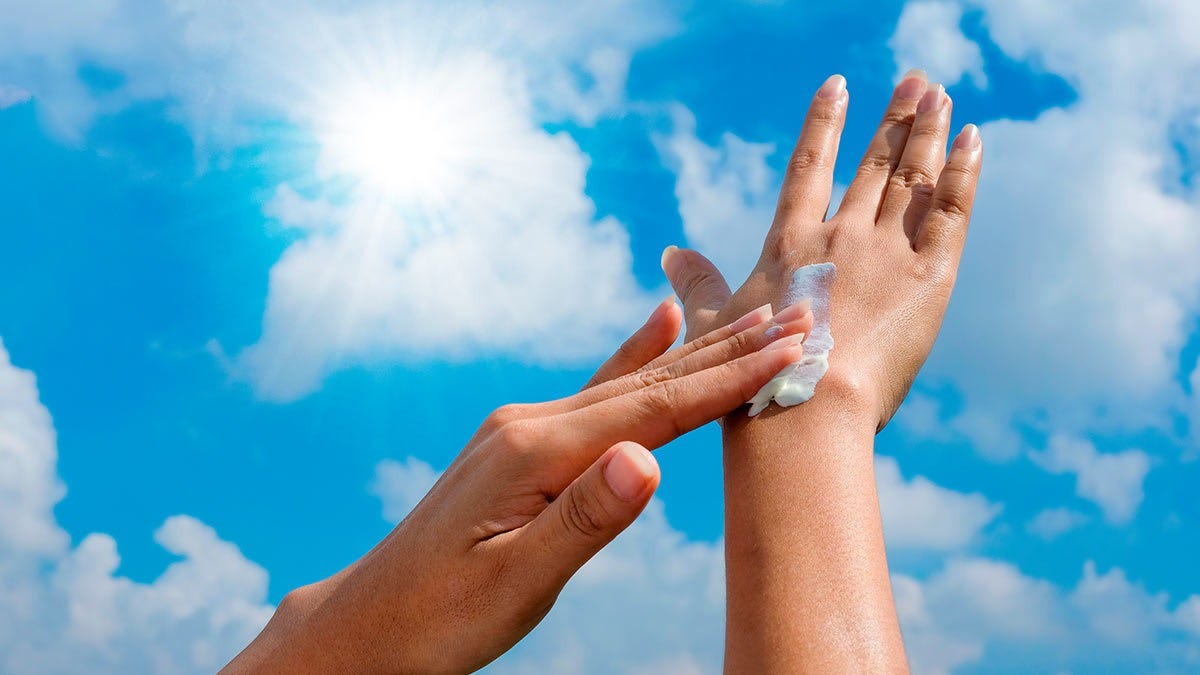
Bemotrizinol protects against both UVA and UVB rays and doesn’t break down in sunlight.
Summer has arrived, and with it the joys—and occasional concerns—of outdoor living. Among the latter, one of the biggies is sun protection.
Some recent news covered by CR’s Catherine Roberts is likely to make a difference—maybe not today, maybe not tomorrow, but soon and for the rest of our lives (Casablanca reference for drama). Drumroll please: The FDA recently approved a new active ingredient for sunscreen called bemotrizinol.
It’s kind of a big deal—this ingredient is the first UV filter the FDA has approved in more than 25 years.
In her story Catherine breaks it down:
“Bemotrizinol is a chemical sunscreen active ingredient that protects against both UVA and UVB rays. UVB rays cause sunburn. UVA rays primarily cause skin aging, and both types contribute to skin cancer risk.”
While bemotrizinol is new to the U.S., it’s old-hat elsewhere:
“[It] has long been used in sunscreens in Europe and other parts of the world, where sunscreens are regulated as cosmetics. (It was first approved in Europe in 1999.) In the U.S., the FDA considers sunscreen a drug, and there are far fewer approved UV filters than in other countries.”
Catherine points out that bemotrizinol, which provides broad protection, has advantages over some other broad-spectrum sunscreen ingredients commonly found in the sunscreens we’re used to in the U.S.:
“For example, avobenzone, a chemical active ingredient, is photounstable, meaning that it breaks down in sunlight, which limits how long its protection lasts. Another, zinc oxide, is a mineral active ingredient that works well against UVA radiation and is stable in the sun, but it gives a white cast to the skin when applied.”
Bemotrizinol may have a leg up in terms of safety as well:
“... because of its large molecule size, [bemotrizinol] is absorbed into the bloodstream through the skin at lower rates than other chemical sunscreen active ingredients.”
The safety section of Catherine’s article delves into questions and concerns around existing sunscreen ingredients as well.

Read the full story to learn more and to find out when bemotrizinol might show up in products on shelves (actually, sooner than you think). Also check out our top-rated lab-tested sunscreens to find perfect picks available now.

The best July Fourth sales across categories—from grills and kitchen gear to fitness equipment and tech.

A couple of beach tents our testers love.
We found sunscreens that don’t leave a white cast.
Create a shady haven with a new patio umbrella.
Editor’s note. A couple of weeks back, we excerpted CR’s investigative piece on Uber and Lyft pricing practices, which included testing conducted with the help of volunteers. We want to share an update on that content: On June 25, 2026, Uber wrote to CR saying that it used the anonymized test data CR provided to re-identify our volunteers and their quoted prices and found three specific data-collection user errors among the hundreds of Uber prices recorded in screenshots by our 174 volunteers. After investigating those cases, we amended the article to say the median difference between the highest and lowest price groups across all 30 virtual routes for both Uber and Lyft changed from 49.8 percent to 42.4 percent as a result. These changes also resulted in the percentage of fictitious discounts we observed increasing from 10.8 percent to 12.4 percent.
Comments
Nothing yet. Say the first thing.
Sign in to join the conversation.