
Dear Friends,
This week, while the hardworking Craftsmanship team takes its usual late-summer hiatus, we’re unlocking a previously paywalled story for everyone to enjoy and share.
While we’re happy we can offer this story free of charge, we hope you’ll consider becoming a paid subscriber. A paid subscription gives you access to our newest articles as soon as they’re released, as well as all of our archives. And critically, paid subscriptions enable us to continue producing thoughtful journalism without advertising, and to pay our contributors fair market rates at a time when independent journalism is increasingly under threat. (If you’re already a paid subscriber, please stay tuned. We’ll have more exclusives for you after the break—along with our undying gratitude.)
We hope you’ll enjoy reading “Cairo’s New Brass Revivalists,” written by Pauline Bartolone.
We always welcome your thoughts and suggestions, which you can offer in a comment, as a Substack Note, or via email. Thank you for reading and sharing our stories, for supporting our work with a paid subscription if you can, and for being such a loyal part of the Craftsmanship community.
Sincerely,
Todd Oppenheimer
Publisher & Editor-in-Chief, Craftsmanship Magazine
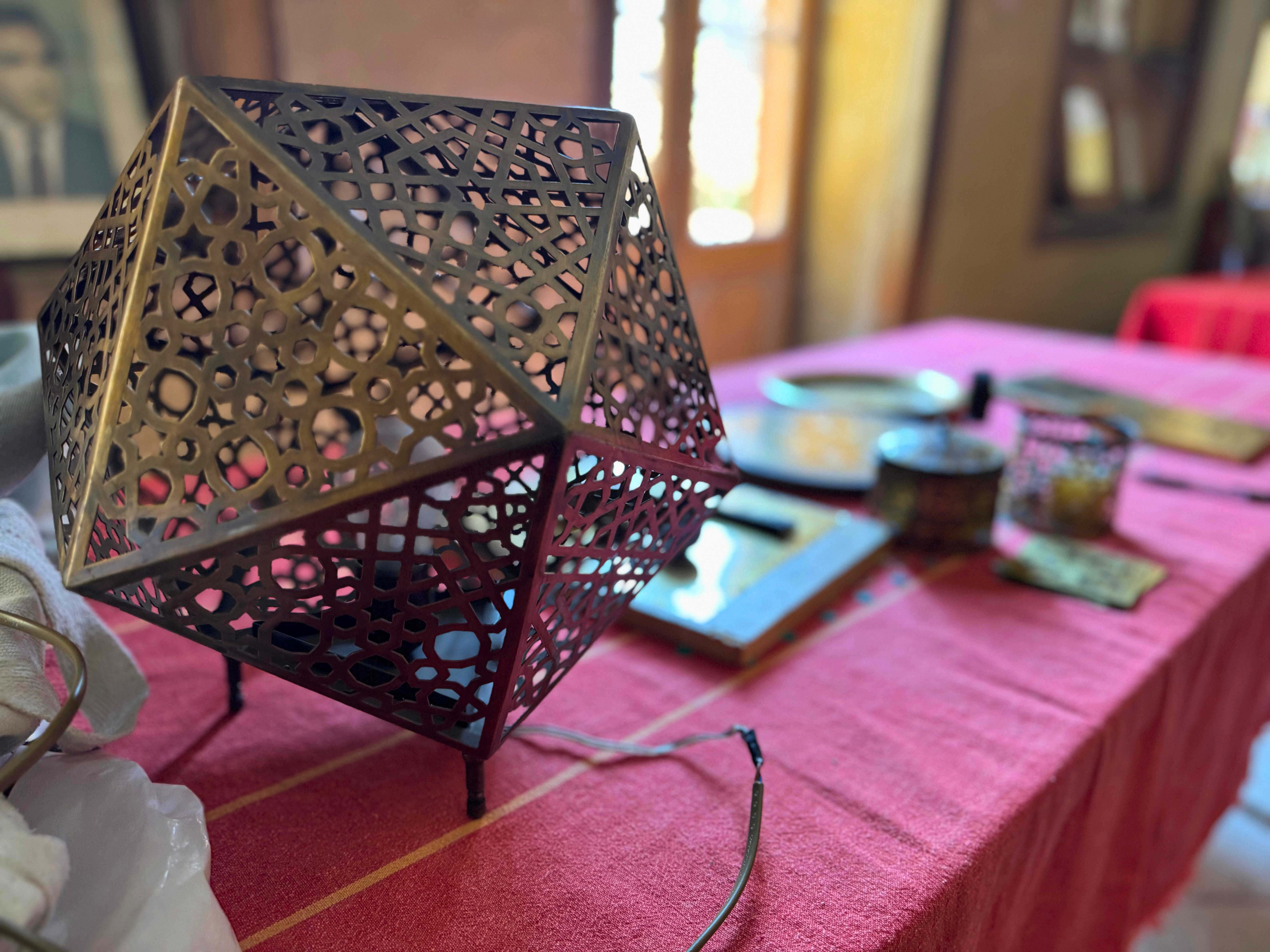
By the 13th century, Cairo (along with Mosul and Damascus) had become a hub for metalwork, and the region’s wealthy filled their homes with brass objects, often inlaid with silver and gold. Fine brasswork went into everything from jewelry and housewares to the ornate basins used for ritual washing before prayers.
The Industrial Revolution effectively hollowed out this brass tradition, says Fetvaci (who is also president of the Historians of Islamic Art Association). But the craft never died; in fact, it became an integral part of the Egyptian Revival period—a surge of Western interest in Egyptian art and architecture in the 18th and 19th centuries. Today, only a handful of Egyptian artisans are working to revive it.
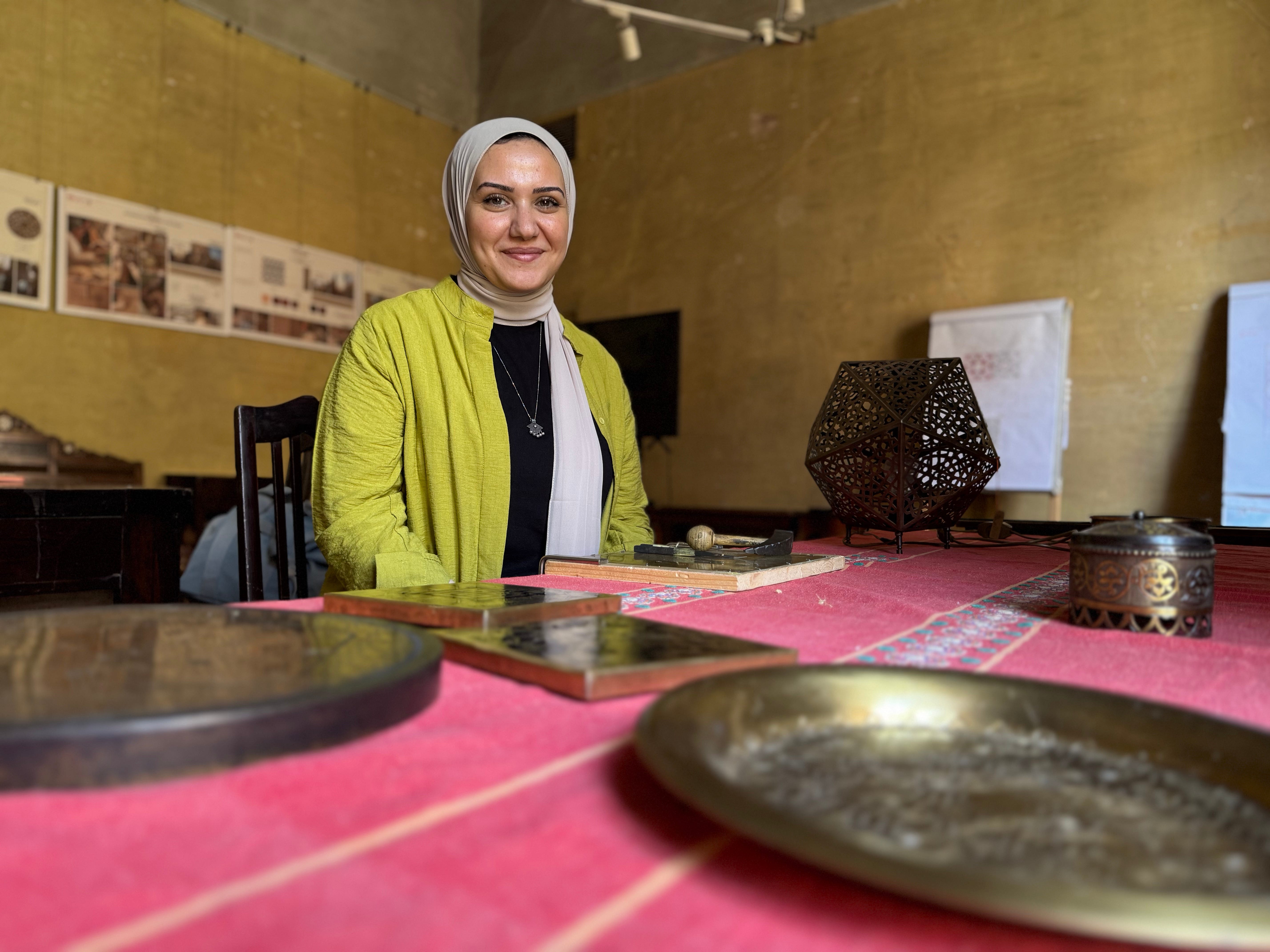
Noha El Qahwagy, 36, is among them. She has built a following over the past eight years for her handmade brass light fixtures, candleholders, mirrors, and trays, all inspired by traditional Islamic designs. Originally trained as a graphic designer, El Qahwagy moved on to handmade jewelry before enrolling in a two‑year program at the Jameel House of Traditional Arts in Cairo. That’s where she discovered that working with brass felt “like therapy.” She doesn’t even mind the whine of the jigsaw as it cuts through brass sheets, or the ring of the engraving hammer—she says the noises put her in a flow-like state.
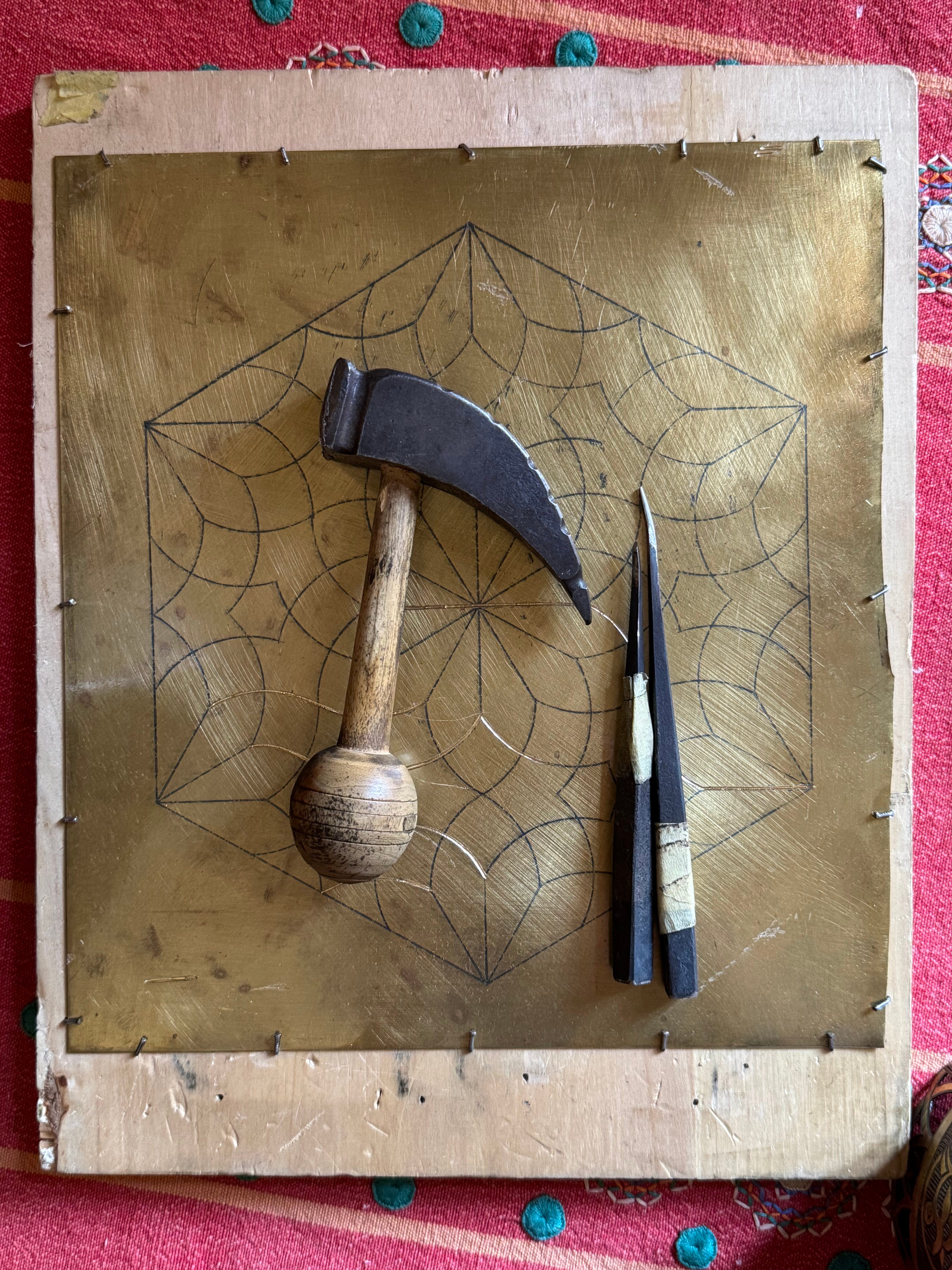
El Qahwagy learned traditional brass techniques—piercing, sanding, hammering, welding, sawing, and engraving—all by hand, and now teaches those same techniques at Jameel House three days a week. She insists that students master the old skills before turning to modern tools like laser cutters.
El Qahwagy still makes jewelry, but finds that market crowded. Her true passion lies in creating household pieces in brass that can be passed down as heirlooms. “She’s one of the very fine masters when it comes to brass‑making,” says Clea Daridan of Community Jameel. “She has really shaped a vocabulary of her own.”
Even at El Qahwagy’s level, handcrafting brasswork is not exactly a path to wealth. She could easily spend a month—roughly 150 hours—creating a single piece. Then there’s the cost of raw materials, which she says has skyrocketed in the past few years. Despite such costs, her finished pieces might sell for as little as $10 USD for a small jewelry item. (Large home accessories do better, however, fetching up to $1,000 apiece.)
Outside of the Jameel House program, El Qahwagy estimates that only 10 to 15 artisans in the whole country are doing brasswork by hand. And they have to pit their labor-intensive products against a glut of cheap, mass‑produced brass pieces made in China. Ironically, those Chinese pieces have become the mainstay of Cairo’s once-traditional bazaar, Khan el‑Khalili.
All of this leaves El Qahwagy determined to keep the craft from dying out. “It’s our culture,” she says. “We have to preserve it.”
Freshly Unlocked: "The Last Jacquard Silk Weavers"
·
Aug 7
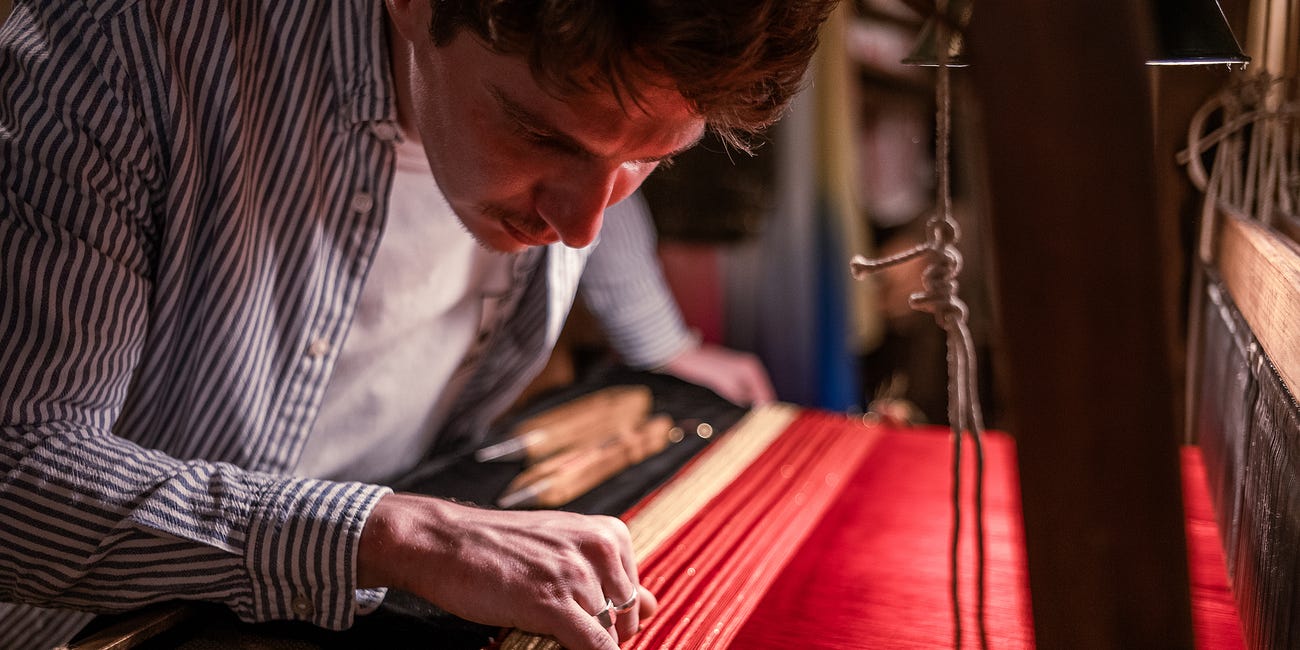
In Lyon, the silk-weaving capital of Europe for centuries, the rhythmic clatter of Jacquard Looms once emanated from about 30,000 workshops. Today, only three workshops still uphold this tradition.

Craftsmanship Magazine focuses on master artisans and innovators whose work informs our quest: to create a world built to last. In addition to our Substack offerings, you’ll find a rich archive of stories, podcasts, photo essays, and documentary shorts on our free website—along with community resources like our Artisans’ Directory, our guide to U.S.-based craft & folk schools, and much more.
Comments
Nothing yet. Say the first thing.
Sign in to join the conversation.