
Yesterday, I was lucky enough to attend the Ukrainian Independence Day event at the National Army Museum in Chelsea.1 The evening was both a celebration of Ukrainian culture, and an in-depth discussion on Operation Interflex, the United Kingdom’s flagship contribution to the Ukrainian Armed Forces through training provision. I’d like to reflect on the evening both as a meld of culture and military activity and a microcosm of British-Ukrainian relations.
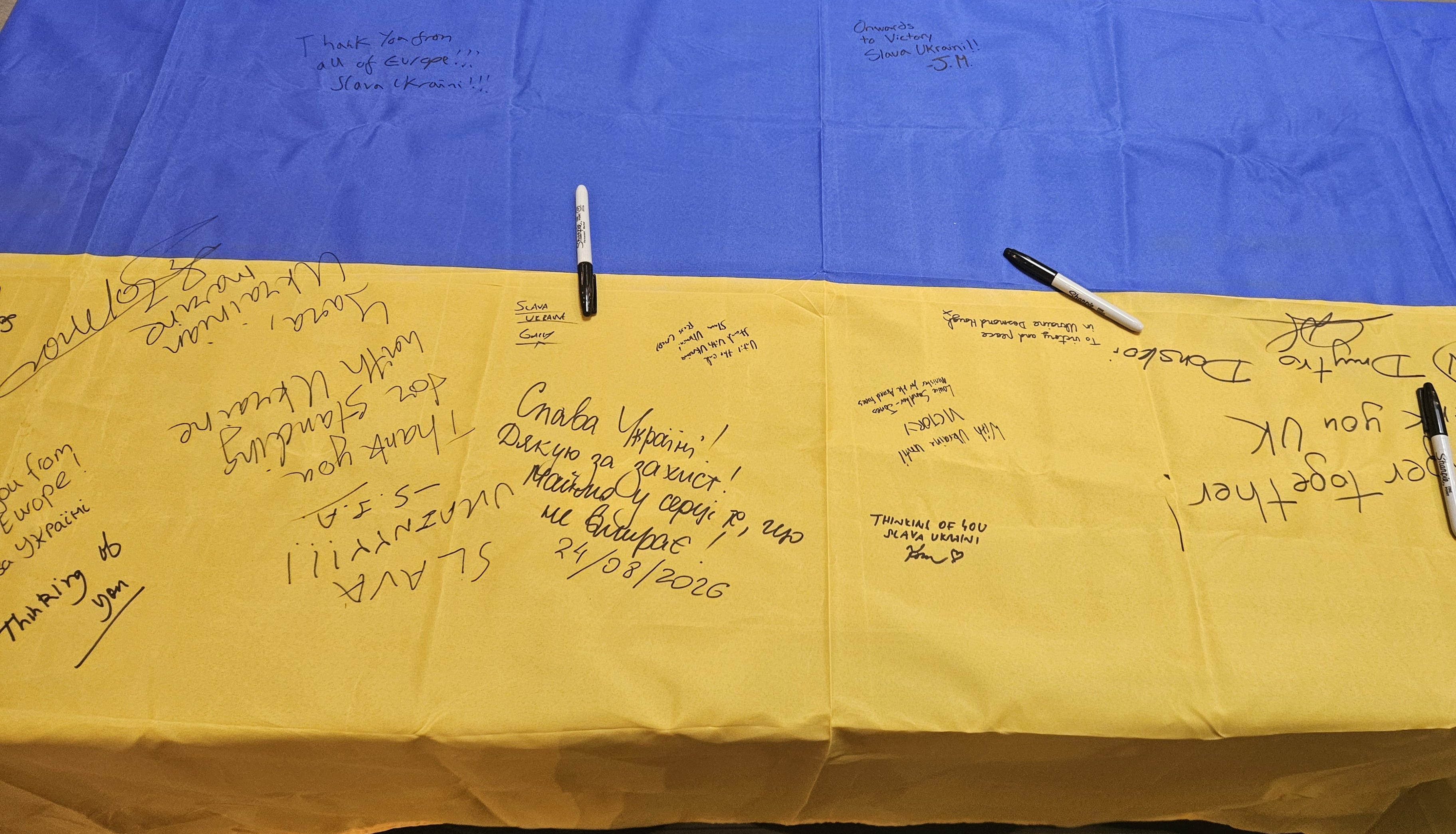
Culture has been on the front line in this war. Museums and artwork have been deliberately targeted by Russia as Putin has attempted to destroy Ukrainian heritage and civilisation. For those not aware, the targeting of cultural heritage is a violation of the Laws of Armed Conflict – a war crime. I’ve written previously about Ukrainian art and the work of the Cultural Forces in Kyiv, and how critical it is to keep the flame of national culture alive in the face of a fascist enemy. In Ukraine, war and culture are entwined as tightly as they have ever been.
Last night’s event was testimony to this. The evening was attended by a mix of Britons and Ukrainians, many wearing traditional clothing like the vyshyvanka. The event opened with a short a capella concert by the Songs for Ukraine Chorus, performing some beautiful traditional music in Ukrainian and ending with a stirring rendition of the national anthem.2 The audience watched the concert while standing in the midst of images of war and beneath the shadow of a Lynx helicopter hanging from the ceiling. Beautiful music interspersed with the machinery of war makes for a powerful contrast.
Perhaps the clearest example of the intimate connection between war and culture was embodied in one of the panellists, Yaryna Chornohuz. One of the most quietly impressive people I have ever seen, Chornohuz has been a full-time combatant since 2019, serving as a frontline combat medic and drone operator in the Ukrainian Marine Corps on almost every front of the war. On top of this, she is also a civil activist and an accomplished poet who has won the Taras Shevchenko Award for Literature as well as the Ukrainian Medal for Lifesaving. Her live recital of her work, even translated into English, was extraordinarily powerful, and she was also candid relating her experiences of the frontline.3
Much of the discussion revolved around Operation Interflex, a keystone of the UK’s contribution to the Ukrainian war effort. Since 2022, Interflex has trained over 63,000 Ukrainian soldiers on UK soil. Originally, the focus was on basic infantry training, but has now evolved into providing more specialist instruction including on combat engineering and medicine. Much of that training has included ‘train the trainer’ courses, and 11,000 instructors have been qualified and sent back to Ukraine to pass on knowledge learnt in the UK.
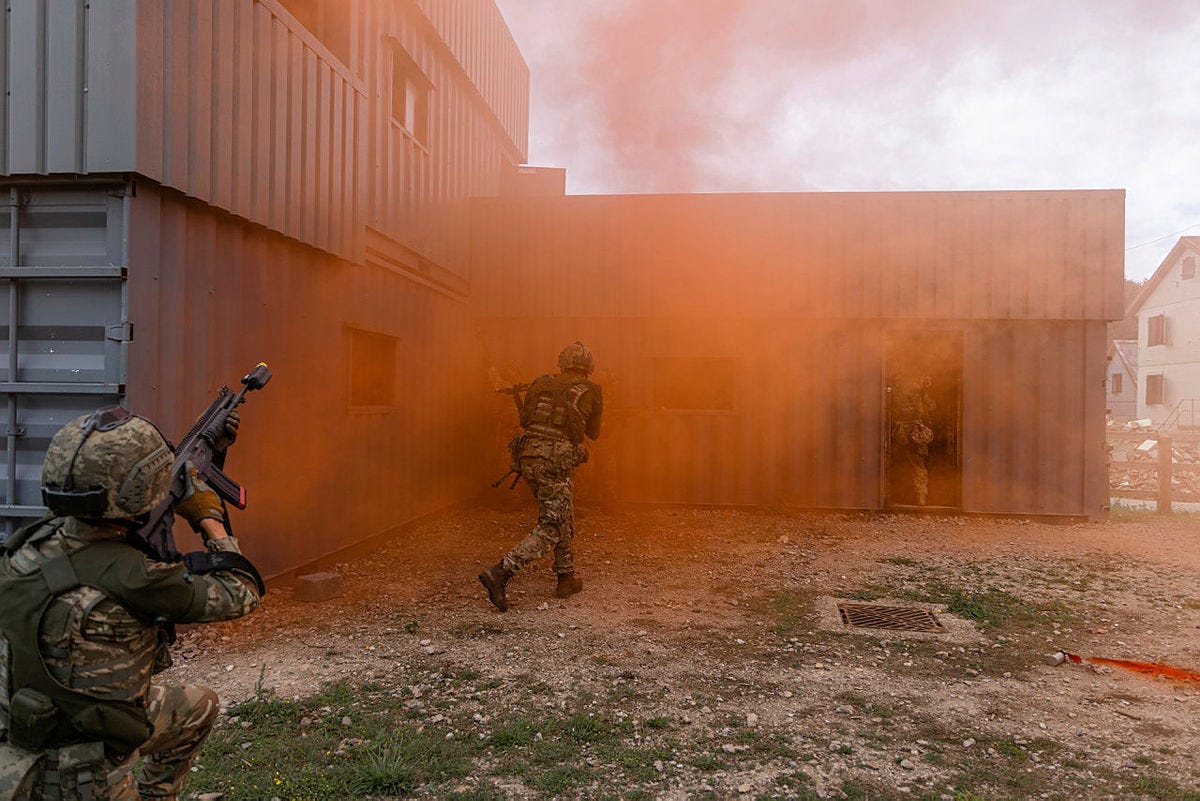
Interflex has been a fantastic achievement, and Britons and the citizens of allied participant nations should be justifiably proud of our efforts.4 I admit, when I first heard about the project back in 2022, I scoffed, cynically assuming that we’d never pull it off. I couldn’t be happier that I was wrong. It has been a significant undertaking, especially on the part of the British Army, but one that is worthwhile.
Beyond training the soldiers that are defending Europe from Russia, Interflex has also been hugely valuable to the British Armed Forces on a practical level. As the war has progressed, Ukrainians have come back with news and experience from the frontline, which has been fed back into both Interflex training and British military practice.
Two of the panellists were British Army officers that had set up medical training under Operation Interbow, a component of Interflex. They noted that, based on lessons from the front, combat medic training has been updated from the Afghan days where rapid medical evacuation within the ‘golden hour’ was almost guaranteed, to a focus on more medium-term survivability at the front, including basic frontline surgery.5 Much of this is not new – it was relatively standard practice during the Cold War, if more primitive – but as ever, old lessons are having to be relearned since 2022.
A particularly interesting point that was highlighted was the introduction of a Combat Stress Signposting Course, training soldiers as very basic ‘field psychologists’ to support their comrades in dealing with the psychological injury of war. It is apparently by far one of the most popular and well-attended courses over the entirety of Interflex. Ukrainians know better than anyone else in Europe the moral and psychological injuries that war inflicts.
Returning to culture, Interflex has provided the opportunity for an unprecedented cultural exchange between Ukraine and Britain. There are many stories of friendships, relationships, and even marriages flowering as a result of the programme, and more broadly the war has created a surge of interest in Ukrainian culture in Britain. The National Army Museum hosting an event devoted to Ukrainian Independence Day would have been almost unheard of before 2022. On the flipside, when I was last in Kyiv the warm reception I received – not just as a visitor, but as a Brit in particular – was noticeable.
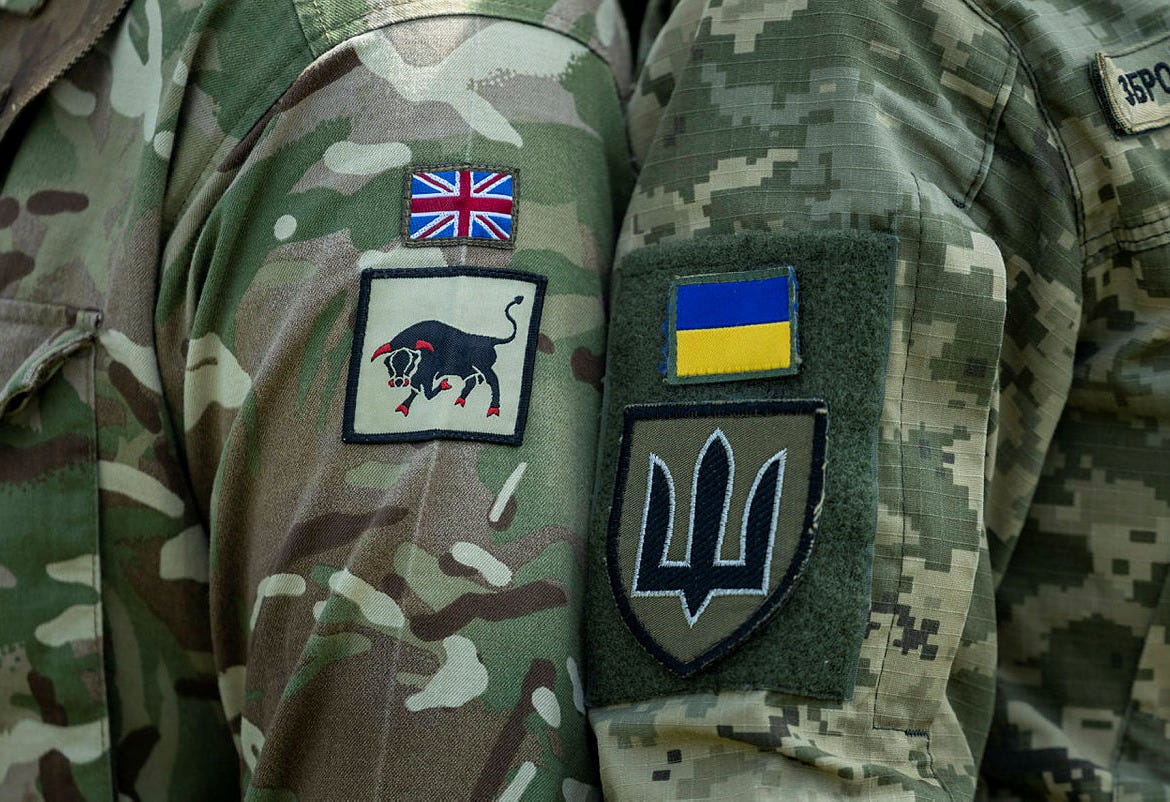
I am often very cynical and depressed about the state of Britain, but one thing I am genuinely proud of is the support that my country has provided to Ukraine – support which remains widely popular amongst the British public. The announcement of even deeper cooperation following the visit of the new Prime Minister to Kyiv is testament to that fact.
Tragically, I doubt that Russia’s war against Ukraine will end soon. I do believe, however, that the United Kingdom will keep supporting Ukrainians regardless in their fight for freedom.
Cracking Defence is a reader-supported publication. If you enjoy my work, please like, share, subscribe, and if you are able, buy me a coffee to support my work. All and any support is hugely appreciated.
Of course, this was rounded off by a stirring Слава Україні! and in response Героям слава!
Interflex has been supported by troops from Canada, New Zealand, Australia, Romania, Albania, Kosovo, and many member nations of the Joint Expeditionary Force.
It is not uncommon for wounded soldiers in Ukraine to have to wait days before receiving professional medical treatment, due to the difficulties of medical evacuation.
Comments
Nothing yet. Say the first thing.
Sign in to join the conversation.