
This is an update of an article I wrote last year for the Council on Geostrategy. I have also written a long paper on conventional and nuclear deterrence which might be of interest.
If you had told someone in 2021 that within a year, there would be a full-scale conventional war on the European continent, they’d have probably called you crackers. If you had informed them that Russia would not just be conducting cyber-attacks and espionage operations against NATO countries, but a full campaign of sabotage, arson, and attempted assassination of European leaders on European soil – what is now often termed ‘hybrid warfare’ - they would think you a crank.1 If you had then told them that Russian missiles and drones would land with disturbing regularity on NATO territory, they’d have probably laughed at you. And yet, here we are.
Russia’s campaign of political interference, sabotage, arson, assassination and general disruption has only intensified in recent years, especially since 2024.2 Hundred of attacks, many directly attributed to Russia, have been reported. There are undoubtedly many more that have been unreported in the public sphere.
In general, the European response has been to focus on resilience – improving the protection of critical national infrastructure, cyber-security, and implementing counter-disinformation campaigns. This is all good, critical activity, and should be undertaken with gusto. However, improved passive defences have not deterred Russia, as seen in the continual intensification of attacks over the past few years.
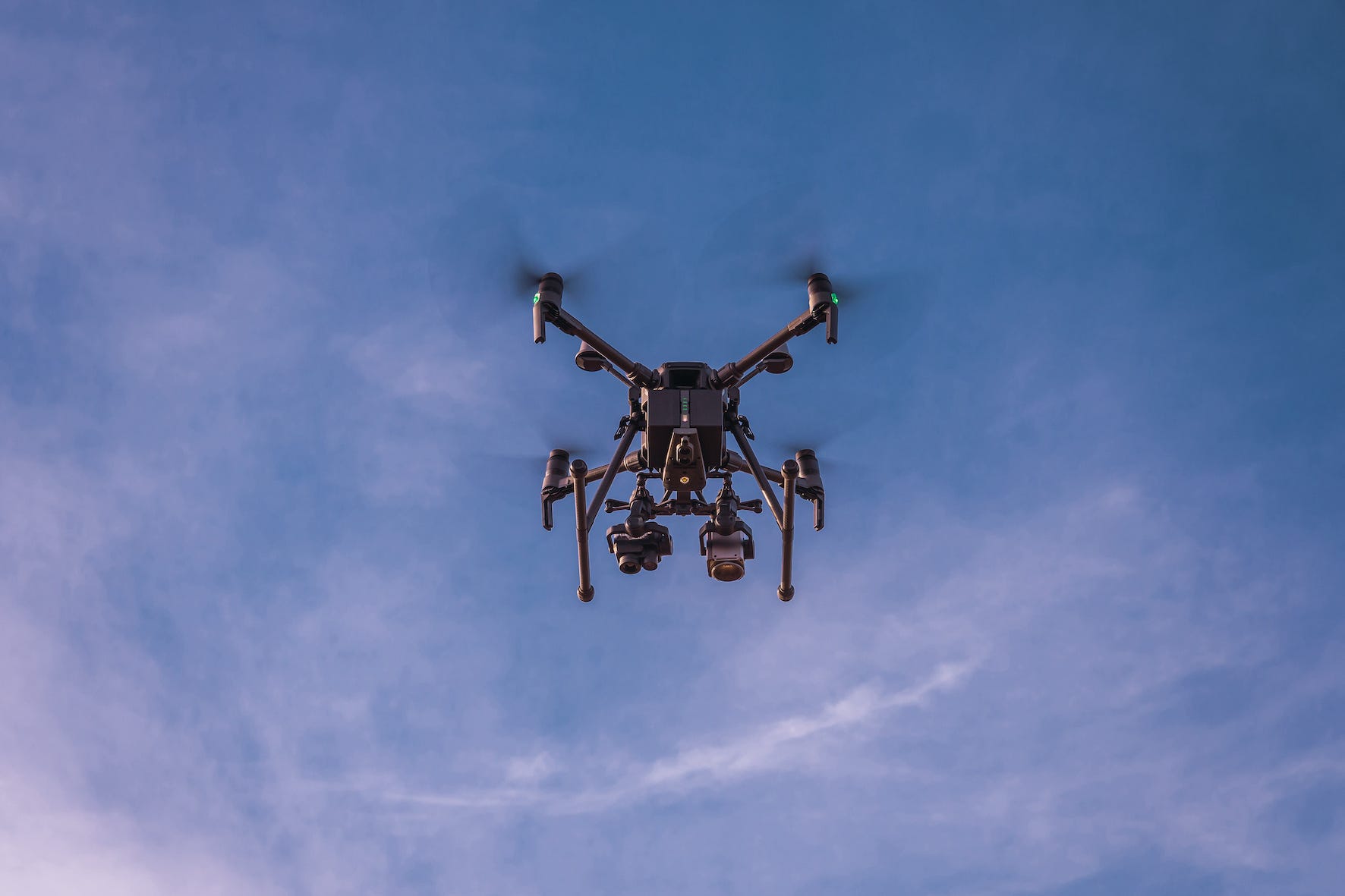
I have argued for a while that a more proactive approach to Russian political warfare is necessary.3 It is not good enough to simply be resilient; Russia needs to feel pain as a result of the consequences of its actions.
There are several reasons for this. Firstly, the cost of such attacks is extensive, financially and politically, and should not be tolerated by sovereign democratic countries. Secondly, like all bullies, Putin won’t back down until he is forced to. The campaign of sabotage, assassination attempts, and cyber-attacks will not stop because we wag our finger at him and call him a naughty boy, or simply by demonstrating our resilience. Thirdly, there is an important strategic communications angle to this. The European public – and wider global audience – also have to see that their governments can respond, and that they don’t have to simply endure Russian aggression.
This proactive approach should be enacted deliberately and in a coordinated fashion. A Russian drone flying into NATO airspace or act of sabotage should be rapidly countered by, for example, the seizure of a ‘shadow fleet’ vessel, a sudden injection of finance or weaponry to Ukraine, a new round of sanctions, or the roll-up of Russian intelligence assets where they are known to be hiding. All of this should be highly publicised for strategic messaging purposes (alongside further covert activity) and tailored to weaken Russian influence, capability and their war effort against Ukraine.
This of course is easier said than done, and would take planning, resource allocation, multinational coordination, and, most importantly (and difficult), policy changes. The thorniest issue is attribution – often it is very difficult to quickly assess that a hostile attack definitely came from Russia, which has long hid behind the fog of ‘plausible deniability’. This is why responses are often slow and come weeks or months after the event, if they come at all. Waiting for a 100% proof of evidence will slow down responses to the point that they are useless, especially from a strategic communications perspective. A lower burden of proof will have to be accepted, which will require brave decision-makers and flexible policy.4
Arguments Against
There are several arguments I’ve heard against this sort of muscular response, from various authorities, many of whom I respect. These arguments roughly fall into the following categories:
Escalation: Any overt counter to Russian aggression would be seen as a deliberate escalation, which is extremely dangerous especially considering that both sides have access to nuclear weapons.
Resilience: By not reacting, NATO countries are demonstrating their resilience and ability to weather Russian attacks. It is a waste of resources to counter.
Covert Operations: We are responding to Russian activity through covert measures, which the Russians know about but are not visible in the public sphere.
NATO is a defensive, consensual alliance and should not be conducting hostile activity against other nations.
Ethics: Western democracies should not stoop to the level of an authoritarian adversary in conducting tit-for-tat attacks.
Let’s take them in turn.
Escalation: The problem with this argument is that Russia thinks that it is effectively at war with the West anyway, and will not reduce activity while we support Ukraine. If the policy is to continue supporting Ukraine – which it should be – then it is unlikely that being unresponsive to Russian attacks will improve matters.5 Where can Russia escalate to at this point, other than full-scale war? While this is always a risk to be considered, I do not think that we should play possum for fear of it. Russia also knows that western audiences get jumpy about escalation, and deliberately plays on this fear in its messaging. Furthermore, Russian doctrine does not necessarily see escalation in the same way as we do; it is a mistake to consider our concepts of strategy, deterrence and coercion to be appropriate guides to the Kremlin’s thinking on the issue.6
Resilience: I’m not convinced by this at all, not least because it isn’t borne out by experience. Russia has continually escalated despite the lack of overt response by Europe. This argument also, in my view, understates the seriousness of the problem here, and normalises hostile activity as simply the ‘default’. Former UK Prime Minister Keir Starmer’s property and car were firebombed by Russian stooges, while Russian intelligence planned an assassination of the CEO of Rheinmetall (among others). This sort of blatant political warfare should not be ignored, nor should it be considered a ‘new normal’ that we just have to put up with. Putin likely sees any passivity on the part of the West as weakness, not strength, and will keep attacking us as long as he can get away with it.
Covert Operations: This is the most reasonable argument. Without a doubt, western intelligence agencies, security organisations and militaries are conducting various ‘sneaky beaky’ operations against Russia. However, this argument, which presupposes that Russian policymakers are directly aware of Western covert measures, underplays the key strategic communications element of deterrence. You are not just messaging to your opponent; you are also messaging to friendly and domestic audiences. Russia being able to conducting sub-threshold attacks without retribution is unlikely to reassure the average European citizen as to their security and safety. It is also, in my view, more likely to lead some to vote for pro-Russian and pro-appeasement politicians, forever regurgitating the myth of the ‘Russian Bear’ that is too powerful to be resisted.
NATO is a defensive alliance. I agree that it would be very difficult to conduct rapid, flexible responses within the byzantine bureaucracy and institutional culture of the alliance. However, allies do not have to work within the structures of NATO itself, but can coordinate either bilaterally or through ‘minilaterals’ like the Joint Expeditionary Force.
Ethics: This is an important point and should not be dismissed. Of course any activity has to be done in a measured, appropriate, lawful manner. Doing exactly as the Russians do won’t work, as it will erode the moral credibility on which democratic western nations must stand. However, there is much we can still do, not least because what Russia does is often blatantly illegal.
Conclusion
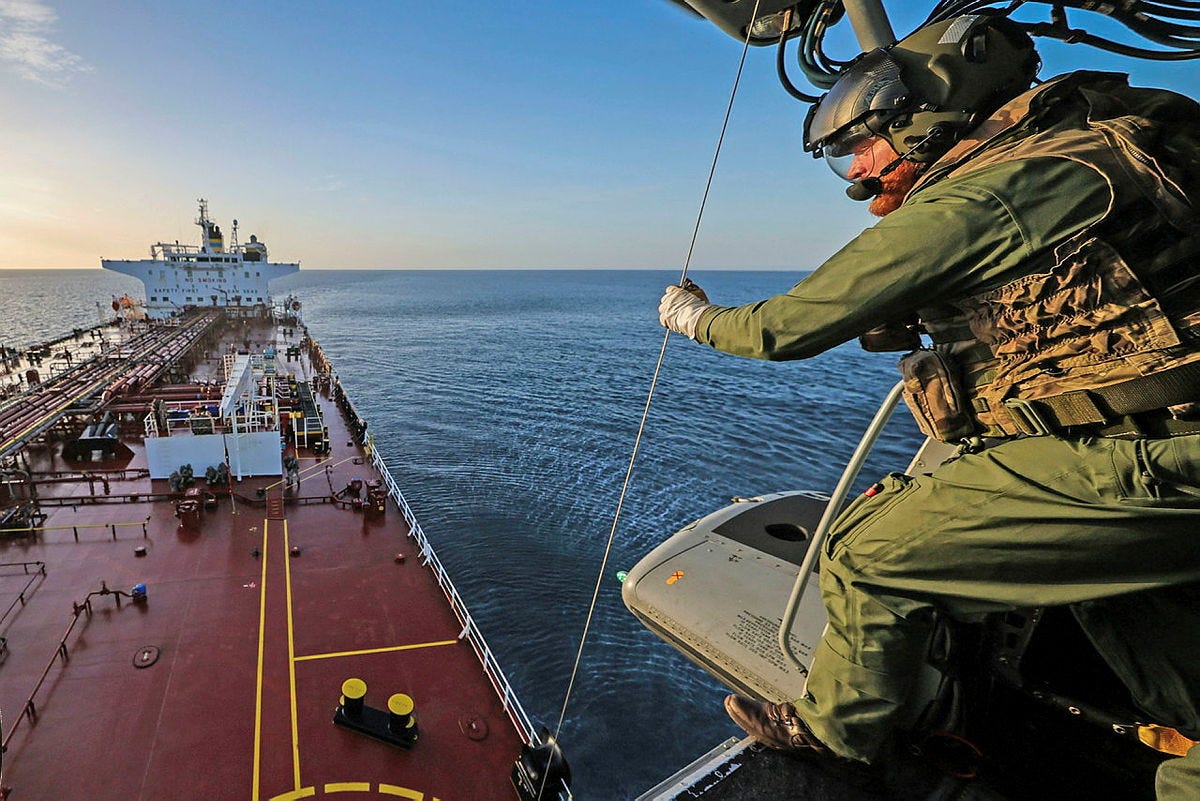
It should be noted that European nations are taking some positive steps towards this approach. Britain made a very public attempt at attribution earlier this year. However, the Defence Secretary’s ‘we see you’ felt weak and was quickly followed up by Russian airspace violations, suggesting that it did not work as a deterrent activity. By comparison, the recent British seizure of the Smyrtos by the Bootnecks was very well done - more of that please! In general, there has been an increase in ‘shadow fleet’ vessels being interdicted by European authorities, though it is estimated that there could be between 600-1400 vessels in the shadow fleet, so the numbers interdicted are comparatively tiny.7 Overall, though the trend is positive, more needs to be done.
Russia has continually intensified its political warfare campaign against Europe. Putin will not stop if we don’t make him stop. For every jab he throws at us, let’s throw one back – and follow up with a hook to the body.
What are your thoughts on how to respond to the Russian threat? Let me know in the comments below.
All the best,
Matthew
Cracking Defence is a reader-supported publication. If you enjoy my work, please like, share, subscribe, and if you are able, buy me a coffee to support my work. All and any support is hugely appreciated.
I’ve started to dislike the term ‘hybrid warfare’ as it has lost much of its meaning and is now used to refer to any form of action short of conventional war. I’ve started to prefer the classical ‘political warfare’.
I am more than aware that this all happened pre-2022, not least in the United Kingdom, but then it was considered the exception rather than a fact of life.
From experience, both of these necessities are hard to come by in government service…
I’d also note that conducting retaliatory activity ourselves potentially gives us a ‘carrot’ to offer the Russians - if they stop, we stop.
On Russian conceptions of deterrence, see Dmitry Adamsky, ‘Quo Vadis, Russian Deterrence? Strategic Culture and Coercion Innovations’ in International Security 2025; 49 (3): 50–83. https://doi.org/10.1162/isec_a_00502.
Comments
Nothing yet. Say the first thing.
Sign in to join the conversation.