

The painbody is Eckhart Tolle’s (and others’) phrase for the unprocessed pain we subconsciously build and carry over a lifetime. It’s essentially an energetic way of talking about what trauma therapist Pete Walker, author of CPTSD: From Surviving to Thriving calls “emotional flashbacks.” While the phrase ‘emotional flashback’ explains the psychological mechanism; painbody explains the energetic dimension.
Painbody attacks emerge when the energy of unhealed trauma is triggered by something benign. For example, for years I had a jarring response of inner rage whenever someone I was speaking to looked away—or a friend read a text but didn’t respond in what I thought was a timely way. If you’ve ever reacted in a way that you later recognized was completely disproportionate to the situation, it’s likely you’ve experienced a painbody attack.
We generally think of flashbacks as involving auditory and visual hallucinations, but emotional flashbacks often are just that: emotional.
Trauma—big and small, individual and collective. If the trauma happened before we had language, we may never have a coherent story in our heads; infants and pre-verbal toddlers record sensory experiences, not thoughts and concepts. Which makes it really tricky when, in your 40s or 50s, a stranger’s sideways glance evokes terror or rage.
In addition, traumatic memories that evoke reactivity haven’t been encoded in the brain as historic. When reactivity arises, the limbic system hijacks the body, the frontal lobe goes offline, and we’re back in the terror of being an abused five-year-old or living with an abusive partner. Our rational minds know that we’re not in imminent danger, but in those moments, the rational mind has been kicked offline.
Just as there is a collective unconscious, a cellular memory every human holds, there are also collective painbodies, and each person has a share that needs to be energetic processed.
For example, the citizens of a country that’s at war or being attacked by another country are likely to have a collective painbody, even if the individual flees the region. Those who experience famine also have a collective painbody, even if some individuals later are able to experience food security.
Historically marginalized and abused groups, like African-Americans, LGBTQIA+ and neurodivergent people also have collective painbodies. All of us have shares in many different painbodies. What fun! (In my Gen X voice: Not.)
During the many years I was broke, even though I was experiencing bliss in the forest, when I came back to mundane concerns, I often struggled. My recommendation to practice “fierce presence” comes from my own 10,000 hours of practicing it, in order not to freak the fuck out.
On an individual level, I was re-living all the times I’d run out of money before. On a collective level, I was feeling a piece of the collective fear of everyone who has ever experienced food insecurity (which is a whopping number and a lot of pain).
I spent many years training my brain to reframe “lonely” into “solitude” (because solitude doesn’t carry a story that anything should be different, and therefore it’s less painful). I’ve never felt lonely in nature, but the challenge came when I returned home feeling peaceful, only to feel lonely once I was inside.
And sometimes, loneliness is loneliness. In those moments, I would think about all the other people in the world who have ever felt lonely, and how my loneliness was not only “mine” but also a share of the collective pain. Once I recognized I wasn’t alone in my loneliness, I felt compassion for all the others who had ever felt this way, and I was able to transmute pain into acceptance and regain inner peace
Whenever I was able to remember that others had felt this way before, it reminded me that I was just having one of many experiences of being human.
The pain body lives in the physical body, but it is not an identity, and it’s not a permanent part of us (thankfully!). So even when there is pain in us, there are parts of us that are calm and peaceful. Those parts are quieter, for sure, but they’re there. The trick is to gently hold the pain from the place of calm and peace… and not to strengthen the pain by thinking about it or creating stories around it.
In the next post, I’ll suggest some strategies that have helped me interrupt painbody attacks and find peace again.
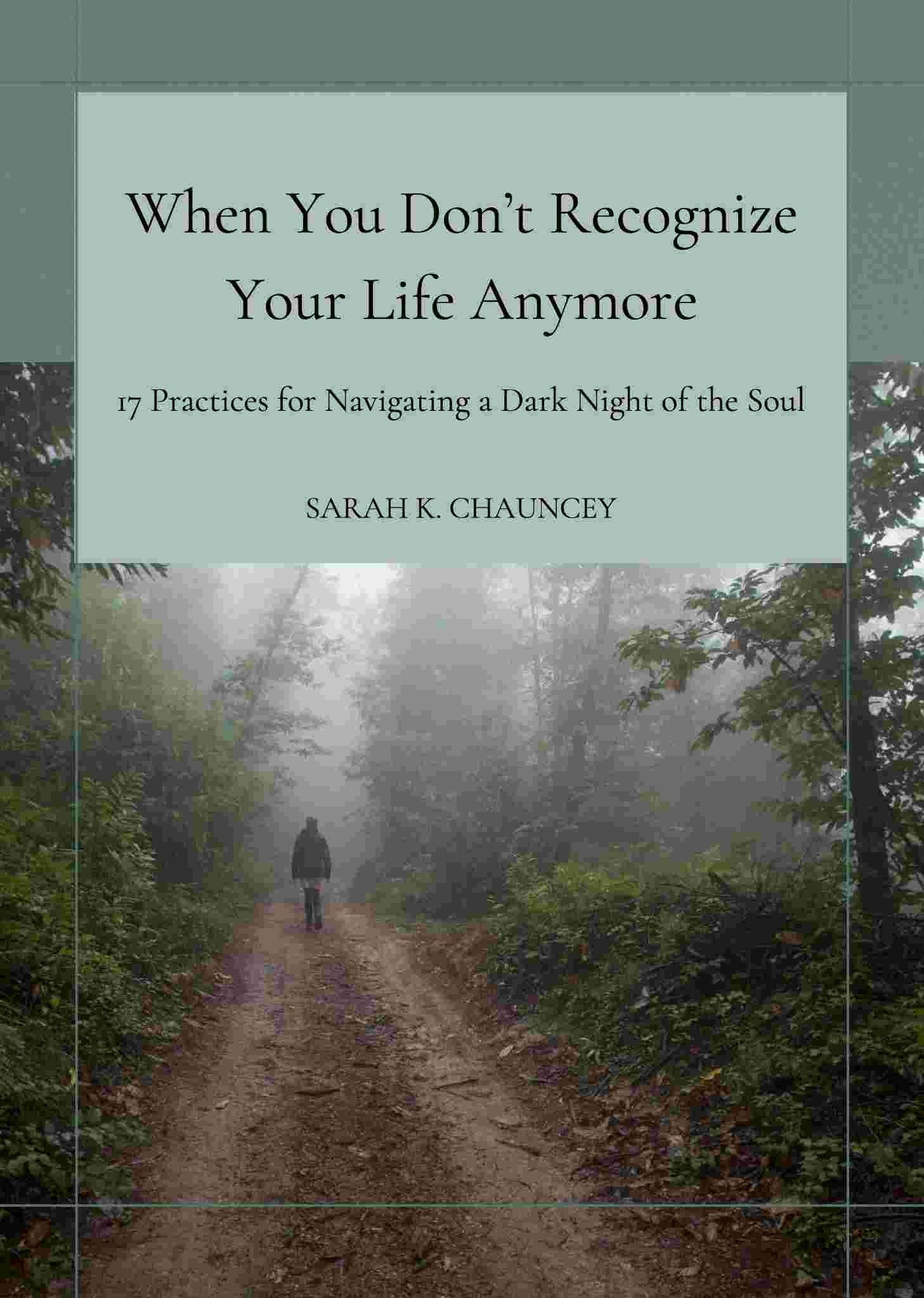
I’ve been creating workbooks and self-guided courses both for writers and also for people who are looking for ways to mitigate stress and find inner peace. The first of these (drum roll please) is…
When You Don’t Recognize Your Life Anymore:
17 Practices to Help You Navigate a Dark Night of the Soul
When collapse happens, whether personal or collective, our sense of stability and certainty is uprooted. This workbook won’t fix that. It’s here to offer something else: A way to stay with what’s happening without abandoning yourself. This 60-page guide helps you give yourself the inner resources you need when navigating a spiritual initiation, and it’s a starting point on your path to reclaiming wholeness.
The workbook is typically priced at $17 USD. Through Monday, October 13, however, readers can purchase the workbook for just $7 using the code CGUIDE17.
One more thing…
Thank you for reading this Counterintuitive Guide post. I understand you’re probably swamped with emails, and I appreciate that you took the time to read this. If you found this post helpful, here are some simple ways to support this Substack:
Click or tap the heart ❤️ icon to like this post. I appreciate every one of those!
Leave a comment about what spoke to you the most about this post.
Subscribe to this Substack, if you don’t already
Upgrade to a paid subscription (bonus: you’ll be supporting a Canadian 🇨🇦!)
Share this post by ‘restacking’ (use the ‘quote’ function to say what helped you the most about this post)
Forward this email to a friend or share the link on social media
Comments
Nothing yet. Say the first thing.
Sign in to join the conversation.