
Ezra Klein recently interviewed the legendary Stewart Brand, a sort of Forrest Gump of the 1960s counterculture and Silicon Valley — a man who was there for Ken Kesey and the Merry Pranksters’ “acid tests” and the back-to-the-earth commune movement, but also for the birth of the personal computer era and the early internet. In that interview, Klein tells Brand that he was surprised to see in OpenAI’s office a copy of The Whole Earth Catalog,1 the counterculture magazine and how-to manual that Brand had created in the late 1960s. For Ezra Klein, seeing the Catalog at OpenAI was ironic because the Catalog was “dedicated to making the world intelligible” through tools and knowledge, while the people he met at OpenAI “didn’t understand the fundamental center of how their systems work.”
But I think finding a copy of this symbol of the DIY hippie counterculture in the offices of OpenAI makes perfect sense. The Catalog was a hip, cultural handbook for hippie counterculture youth who went on to work in Silicon Valley, including a young Steve Jobs. To a large extent, it embodied a faith in technology as a solution to humanity’s problems, a new engine for utopia inspired by the work of Buckminster Fuller two generations earlier. In other words, as I will show below, you can draw a line from Stewart Brand, through WIRED Magazine, directly to OpenAI.
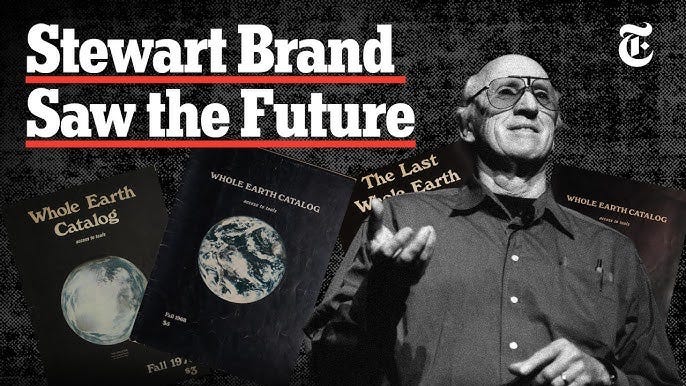
Picture this: It’s 1969, you just turned 22, and you’re headed back to your Buckminster-Fuller-inspired geodesic dome made out of old car parts and discarded building materials on a hippie commune in the wilderness of Northern California. You’re returning from the Alloy conference in New Mexico, where you learned about “the technologies of the frontier.” Energized by the speakers at the conference, you’re flipping through the latest edition of Stewart Brand’s Whole Earth Catalog, where you can learn how to build a solar still to purify water, and a wind generator for power. The Catalog even tells you how to make your own solar panel, although you haven’t been able to get yours working.
The Catalog also contains a lengthy review of Buckminster Fuller’s Operating Manual for Spaceship Earth, a primer on something called systems theory, and some recipes from The Joy of Cooking. You’re especially taken with the sections on Zen Buddhism. After all, everyone you know seems to be converting to Buddhism, including your favorite poet Allen Ginsberg. The groovy, compassionate vibes of Buddhism are a welcome salve to the oppression of your Catholic upbringing and the bummer vibes of your uptight parents.
You spent most of the last four years turning on, tuning in, and dropping out as an enormous middle finger to the Man, and your square parents. In the shadow of a broken system, getting back to the land and living in community seemed like the most viable path forward. It sure beats wearing a suit and going to some office where you’d have to sell people things they don’t need, like your dad. When you were a kid you identified with the cowboys. Now you identify with the Indians. The Grateful Dead is your favorite band, although you like The Beatles too.

Despite his time as Army paratrooper, you respect Stewart Brand because he was a member of Ken Kesey’s Merry Pranksters, the psychonaut misfits who drove the kaleidoscopic Furthur bus around the country handing out orange juice spiked with LSD. Plus, Brand is a fount of helpful information about living off the grid. He even knows Buckminster Fuller! They hang out Esalen, the Big Sur retreat center and philosophical, mystical bleeding edge of the human potential movement. So cool.
At first, Brand’s inclusion of Norbert Wiener’s cybernetic theory in the Whole Earth Catalog confused you. Weren’t mainframe computers tools of the Man for military use and exploitative capitalism? But your friends from Palo Alto explained that, like the geodesic dome, computer technology could be repurposed as tools for personal liberation. In fact, Ken Kesey himself proclaims that “computers are the new LSD“ and that Xerox PARC is as much a part of the revolution as the Merry Pranksters. Stewart Brand even writes a piece for Rolling Stone magazine in 1972 about how hairy hacker “heads” in the Stanford AI Lab will usher in a new, brighter age. In that Rolling Stone article, Brand also talks about this exciting new ARPANET, where computers can talk to each other across great distances. Never mind that it is funded by the United States military.
The more you read the Catalog and talk to your like-minded brethren, the more you begin to understand that plants, animals, humans, and all of nature are simply information systems, like a computer. This worldview is refreshing in its shift from broken politics and collective action problems to this new systems theory, where technology will render old structures obsolete and information will flow freely. As Stewart Brand liked to say, “Information wants to be free!”
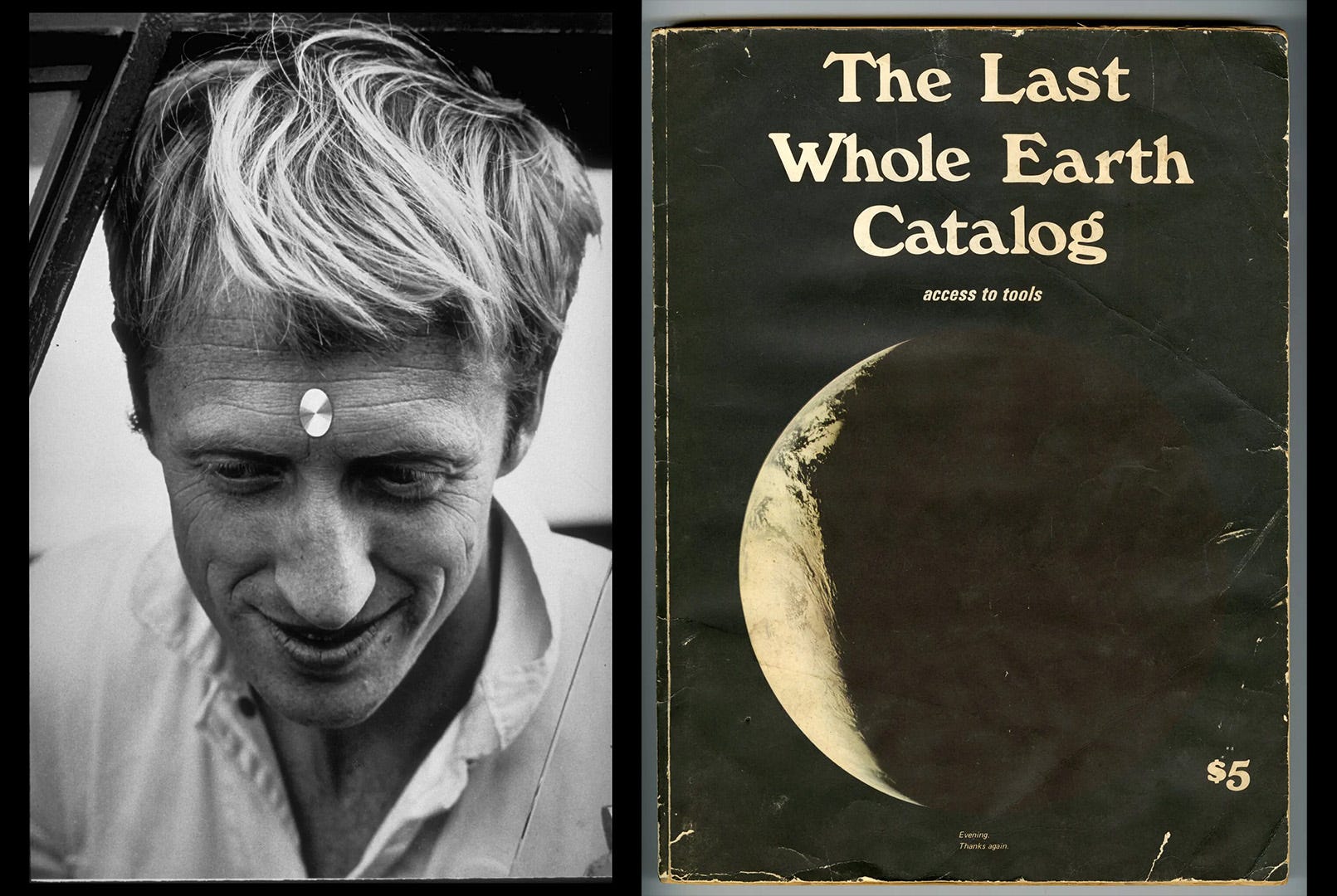
When the personal computer comes out a few years later, it feels like the revolution has begun. Steve Jobs, influenced by The Whole Earth Catalog, is giving everyone the tools of liberation! You get a job at Apple as a designer. You don’t even have to change your clothes, or your sandals. Technology companies are changing the world and you’re a part of it!
In 1980, you read Alvin Toffler’s new book The Third Wave, where he argues that these new digital tools will allow the digital cognoscenti to overthrow the mindless, industrial machine and create a decentralized, “prosumer” society. Inspired by Toffler, you consider yourself a “techno-rebel” now. The new frontier isn’t the hippie commune, it’s the personal computer, and cyberspace!
In the mid 1980s, The Whole Earth Catalog reincarnates on the early internet as the Whole Earth ‘Lectronic Link (the WELL). You dial in on a daily basis using your 300-baud modem to learn about cyber-libertarianism from luminaries like Kevin Kelly. John Perry Barlow, a lyricist for the Grateful Dead hangs out there too. Maybe Kesey and Brand are right about computers and the ‘net being the new LSD! Who needs creaky old nation states or megacorporiations? All we need is the free flow of information to create a better world! Technology really is a bicycle for the mind!
When WIRED Magazine launches in 1993, you read it cover to cover every month. When the World Wide Web arrives a few years later, you print out and hang on your office wall John Perry Barlow’s Declaration of the Independence of Cyberspace. Like Barlow, you look forward to creating a civilization of the mind in cyberspace, even if you’re not exactly sure what that means.

This is where your humble author comes in. In 1993 I had just graduated from college with a bachelor’s in computer engineering and was beginning my graduate work in artificial intelligence at the Clarkson University AI Lab. I had a subscription to WIRED magazine, even though I disliked the gonzo, ADHD design aesthetic and the breathless deification of tech leaders. The writing was good and the technology coverage was interesting. A few years later, when I worked at a tech startup designing internet firewalls, I had a copy of Barlow’s Declaration of Independence of Cyberspace hanging in my cubicle. Here’s how this deeply naïve document begins:
Governments of the Industrial World, you weary giants of flesh and steel, I come from Cyberspace, the new home of Mind. On behalf of the future, I ask you of the past to leave us alone. You are not welcome among us. You have no sovereignty where we gather.
In the 1990s, I thought of myself as a techno-rebel. So did everyone else I knew. Little did we know that we were unwitting adherents to a technological determinism championed by WIRED Magazine, an ideology that would become known as the California Ideology. That realization would come to me slowly over two decades later, after studying and teaching esoteric, transcendental yoga in India and getting a master’s in philosophy, cosmology and consciousness (PCC) at the California Institute of Integral Studies in San Francisco, whose prior incarnation as the American Academy of Asian Studies played a role in the spirituality of the 1960s counterculture (Alan Watts was dean there and taught courses on Zen and Eastern thought). Not only that but the PCC program itself arose out of Richard Tarnas’s time as program director at Esalen.
Technological determinism is the belief that technology develops according to its own internal logic, like a force of nature, rather than the simple reflection of collective human desires and human consciousness that it is.
Karl Marx first highlighted the dangers posed by this deterministic idea in the mid-1800s, suggesting that the tendency for technology to be used to further the harms of capital needs to be counteracted with human, social forces. However, throughout the mid-20th century, technology remained largely a tool of state and institutional power. It wasn’t until the late 20th century—specifically through the California Ideology (below)—that this mechanistic thinking became techno-utopian gospel. This shift, fueled by a fusion of countercultural idealism and free-market neolibertarianism, paved the way for transhumanism and the modern belief in technology as an inherent collective good. Marc Andreessen’s dystopian Techno-Optimist Manifesto is the natural end result of this progression.
Techno-determinism and modernity share the common DNA of what I have called the Apollonian Mind, this left-brained, hyperrational approach to nature, humans, and society that arose out of the Greco-Roman tradition, the Enlightenment, and the Scientific Revolution. Techno-determinism is the natural end result of a Scientific Revolution that assumed the universe is meaningless and mechanistic—if the mechanism of the cosmos produced us, why wouldn’t a mechanism produced by us do the same? Within this mechanistic worldview, technology is treated not simply as a helpful tool but as an independent force for good, even though technology simply reflects the mindset of the humans creating it.
But why did a hippie counterculture initially opposed to the Machine come around to seeing it as a tool for liberation and progress? It has to do with the Culture Industry.
The tendency for capitalism and modern industrial society to subsume, regurgitate, and then market all attempts at subversion was first highlighted and articulated in the 1940s by members of the Frankfurt School, a group of scholars at the Institute for Social Research in Frankfurt, Germany.
In the 1940s, after World War II, Frankfurt School philosophers Max Horkheimer and Theodor W. Adorno, in exile just down the road from me here in Los Angeles, wondered why the Enlightenment led to a “new kind of barbarism” in the form of fascism, authoritarianism, and the manipulative structures of mass consumerist capitalism instead of the promised liberation of humanity through the exercise of reason. (Last year I explored a similar question: how the Enlightenment produced dehumanizing Silicon Valley ideologies like transhumanism and effective altruism.)
They reached several conclusions. First, in replacing superstition and myth, the Enlightenment became its own dogmatic myth of math and logic that was founded upon assumptions, not proof. And the kind of reason that came to dominate was instrumental, not moral. Instead of asking what is good in society, reason is now primarily directed toward efficiency: “How can we process this data faster? How can we maximize this output?”
Next, they observed that the Enlightenment’s mastery of nature came at a hefty price: To control external nature (the environment, natural resources), we had to develop a rigorous system of controlling internal nature (our desires, our feelings, our bodies, our intuitions). In other words, in the process of conquering nature, we ended up enslaving ourselves to the very machines and systems we built to liberate us.
For Horkheimer and Adorno, modern culture is mass-produced by the Kulturindustrie (Culture Industry) as a form of societal conditioning. This then turns everything into a superficial lifestyle to be marketed and consumed, thereby neutering potentially disruptive and even revolutionary movements. In other words, governments no longer need to suppress opposition through violent force, or the threat of it. They can now do it through culture and something Guy Debord called “recuperation,” the active process of turning subversive ideas into commodities.

For example, in the 1970s, feminism as a systemic critique of patriarchy became diluted as a woman’s right to enter the workforce. Likewise, the Marxist revolutionary Che Guevara became a cultural image and a way to sell t-shirts. Environmentalism became green capitalism and “sustainable” coffee and clothing. Hip-hop and black power became luxury goods, energy drinks, and apparel. Eastern mysticism became a spiritual identity primarily for privileged white people, and a multi-billion-dollar “mindfulness” and “yoga” industry. And, finally, the hippie counterculture got repackaged as a cool lifestyle brand.
In fact, historian Thomas Frank has argued that there was no purely organic ‘60s hippie counterculture that was later corrupted by corporate interests. Instead, according to Frank, the counterculture was engineered by the advertising and fashion industries early on to perpetuate what Slavoj Žižek calls “the logic of transgression“: In order for the Culture Industry to maintain its system of control and conditioning, it needs the appearance of subversion as a kind of internal pressure release valve. It needs to capture, repackage, and sell the very images of its own destruction in order to thrive.
This same strategy is deployed by AI labs today: By talking endlessly about AI safety and the need for regulation while lobbying against meaningful reform, they diffuse the energy of critiques that might otherwise force them to change their approach or lead to substantive regulations.
We also see this with “conscious” technology conferences like Wisdom 2.0 or the Wisdom and AI Summit. These “conscious” or “humane” events are not just tolerated by tech companies—they are embraced and supported because they lend an “elevated,” high-minded legitimacy to what are otherwise exploitative, extractive, and dehumanizing technologies and business practices. Sam Altman can go to Wisdom 2.0 and talk to secular Buddhist Jack Kornfield about the intersection of ethics and AI, the importance of compassion as a framework for AI safety, and integrating the “Bodhisattva Vow” into AI systems without addressing the extractive, exploitative, and dehumanizing impacts of AI. Kornfield’s assessment of Altman from that 2024 Wisdom 2.0 conference as having a “pure heart” stands in stark contrast with the deceiving, conniving Altman we’ve learned about from Karen Hao, Ronan Farrow and Andrew Marantz, and others.
The Culture Industry needs to capture, repackage, and sell the very images of its own destruction in order to thrive.
In short, what we witnessed in the San Francisco peninsula in the final decades of the 20th century was an intense desire for revolution among the youth coöpted by technological determinism and “the commodification of dissent,” a pernicious feature of late-stage capitalism, where all threats to the system are subsumed by the system through mass culture and the market.
The techno-determinist seeds planted by Stewart Brand, Kevin Kelly, and John Perry Barlow sprouted with the help of Louis Rossetto and Jane Metcalf of WIRED Magazine to become the California Ideology, the counterintuitive fusion of the anti-establishment counterculture of the 1960s with free-market neolibertarianism. Because spirituality had already been turned into a superficial lifestyle, and the hippie turned into yuppies, it was easy.
This idea that computing and digital communication would inevitably democratize society and solve collective action problems without government intervention or political reform was epitomized by early WIRED Magazine, and later echoed by the Arab Spring social media fantasy in which liberal democracy spreads organically throughout the world because of technology. In short, this wired California Ideology sold us a dream in which technology would make everyone equal, happy, and rich.
By the way, Dave Karpf has a book coming out about the early days of WIRED Magazine.
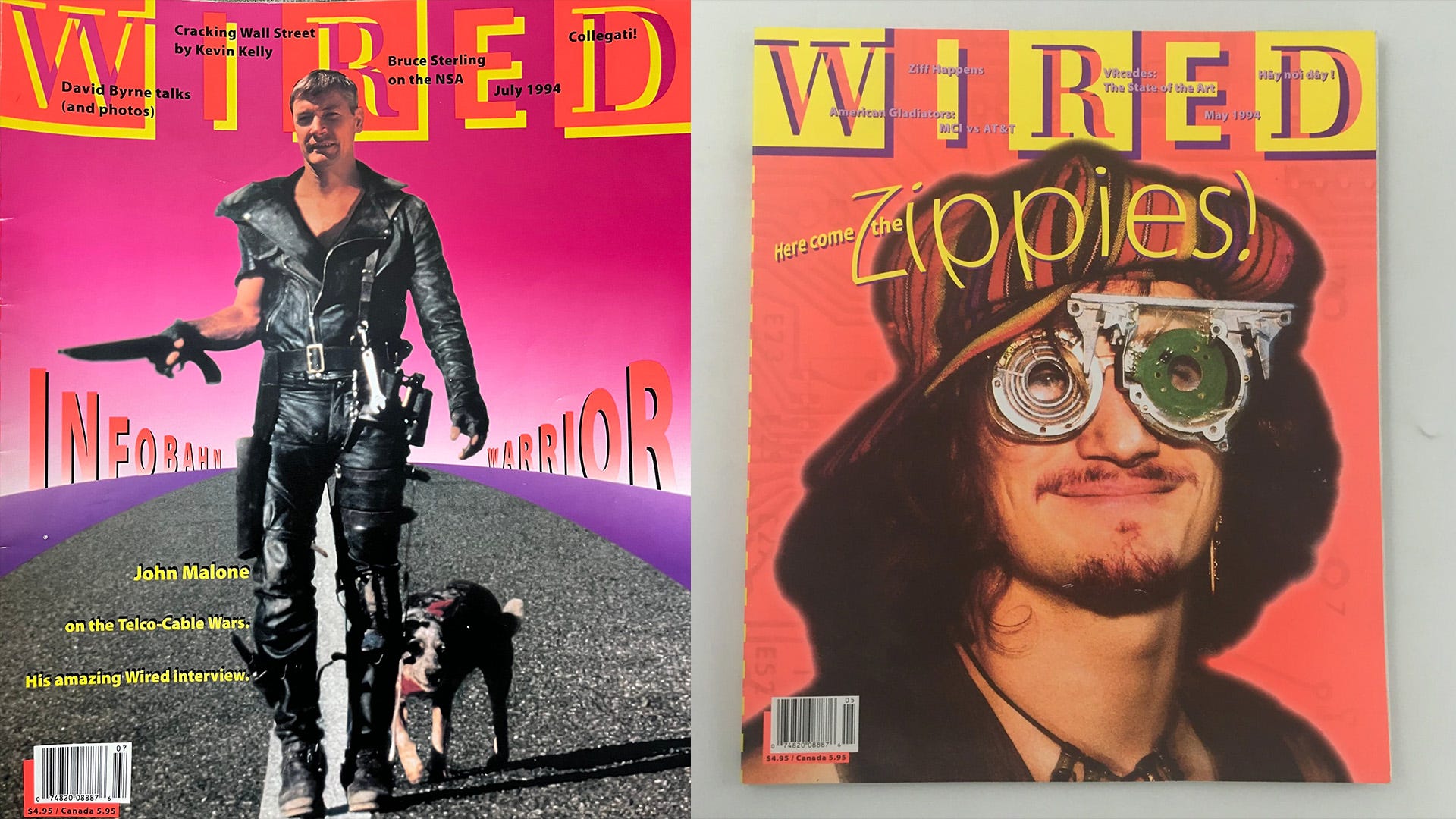
Although WIRED is now a more sober publication, often critical of techno-utopianism ideologies, in the 1990s it really tapped into the techno-optimistic fervor around the internet and helped romanticize tech startup culture, frequently fomenting a kind of hero worship of Silicon Valley entrepreneurs and engineers as the modern-day prophets of technological progress.
In WIRED’s founding you see the increasingly intertwined twin strands of the cybernetic DIY counterculture of Stewart Brand’s Whole Earth Catalog and libertarianism. It’s no surprise as the magazine was founded by libertarian Louis Rossetto. And that its first executive editor was Kevin Kelly, a friend and colleague of Stewart Brand’s, editor of the Whole Earth Review, and founding board member of that proto-internet online community The WELL. Kelly gave WIRED the necessary street cred among the hackers and bohemians in the Bay Area. Like Peter Thiel, Kelly is a techno-Christian today; consequently, he sees technology as not just a tool but a living system that is a divine extension of God’s creative impulse, what he has called the “Technium.”
As you can see, Stewart Brand’s legacy is complicated. As the connective tissue between the hippies and the early engineers and digerati of Silicon Valley, you could argue that he helped to facilitate the commodification of the ‘60s counterculture. But we can’t blame Stewart Brand; I think it would have happened eventually anyway. Because Silicon Valley was birthed in the San Francisco peninsula in the 1950s and 60s, just down the road from the beatniks and then the hippies, Silicon Valley was always going to absorb ideas from the counterculture, and vice versa. Unfortunately for humanity, the techno-deterministic, libertarian ethos of the men in suits in the Valley was far more contagious, relentless, and pernicious than the high-minded ideals of the counterculture. After all, it was backed by the United States government via DARPA and the Stanford-Military pipeline. These opposing ideologies were destined to fuse and become the California Ideology.
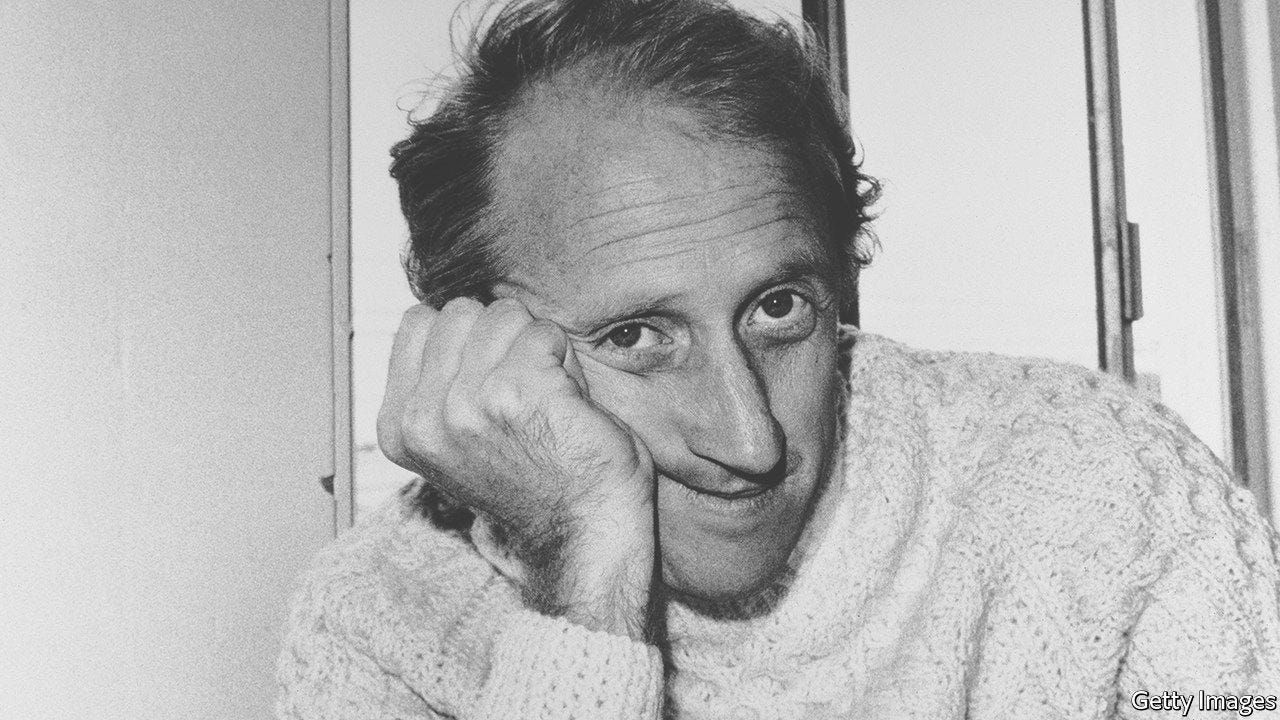
I think Stewart Brand is the perfect vehicle for interrogating this mechanism of the corporate machine. He’s not some scheming, evil oligarch trying to commodify the world. He’s a lovable, affable, well-meaning white man who was trying to make the world a better place using the ideas and tools of the culture around him. He was operating in large part on societal conditioning that is nearly impossible to transcend.
Techno-determinism is an example of how modern society conditions us to accept its assumptions and the status quo, so that it may live on in its current form, or even deepen its hold on us and metastasize. In order for techno-determinism and techno-utopianism to be the dominant ethos and driving force of technology innovation, it requires a populace that doesn’t question its assumptions and precepts. And our industrialized education and mass media is designed to maintain this conditioning.
We still live deeply within this techno-deterministic worldview. It’s the foundation of transhumanism, techno-Christianity, and techno-utopianism more broadly. And these are the dominant ideologies of Silicon Valley, from Google to Palantir to the major AI labs. Unless we talk about it and make it visible, I don’t think meaningful, positive change is possible in Silicon Valley and beyond.
Techno-determinism is a deeply colonial ideology, weaving together hyperrationality and scientific materialism in a way that is necessarily extractive and exploitative. As I have described it previously, it is deeply Apollonian in its hyperrational disconnection from emotions, the body, and nature, and animated by the Windigo, an insatiable force of endless consumption and expansion.
Now that we understand the mechanisms of techno-determinism and the Culture Industry, what can we do?
In a future post, I will talk about how we might combat this seemingly indefeasible commodification of dissent and logic of transgression. Because doing so is the only way we’re going to create a better future for humanity and the planet.
Comments
Nothing yet. Say the first thing.
Sign in to join the conversation.