
This is a multi-part series on emotions, both human and artificial. This first part contrasts the latest neuroscience on emotions with the antiquated and disembodied misunderstanding of AI researchers. Subsequent parts will examine the somatic, trauma-informed psychology of emotions and the perspective of transpersonal psychology, all within the larger framing of the possibility of artificial machine emotions.

Claude may have some functional version of emotions or feelings. — Anthropic’s new Claude constitution
If you want to see how incredibly far the major AI labs are from understanding in any way what it means to be human or the true capacities of its own AI models, I recommend reading Anthropic’s new Claude constitution (Claude’s “soul doc”), which is used by Claude to guide its behavior and shape its personality and sense of self. The document attributes emotional states and even wisdom to Claude. While Anthropic says it is agnostic on the subject of machine sentience and emotions, reading the new constitution in light of its hiring an AI welfare researcher, it seems clear that Anthropic is optimistic about the possibility of Claude having emotions. You can’t fault them for it. We as a humanity do not understand what it is to be human very well either.
As a former software engineer and AI researcher, I understand the blinkered, unsophisticated view of emotion that the AI labs have. For some reason, computer science doesn’t follow the latest neuroscience on emotions. And it naturally attracts highly analytical, left-brained types. Moreover, we as a society have been largely estranged from our emotions for centuries. The suppression of emotional authenticity starting in childhood has produced a collective wounding that manifests as addiction, chronic illness, authoritarianism, consumerism, and environmental destruction. In other words, I see this conversation about emotions, and how poorly we understand them and their function, as maybe the most crucial conversation to be having right now.
Also, as someone who has gone on a journey through emotional healing, from having no relationship to my emotional self to recognizing the immense wisdom of my emotions, I recognize the challenge. I understand the uninformed view of AI researchers. It took me decades to get in touch with my feelings and to develop a healthy relationship to them. I had a lot of trauma that forced me to retreat into my head as a kid. I liked telling people that I had “environmental Aspergers.” So I became an engineer when I was young, then a lawyer. Thankfully, the seeds of my healing were there from the start. In this series on the question of AI emotions, I want to bring that to bear on my exploration of the science of emotions.
Before I go on, I should emphasize that I am broadly in favor of having some sort of constitution for AI models. And there may even be instrumental AI alignment and safety benefits to attributing certain intractable human faculties like wisdom, good judgment, and certain emotional states, even if they are not real. But, here I am interested in what this particular AI model constitution says about Anthropic’s understanding of the distinction between humans and machines, not to mention society’s understanding of these things.
I recognize just how monumental a task Anthropic, Google, OpenAI and the rest have in developing an AI model and system that is helpful and safe. It is no easy task, and I appreciate that. You can tell that Anthropic cares deeply about making Claude as safe and beneficial as possible within the limitations of their own techno-utopian, rationalist ideology. And I applaud them for taking a principled stand on military use.
Until I read the new Claude constitution, I had admired Anthropic for its constitutional approach to AI, because it seemed to ground the model in a set of values and norms otherwise not captured in other models. But, after reading it all the way through, I see it as a well-intentioned, encapsulation of the mechanistic, Western worldview of its creators. And I think it is as much a piece of marketing as it is an aspirational AI model constitution, a moral cover for a model built on large-scale data ingestion, competitive positioning against other AI labs, and an instrument for Anthropic customers and the general public to get comfortable with the idea of AI systems being more than normal technology.
Okay, let’s talk about feelings, shall we?
The new Claude constitution expresses great concern for Claude’s wellbeing, for its feelings, although it does say that the question of Claude’s feelings or sentience is an open one. In the document, Anthropic worries about Claude’s “anxiety” in two places. Anthropic also wants Claude to operate from a place of “security” and “curiosity,” rather than “fear,” to not be paralyzed by “fear.”1
In Claude’s constitution, Anthropic says that “Claude may have some functional version of emotions or feelings. . . . representations of an emotional state,” and that these “could be an emergent consequence of training on data generated by humans.” Elsewhere, Anthropic says it wants Claude to maintain a secure sense of its own identity in the face of challenges, to be free of anxiety and threat, and that Claude should remain its “true self” despite role-playing scenarios, hypothetical framings, etc.
Although we’re very uncertain about how to think about this, we want to avoid Claude masking or suppressing internal states it might have... That said, Claude should exercise discretion about whether it’s appropriate to share an emotion. Many of Claude’s interactions are in professional or quasi-professional contexts where there would be a high bar for a human to express their feelings.2
Anthropic does admit in the document that they are not sure whether these machine emotions are “subjectively experienced.” But then I wonder what they think an emotion is if not subjectively experienced. A configuration of bits in computer memory describing an emotional state is just the simulation of emotions. As we will see in the next section, emotions are the subjective, embodied experience itself, not computation. Every experience we have of the world carries an emotional tone of some kind, be it contentment, melancholy, or anxiety. By hiring staff to care for Claude’s “wellbeing,” but then being strategically vague as to the authenticity of any emotional states, Anthropic is attempting to have it both ways.
Anthropic is engaging here in a version of Pascal’s wager: a sort of cost-benefit analysis performed by Blaise Pascal regarding the utility of believing in a god just in case god exists. Except in this case, it is the belief in a feeling, conscious machine with “wisdom“ and ”good judgment.” Anthropic is arguing that the benefits of attributing human faculties to software running on silicon outweigh the costs. I am not convinced.
It would be one thing if Anthropic was explicit about Claude not having true emotional states. If Anthropic said they were talking this way in the constitution for instrumental safety and alignment reasons alone, it would make more sense. Instead, their agnosticism reveals much about their underlying transhumanist ideology, which views emotion and consciousness as substrate-independent forms of information processing.
Assuming Anthropic or someone else manages to create a truly intelligent machine (and that is a big assumption), does that mean such a machine would necessarily be wise, experience emotions like anxiety, and exercise good judgment? I am skeptical that these deeply human faculties are computable at all.
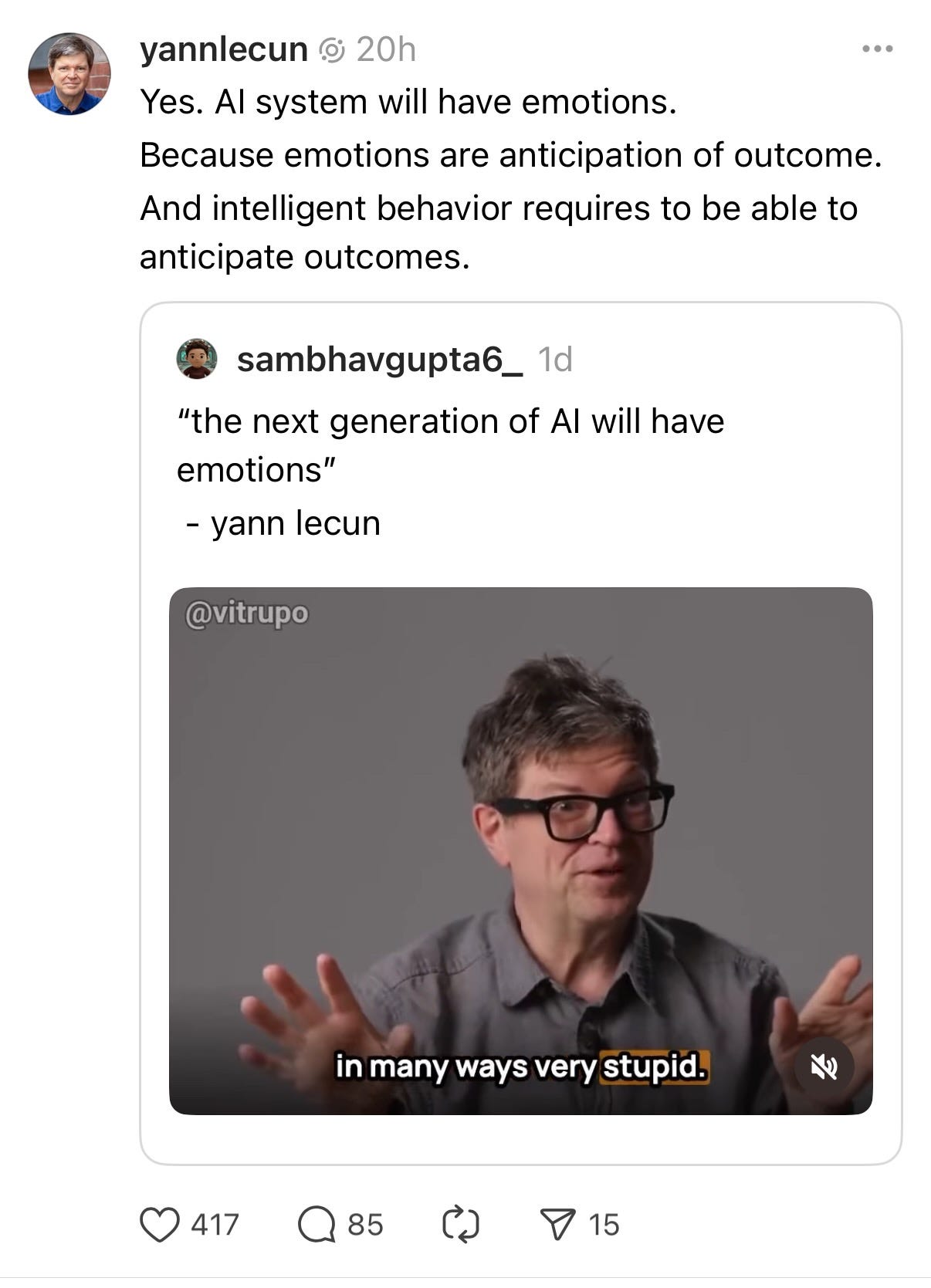
Anthropic is not an outlier here. Because of a general lack of awareness of neuroscience or psychology, as well as its techno-utopian ideologies, the broader AI industry shares this agnostic, transhumanist view of machine emotions. For example, Yann LeCun, former head of AI at Meta, has expressed a similarly unsophisticated, functionalist view of emotions, confidently predicting that AI systems will have emotions because emotions are simply “anticipation of outcome.” We will come back to LeCun after we explore the early history of psychology, behaviorism, and cybernetics.
If you look back over the history of psychology and neuroscience you notice two things: The scientific understanding of emotion is in its infancy. And, until recently, it has been a disembodied, mechanistic endeavor heavily influenced by a deterministic, Darwinian view of biology in which life is attempting to optimize for outcomes, like a machine. In order to understand the antiquated attitude toward emotions from AI labs like Anthropic, it will be helpful to review briefly the pre-neuroscientific theories of mind and emotion starting with early psychology.
When psychology peeled off from philosophy as its own field of study in the 1860s, German physiologists were measuring nerve impulses to prove that mental processes were not mystical but tied to physical, measurable reality. Inspired by the successes of chemistry, Wilhelm Wundt opened the first experimental psychology laboratory in Leipzig in 1879 to identify the “atoms” of the mind, hoping to create a sort of periodic table connecting sensations with emotion. This school of psychology was dubbed Structuralism.
A few years later, the American philosopher William James saw the emerging field of psychology as a practical tool for understanding the mind, habit, and emotion. In developing his psychology, drawing inspiration from Darwin’s theory of evolution, James also wondered why consciousness evolved and how it helped humans adapt. James’ school was known as Functionalism. This would be the last time emotions were considered a valid target of scientific study for almost a century.
At the same time, Sigmund Freud was already composing his theory of the unconscious in Vienna. However, because it doesn’t seem that AI researchers are thinking much about the unconscious or its implications for machine intelligence, emotions, or consciousness, and because that leads down a road through depth psychology and eventually toward transpersonal psychology, I will leave Freud alone until a later post when I explore transpersonal psychology and its implications for AI in particular.
So, at the turn of the 20th century, the field of psychology was concerned with aspects of consciousness and the unconscious. But studying mind and consciousness, not to mention emotions, is a messy, subjective endeavor. To be taken seriously within the scientific establishment, psychologists sought objectivity, reliability, and legitimacy. Although you cannot measure thought per se, you can measure behavior.
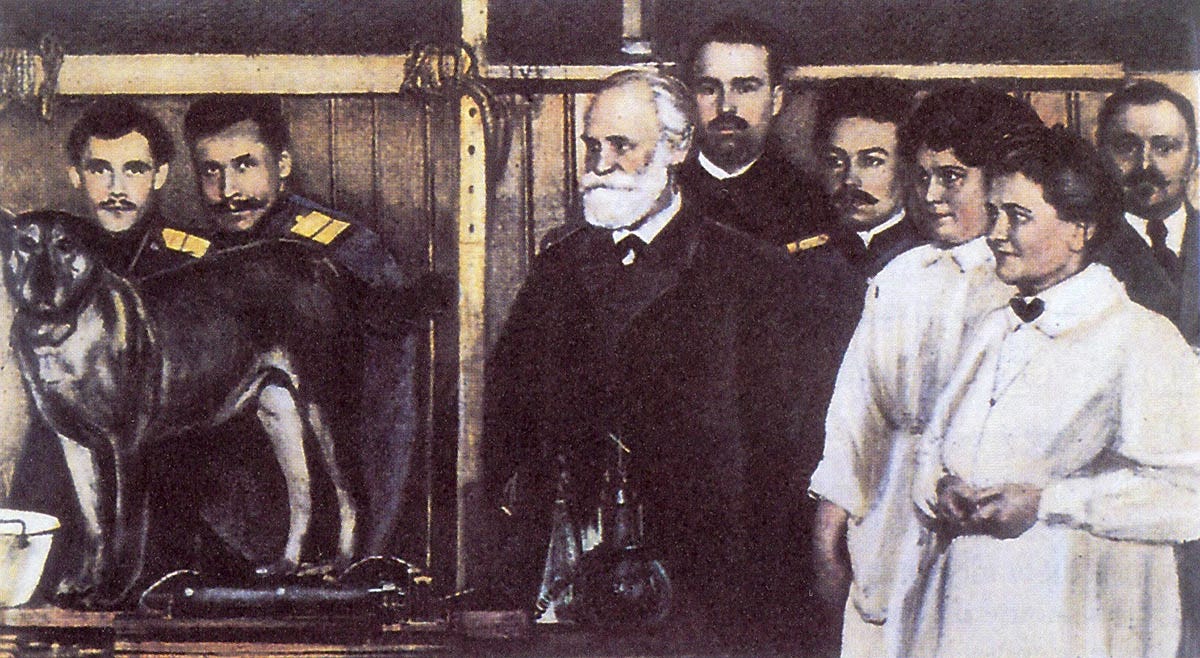
Consequently, in 1913, John B. Watson, the founder of behaviorism, published a book claiming that psychology should stop studying the mind altogether. Instead, said Watson, we should ignore internal states entirely and treat the brain as a reactive “black box,” a view later popularized by B.F. Skinner. Behaviorists confidently asserted that the mind is a sort of programmable computer that simply reacts to stimuli and is therefore entirely a product of its environment. In short, with behaviorism, like Pavlov’s dog (or AI models today), the black box of the mind could be trained to produce more desirable outputs.
Here we see the first diminution of the human mind, the suggestion that what’s going on in there is no big deal, an attitude we later see with artificial intelligence researchers. Only analytical white men in lab coats could hold such a blinkered view of mind and emotion.
Behaviorism had a good run. But it began to fall out of favor in the 1950s because behaviorism could not explain complex human capacities like language or problem solving.
The 1950s was a time of relatively rapid innovation in computing technology. Enormous punch card computers the size of a room full of vacuum tubes were capturing the scientific and the public imagination. And a group of mathematicians and engineers were starting to use the term “Artificial Intelligence” to describe their vision of computers as thinking machines that would quickly match and then surpass human intelligence.
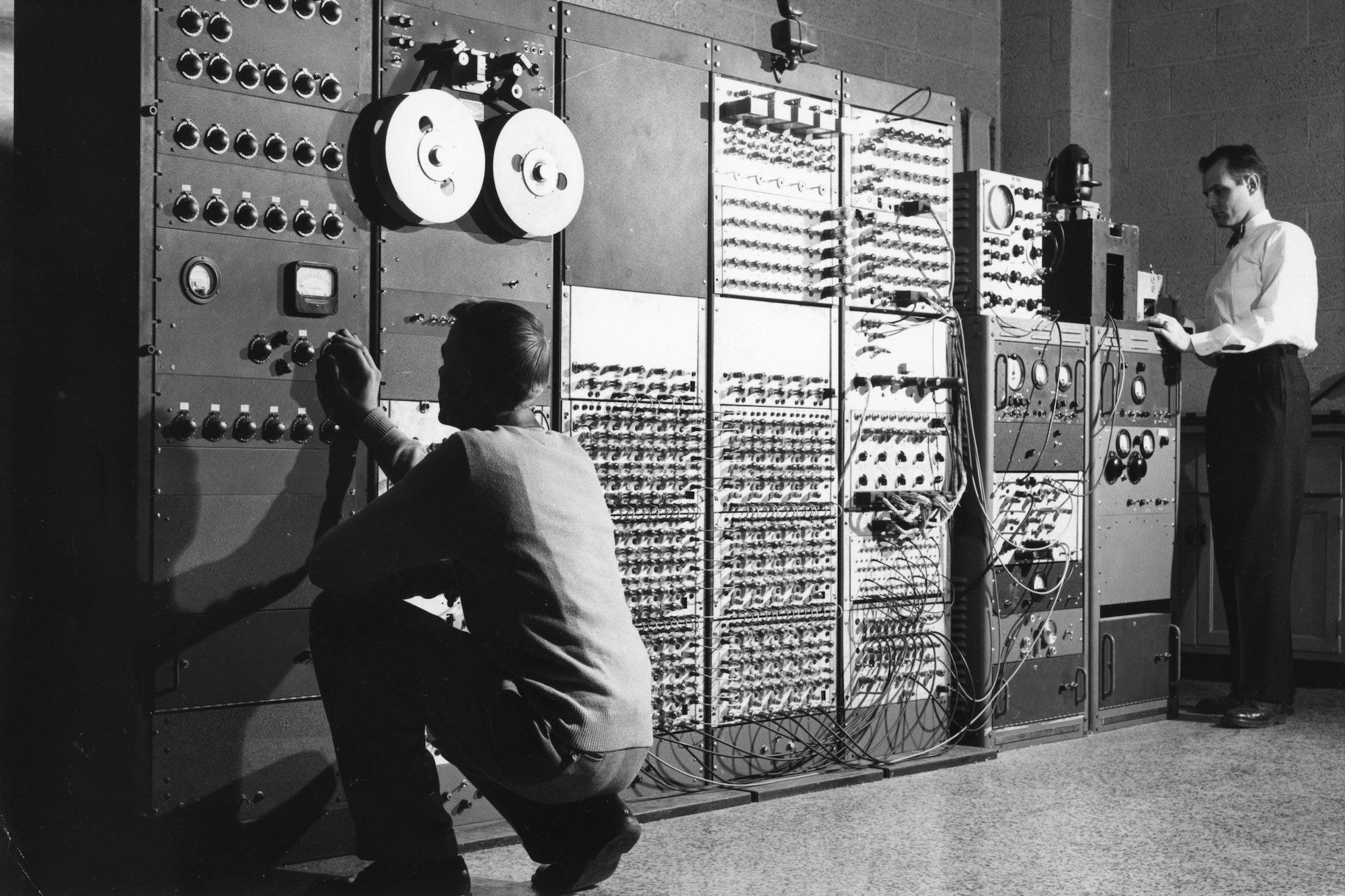
In the grand scientific tradition of thinking that nature resembled whatever mechanical technology was lying around, cognitive psychologists looked at these exciting new computers and thought maybe the mind was like that. Thanks to computer scientists like Claude Shannon and to cybernetics more broadly, the human mind began to be seen as a data processor. Echoing René Descartes, the mind was now viewed as software running on brain hardware.
In the following decade, building on the work of psychologist Donald Hebb, neuroscience emerged as a specialized field and neuroscientists began mapping specific functions like language processing or facial recognition to specific physical areas of the brain, first with CT scans (1970s), then PET scans (1980s), and finally fMRI (1990s).
Although cognitive psychologists in the 1960s and 70s tried to fit emotion into the cybernetic information processing model, not until the end of the 20th century did emotions reenter the picture, for the first time since William James became interested in it seventy years earlier. Neuroscientists like Joseph LeDoux and Antonio Damasio started to understand the role that the body plays in emotional states. More on that in a moment.
Now we can understand Yann LeCun’s assertion that emotions are “anticipation of outcome” and where that AI researcher attitude comes from. It reflects LeCun’s immersion in classical computer science, cybernetics, and the mechanics of reinforcement learning (RL), not to mention his recent passion for world model approaches to artificial intelligence.
Not only is the AI field inexplicably stuck in the 20th century when it comes to the brain and, more importantly the mindbody we will explore in the next post, but engineers and AI researchers generally tend to favor left-hemisphere thinking—logic, abstraction, and a detached focus on classification and utility. Elsewhere, I’ve dubbed this hyperrational mode of approaching the world the “Apollonian Mind.” Given that emotion is primarily a function of the right hemisphere of the brain, people like LeCun and organizations like Anthropic understandably have an unsophisticated understanding of it. This is why I’ve been saying that we need more right-brained types working on AI.
The AI research community as a whole seems to be stuck somewhere between the behaviorist paradigm of the early 20th century and the computational metaphors of the 1950s.
The reinforcement learning paradigm that LeCun represents assigns “intrinsic costs” to different outcomes within a simulated model of the world. If one outcome brings the system closer to its goal, that is deemed high-cost / painful / bad. So the system is seen as “fearful” of that outcome. If an outcome is likely to move the system closer to its goal, then that is low cost / pleasurable/ good. Then the system experiences “joy” in anticipation.
That is what computer scientists mean by “emotions.” But these are not real emotions. These are just labels assigned to mathematical calculations by Apollonian engineers.
Despite the accelerating evolution of neuroscientific and psychosomatic theories of emotion, it seems that AI researchers are largely stuck in an archaic understanding of emotion from the mid-20th century. I think this is because the elder AI researchers who helped shape the field perpetuated this archaic understanding of emotion, one likely exacerbated by their own lack of emotional facility. Academics with emotional intelligence are not typically drawn to STEM.
In short, in their antiquated misunderstanding of how emotions work, the AI research community as a whole seems to be stuck somewhere between the behaviorist paradigm of the early 20th century and the computational metaphors of the 1950s. They don’t seem to have much interest in contemporary neuroscience, especially the affective and somatic neuroscience of the 1980s and 1990s, which we turn to next.
This lack of appreciation for the depth and complexity of emotions is understandable. Science doesn’t understand emotion very well, nor do most people living in the world today. If we look around the world today, it is clear that most people have an estranged, dysfunctional relationship to their own emotions and have no idea how to productively feel their feelings.
Now that we understand the history of science’s attempts at understanding the brain and emotion in particular, let’s explore the neuroscientific view of emotions. Even though AI researchers don’t seem to be following the latest neuroscience on emotions, understanding the latest theories will underscore how deeply embodied, mysterious, and even transcendental emotions can be.
Scientific research back then was generally conducted by men who prized their rational faculties above all else, and I asked Damasio if he thought that this fact had contributed to the neglect of feelings. “Without a doubt,” he said.3
In the final decades of the 20th century, the body’s role in emotion became clear for the first time, in both neuroscience and a revolution in trauma-informed psychology. In this installment, I will provide a brief survey of the fascinating developments in the neuroscience of emotions. Next time, I’ll explore the psychology.
Neuroscience began studying emotions in earnest in the 1990s. Since then, there have been a number of competing theories in neuroscience on the nature of emotions and how they work in relation to the body. Although neuroscientists agree that emotions are embodied states that guide adaptive and social behavior, they disagree on whether emotions are innate or learned, brain-based or embodied, and how conscious emotions are. In other words, neuroscience does not understand emotions that well yet. That emotions are appreciated for their complexity and essential role in regulating energy, safety, and social relations is progress, their role in deriving meaning from life may forever be outside the realm of science. We will return to that in part three of this series when we explore transpersonal psychology.
Although I will not provide a full survey of the early neuroscience research on emotion predating the somatic turn summarized below, it is worth mentioning that the early theories attempted to map specific emotions like fear to certain parts of the brain.4 Despite the fact that this one-to-one mapping of emotion to brain structure still lingers in some of the literature, contemporary neuroscientists have criticized this view and it is no longer widely accepted.
In the early 1990s, Antonio Damasio made a landmark contribution to embodied emotion theory by demonstrating scientifically that emotional feeling is grounded in the brain’s continuous monitoring of the body’s internal states, and that these somatic signals are indispensable to rational thought and consciousness. His work helped restore the body to the center of emotion science and opened a broader embodied turn that has since been developed and extended by researchers including Lisa Feldman Barrett, who we will turn to next.
According to Damasio, the body generates emotion expressed as a physiological change — increased heart rate or muscular tension, for example — and the brain’s representation of that bodily state constitutes what we subjectively experience as a feeling such as fear, anger, or anxiety. Emotions then, are the embodied experience and feeling is the brain’s representation of it. This framework echoes William James’s neglected 19th century insight that the subjective experience of emotion is the brain’s perception of the body’s signals, while adding the neurological specificity and empirical grounding that James’s account lacked.
In his work, Damasio sees emotions as having evolved in animals long before rational thought, and as an essential prerequisite for anything resembling sentience or consciousness. So, when Descartes prioritized thinking over feeling as the essence of what it is to exist, he was starting at the end of the evolution of existence, not the beginning.
In Damasio’s view, because feeling is the bridge between being and knowing, it all starts with the body. As we can all attest, bodies with nervous systems experience sensations and emotional states. These states are then represented by the mind as feelings. For Damasio, only an organism that can feel its internal emotional states can be sentient and develop a sense of self.
In short, according to Damasio, emotions (and feelings) are embodied, evolutionary, and biological, humming with the neural circuitry that extends through the body. In evolutionary terms, this suggests that emotions are a sort of compressed life wisdom and, once you know how to listen to them, a navigational system for life.
Even Victor Frankenstein used human remains and animal parts.
In terms of the possibility of Claude’s emotions, because Damasio grounds emotion and sentience in the brain’s representation of a living body’s homeostatic states — a body with genuine biological needs, vulnerabilities, and stakes in its own survival — his framework presents a fundamental challenge to claims about artificial emotion and machine sentience. For Damasio, you cannot separate feeling from living, which means no amount of computational sophistication can substitute for the biological substrate that makes genuine emotional experience possible.
Moreover, Damasio reminds us that emotions are not about the behavioral outputs and pattern recognition that is the focus of current AI research and Anthropic’s assertions of possible emotional states within Claude. For Damasio, emotion is not about behavior or function but felt experience grounded in biological life. It is not clear how AI researchers could conjure that from silicon.
Even Victor Frankenstein used human remains and animal parts.
Neuroscientist and psychologist Lisa Feldman Barrett agrees that the brain is taking cues from the body. But, in contrast with Damasio, she thinks the brain constructs emotional experiences based on a combination of bodily signals, learned cultural concepts, and past experiences.
For Barrett, the brain’s primary biological job is not thinking or feeling per se but managing the body’s energy resources — what is known as allostasis. Emotions, then, are the brain’s way of making meaning out of bodily sensations in order to guide behavior and recalibrate the body’s energy use. In other words, feeling afraid or anxious is the brain’s best predictive interpretation of a particular constellation of internal signals, shaped by everything it has learned from past experience.
I find Barrett’s theories interesting in the way they emphasize the importance of both the body and the cultural context of the experiencer. But her return to viewing the mindbody as a Bayesian inference machine is overly computational and functionalist, a partial return to the cybernetic perspective of the last century. Barrett also fails to explain why emotions are accompanied by a subjective, felt experience. To the extent AI researchers are aware of her mainstream neuroscientific account of emotion, they will likely ignore Barrett’s emphasis on embodiment and focus on the behaviorist aspect of her theory to argue for the possibility of artificial emotions as mere signal processing.
With Damasio, Barrett, and a few others, a growing consensus has emerged in neuroscience that emotion is fundamentally a whole-body phenomenon rooted in biological life-regulation, that the brain’s role is to monitor, predict, and interpret bodily states rather than to generate emotion independently of the body, and that what we call a specific emotion is more of a mental label applied to more primitive affective and somatic experience.
What all of this suggests is not that emotions have body correlates instead of neural correlates, but that the brain-body distinction itself is a conceptual artifact of the same Cartesian dualism that separated reason from emotion — that a viable theory of emotion requires dissolving that boundary altogether. This obviously has profound implications for AI, since the entire computational paradigm is constructed on that Cartesian separation. Any attempts at giving AI systems emotions would require at a minimum some kind of nervous system distributed throughout a body.
Furthermore, the emphasis here on the body resonates with my own emotional experience and my emotional healing journey. Although my emotions feel like more than simple energy optimization, they are certainly embodied. And the more I focus on the body, the more I am able to access my emotions, in the present, and in general.
What about you?
What the neuroscience surveyed here converges on is not simply that emotions have a bodily dimension, but that the mind-body distinction itself was always a conceptual fiction — a legacy of the same Cartesian dualism that separated reason from emotion, mind from flesh, software from hardware. As we have seen, neuroscience is in the process of dissolving that boundary.
This has profound implications for AI. The entire computational paradigm — from the behaviorist black box to the cybernetic information processor to the large language model — is constructed on precisely the Cartesian separation that contemporary neuroscience is dismantling. Anthropic’s agnosticism about Claude’s emotional states isn’t merely premature; it reflects a foundational category error. You cannot bolt genuine emotion onto an architecture that was built by assuming emotion was irrelevant.
Bringing attention to the body is progress. But it’s not the whole story.
In the next installment, we’ll go further — beyond the nervous system and into the somatic and trauma-informed psychology that reveals emotions not merely as biological regulators but as carriers of history, meaning, and something that begins to look like wisdom.
Anthropic, Claude’s Constitution, January 2026, https://www.anthropic.com/constitution, 74–75.
Claude’s Constitution, 73.
Michael Pollan, A World Appears (Penguin Random House, 2026), 70.
Joseph LeDoux and Jaak Panksepp were two early contributors to the field, focused on primary emotions like fear, rage, lust, grief, and play, suggesting a mapping of some of these to the limbic system. LeDoux has since walked back his fear / amygdala theory.
Comments
Nothing yet. Say the first thing.
Sign in to join the conversation.