
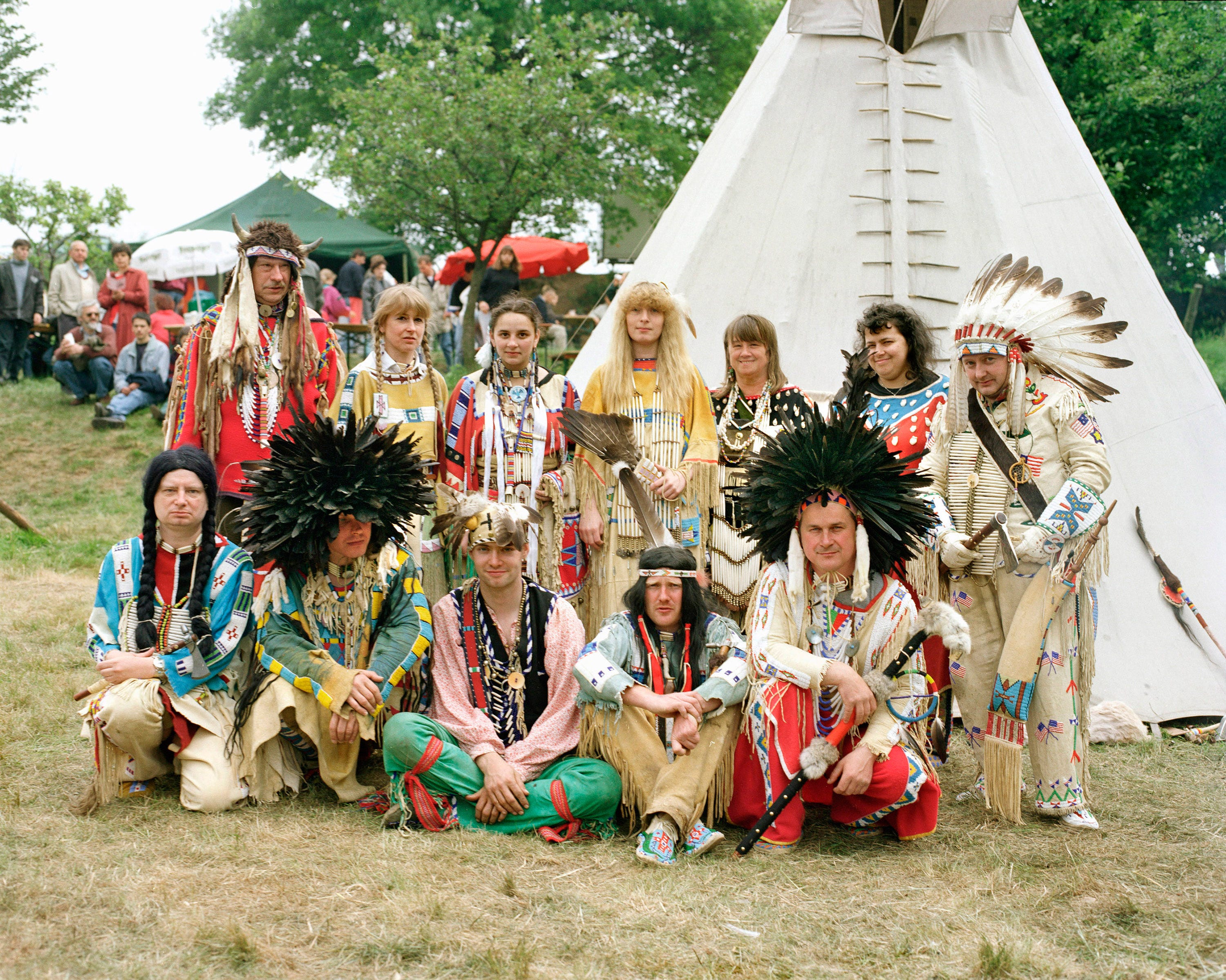
First things first. If you wouldn’t feel comfortable calling me an Indian to my face—meaning, you aren’t Native or literally a South Asian person—then don’t use the term “pretendian” out loud. Just don’t.
Now, this issue has been spoken about at length. As of 2026, there have been dozens of cases of pretendians recorded in the media. But for folks who have been living under a non-Indigenous rock, pretendians, or “pretend-Indians,” are:
“Ethnic frauds”—those who falsely claim that they’re First Nations or Native American,
or,
Those who exploit and overemphasize a small amount of ancestry to make it appear as if they are part of these nations or tribes.
There have been so many incidents. Notable cases that come to mind include Thomas King, Buffy Sainte-Marie, Joseph Boyden, and Michelle Latimer, to name a few. People liken them to disgraced professor Rachel Dolezal—the white woman presenting herself as Black—but it’s deeper and more systemic than that.
This shit is complicated. Being a pretendian is not the same as redface, because there is no one way to look Native. North American Indigineity, as defined in the US and Canada, includes a combination of ancestry, citizenship, and kinship ties. Someone could technically be “100% Indigenous” but not be tribally enrolled or federally recognized. There are also reconnecting folks or disenrolled tribe members—individuals who were adopted into white families or ostracized from their communities for colonial and racist reasons. There are Afro-Indigenous folks who’ve faced discrimination for their Blackness and weren’t recognized by their nations. There are millions of global Indigenous people across the world and there are many, many Latinos who have legit Indigenous ancestry from the south of these colonial borders.
To be clear, I am not talking about any of these people.
What I am talking about are people who say they belong to a nation, a tribe, a reservation, or a community when they do not. Not just an excitable white lady who exclaims, “My great-grandmother was a Cherokee princess!” but the white lady who starts speaking at events in a ribbon skirt, representing herself as a member and speaker from the Cherokee Nation. And that shit is sinister.
First Nations in North America have an inherent right to self-determination, which means that we decide who is from our communities. This part is really important. And if anyone can just spit in a tube, find a percentile of “Native blood,” have no idea which nation they come from, and then position themselves as a part of us without involving the community—it threatens that very sovereign right.
There are many smart figures who’ve written extensively on these matters, and I encourage folks to read up on them. The work by Alethea Arnaquq-Baril on Canadaland is especially thorough and crafted with much care.
I have spoken at length about the issue of pretendians, and I must say—it’s exhausting. But as completely donezo as I feel with this whole-ass conversation, there is one aspect of it that hasn’t been discussed yet that can afford to have more nuance invoked.
As an actor, I’ve always had a fantasy that I would be nominated for an Oscar one day and would invite the late Sacheen Littlefeather as my date. Famously known for her speech at the 1973 Academy Awards, where she declined Marlon Brando’s award as a protest of the industry’s treatment and portrayal of Native Americans, Sacheen was a personal hero of mine.
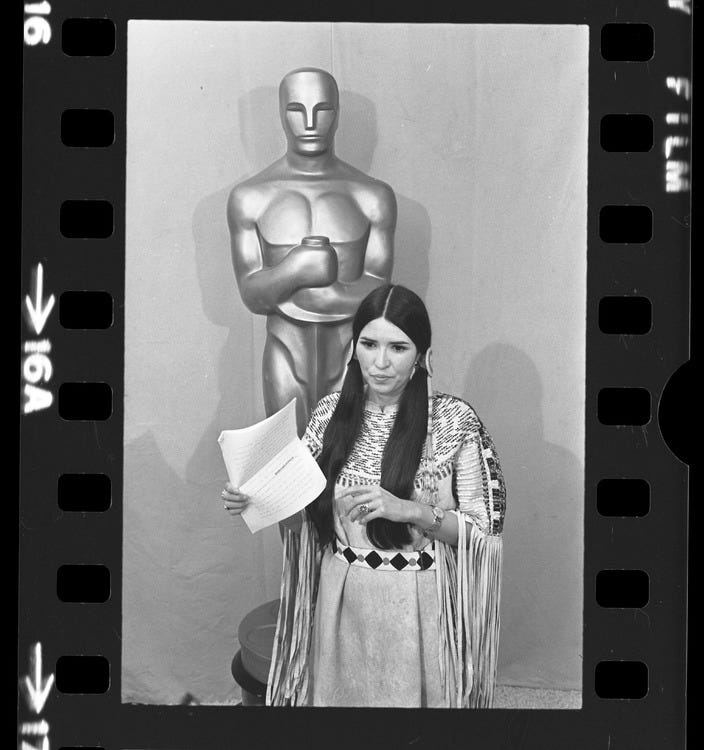
Before her passing, I had a chance to meet her at the Academy Museum and tell her how much her activism had meant to me—how I’d idolized her defiance and grace in the face of racist Hollywood. I’d flown to Los Angeles specifically for the event honouring her, knowing she was ill and that the opportunity to share space with this woman was quickly closing. Respected peers gathered to hear her speak, listening as she passed down stories, memories, and hard-earned wisdom while being wheeled through the room like royalty among her court.
The announcement of Sacheen Littlefeather’s death was crushing, yet the worst was yet to come. It wasn’t the postmortem exposé of her real ethnicity—that she was, in fact, Mexican-American and not Apache—but the manner in which she was unmasked that gutted me most. More on that later.
Rather than feeling anger and betrayal at the news, I felt deeply unsettled, with pangs of grief. My first thought was, “Did we really have to go after her…?”
I’d felt similarly when an investigation surfaced around the 82-year-old Buffy Sainte-Marie.
Don’t get me wrong—I don’t believe that Sacheen or Buffy were exempt from lying or exploiting opportunities that arose for them. The hurt around that is real. I think where my defensiveness and protectiveness arise is from the fact that these people are elders. And I will throw down for any elder, any day.
Back then, folks didn’t have the same incentive to commodify their Indigineity the same way that we do now—especially in Canada. Millions of dollars in grants and prizes are issued to Indigenous artists. It’s a way to uplift groups who’ve historically been (and continue to be) oppressed, and there is real financial incentive.
People who come to mind are Joseph Boyden and Michelle Latimer—who’ve earned millions under the pretence that they’re specifically Native artists.
But elders like Sacheen or Buffy didn’t have anything to gain back in the day other than community. In fact, I’m sure they actually lost opportunities; Littlefeather was publicly booed, shamed, and reportedly threatened with violence for the speech she delivered on the Oscars stage. She struggled with finding work as an actor following her activism. And Sainte-Marie was explicitly blacklisted on American radio stations for her vocal opposition and advocacy. So it calls into question what the impetus was to feign racial identity back in the day.
Strangely, these pretendians are oftentimes the biggest champions of community. Nearly a decade ago, when creating my short film RAE, Buffy licensed multiple tracks from her album Moonshot to me for next-to-nothing. It wasn’t required of her, and certainly didn’t benefit her–I was an emerging filmmaker with little money and even less industry leverage, yet she went out of her way to lend a hand. While her identity was proven false, her support was very real.
The same can be said for Michelle Latimer. When damning disputes of her heritage surfaced, I knew multiple emerging Indigenous artists who felt conflicted; torn between the betrayal of being lied to and feelings of guilt because she’d propped them up; she’d provided them with mentorship and paid opportunities. (Truthfully, I was one of the people she offered an internship to, but by some coincidence I turned it down).
What does it say when some of our biggest community advocates are not actually Indigenous? Is it an over-compensation for their lack of belonging? Or a true desire to advance and uplift? Admittedly, I’m dumbstruck on how to reckon with these actions–not the harm these people have caused, but the help.
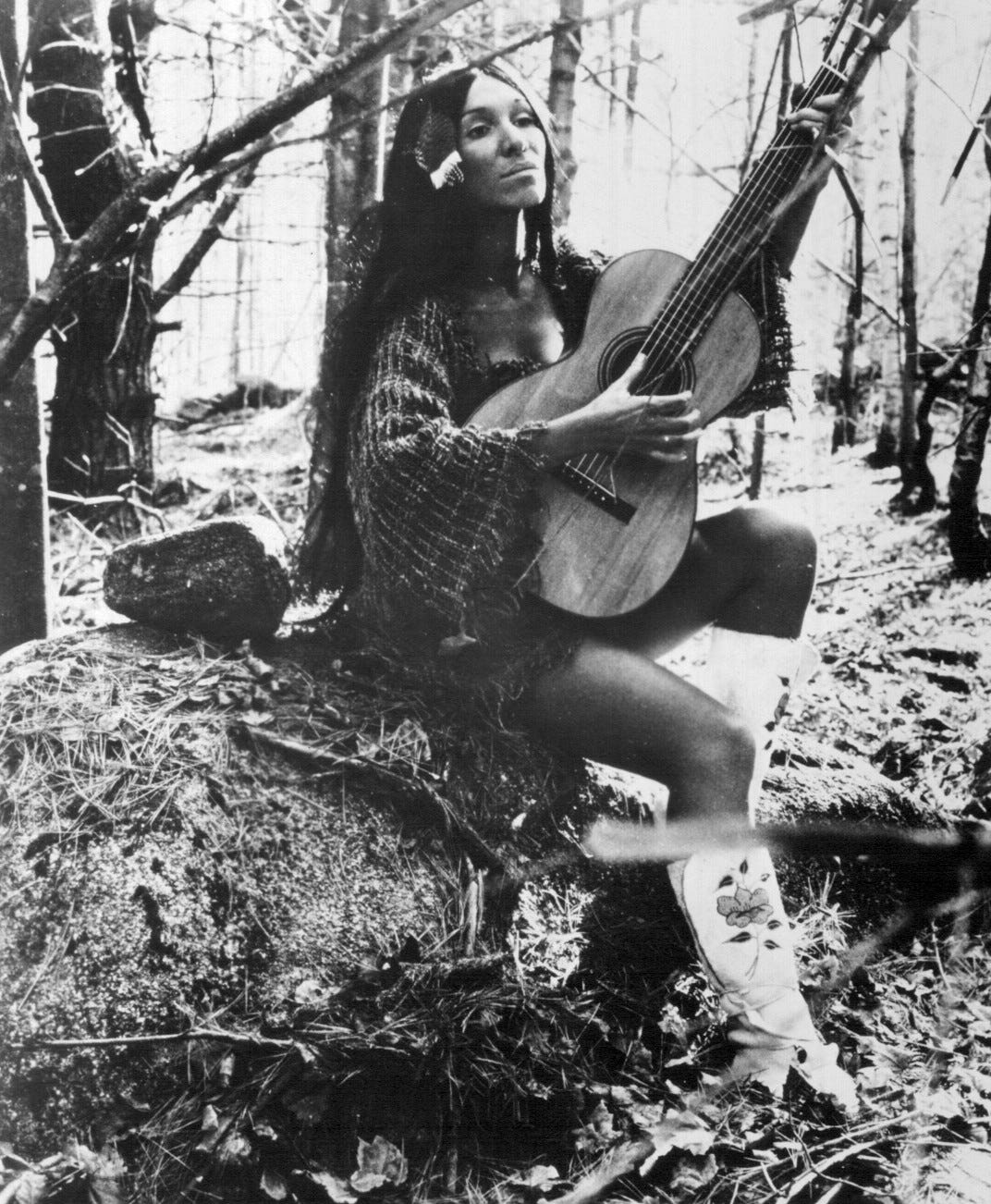
There is a bizarre romanticization that Western cultures have with Native people. Like, really weird—I’m talking New Age cultural appropriation and an obsession with mysticism (rather than our real, living cultures). And I’m certain that saying they were Indian made Michelle, Buffy and Sacheen feel special, spiritually connected, and gave them a badge of coolness. I get it. We are cool—just maybe not the way that white people think we are.
I will always respect someone more who may have some amount of vague Indigenous ancestry but is honest and forthcoming about it—who contributes to allyship—rather than someone who conceals and deceives, who tries to be a part of a tribe without due process.
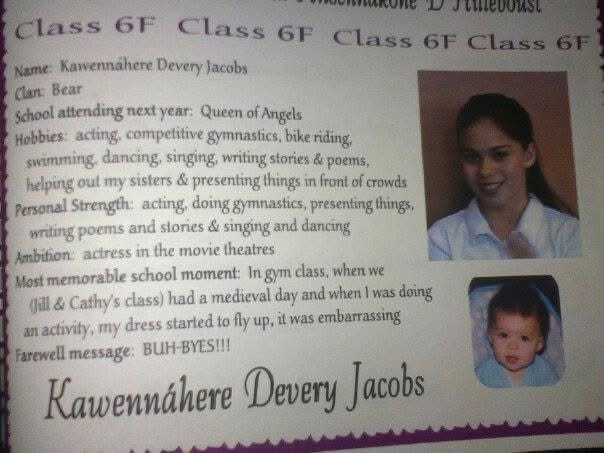
I’ve joked that I can’t wait for the day where I get accused of being a pretendian, where I roll out the receipts of my sprawling family tree and show them the yearbook of the on-reserve school I attended. But I realize that my situation is clear, straightforward. And I’m fortunate for that—that I’m federally recognized, enrolled, card-carrying, connected to my community. Not everyone has that same privilege.
I think of mixed or reconnecting Indigenous folks who have been the target of witch hunts from self-proclaimed Pretendian Hunters—where families are split apart, paternity is questioned, and people get invasive and nasty.
When Sacheen Littlefeather was called out, it had been by her estranged sisters, who announced her Native American identity was a lie. They were approached by a controversial journalist who’s been accused of unethical reporting and confirmation bias, and according to rumour, they slandered her name to anyone who’d listen.
It’s seemingly true that Sacheen lied—and people have the right to know. But it also feels true that her sisters were set on a takedown. For me, that is where I need to draw the line: when shit is in poor faith.
I thought my stance was solid when these issues first crossed my desk—that it was black and white. You’re Native or you’re not. Point blank. A good rule of thumb to go by is: “Who do you claim, and who claims you back?” For many, it’s that simple. But I realize people’s situations can be more complicated.
Personally, pretendians over 65 feel like they get a semi-pass from me. They’ve lived through hard shit and actually fought for the communities they desperately wanted to be a part of. They helped further our recognition and rights, and I have to acknowledge my admiration for that. Pay respect where respect is due—and that is to their earned elder status.
But under 65—that’s where my compassion wanes.
This is not a perfect science, but an educated vibe check. Under 65, individuals still have time and energy in their lives to meaningfully unite with the community they claim to be a descendant of. For those disconnected and with distant ancestry, reconnection is hard, unappreciated work. But it’s necessary to go about it in a way that empowers rather than undermines Indigenous sovereignty.
By claiming Native back then, people like Sacheen and Buffy were genuinely accepted into our communities, who were so proud of them for their accomplishments. But being outed for their real ethnicities after the brave and gruelling advocacy work they’d done must have been disorienting. It must have felt like a total communal loss. I personally couldn’t fathom the anguish I would feel if I were booted from the nation that raised me… But that said, my nationhood is my responsibility and my birthright.
All in all, there are still dozens of known pretendians working in my industry today. Though it’s not up to me to expose them—I’m not from the nations or tribes they claim, and I no longer care to contribute to witch hunts or humiliating takedowns. Whatever their reason for falsifying—whether financial greed, a dislike of oneself, or a deep void of un-belonging—just makes me feel sad and sorry for them.
What goes around comes around, and the paranoia of living in fear of exposure feels like karma and punishment enough. At a certain point, upholding a false identity becomes its own sentence that pretendians will serve time and time again.
No posts
Comments
Nothing yet. Say the first thing.
Sign in to join the conversation.