
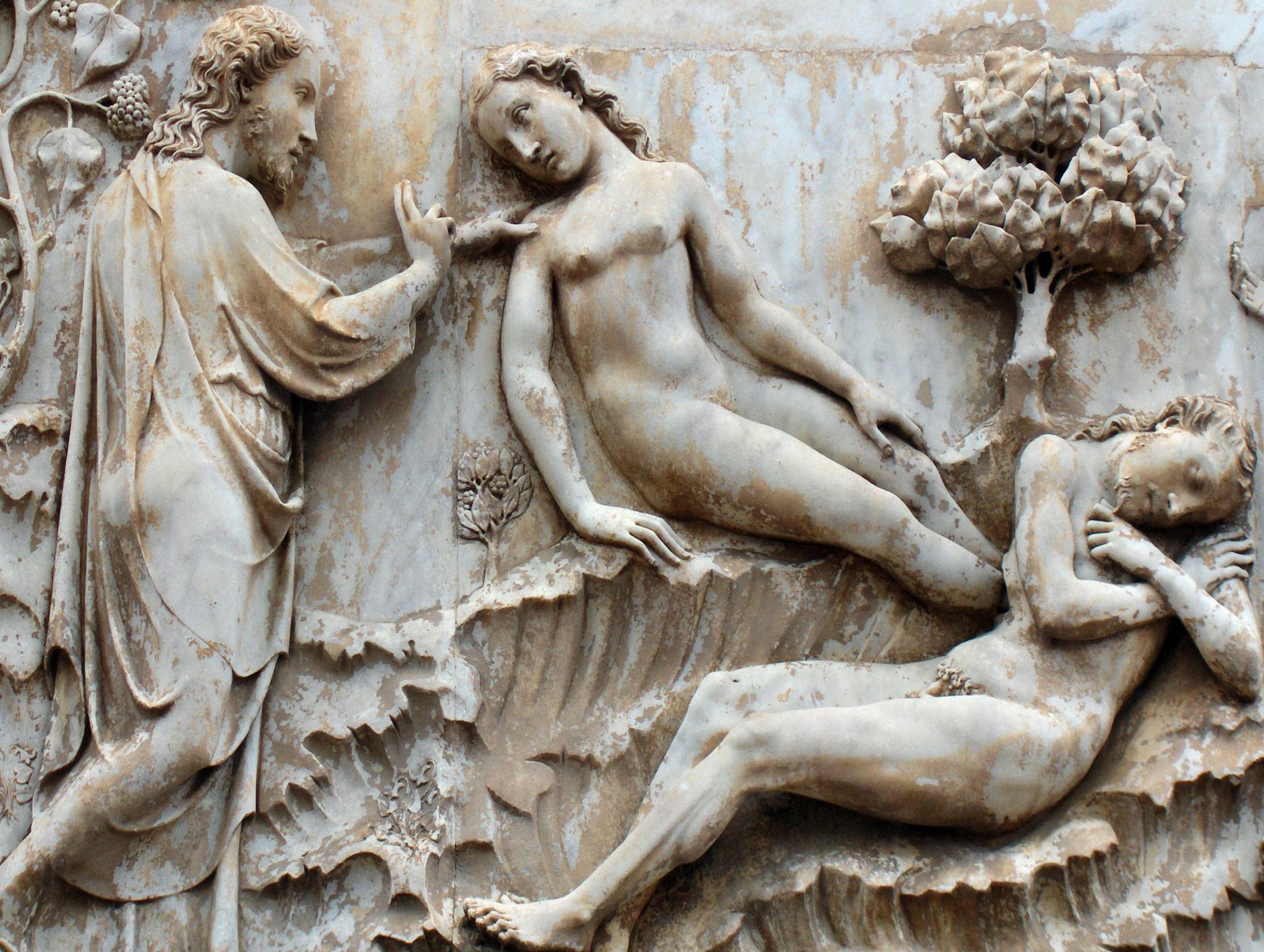
Amid today’s avalanche of alienation from each other and from our world, why worry about how to restore our lost relationship with our first parents? Well, I suspect that our sense of connectedness to each other and to our world correlates closely to our sense of fellowship with Adam and Eve. Entering into Lent of late, I recall a series of supplications that we all pray together with Adam sitting outside the gates of Eden. With one of these, our first father appeals to the plants inside the lost garden to pray for his soul: “by the music of your rustling leaves beseech the Creator of all to open to me the gates which my sins have closed.”1 It is one thing to write about this prayer in an essay like this and another thing entirely to pray this prayer in your own little parish beside your family, coworkers, and friends. Having enjoyed this later privilege a few times (including just this evening), I can attest to the fact that it shows me how bound I am to all those around me. As I sit with my exiled father, God’s loving ears hear and join together the steady song of the leaves in Paradise with my own feeble words.
Sadly, American Christians are inheritors of a continual deadening of anything that resembles communion with our first father and mother. There is really nothing about the Scopes trial of 1925—or much of anything that we have obsessed over in the intervening years—that brings us closer to our fallen parents or to our fragmented selves and our shattered places. Readers will find almost nothing that nourishes intimate communion within the 2013 book Four Views on the Historical Adam (Zondervan) or the 2024 book Perspectives on the Historical Adam and Eve: Four Views (Lifeway’s B&H imprint). These two books survey the standard debates over a historical Adam with regard to the authority of the scriptures versus evolutionary theory. As I will outline more fully below, both books offer four options that differ chiefly by means of escalating the up-to-date rigor of technical engagement with the latest research in genetics and Ancient Near Eastern literature. These are both excellent topics and well worth studying within a larger context of living communion. Taken in isolation, however, they actually tend to undermine anything like a real relationship with our first parents.
To be fair, in the modern West, Adam is hardly a father with whom anyone would want to invest much of their precious personal time. Even before we launched forth into endless debates over human origins, Western Christians had already spent centuries giving Adam just one unsavory job to do within the story of salvation: to secure for us all the inherited guilt that renders every child in history justly condemned to death upon conception. Thankfully, our ancestors in the faith—both East and West—found a lot more to ponder and relate to when it came to their first parents. We modern Christians have proliferated an expanding array of specialized questions about genetic science and positivist history over recent centuries, but those before us relied on skills such as the telling and retelling of stories. Their songs, prayers, icons, and stories piled up a treasury of insights regarding their first parents that both connected and enlarged the souls of our ancestors. Counting only major texts up through the medieval period, we have easily thirty narrative expansions or retellings of the Adam and Eve story from within the Jewish and Christian faith traditions.2
Comments
Nothing yet. Say the first thing.
Sign in to join the conversation.