
Me: If I told you there’s an environmental action that is simple, cheap, and effective and that has the potential to change the systems, would you do it?
You: What’s the catch?
Me: It’s calling your representatives.
You: Isn’t there a petition I can sign? Or can I just change my toilet paper brand and get on with my day?
Calling your legislator can feel weird because you have to talk to someone on the phone. And it’s one more task in your already busy day.
All true, but stay with me.
Because calling your representative feels weird and people are busy, lobbyists are more likely to talk with our legislative staff than we are. I know I don’t want corporations creating policy! But here’s some good news. Lobbyists aren’t constituents, which means they don’t vote. YOU vote. And when you—a voter—call in, your representative pays attention.
Here’s what happens: When staff in a legislator’s office get a call over a specific issue, they log it onto a spreadsheet and then report the results to the legislator. Getting five calls on a bill is a big deal. Now imagine the conversations that happen when an office gets 15 or 20 calls. Even one call on an issue gets your voice heard in a tangible way.
On the other hand, one-click emails and petitions are so widespread, they’ve become background noise, and the impact of social media is hard to quantify. Legislative offices can’t know whether a social media post is coming from a constituent or not and so while social media can create energy around an issue, individual posts rarely make it onto a lawmaker’s spreadsheet. Yes, I will sign every petition I see on reducing plastic waste, and yes, I will also try to amplify my voice through social media posts, but I know that my power rests in picking up my phone and calling my representative and championing a specific piece of legislation.

Step one: Find your representatives.
If you live in the United States, you are represented by two state senators and one assembly member at the national level.
You are also represented at the state level by a senator and an assembly member and at the city level by a city council member. You can find these representatives by doing a Google search with your zip code. FYI: city councils get stuff done and are a great place to change systems. My city council just passed a moratorium on data centers.
Step two: Have an ask.
When I bumped into my assembly member Mark Takano at my favorite California coffee shop, I did something right: I knew who he was. I also did something wrong: I didn’t have a specific ask. Instead of telling him I supported the Green New Deal, and wanted him to support it (this was a decade ago), I told him, “I’m worried about climate change because I have a daughter.” It wasn’t a terrible moment, but I didn’t translate my concern into concrete policy. Later, I went to his office with a climate group and we did ask him to support the Green New Deal and shortly afterward, he came out in favor of the legislation. Having an ask matters.
Examples of asks:
I’m calling to support plastic reduction legislation.
I’m calling to support wind and solar farms on public land.
I’m calling to support a right to repair bill.
I’m calling to support a one year moratorium on data centers.
Bonus: Your ask will be more powerful if it is about an actual bill being considered in the legislature. New York state, and I have been calling my state representatives to support the Packaging Reduction and Recycling Infrastructure Act.
Step three: Know the bill’s numbers Step four: Give your zip code.
Bills in the U.S. have two numbers: a Senate number (S) and an Assembly number (A). The numbers for the Packaging Reduction and Recycling Infrastructure Act, for example, are S1464/A1749. If you’re supporting a specific bill, write down the number before you call. Then, when you are making your ask, provide the staff members with the bill’s numbers. There are so many bills introduced in legislators that staff don’t know them all or even half of them. A bill’s numbers allow the staff member to look up the bill and log your opinion.
Your opinion matters because you’re a constituent. The staff member is going to want to make sure you live in the right district.
Step five: Tell your story.
Emily Ellsworth, a former staff member for Jason Chaffetz and Chris Stewart, told the New York Times: “What representatives and staffers want to hear is the individual impact of your individual story. I couldn’t listen to people’s stories for six to eight hours a day and not be profoundly impacted by them.”
One more secret: One reason I know about upcoming legislation is because I’m part of environmental groups and I depend on other people doing the research. I’m currently a member of Beyond Plastics and the Sierra Club and both organizations inform me about relevant legislation.
Sierra Club has local chapters and many of them put out a fantastic list of legislative priorities.
Beyond Plastics will keep you informed about plastic reduction legislation.
Surf Riders is great on healthy oceans and they have a lot of local chapters.
350.org has local chapters focused on climate change and is where I got started.
Citizen Climate Lobby is all about helping citizens lobby representatives.
Ask yourself: What is my environmental priority? Then look for a local group who is working on that issue. They, in turn, will let you know about upcoming bills, which you can then call your legislators about.
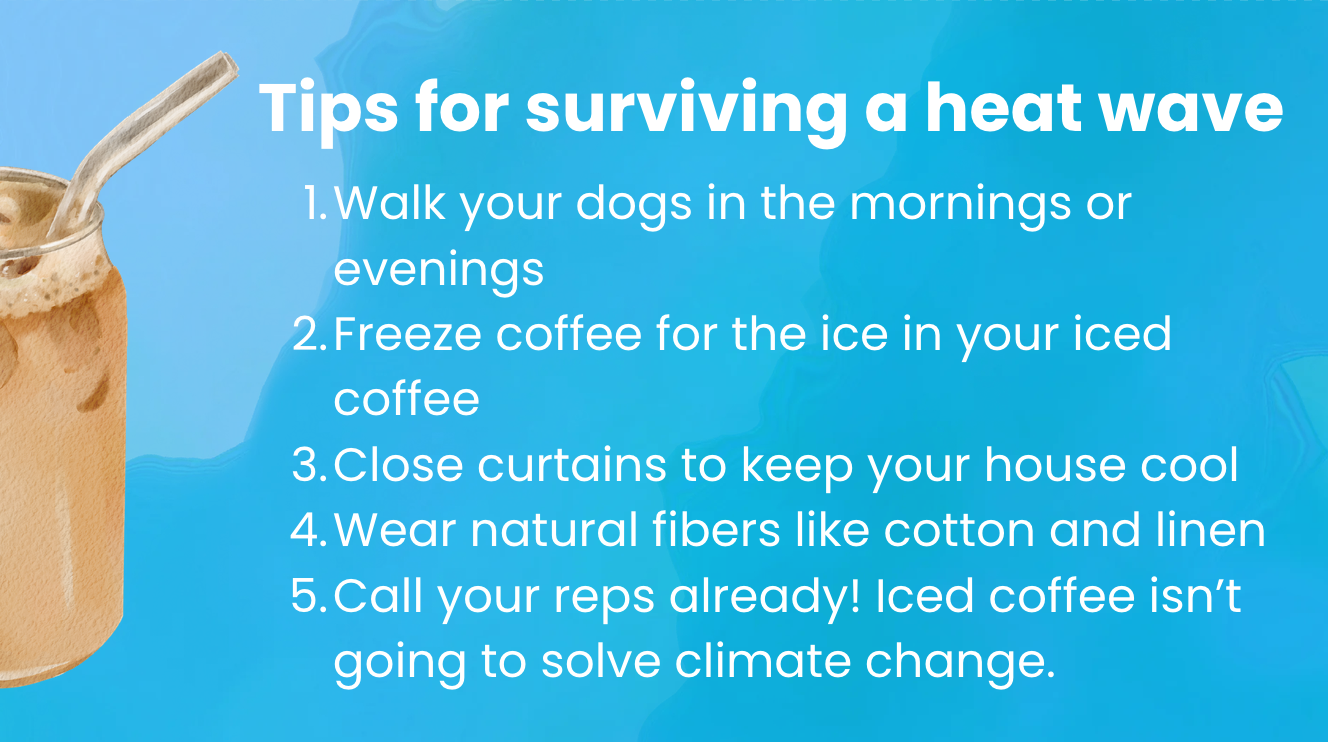
A final word: Speaking on the phone about complex issues is difficult. Even when I write down the name of the bill and the bill’s number, I still verbally trip over the words. And then I hear myself sounding awkward and I cringe. But guess what? Awkward is authentic.
And the more I call, the easier it gets. And the more I call, the more I have normalized citizen action in my household. My daughter knows about our legislators, not just from what she’s learned at school, but from watching me contact our representatives. She is going to be a citizen warrior when she grows up.
Link Round Up:
For Bridget Shirvell newsletter, I wrote a letter to my daughter in the future. It’s about whales and hope and old men who said it’s too late. Please give it a read.
This newsletter is funded by voluntary paying subscribers, allowing me to keep it open for everyone. Because climate change is here and it’s an all-hands-on-deck situation, I don’t want to paywall any content. Thank you for reading

Have you called your representative before? What tips do you have for others?
Comments
Nothing yet. Say the first thing.
Sign in to join the conversation.