
When we talk about organizing, we’re talking about people power. Volunteers are the heartbeat of every campaign or movement–no matter your size or budget. Too often, people may see organizing as an expensive feat, or don’t fully understand how powerful it is to provide someone the resources and knowledge to organize.
If you’re reading this, we’re making the assumption that you’re aligned that volunteer and supporter-driven organizing is best. Ok, great. Let’s jump in.
This is arguably the most important step of building any volunteer organization. Without clear goals, every additional step of the process will fail. Ask yourself: What are you organizing for, and why?
Right now, many people across the country are unaware of the budget bill the GOP is pushing this month, a sweeping piece of legislation that slashes Medicaid, eliminates clean energy investments, and gives over $4 trillion in tax cuts to the wealthy and corporations. An example of a clear goal can be for your supporters to pressure House Republicans to vote NO on the GOP budget bill this month. That’s a clear, urgent goal that can galvanize your volunteers immediately.
Example:
Goal: Generate constituent pressure targeting Rep. XYZ to oppose the GOP budget bill by mobilizing supporters to carry out direct outreach to Rep XYZ's office, while generating media and digital coverage that increases public support for potential Democratic challengers in next year's midterms.
Why: Because the bill slashes Medicaid and clean energy investments, gives tax cuts to billionaires, and harms working people.
Be direct and transparent about why you’re asking for help. Volunteers respect honesty and clarity.
If you have a clear goal and “why” for inviting volunteers to take action with you, you need to have a very simple entry point for them. In the process, you begin to build a list allowing you to consistently engage these supporters. Lists become your foundation, enabling you to quickly communicate, organize events, and mobilize supporters when it matters most. Your lists are not just for fundraising.
Start simple. Collect names, emails, and phone numbers through:
Web Form: Make it easy for supporters to share information with you. Leverage web forms, either through your CRM, or if you don’t have a CRM you can start simple with Google forms.
Website: Allow for volunteer interest to be front and center on your website. Do not make it difficult for someone to get involved.
Convenings: Host local events and convenings with other people in communities, and ask your volunteers to do the same.
Digital Networks: Ask your supporters to share your organizing goals, and web form, in their personal networks online.
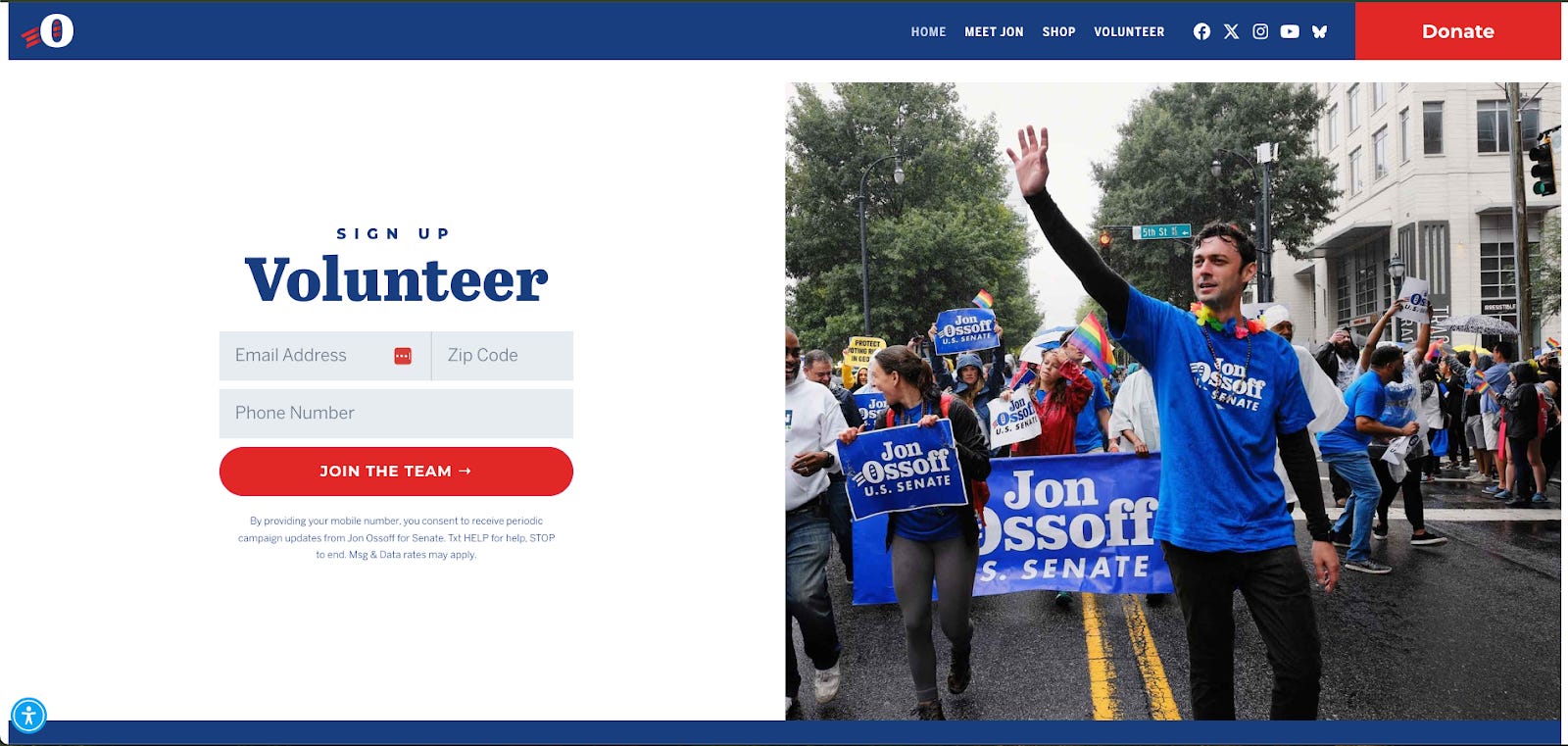
Senator Jon Ossoff’s website features a prominent volunteer commit-to-action (CTA) directly on the home page.
Once you've started building your volunteer list, regular and clear communication is critical. Volunteers and supporters should never wonder what’s next or how they can help.You should be proactive and intentional about ways they can continue to support, how they should take action, and reflective of how they’ve participated in the past.
Weekly update emails highlighting organizing progress and priorities.
Virtual webinars or event meetings to hear directly from supporters.
Text message engagement for high priority updates.
Set up a digital community (such as Discord) to share resources and collaborate.
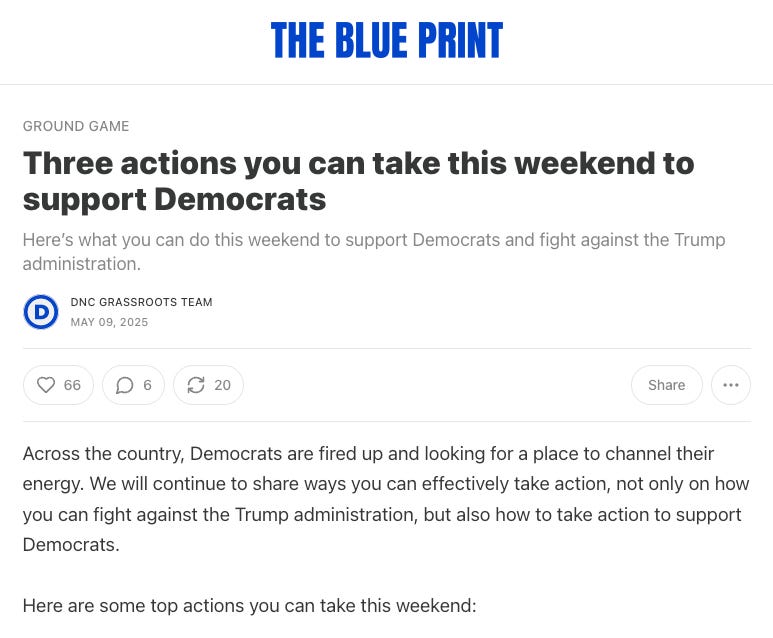
Democrats weekly Substack newsletter, sharing regular updates and volunteer opportunities.
The organizing tasks you’re delegating to volunteers should also be simple. Volunteers should feel capable and motivated by achievable actions rather than overwhelmed by complexity or unclear expectations. This will also make sure that the experience for your volunteer is good, making the ask to return for more actions easier and an incentive for them to invite others to join your effort.
Share a Social Post: Give supporters sample copy and graphics to share on their social media to help spread the word.
Recruit 5 Friends: Give them a personal recruitment goal with a link or form to share to sign up for your list or take an action.
Phonebank for 30 Minutes: Provide a link and script so they can jump into a quick shift without training barriers.
Attend a Weekly Organizing Call: Invite them to a low-lift, recurring event to stay plugged in and informed.
Host a House Meeting: Help them gather a few people at home or virtually to talk about why this moment matters.
If you’re a small team, or even a one-person team, volunteer leadership development is critical for your volunteer organization to grow and scale. It not only multiplies your capacity but also ensures your volunteers feel invested and valued. Volunteers who feel empowered are more likely to stay committed and recruit others into your organizing efforts. More importantly, through leadership development you’re building lasting organizing infrastructure.
Empower volunteers by offering them clear roles and responsibilities along with the resources and trust they need to succeed:
Hold training opportunities for volunteers interested in developing and refining their organizing skills.
Allow volunteers autonomy to host and run their own events and virtual meetings.
Provide dedicated communication systems to coordinate and communicate with volunteer leaders.
Regularly share wins, big and small, with your supporters and volunteers. We value the important work that our volunteers do. Show the appreciation they deserve!
Highlight when goals have been reached.
Publicly acknowledge volunteers who go above and beyond.
If you are a candidate campaign, have the candidate reach out personally to recurring action takers to thank them for volunteering and for their support.
Do not underestimate the importance of consistent and regular follow up with your supporters and volunteers. No matter how big or small their actions, have processes and systems in place to provide touch points.
Set up an automated email and/or text message after a supporter signs up to volunteer or take an action. This should include clear instructions and next steps to get involved immediately.
Reach out via staff or other volunteers to first-time action takers and personally thank them for their time. Make an ask to take another action.
Highlight their impact. Let people know what their action helped accomplish (e.g. “You were one of 182 volunteers who showed up this week — and together, you made 12,000 calls!”).
Re-engage lapsed supporters. If someone hasn’t taken action in a while, send a quick note that says: “We miss you. Ready to jump back in?”
Ask for feedback. After a shift or event, send a short survey or ask a quick question like, “What worked for you?” or “What could we do better?”
Starting a volunteer program from scratch can feel daunting, but remember: every powerful organizing program starts with just a few committed people taking action. With a little work, some simplicity, regular communication, and sincere appreciation, you have everything you need to begin building an effective and lasting volunteer program.
Let's get to work!
No posts
Comments
Nothing yet. Say the first thing.
Sign in to join the conversation.