
Here's what we keep seeing: Organizations and campaigns know organizing works. They understand people power wins campaigns and changes policy. But when it comes to actually funding organizing programs, hesitation stands in the way.
They wait for the "right moment." They wait for a big donor to commit first. They wait until they have a perfect plan and a six-figure budget to get started.
Meanwhile, their fundraising emails sound exactly like everyone else's: "The stakes have never been higher. Rush $25 to help us fight back."
And donors? They're getting dozens of these generic asks every day. They're often numb to the urgency. They don't know what their money actually accomplishes. They certainly don't understand why organizing matters or how it wins.
Here's the reality: Right now, while you're waiting for the perfect moment to invest in organizing, it’s one less conversation and relationship we can be building with voters. And while you're utilizing the same fundraising approach as everyone else, you're missing the most powerful story you could tell donors—the story of how organizing actually creates change.
The Problem: We Don't Tell The Organizing Story (in a way that most can understand)
Most organizations and campaigns treat organizing like a secret. They do the work behind the scenes, then ask for money to keep doing more work behind the scenes.
But organizing isn't a background activity. It's your most compelling fundraising story.
When a 67-year-old retiree starts making calls for the first time because she's terrified about Medicare cuts—that's a story. When your volunteer coordinator turns 15 first-time volunteers into a team that contacts 500 voters in their community—that's impact donors can understand. When your organizing program moves the needle in a city council race by 300 votes—that's proof your mission works.
Yet most fundraising completely ignores this. We talk about "fighting back" and "standing up" but never explain how organizing is the actual mechanism that makes fighting and standing up possible.
You don't need a massive budget to start organizing. You need a few committed people and the discipline to document what happens next. Read our recent post on how you can get started right now.
Then immediately start telling supporters and donors what this small investment creates:
"Three weeks ago, we hired Sarah part-time to coordinate volunteers. She's recruited 23 people who have talked to 843 voters about the upcoming school board election. Yesterday, one of those voters reached out to us to volunteer following their conversation."
That's a story worth funding.
It’s also important to tell this story across digital platforms. Don’t limit yourself to email and SMS, but use emerging platforms like TikTok and Substack. Even if you’re not soliciting money in the process, it’s important to tell the story of your organization or campaign in the most authentic way possible.
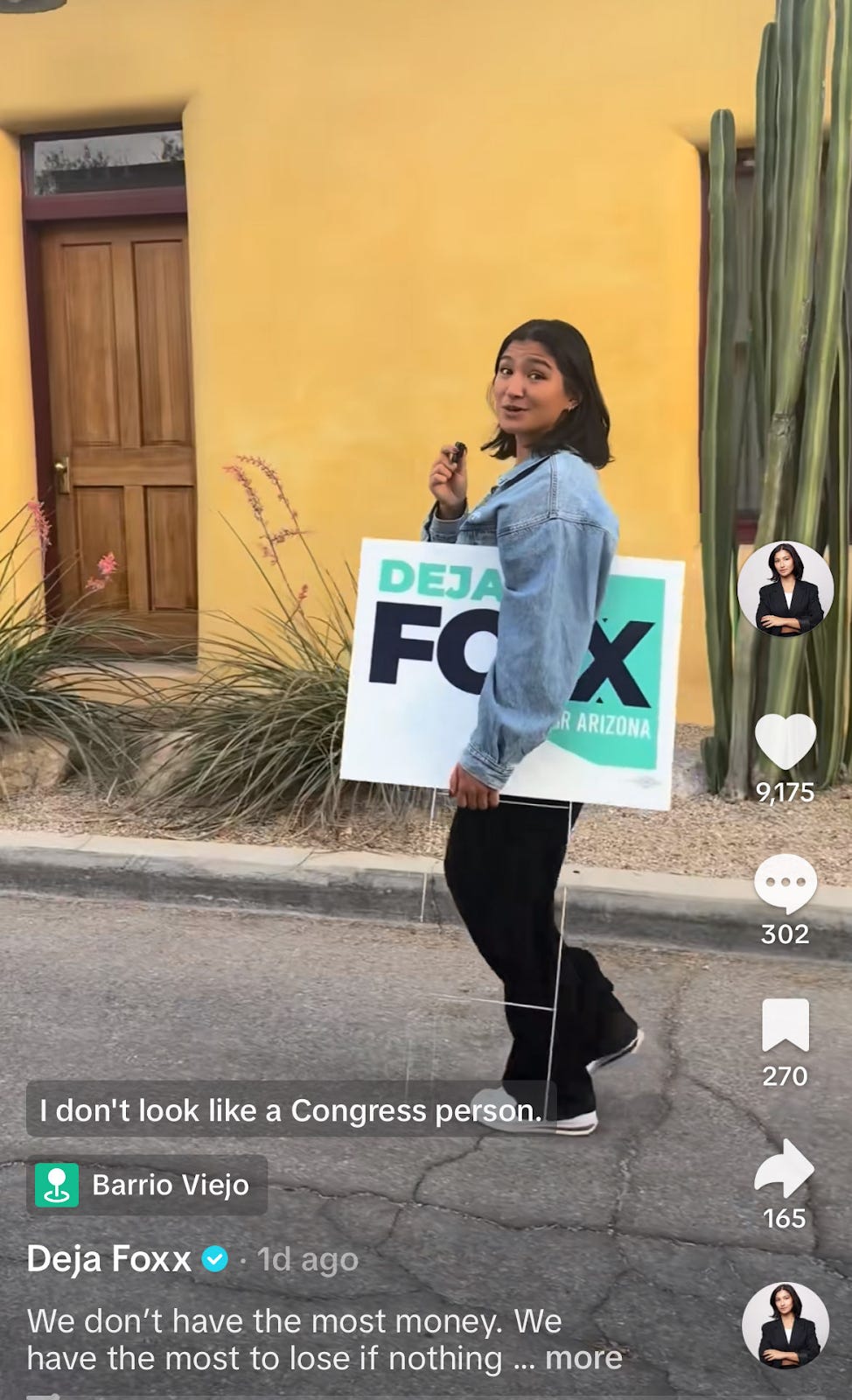
Deja Foxx is running for Congress in AZ-07 and utilizes platforms like TikTok to document her journey as a candidate, mobilize supporters, and to fundraise.
Stop burying organizing in generic "grassroots" language. Make it the hero of your fundraising story.
Instead of: "We're fighting for working families and need your support" Try: "Our volunteers are talking to everyday working Americans, having real conversations about how this policy affects people's lives. Last week, they talked to 312 voters—and 89 of them had never heard about this issue before."
Make organizing the main character, not a footnote.
While everyone else is sending urgent appeals about "midnight deadlines," you can send updates that actually matter. An actual behind the scenes look into what your donors are funding, and what a possible new donor can invest into.
This isn't just fundraising. It's proof your organization is actually doing something while others are just talking.
Donors are starving for substance. Give them organizing updates that include:
What your volunteers are hearing from voters
How organizing is changing the conversation in your community
Real stories from real people your organizers have reached
This is so important and we see this happen way too often. Don't just ask donors for money. Invite them into your organizing work. You’ll be surprised how many donors are enthusiastic about receiving an invite to do more! And the same goes for your volunteers who can also be donors.
Here are just some examples of what that can look like and how it cultivates returning donors in the process:
Organizing Briefings for Donors: Host regular virtual or in-person briefings where organizers share updates from the field, key wins, and challenges. Let donors hear directly from the team their contributions support.
Program Tours: Organize opportunities for major donors to visit key organizing hubs, meet local organizers, and see the work firsthand — think of it as an organizing version of a site visit.
Recognition in Organizing Spaces: Acknowledge top donors in your volunteer newsletters, field team briefings, or at community events to reinforce that they are part of the organizing team, not separate from it.
Victory Celebrations: Host special events celebrating major organizing milestones where donors and volunteers come together to recognize shared wins.
Organizing Leadership Circles: Create a leadership circle for donors who also commit to volunteering a certain number of hours each cycle. Give them special access to strategy calls or early looks at organizing priorities.
Don't treat organizing like a one-time expense. Make it clear this is ongoing infrastructure that needs sustained investment.
“The example of the 67-year-old retiree volunteering for the first time? Do you want to help more people like them?” That is a direct fundraising appeal tied to organizing. Tell real stories about your work and be more creative than sending incomprehensible metrics without context.
Be honest with your donors and supporters, and be consistent in telling your story, and you might be surprised what you see in return.
No posts
Comments
Nothing yet. Say the first thing.
Sign in to join the conversation.