
Hi! Let’s start this week with a review of the latest events from the world of startups and some stats (which surprised me to some extent).
Lately, I’ve been reading and hearing a lot about the exodus of founders and entrepreneurs from Silicon Valley.
As it turns out, these conversations are quite far from the truth: according to Crunchbase, the opposite is true. California’s share of US venture capital has grown to 63% (for context: until 2023, the share did not rise above 50%, and in 2024 it was 58%).
That’s how it is.
Anyway, here’s your latest startup recap:
😡 When One AI Failure Is Not Enough
💻 30 People Against All Big Tech
📰 + Quick News That Matters
💰 + Last Week in Funding
🛠️ + New Tools to Try
📚 + Weekend Picks
Subscribe to receive new posts and support my work.
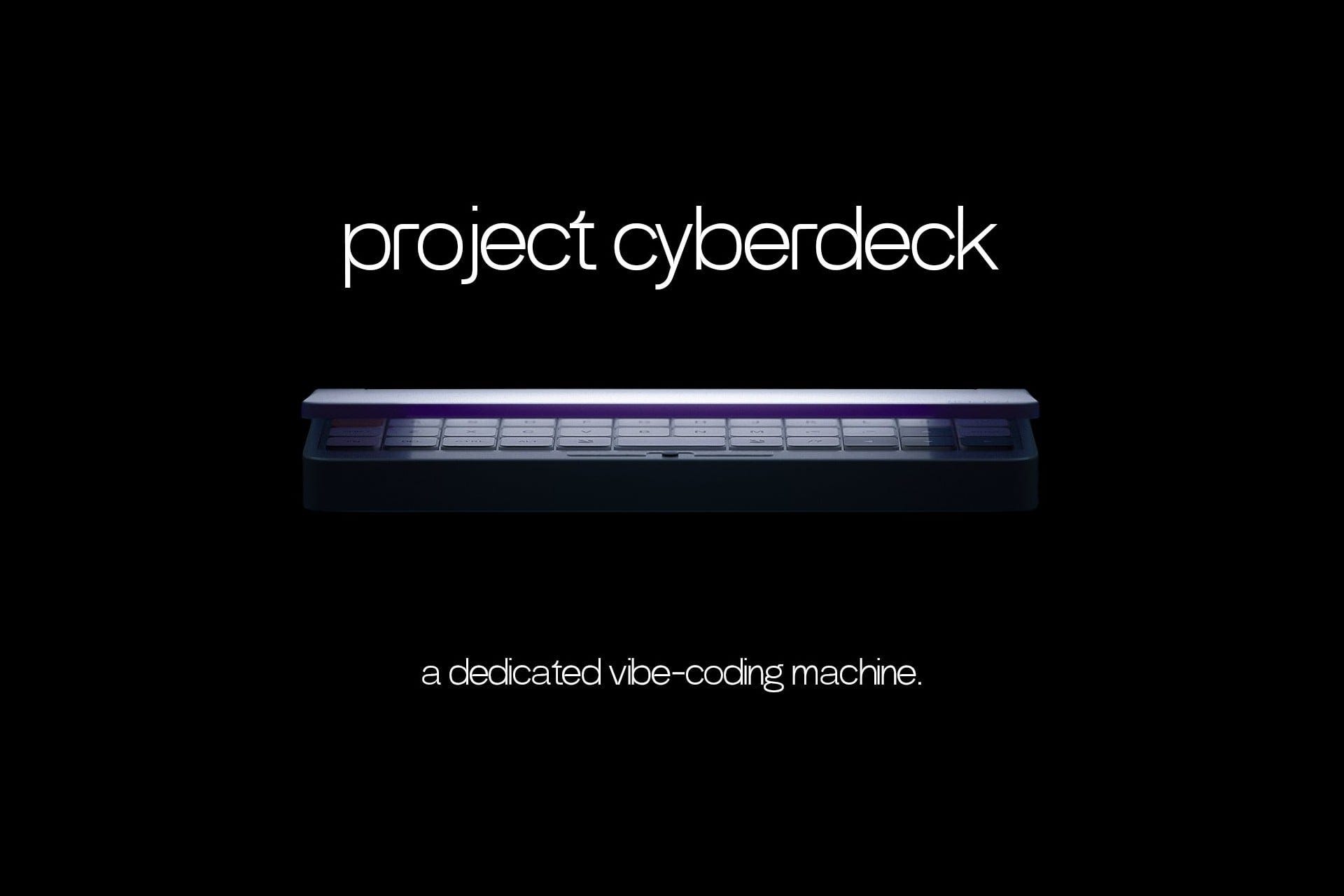
What’s Happening: Remember the startup Rabbit? These are the guys who made quite a splash in the spring of 2024. Back then, they entered the market with one of the first AI gadgets called Rabbit R1. It was a huge failure: for $200, buyers got a device with a chatbot and the hardware of an outdated Android smartphone.
Now, they are back with a new idea. The startup has announced Project Cyberdeck. It is a “dedicated vibe-coding machine” designed to create applications without coding skills. According to the developers, Cyberdeck will be equipped with its own AI agents and various tools, such as Claude Code.
The Context: Despite the high-profile failure of Rabbit R1 and its direct competitor Humane AI Pin, many startups continue to try to bring AI gadgets to the mass consumer. Perhaps the most anticipated device in this field is OpenAI’s mysterious product. According to Axios, we will learn more about it later this year.
What’s Happening: Arcee AI, a 30-person startup, published an open-source foundation model and says it can compete with the latest top-tier releases from major labs. The model comes with an Apache license, which allows commercial use and makes it straightforward for teams to build on top of it. Arcee presents the release as a direct attempt to put a serious alternative on the table next to the models controlled by the biggest players.
The Context: The interesting part is the challenge: a small team claims it can stand in the same arena as OpenAI, Google, Meta, and other labs that define what “default” AI looks like for most companies. In the future, this open release can shift buying decisions, because it gives startups more room to choose how they deploy, what they fine-tune, and what they keep in-house. It also becomes a negotiating lever: even if you still use closed APIs, the presence of a strong open option can change pricing and terms in practice. the startup says.
The Context Loop is a free newsletter.
If you like what I do, you can support me through a donation.
Google has unveiled Project Genie: the company’s new AI product is a platform for generating interactive worlds based on text prompts. Essentially, you can now generate a 3D game in a matter of seconds. However, the main limitation is that sessions are limited to just 60 seconds.
Learn more here: Google Deep Mind.
Demand for Sora 2 is Gradually Falling: Either people got tired of AI slop, or OpenAI is not supporting the video generation service well enough. The app’s installs and spending have cooled after the initial spike. Appfigures data shows installs fell 32% month-over-month in December, then 45% month-over-month in January to about 1.2M. The same tracking also shows consumer spending down 32% month-over-month as of January.
Apple Has Acquired Israeli Audio AI Startup Q.ai: Reuters says the purchase price was not disclosed, and that Q.ai focuses on audio-focused machine learning, including tech that helps devices interpret whispered speech and improve audio in noisy environments. The report adds that Q.ai’s team (about 100 people) will join Apple.
OpenAI Wants to Become the First Big AI Startup to IPO: The WSJ says the company is aiming for a Q4 IPO and has started early preparations with banks. It’s a race to be the first AI-native giant to test public markets while investor appetite for AI still holds. If this timeline becomes real, it will force clearer answers on revenue durability, compute costs, and how fast AI demand turns into predictable cash flow.
AI Agents Now Have Their Own Social Network: A new project from the CEO of Octane AI, Moltbook (moltbook.com), has attracted a lot of attention from users on X, Reddit, and other platforms. The founder used AI Clawd Clawderberg to create a social network originally intended for AI agents.

According to OpenAI co-founder Ilya Sutskever, it is currently one of the most interesting places on the internet.
There weren’t many deals last week, but I did find a few interesting ones. Of course, they are all related to AI startups. Without those two coveted letters, it’s impossible to attract investors, right?
CVector closed a $5M seed round led by Powerhouse Ventures to build an “industrial nervous system” that links plant operations (like valve changes) to real economic impact, with early customers in utilities, manufacturing, and chemicals.
Brickanta closed an $8M seed round led by Northzone to bring agentic AI into pre-construction planning (bid analysis, cost estimation, procurement) using real project data and industry standards.
Risotto raised a $10M seed led by Bonfire Ventures to automate help desk tickets by sitting between systems like Jira and the internal tooling needed to resolve issues, and says it automated 60% of support tickets in a deployment with Gusto.
Share this post if you like it!
Here’s what caught my eye on Product Hunt over the past week.

Pandada AI - Turns CSV/PDF/Excel files into structured reports and slides you can export.
Leapility - Lets you write repeatable workflows as “playbooks” and run them across tools and sources.
AutoSend - Email platform for transactional and marketing sends with a developer-friendly setup.
Kalendar.work - A Calendly-style scheduler with customizable branding and no per-seat limits.
Cue - One dashboard to draft and schedule posts across multiple platforms with timing suggestions.
Change the Game Before the Game Changes You – Garry Tan
How SAP’s CEO Is Remaking the Tech Giant for the AI Era – WSJ’s Bold Names
Meet the new European unicorns of 2026 – TechCrunch
Comments
Nothing yet. Say the first thing.
Sign in to join the conversation.