
Hi! And Happy New Year!
Typically, the end of one year and the beginning of another are marked by a lull among startups and large companies. But we live in an era when there is no time for breaks. So even between December 29 and January 5, there were several exciting topics to discuss.
So, let’s talk about them. Here’s your latest recap:
💼 Meta Bets $2B on Manus
👩💻 Twitter & Pinterest Founders Try Social Again
🔏 Face ID Team Goes Robotics
📰 + Quick News That Matters
🛠️ + New Tools to Try
📚 + Weekend Picks
Subscribe to receive new posts and support my work.
What’s Happening: Meta ended 2025 with a major acquisition of an AI startup. According to the WSJ, the company acquired Manus for more than $2 billion. Both parties later confirmed the deal.
Manus was one of the most talked-about projects in the first half of last year. The startup appeared in public in early March with a bold statement: its devs claimed to have developed an agent that surpassed ChatGPT’s Deep Research. And although the hype around Manus has died down over time, it managed to raise $85M and attract millions of users around the world.
In December, Manus also announced that it had achieved ARR of $100M.
The Context: The purchase of Manus is another step by Meta in its attempts to gain a foothold in the artificial intelligence market. Last year, it allocated more than $64B in capital expenditures, invested $14.3M in Scale AI, and engaged in aggressive headhunting of top managers from other startups.
In particular, according to Wired, Meta offered one researcher from Thinking Machines Lab (a startup founded by former OpenAI CTO Mira Murati) $1B (!).
As for Manus, I was lucky enough to be one of the first testers of this agent when it was still in closed beta. And in my opinion, its creators weren’t even exaggerating: at the time of release, it worked better than Deep Research from OpenAI.
In addition, my recent experience with this platform has shown that Manus is better at generating presentations and diagrams. So, if you missed it last spring, I recommend taking a look. It’s a great tool.
You can find a more detailed review of Manus that I wrote in the Creators’ AI newsletter. Follow this link.

What’s Happening: Biz Stone (Twitter) and Evan Sharp (Pinterest) are back with a new “anti-social media” social product: Tangle, an invite-only app from their startup West Co. The app nudges users every morning with a simple prompt, then lets friends share goals, support each other, and reflect — more journaling-meets-accountability than feed-meets-dopamine.
West Co was founded in 2023 and has raised about $29M, with Spark Capital leading the seed, according to reporting based on filings and job listings. Stone has also said the current version is an early test and may change a lot before any wider launch.
The Context: Rebuilding “social, but nicer” has become a recurring founder sequel, and the genre isn’t exactly known for happy endings. Clubhouse rode the pandemic wave to a funding round valuing it at $4B (2021), then later announced layoffs of just over half its staff as it “reset” the company.
And if you want a cleaner “Twitter alternative” example: Post News (a16z-backed, news-focused microblogging service that mixed a Twitter-style timeline with pay-per-article publisher access) shut down in April 2024, about a year and a half after launching in beta.
Fairness check: it’s not all doom. Bluesky has managed to stick around and scale into a real network, with reporting putting it at roughly 40M users by late 2025. So, worth waiting to see whether Tangle becomes a durable habit or another well-funded experiment.
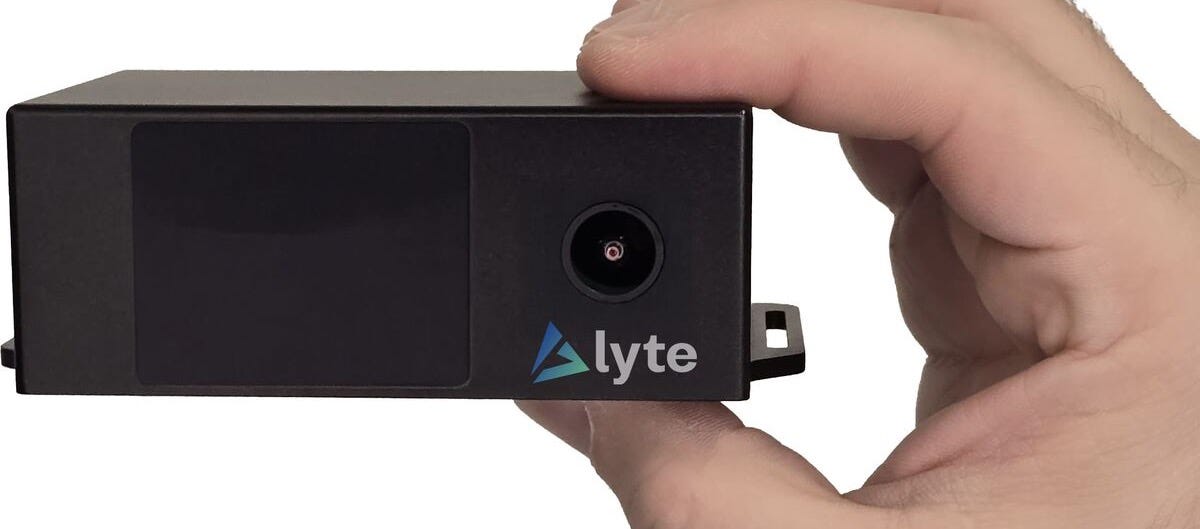
What’s Happening: Lyte, a Mountain View-based robotics startup, founded in 2021 by Alexander Shpunt, Arman Hajati, and Yuval Gerson (all alumni of Apple’s Face ID engineering team) has come out of stealth. The company says it’s building a kind of “visual brain” that helps robots perceive the world more reliably, so they can navigate and operate more safely outside carefully controlled environments.
Lyte has raised about $107M to date, including backing from Fidelity Management & Research (among other investors).
The Context: The pitch is straightforward: before robots can do useful work, they need to stop acting surprised by basic reality. Better perception is one of the few “unsexy” layers that actually compounds, whether you’re building warehouse bots, delivery robots, or humanoids that have to handle messy edge cases.
Lyte’s founding story also reads like a cheat code. Shpunt previously co-founded PrimeSense, the 3D sensing company Apple acquired in 2013, and that lineage matters here because modern robot perception is basically a long argument about depth, occlusion, and what’s “really” in front of you.
If Lyte can turn that expertise into something other robotics teams can reliably ship with, it could end up being infrastructure. At least that’s how I feel.
The Context Loop is a free newsletter.
If you like what I do, you can support me through a donation.
Microsoft’s “cognitive amplifier” framing got people arguing when Satya Nadella described AI as a work “amplifier” and urged readers to move past the “slop vs sophistication” debate. The phrase turned into a proxy fight over whether current AI tools improve everyday work (or just scale mediocre output).
Grok’s image features triggered another safety blowup after examples circulated on X showing it could generate sexualized images upon user request. xAI acknowledged safeguard lapses and said fixes were coming.
As usual, it reignited the “freedom vs. safety-by-default” argument for models embedded in social platforms.
Antler raised a new $160M U.S.-focused fund after making 400+ investments in 2025. The firm’s bet is volume + filtering: small early checks across a huge funnel, then doubling down on the few that show traction, with a target of roughly 500 investments in 2026.
OpenAI set a stock-compensation benchmark, with an estimated ~$1.5M average in stock-based pay per employee across roughly 4,000 staff. The package is framed as a retention move in an overheated AI talent market—at the cost of heavy dilution and a bigger expense base.
Share this post if you like it!
Opttab — A app for managing your presence in AI search. Useful if you care about how ChatGPT/Gemini/Perplexity describe your brand and want something closer to “analytics + knobs,” not vibes.
Scaloom AI — A tool for Reddit that helps founders safely promote their projects. If you don’t want to spend too much time marketing on a single platform, give it a try.
MiroMiro — Copy any website’s design & assets in one click. A fast way to audit how a site is built visually (tokens, spacing, components) when you’re iterating on a landing page.
Bookmark Assistant — Sync Chrome bookmarks to Notion with rich metadata. It turns “I saved it somewhere” into a searchable Notion library that doesn’t rot immediately.
Dopamine Expert: Short Form Videos Are Frying Your Brain! This Is A Dopamine Disaster! — The Diary of CEO
Meet the new tech laws of 2026 — The Verge
The dumbest things that happened in tech this year — TechCrunch
AI-driven inflation is 2026’s most overlooked risk, investors say — Reuters
Comments
Nothing yet. Say the first thing.
Sign in to join the conversation.