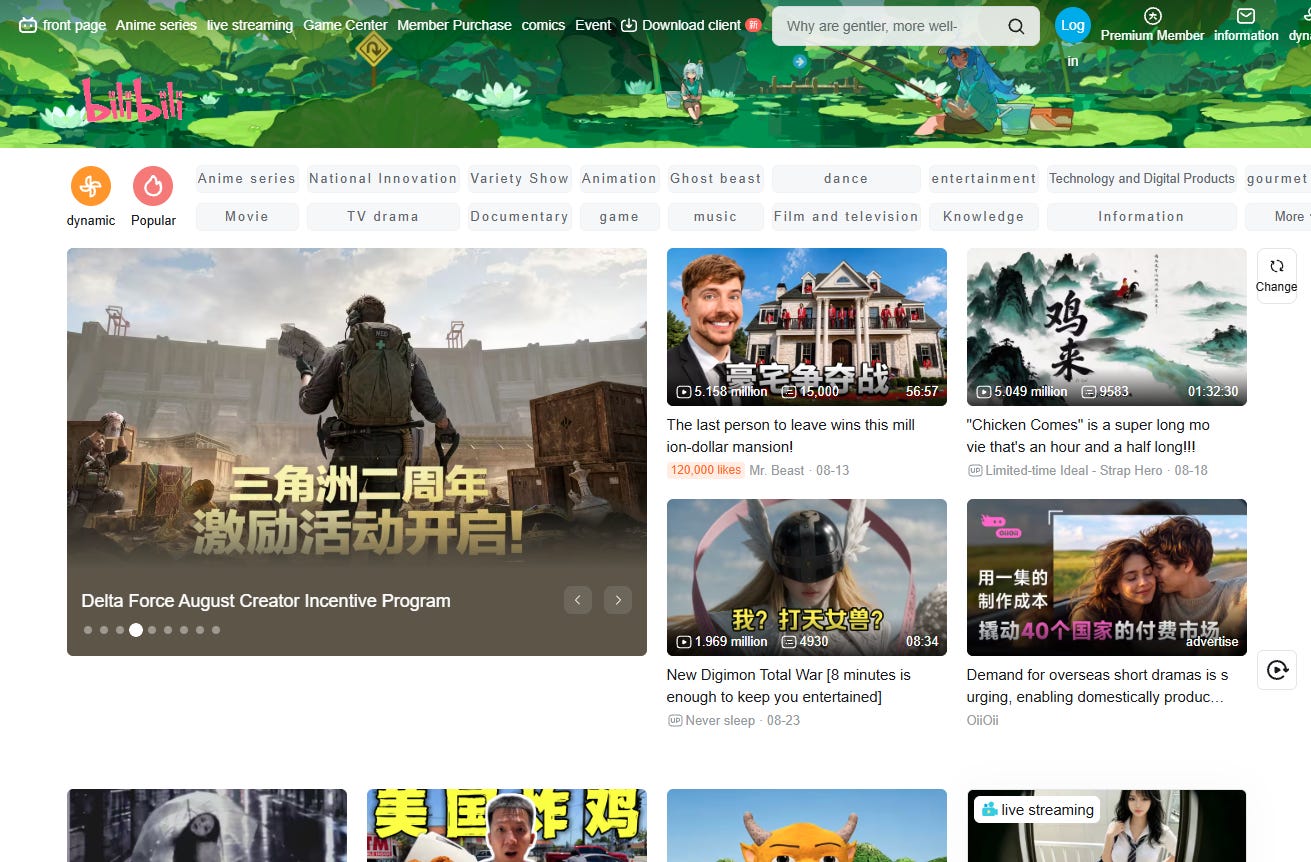
Bilibili, a hip fun YouTube rival from China, is ramping up efforts to take on YouTube. If it “does a TikTok”, YouTube will have to up its game to keep creators from following the money.
Book publishers are tying themselves in knots over alleged uses of AI in works. But what happens if the detectors are wrong, or, perhaps worse, the AI stuff is better?
Attempts to enforce the provenance and use of AI-generated content may inadvertently entrench the most successful of those who stole it in the first place.
Western AI's Big Three are making the same mistakes Detroit's Big Three made in the 1970s. Chinese open-weight models are cheaper, getting better, and hard to beat. Where does that leave us users?
Harry Clarkson-Bennett writes that the declining media interest of younger audiences is down to changed habits rather than the effect of AI. A new Emerging Audience Index reveals all.
Two events this week could have long term consequences for how the future of AI and content thievery plays out. As well as being very entertaining to watch unfold.
Media leaders from a wide background gathered behind closed doors in London to talk about fightbacks against the worst of tech and AI. Contrary to what you may think, the mood wasn't doom and gloom.