
Recently I posted an article challenging authors to call and pitch their books to different types of retailers that were suited for their titles and evaluate the response.
Didn’t do it?
It’s not too late!
But before you jump on that challenge, consider what types of museum stores would provide opportunities for books like yours. Notice I said what, not if. Museum stores offer retail real estate for all kinds of books. Period. Fiction. Nonfiction. Serious. Fun. Adult titles. Children’s books. Traditionally published. Independently published.
My most recent visit to a museum store—the one anchoring the Michigan Maritme Museum (during the South Haven National Blueberry Festival)—revealed pretty much all authors need to know about museum gift shops.
If you know how to read them.
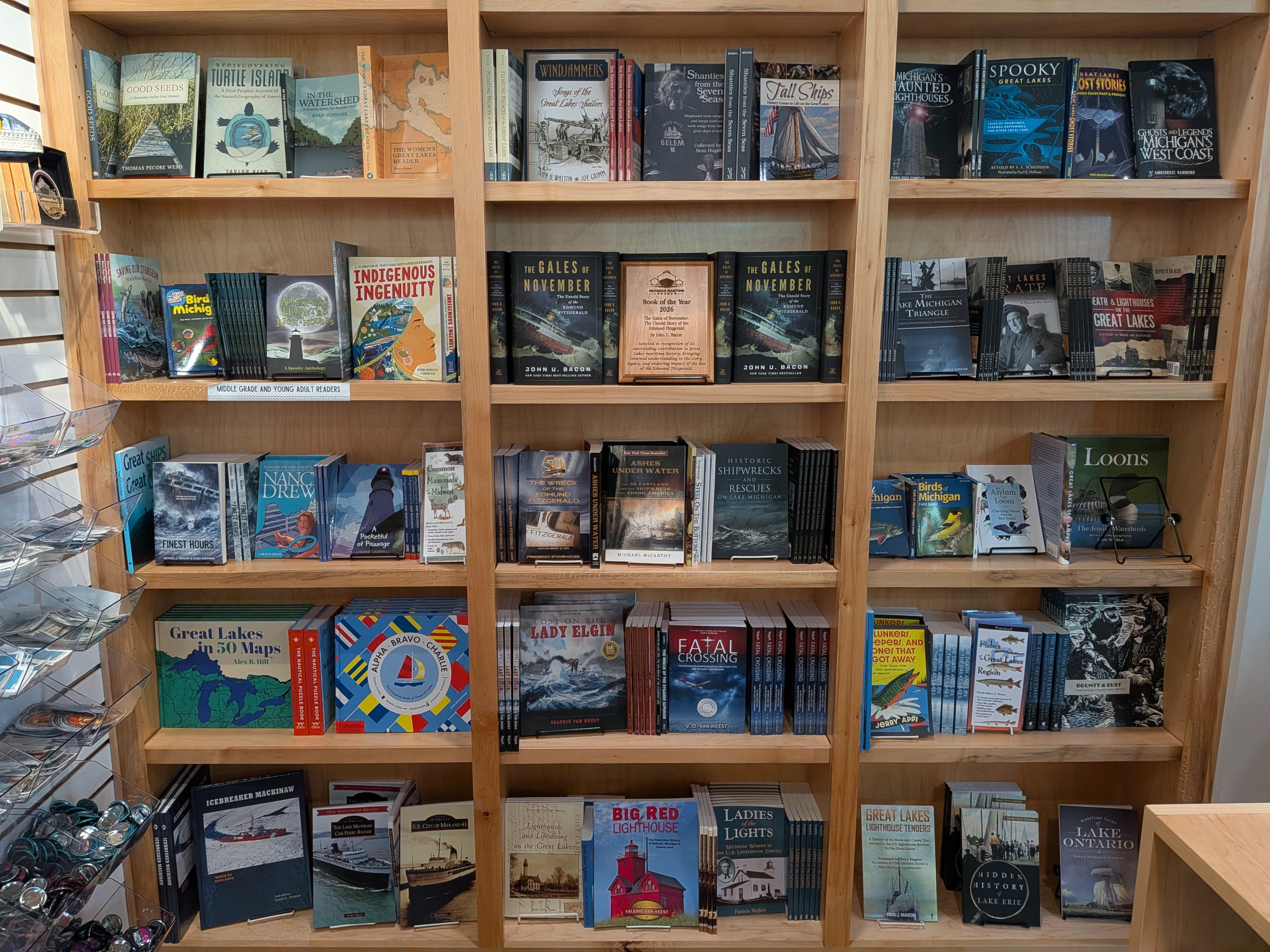
First, look at the square footage of this small shop devoted to books. One very large case for adult books (above) and one smaller case and a graduated display stand for kids’ titles (below).
No store can afford to commit this much space to books unless books sell. (My experience as a publisher bears this out—our books always sold briskly at the shops in museums small and large; local, regional, and thematic.) This tells us that museum stores sell books because museum goers buy books. They like books and read books and they want their kids and grandkids to have and read books. Those customers engage the focus of any museum from multiple angles, and that’s reflected in the selection.
So, next: look at the selections in these photos. These are well-curated offerings on a wide range of topics, from a wide range of approaches, and a wide range of publishers, traditional and indie. There are about 80 adult titles and 60 children’s titles. There’s even a relevant Nancy Drew mystery.
Let’s go back to the museum’s focal points: Michigan. Martime. It’s an archetypal museum formula: (Geographically Situated + Theme) multipled by all the interpretations of each, meaning they have regional, military, and natural history; pirate, ghost, animal, and holiday lore; adventures, heroism, and exploration; various sciences at a spectrum of depths; maps; flags; lighthouses; weather; shipwrecks; indigenous wisdom; birding; and all the waterways and waterway vessels.
Your books have a place—guaranteed—in the gift shops of some or many museums.
Exploit your regions and niches.
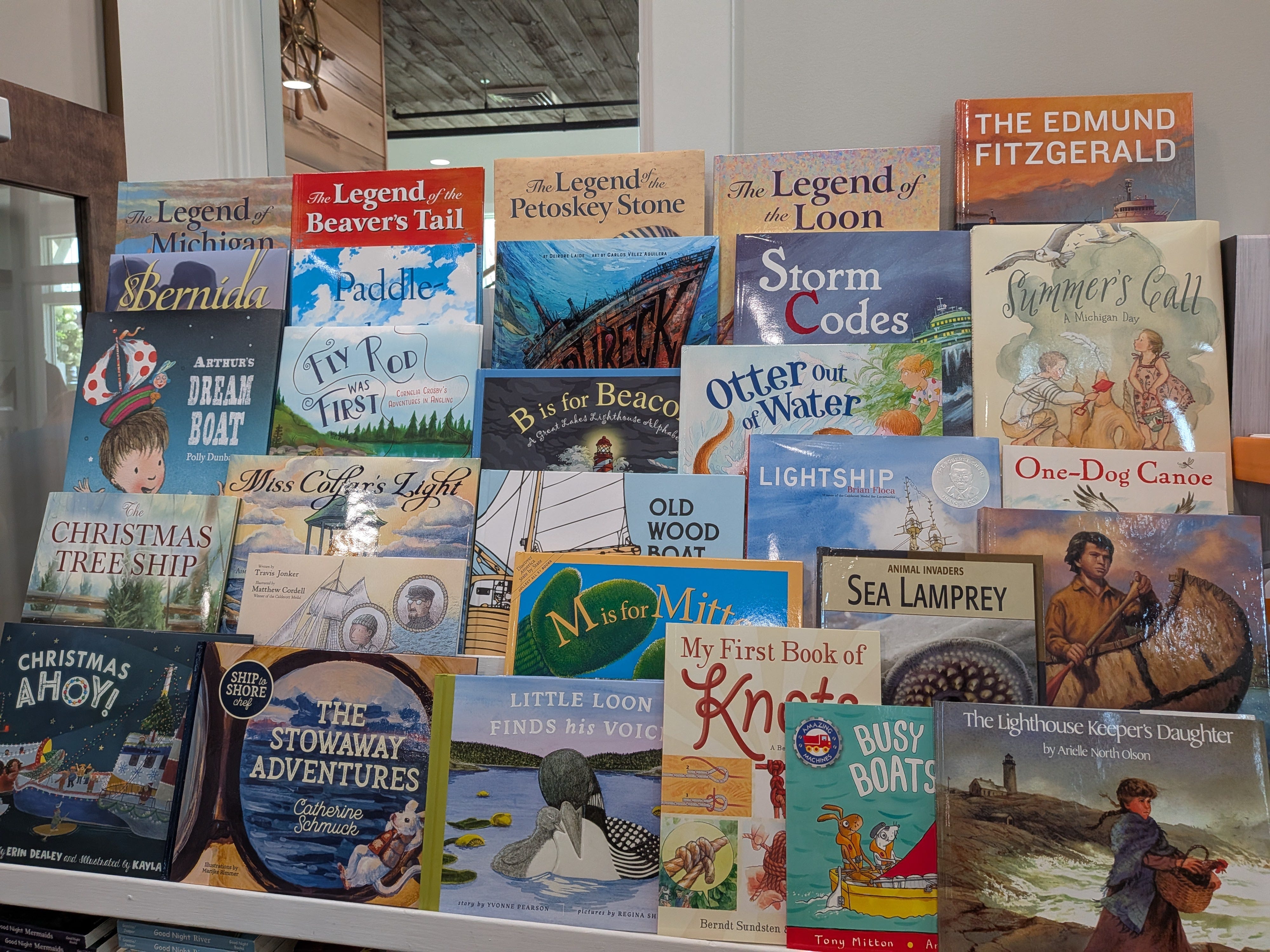
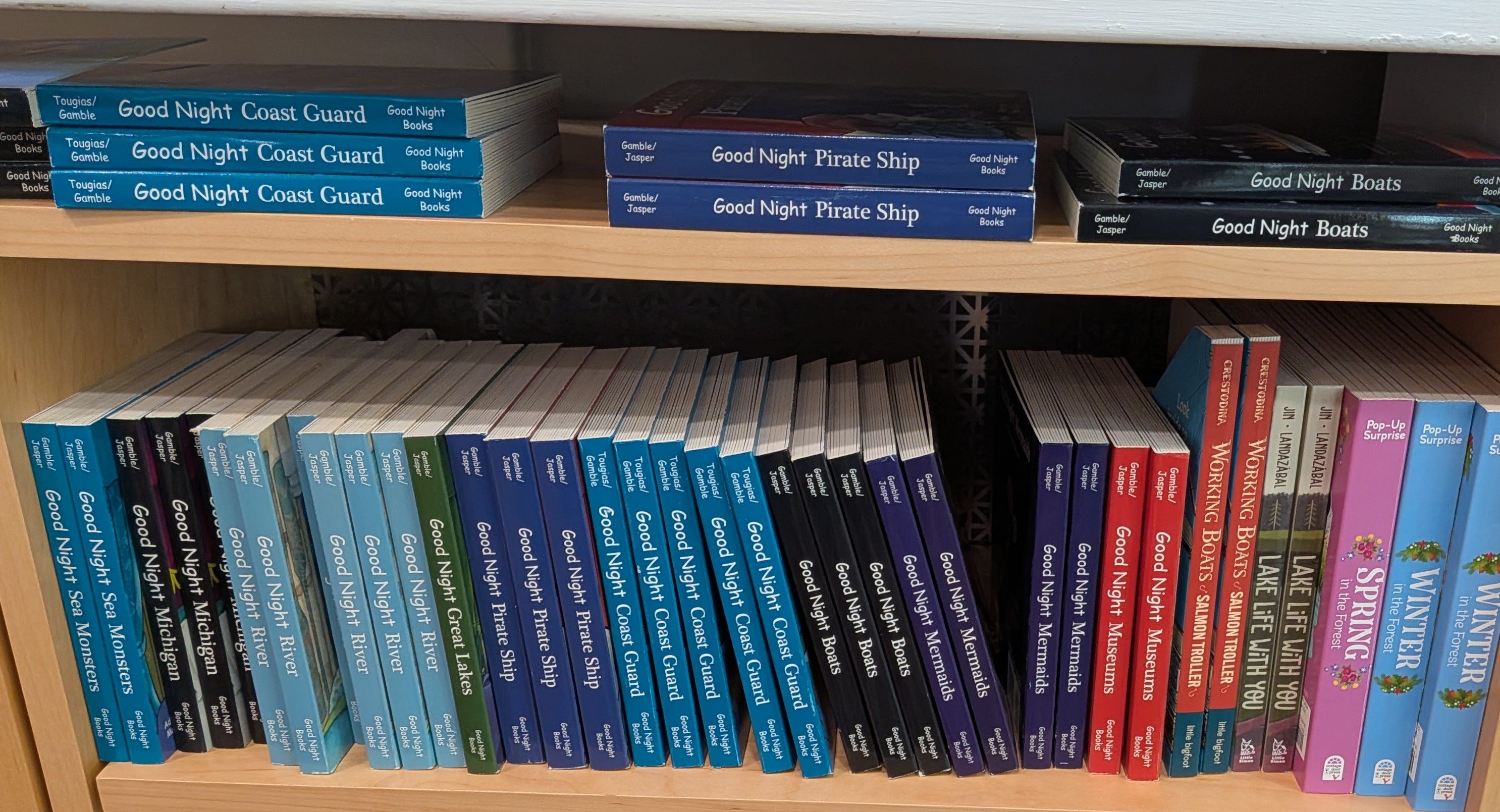
The same kind of publishing, topical, and approach diversity is visible in the collection of children’s books for sale, including all fitting installments of the Good Night Moon board book series: Boats, Michigan, Greak Lakes, Sea Monsters, Mermaids, Museums, River, Cosat Guard, and Pirate Ship.
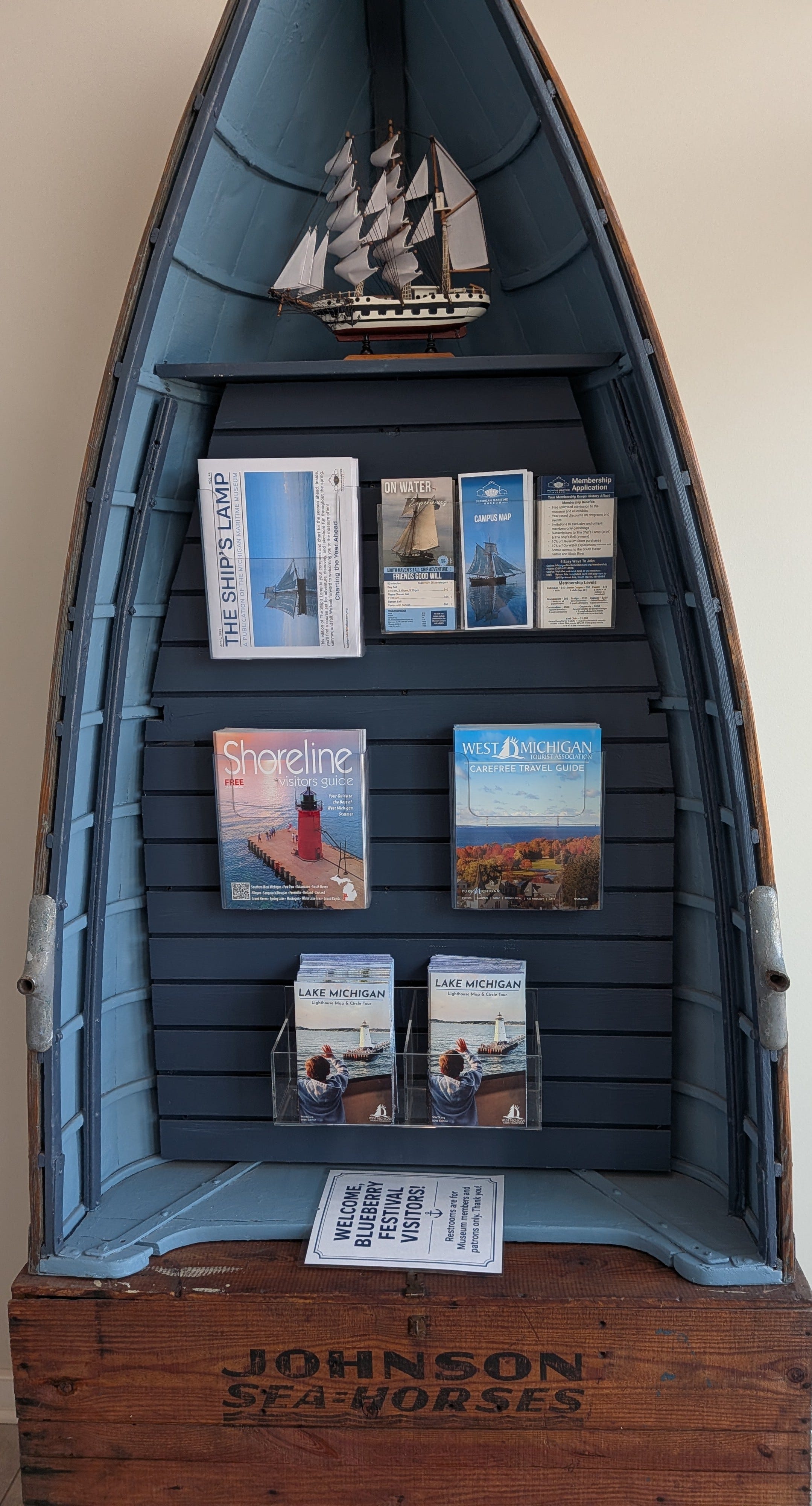
The museum theme extends to the shape and style of its display cases, which of course makes me think: Do your books have such a strong theme or hook, that you can offer museums and other specialty outlets especially-shaped or designed racks or display units?
Offering a free rack or display case can: 1) be an additional sales perk for your customer, 2) help sell a minimum number of units (6–12 or whatever fits in the display!), 3) encourage re-orders (they already own the proprietary rack), and 4) increase your book’s visibility in the retail setting.
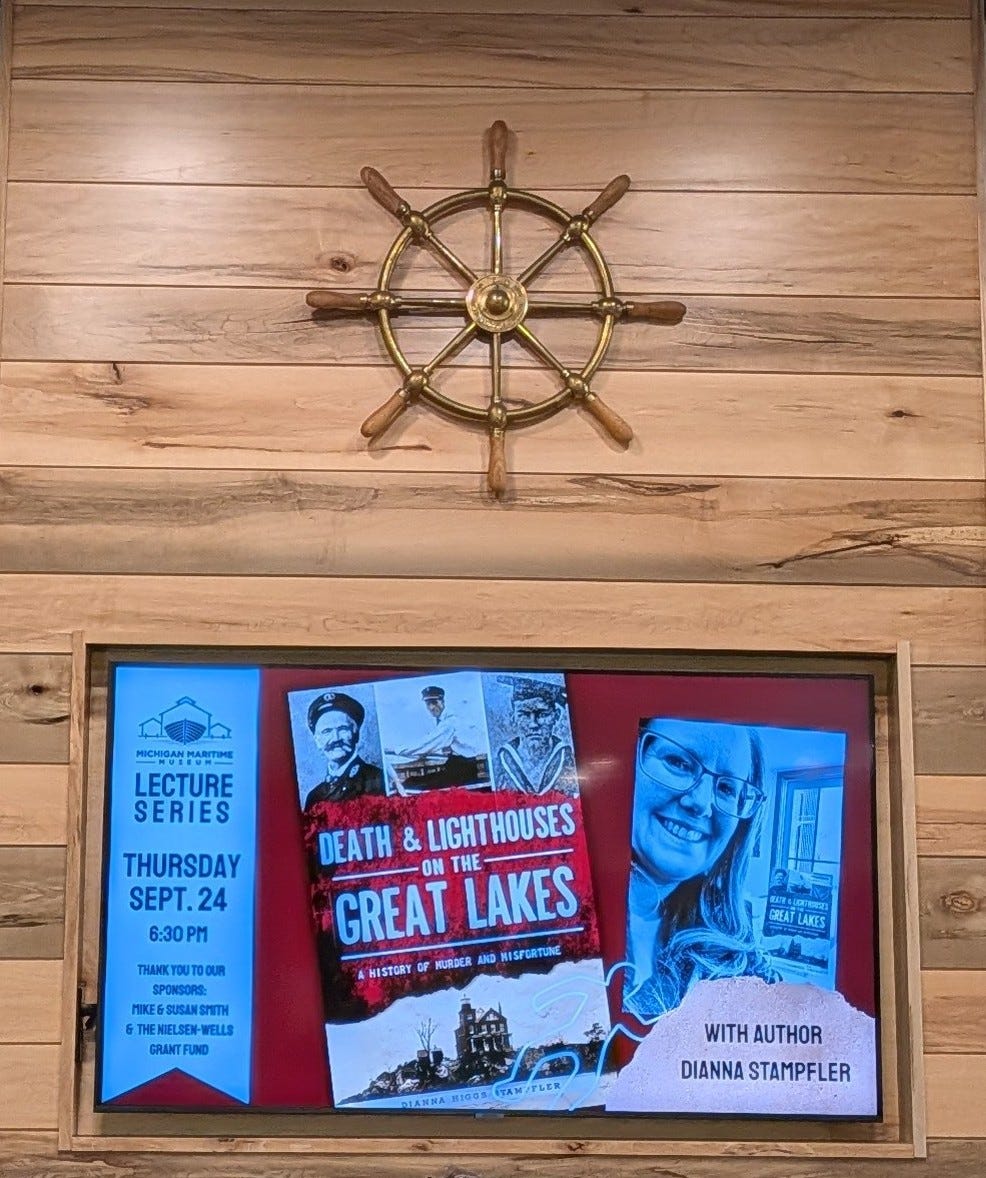
Finally, I caught this promo on a slideshow playing on repeat behind the ticket counter.
How to read this slide?
Author events.
Nearly every museum has regular programming, which opens up every museum whose store is a match for your books to your author event pitches. Think: Lectures, booksignings, Q&As, slideshows, workshops, tours, panels, co-events with other authors or experts.
Don’t forget about the rich possibilities of regional and niche publications for promoting your titles. Read or re-read these articles and put the pieces of an ongoing regional/niche promotional campaign for you, your books, and your author business into place today.
What types of museums are good fits for your books?
Subscribe for $10/month or $97/year. Get weekly strategic advice from my 32 years of building profitable publishing businesses—the same expertise authors and indie publishers pay me $5–$10K for in consulting. The mindsets, partnerships, and revenue models that create sustainable author income, delivered multiple times to your inbox every week.
Comments
Nothing yet. Say the first thing.
Sign in to join the conversation.