
Pravy Jha reads “Kasheer, After”
0:00
-13:00
❊
Editor’s Note: Kasheer is the Kashmiri name for Kashmir, a Himalayan region held by India and long claimed by Pakistan. Its Hindu minority, the Kashmiri Pandits, had lived in the Valley for centuries. In January 1990, as an armed insurgency rose against Indian rule, targeted killings and threats drove almost the entire Pandit community out of the Valley within weeks. Most fled to camps in Jammu; decades later, many have never returned. Among the killings that defined that winter was that of Girija Tickoo, a young Pandit woman abducted and murdered after attempting to collect her salary. This essay moves through the Pandit exodus of Kashmir, and through what could not be left behind.
❊
Author’s Note: This essay is not a record of my own leaving. I did not live through the exodus of the Kashmiri Pandits; I came to it slowly, through reading, through interviews and first-person accounts, through community archives, and through conversations with people who carry the memory themselves. Much of what is here was given to me: the green trunk and the folded winter clothes by a friend whose family left Habba Kadal, other details by voices I found in testimony and reporting. I have tried to hold what was shared with me without claiming it as mine.
❊ ❊ ❊
He did not begin with the night.
When I asked him about leaving, he went instead to the trunk under his bed, as though that was the only part that had stayed intact enough to touch without it coming apart. It was iron, painted a green that had dulled into something closer to ash along the edges, the paint worn thin where hands had met it over years. His mother kept winter things in it. Pherans folded thick, shawls layered one over the other, camphor tucked into the corners so the smell would hold through the damp months.
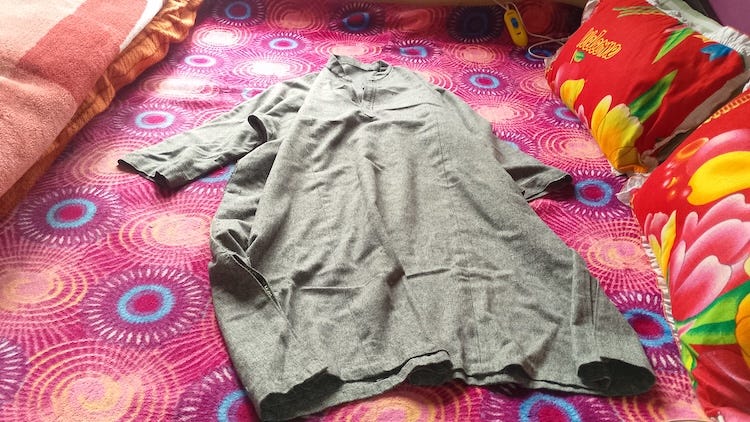
She opened it that morning and did not reach in immediately. He said she stood there longer than she needed to, looking without touching, as if the act of choosing anything at all would make the moment hold. Then she took out one sweater, only one, and closed the trunk.
After that she began to speak the same sentence, over and over. Her voice wasn’t loud or urgent, but its steadiness made it difficult to interrupt. They would be back before the real cold set in. It did not make sense to carry everything for a few days. Her repeated sentence felt the same each time. No one corrected her. They did not entirely believe her. But there are moments when contradiction becomes a kind of violence. It was easier to let the words stand than to break them.
Comments
Nothing yet. Say the first thing.
Sign in to join the conversation.