
With the presence of pioneering global semiconductor giants such as Intel, AMD and Qualcomm’s R&D centers, India has been at the forefront of innovation and design in the semiconductor space. Today, India makes up 5% of the global demand for chips, a figure expected to double by 2026, driven by greater adoption of smartphones, consumer appliances, and new trends like self-driving cars,
However, until initiatives such as the PLI scheme in 2021, India’s ambitious plans for chip manufacturing had not translated into tangible outcomes. So what changed? In this edition of the Conquest Communiqué, let us delve deeper into how India’s semiconductor efforts have progressed over the years.
India's semiconductor efforts began in the 1980s with the establishment of the Semiconductor Complex Limited (SCL) in Mohali, Punjab. Despite early challenges, SCL laid the foundation for the nation's semiconductor manufacturing ambitions. The 2000s also saw renewed efforts with the Special Incentive Package Scheme (SIPS) in 2007, aimed at attracting investments in the semiconductor sector, followed by the Modified Special Incentive Package Scheme (M-SIPS) in 2012, which provided further incentives for semiconductor fabrication units and electronic manufacturing clusters.
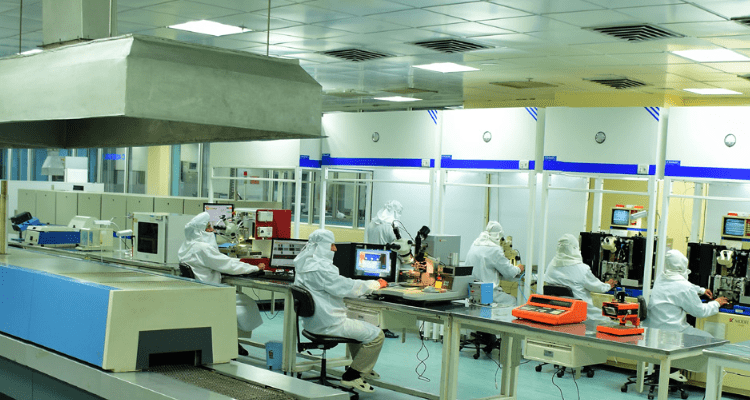
However, these initiatives had negligible impact. Even today, companies have large R&D centers in cities like Bangalore and Hyderabad that focus on designing chips for the global market. Yet India still struggled to attract semiconductor fabrication with little to no small-scale fabrication plants (fabs) due to various factors, including high investment risks, inadequate infrastructure, and a lack of skilled labor in the country. All this put India in a tough spot while competing with countries like China and Vietnam, which have been favorite destinations for global chip manufacturers due to better cost efficiency.
Semiconductors have a small freight-to-price ratio and a zero-custom duty regime under the Information Technology Agreement, of 1996. Therefore, the location of raw material or sales market is meaningless due to low transportation costs.
Another major reason why India has been unable to set up fabs is the inability and challenges in setting up Semiconductor Water Fabrication (FAB) units which provide Ultrapure Water to keep silicon wafers clean during fabrication and are thus essential for the fabrication process. There have been efforts in the past, with players like Hindustan Semiconductor Manufacturing Corporation (HSMC), IBM, and Tower Semiconductor from Israel, but these have been unsuccessful largely due to the erratic power supply in addition to the unavailability of pure water.
As a result of these hurdles, only high mm chips, which are less advanced are being produced in India right now, while the more advanced low mm chips have remained out of reach. However, this cannot continue as the investments required to produce them may often exceed the ballpark of $20 Billion, with no guarantee of outcome. India’s lag also puts it at a competitive disadvantage with countries like Taiwan (TSMC), South Korea (Samsung), and the United States (Intel) which already have a lead in advanced semiconductor manufacturing.
Recently, India’s renewed focus on the industry is gaining traction due to a combination of favorable government policies, global supply chain shifts, and strategic investments.
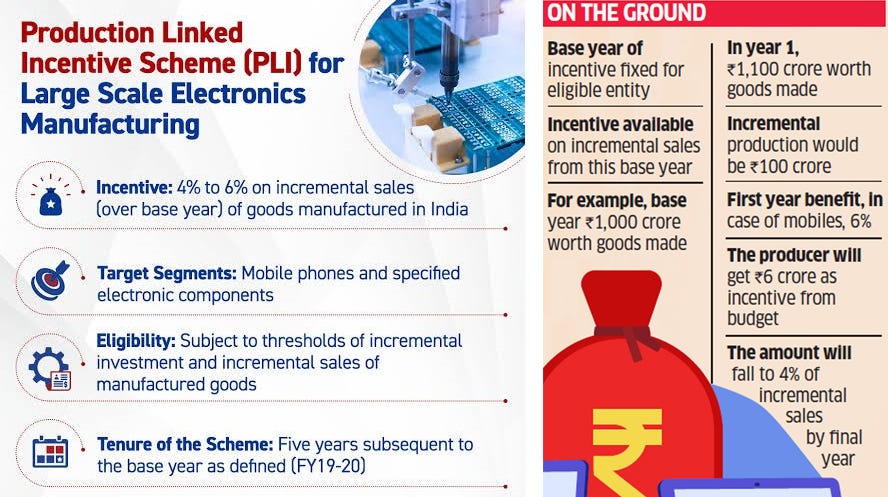
One of the prominent initiatives is the Production-Linked Incentive (PLI) Scheme for Semiconductors, launched in 2021 with an outlay of ₹76,000 crore (approximately $10 billion). PLI aims to reduce dependency on imports and boost local manufacturing. In September 2022, the Cabinet approved significant modifications through uniform fiscal support of 50% of the project cost for setting up fabs and capital expenditure for compound semiconductors, sensors, and packaging facilities.
Complementing the PLI Scheme is Design-Linked Incentive (DLI), which offers incentives to companies engaged in semiconductor design, aiming to support 100 domestic companies and facilitate the growth of over 20 companies with a turnover of more than ₹1500 crore in the next five years.
This National Policy on Electronics (NPE) 2019 is also in force for promoting domestic manufacturing, setting up fabs, and creating an ecosystem for electronic components. The NPE 2019 underscores the government’s holistic approach to industry development, ensuring that every aspect of the semiconductor supply chain is addressed.
In addition to these policies, the India Semiconductor Mission (ISM), announced in 2021, aims to build a strong semiconductor and display ecosystem. The ISM provides financial support to companies setting up fabs and display units, focuses on developing talent, and promotes research and development. By addressing the entire value chain, the ISM seeks to establish India as a global hub for semiconductor manufacturing and innovation.
Global supply chain shifts have also significantly impacted India's emergence in the semiconductor industry. The disruptions caused by the COVID-19 pandemic and geopolitical tensions between players such as China and the United States have led to a realignment of global supply chains, with many companies seeking to diversify their manufacturing bases. This shift has presented a unique opportunity for India to position itself as a reliable alternative for semiconductor manufacturing.
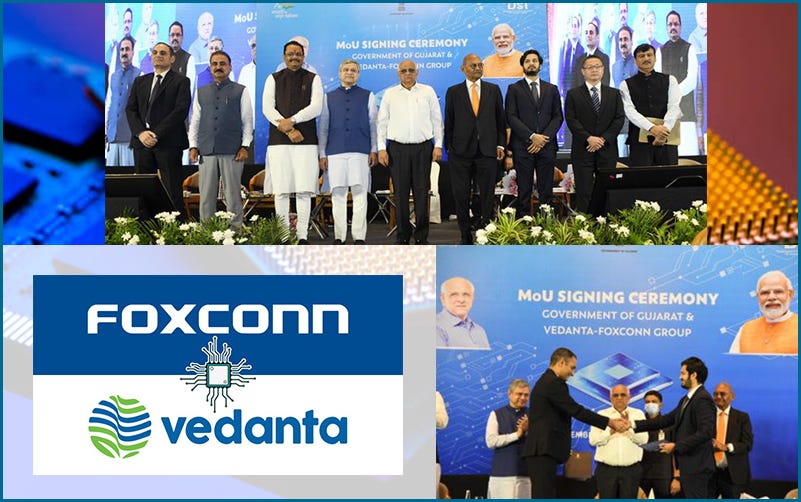
The impact of all these initiatives is already visible through several high-profile corporate efforts and collaborations shaping India’s semiconductor landscape. For instance, the Vedanta Venture, announced in February 2022, aims to set up a semiconductor manufacturing plant in Gujarat for which dedicated water supply and advanced purification systems would be provided to meet the stringent requirements of semiconductor manufacturing. This partnership leverages Vedanta's local market knowledge to build a robust ecosystem, with a planned investment of $19.5 billion in semiconductor and display manufacturing.
Additionally, Zoho Corporation has announced its foray into the semiconductor space, aiming to design and develop chips for its own products. By reducing dependency on foreign suppliers, Zoho plans to enhance its product offerings and has committed to investing Rs. 50,000 crore in building a semiconductor chip plant in India.
The Tata Group is also making significant strides in this sector. Tata Electronics, a subsidiary of the Tata Group, plans to set up a semiconductor manufacturing unit in Tamil Nadu. Furthermore, Tata has partnered with Taiwan’s Powerchip Semiconductor Manufacturing Corporation (PSMC) to fabricate 28 nm chips in Dholera, Gujarat. In Assam, Tata is setting up an OSAT facility, while in Sanand, Gujarat, Micron is establishing a semiconductor testing, marking, and packaging (ATMP) plant.
Another notable project is the ISMC Analog Fab, which plans to set up a fabrication unit in Karnataka in collaboration with Israel's Tower Semiconductor. With an investment of $3 billion, this facility aims to produce analog semiconductors used in automotive, industrial, and consumer electronics, thereby contributing to a diversified semiconductor manufacturing base in India. The Karnataka government is enhancing its power infrastructure to support the ISMC Analog Fab project.
This renewed focus on semiconductor manufacturing is not only domestic economic strategy, but also has significant geopolitical implications. Currently, the global semiconductor supply chain has been heavily dependent on a few key players, namely Taiwan (TSMC), South Korea (Samsung) and the United States (Intel) and the pandemic as well as geopolitical tensions between these semiconductor hubs and China have left the supply chain exposed, and vulnerable.
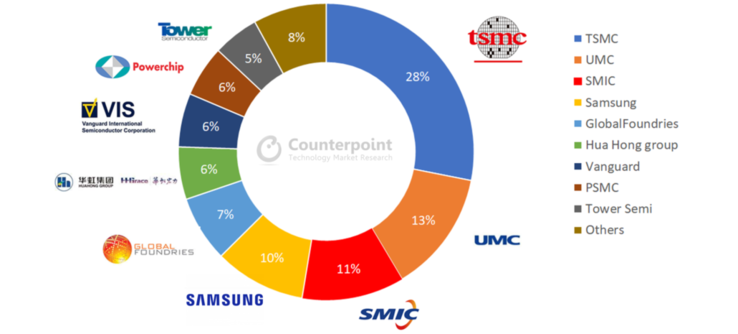
India’s emergence as a potential semiconductor manufacturing hub and its semiconductor capabilities will offer an alternative to the concentration of fabs in East Asia and alleviate some of these geopolitical pressures. This will help prevent risks associated with trade disputes and will ensure a much more resilient and robust supply chain in the long run.
Its strategic position in the Indo-Pacific region and improving ties with the USA have been instrumental in countering China’s dominance in the semiconductor industry. This collaboration allows India to leverage USA technology while also positioning itself as an alternative manufacturing hub for Americans that are looking to diversify their supply chains. All these efforts and initiatives will help addressing supply chain vulnerabilities, reduce reliance on China and Taiwan, as well as strengthen India’s position as a reliable manufacturing destination and a key player in the global semiconductor industry.
India is finally attracting considerable interest in semiconductor manufacturing. The 2024 Union Budget saw a 71% hike in funding for chip and electronics manufacturing. With major investments and collaborations, India's semiconductor industry is poised for significant growth.
The burgeoning semiconductor industry in India promises several substantial benefits. Firstly, the increase in local manufacturing will reduce India's dependency on imported semiconductors, improving supply chain resilience and reducing vulnerabilities exposed by global disruptions. Secondly, the industry's growth will spur job creation, with direct employment in semiconductor fabs and indirect jobs across the supply chain and supporting industries. This will have a multiplier effect on the economy, boosting income levels and contributing to GDP growth. This growth will not only meet the burgeoning domestic demand for semiconductors, driving economic growth, but will also put India at the forefront of the global semiconductor supply chain as a leader of the biotechnological innovation.
Comments
Nothing yet. Say the first thing.
Sign in to join the conversation.