
When I first went to Congress, I thought that if I worked hard enough, I could find a way to contribute to the passage of major legislation. To me, the problem was the incumbents, who found it easy to do nothing and blame their opponents. I still think that’s true, but it’s more of a symptom than a cause. A more significant cause for our stagnant politics is explained in a book I recently came across, which has the benefit of being both short and thorough:
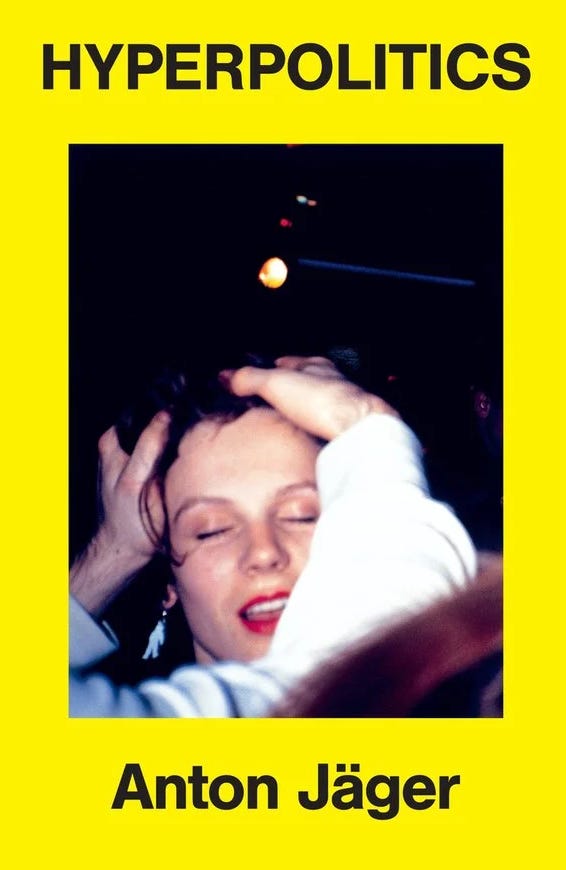
Hyperpolitics by Anton Jäger “is being devoured by the left” in Europe and the United States, but it should interest people across the spectrum. Jäger’s basic thesis is that we live in an era of high politicization — lots of people vote, there are mass protests, and politics seems to occupy more and more of our attention — but low institutionalization. By institutionalization he means “civic affiliation and membership,” drawing on the Putnam literature I mentioned last week.
Politics are “hyper” now because they’re always happening in our minds, but out there in the world, so little seems to be happening. By comparison, the era of “mass politics” following WWII featured both high politicization and high institutionalization (and I’d add, high accomplishment), and “post politics” in the 1990s was low on both. (Jäger would say that “accomplishment” in post-politics occurred outside of the democratic process, mostly at the level of unelected actors like central banks.)
Had I read this in 2018, I might have realized that the performance of the House of Representatives was being driven as much by changes in society as it was by the attitudes of its own members:
Comments
Nothing yet. Say the first thing.
Sign in to join the conversation.