
Hello! It’s been a while, hasn’t it? Again! I’m pretty sure I had a similar newsletter lapse around the same time last year. Effectively a newsletter hibernation of sorts, really, sluggishly lurching back into action now spring has arrived.
Anyway, there’s a lot to catch you up on, including a few months of Periodic Graphics in C&EN, a look at so-called “forever chemicals” and where to find them, and a collaboration with the University of Oxford’s Periodically podcast. Oh, and the small matter of me winning an American Chemical Society chemistry communication award!
You might recall that, in August, I shared that I had been selected as the 2025 winner of the American Chemical Society’s James T. Grady-James H. Stack Award for Interpreting Chemistry for the General Public. At the end of March, I flew to San Diego to the ACS Spring meeting for a glitzy award ceremony.
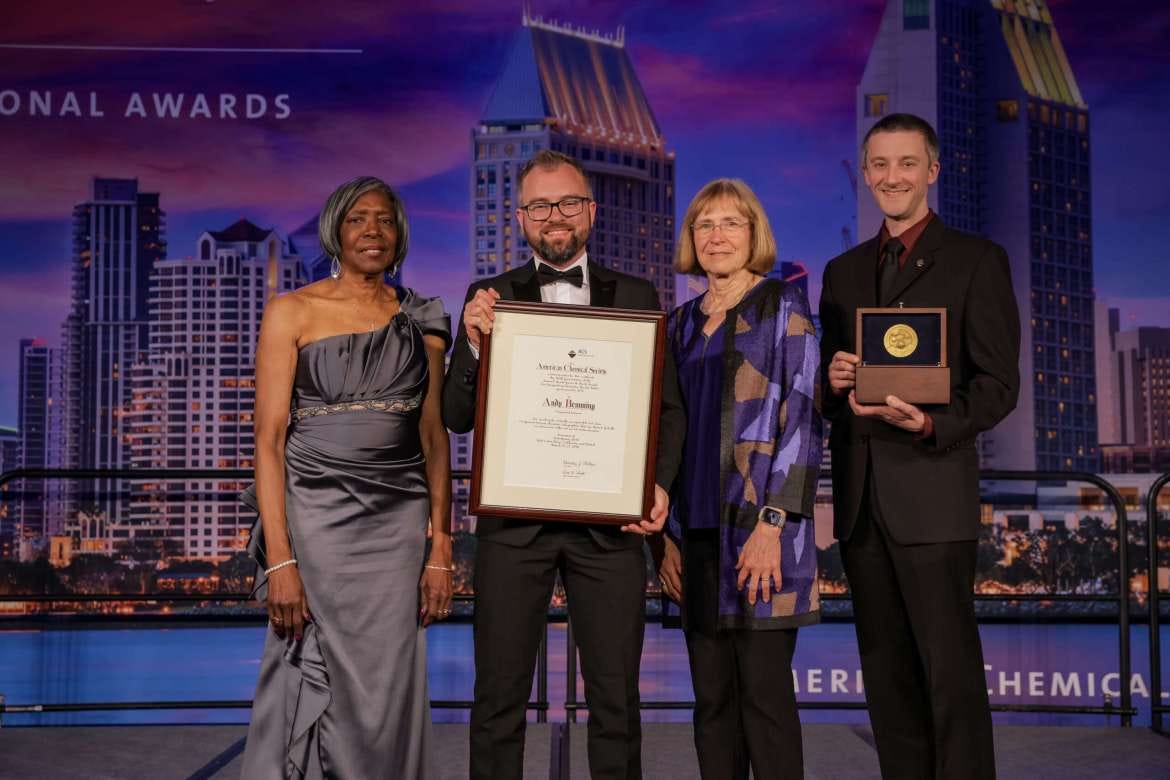
I already shared some personal reflections on receiving the award over on LinkedIn (which is, as we all know, the designated social space for professional navel-gazing), so I’ll spare you them here. However, I will take the opportunity to thank all of you who follow the graphics, share them, or use them in outreach and education. My reach and impact would be very limited without you all.
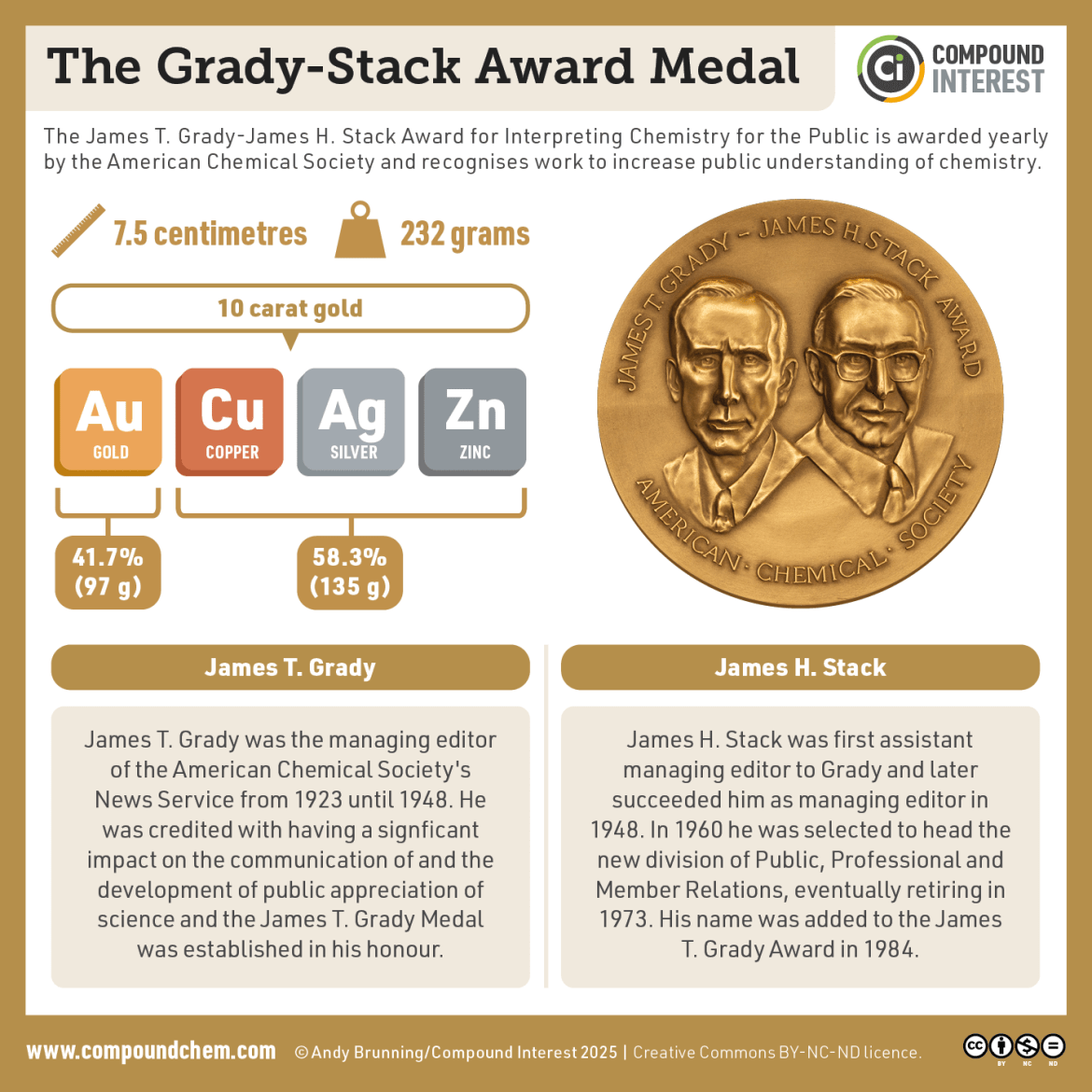
To mark winning the award, a graphic on the medal’s composition felt appropriate. I also took the time to dig into the C&EN archives to find out a little more about the two men the prize is named after. You can read more about their lives in the accompanying post.
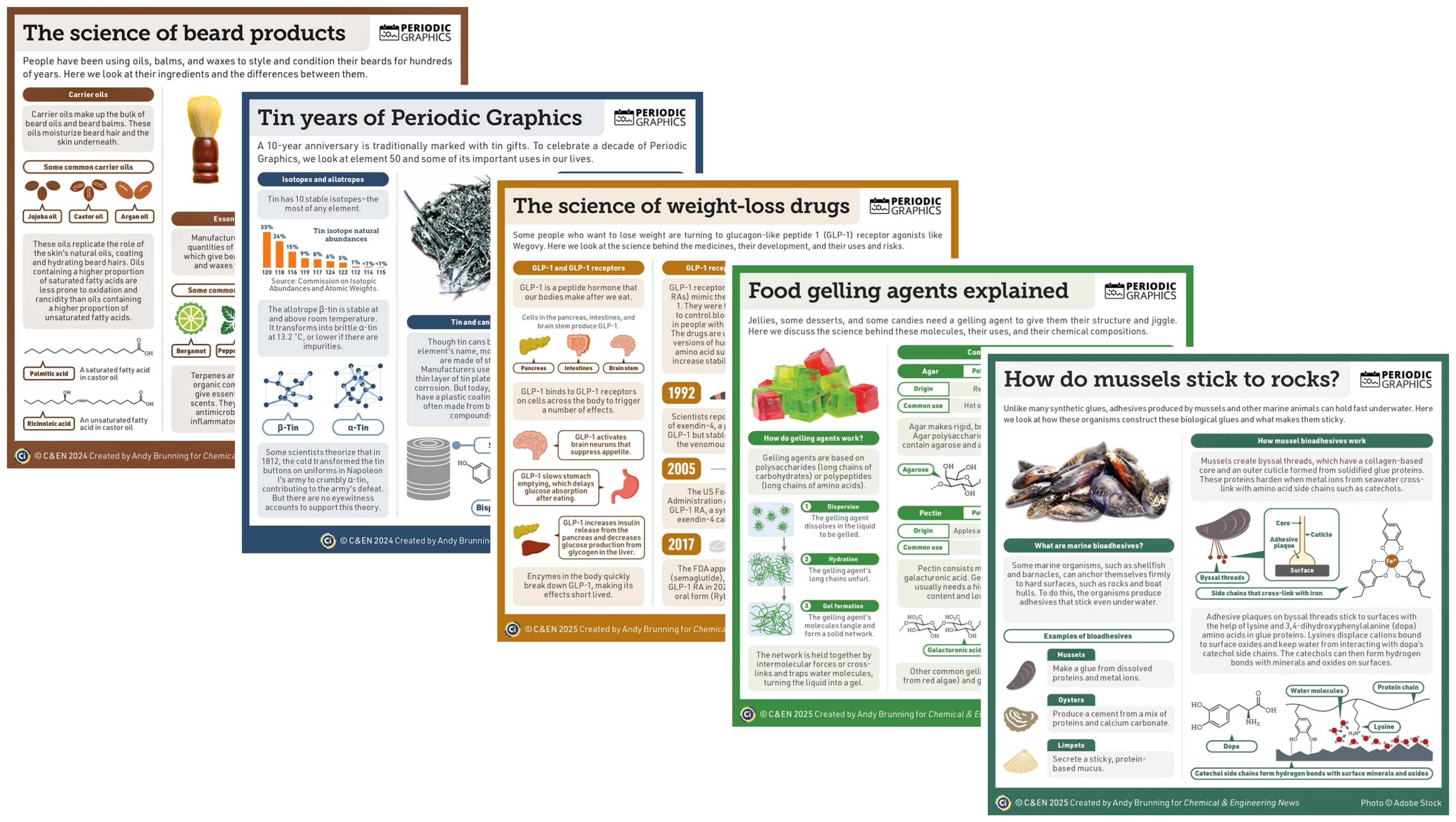
I’ve powered through a few editions of Periodic Graphics since the last newsletter, so here’s a quick rundown of what we’ve covered:
A look at the science of beard products, from oils, through balms, to waxes
A celebration of ten years of Periodic Graphics looking at tin, traditionally given as a 10-year anniversary gift
A summary of the history, uses, and side effects of weight-loss drugs
A dive into the chemistry that explains how mussels stick to rocks
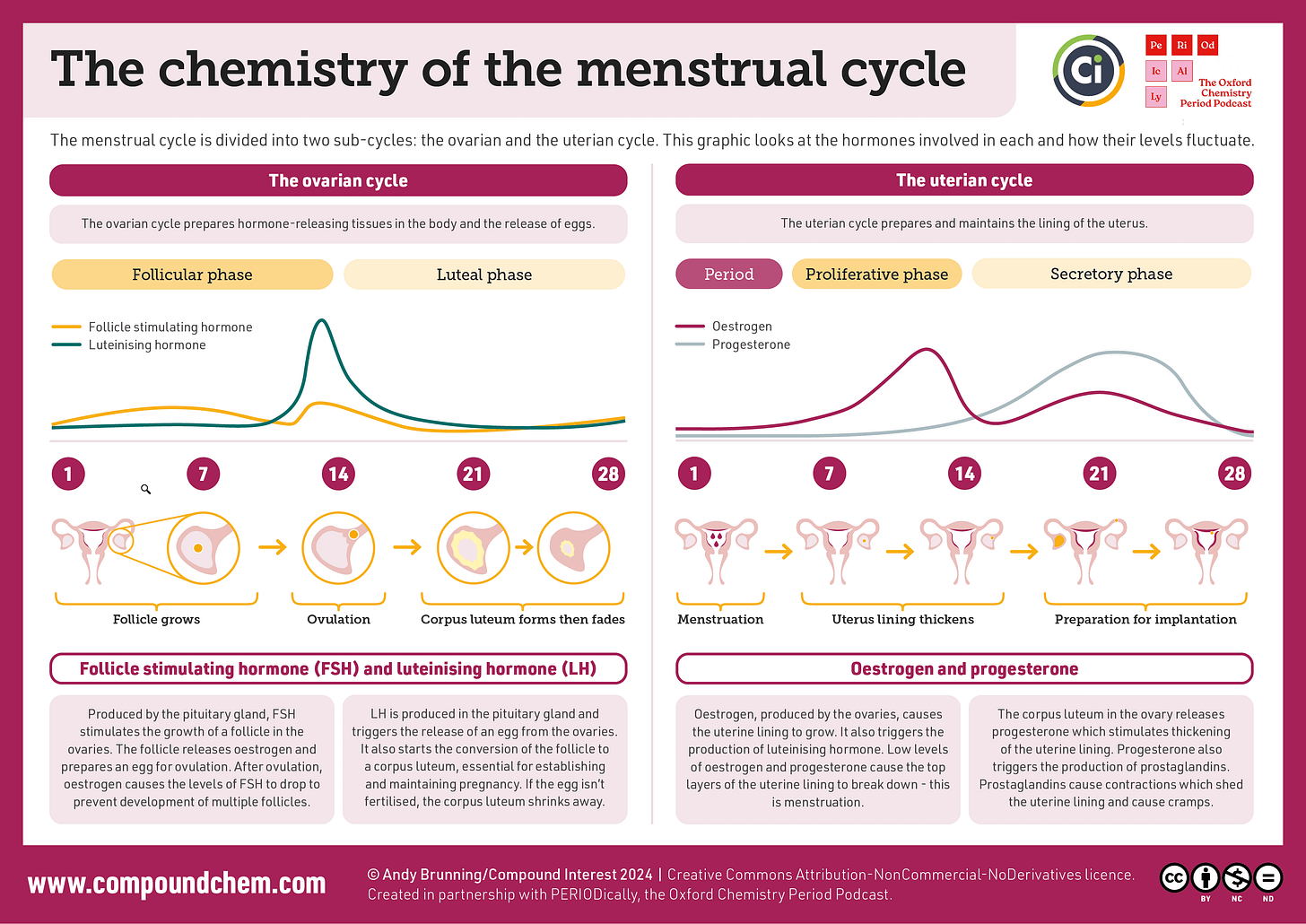
Towards the end of last year, I published the first of a two-graphic collaboration with PERIODically, the Oxford Chemistry Period Podcast. Started in 2023, the podcast brings together undergraduate and postgraduate chemists at the University of Oxford to discuss how having a period has affected their study of chemistry – or, as they term it, “how periods just get in the bloody way.” The podcast won the Royal Society of Chemistry’s 2024 Horizon Prize for Education.
The first of the two graphics looks at the chemistry of the menstrual cycle, highlighting the key hormones involved, how their levels change, and the impacts these changes have.
Keep an eye out for the second graphic, which is coming soon!
Another recent collaboration saw me team up with Agata Communications and ANEMEL to put together this graphic on so-called “forever chemicals”.
These are organic (carbon-based) compounds that contain fluorine atoms in place of hydrogen atoms. This graphic looks at some everyday examples and how they’re used, the chemical properties that earned them their “forever chemicals” moniker, and what’s being done to phase out the worst offenders.


I’ve been making chemistry infographics for coming up to twelve years now. While I produce some on a commissioned basis, along with the Periodic Graphics for C&EN, I don’t receive any direct funding to support keeping the graphics free to access on the website.
Like everything, the costs associated with the website have increased over the past few years, and it now costs me over £60 a month in hosting fees alone. I know some of you will already be supporting me over on Patreon, and I’ve also recently set up a Ko-fi account. Any contribution there helps ensure these educational resources remain accessible to everyone, so if the graphics have helped you at any point in the past, I’d hugely appreciate your support.
That’s all for this edition. Hopefully, the next newsletter will be slightly less tardy!
Thanks for reading,
Andy
Thanks for reading Periodycal – The Compound Interest Newsletter! This post is public so feel free to share it.
Comments
Nothing yet. Say the first thing.
Sign in to join the conversation.