
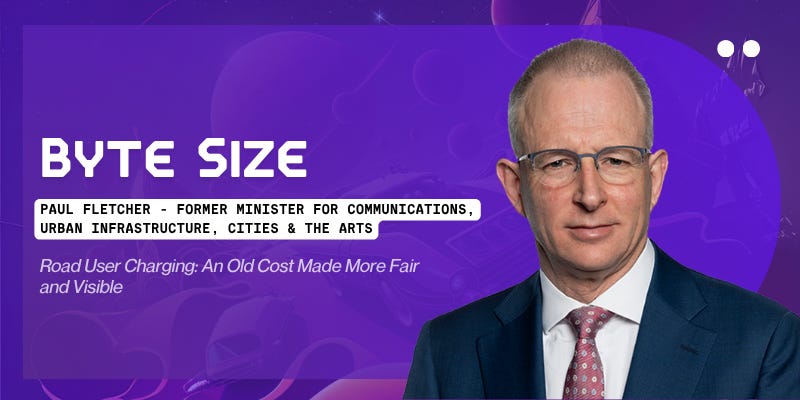
Paul Fletcher is the principal of advisory firm Paul Fletcher & Associates. Paul is a director of the Tech Council of Australia; a director of Amalgamated Telecom Holdings Limited; and an adviser to transport technology business Compass IOT.
Paul was elected to the Australian Parliament as the Member for Bradfield in December 2009, the first of six elections he contested successfully. Paul served for over fifteen years before retiring from the Parliament at the May 2025 election.
From 2013 to 2022 the Liberal Party was the government and Paul served successively as a Parliamentary Secretary, Minister and Cabinet Minister. Apart from nine months as Minister for Social Services, Paul’s front bench service was largely in communications and infrastructure. He was the Minister of Communications, Urban Infrastructure, Cities and the Arts in the Morrison Government.
Paul was the Shadow Minister for Science, Arts, Government Services and the Digital Economy, and Manager of Opposition Business in the house, from May 2022 until January 2025.
Before politics, Paul’s extensive private sector experience included eight years on the Senior Management Team at Optus. He has dual first-class honours degrees in law and economics from Sydney University and an MBA from Columbia University in New York where he was a Fulbright Scholar.
Where the money for roads actually comes from. Fuel excise, state and local revenue, and why the link between what drivers pay and what gets built is weaker than most people assume.
Why road user charging isn’t a new tax. The case that this is an existing charge being updated for technological change, not an additional impost — and why it has gone largely unnoticed for so long.
What the shift to electric vehicles does to the funding base. As more drivers move to hybrids and EVs, excise revenue falls. Whether that’s a fairness problem or simply the price of encouraging the transition.
What connected vehicle data makes possible now. Why measuring road use accurately is no longer a logbook exercise, and what that changes about the design of any scheme.
"It’s not fair that if you’re able to afford a Tesla, which might cost $60,000 or $70,000 or $80,000, you can then avoid paying for the cost of roads, whereas if you’re driving a 15-year-old Commodore, you are hit with the cost of roads through what you pay on the fuel excise.”
“The worst thing is to have a tax system that’s unfair, where the tax is charged on some people but not on others, and some people are effectively able to get out of paying what other people pay.”
“The fact is it’s not a new charge. But in politics, perception is reality, and if a lot of people perceive it as a new charge, then you’ve got something that is challenging to explain.”
“It’s not going to advance anybody’s interests if we have lots more electric vehicles, but our roads get more and more ratty because the amount of money to maintain them starts to erode.”
“Nobody likes having to pay a tax. But what’s even more annoying on top of having to pay a tax is when it’s a clunky, inconvenient process to do it.”
“Increasingly it’ll be people driving older cars, people who are less well off, who will be paying the fuel excise, and people who are better off won’t be paying it. And that’s not good for social cohesion.”
07:22 — Why it isn’t a new tax
The case laid out plainly: we’ve all been paying through fuel excise without noticing. Plus what the 2026 surge in electric vehicle sales does to that revenue base.
13:57 — What happened when he pushed this as minister
The 2015–17 attempt and why it failed, the awareness problem, and what’s changed with the Victorian High Court decision and the New South Wales scheme from July 2027.
28:42 — What connected vehicle data changes
One-click consent, distance without location, and why prepaid vouchers, odometer photos and annual inspections are no longer necessary.
38:48 — Two futures
Eroding revenue and a growing sense of unfairness, versus a transition he thinks we’ll look back on as a storm in a teacup.
Connect with Emily via email: emily@compassiot.com.au
Connect with Paul via email: paul@paulfletcher.com.au
Connect with Byte Size via LinkedIn
Connect with Compass IoT (the producer of this podcast) via our website
Comments
Nothing yet. Say the first thing.
Sign in to join the conversation.