
“Mustafa was sick with a fever. I was carrying him home. The call for evening prayer began. Everyone was indoors, breaking the fast. The next thing I know, Mustafa is next to me with his guts in the dirt. I realized my arm was cut open, and my hip was hanging by a piece of flesh. Mustafa was on the ground with his guts hanging out shouting, “Mama!” I was the only one in the street… The doctor said he couldn’t operate on Mustafa, and we should prepare to say goodbye. He said I was in better condition. A doctor came in and said that Mustafa and I had to be in separate rooms. I kept asking, “Have you sewn his guts in?” But it wasn’t just his guts. It was his leg, his testicle, his rear. Then we started getting bombed. We were running from one room to another. The doors and walls were collapsing on top of us.”
- Fallujah resident Nidhal Abed recalling her son’s injury during the U.S. military’s 2004 assault on the city.

On March 31, 2004, four private military contractors working for Blackwater were killed in an ambush in Fallujah, Iraq. Their deaths quickly became a force for headlines across the world as Iraqis joyously dragged what remained of their corpses to a nearby bridge to hang as a display of the resistance of the Iraqi people amid the larger U.S. invasion. The photos and videos stunned many, especially those who had falsely assumed that the American military was acting in the interest of the Iraqi people.
It wouldn’t take long for the U.S. military to begin planning its response. They began dropping leaflets across the city, telling Iraqis to flee before their imminent invasion. At the same time, troops began amassing and waiting for the order to commence what was being called Operation Vigilant Resolve, which they received in early April. U.S. forces began widespread bombardment of sites across Fallujah, then initiated a ground invasion led by the 1st Marine Division’s Regimental Combat Team-1, beginning what would become one of the fiercest sites of fighting in the invasion. Soldiers and reporters in the years since have recalled the incredibly relaxed rules of engagement that U.S. forces were operating under as they began combat. Former New York Times journalist Dexter Filkins, during the documentary Once Upon a Time in Iraq: Fallujah, noted:
“The rules were like… dialed really far back, like really loose, yanno? Guy picked up a cell phone? You can kill him. If you fire one warning shot at a car and it doesn’t stop coming at you? You can kill him.”
For invading U.S. forces, their time spent warning the general population of the impending invasion was sufficient to ensure civilians were able to flee. Those who remained, therefore, were viewed as combatants or possible combatants.
Sending young U.S. Marines into a foreign city that had been deemed infested with enemies they had been trained to view as subhuman resulted in exactly what one might expect. Countless atrocities were committed amid both the first invasion of Fallujah, which was completed by the beginning of May, and the second invasion, which began later that year. According to the Geneva International Center for Justice:
The United States offensive in Fallujah created siege conditions that brought more than destruction. Food vanished from shelves. Clean water ran out. Medical services collapsed. Gunfire and bombardment trapped civilians, who could neither flee nor receive aid. These were foreseeable outcomes of a strategy that ignored the civilian population. Between 12 and 18 April 2004, the United Nations Assistance Mission for Iraq (UNAMI) reported severe shortages of food, water, and medical supplies. Water and sewage systems failed for at least a week. Humanitarian convoys struggled to enter the city, despite efforts by UN agencies [5]. The occupying forces had a legal duty to facilitate humanitarian aid. Blocking relief in a besieged city broke that obligation.
Hundreds would be killed, and countless others terrorized and wounded, in this time as U.S. and allied Iraqi forces went door to door in an intense urban combat environment to quell resistance in the city.
White phosphorus, a substance that burns so hot it burns through skin and bone, was deployed throughout the city in what was described by journalist Darrin Mortenson as being a part of the U.S. military’s “shake and bake” tactics, which entailed firing high explosives and white phosphorus to terrorize the population and clear out what they had deemed pockets of resistance. Bodies and homes were burned by this substance, which the United States government would later claim was being used purely for illumination purposes.
As white phosphorus fell over the heads of Iraqi men, women, and children, so too did depleted uranium rounds that were fired by U.S. forces alongside their standard munitions. The health effects of such weapons should be obvious. The Geneva International Center for Justice notes:
Researchers, including Dr Chris Busby, documented a sharp rise in birth defects and elevated cancer rates, particularly childhood leukaemia, linked to the deployment of DU and other military pollutants during the battle. Dr Busby worked with the GICJ to collect samples from the hair of children, fathers, and mothers, as well as from the soil and the environment. These samples underwent laboratory testing, which confirmed severe contamination. Fallujah’s already weakened healthcare system, battered by conflict and the collapse of infrastructure, could not address the scale of the health emergency. Children bore the heaviest burden, both in life and in death.
Depleted uranium in particular has had generational consequences for the people of Iraq. Fallujah has found itself a hot spot for research in the years since Operation Valiant Resolve, and the results are truly devastating. A 2010 study by British scientist Chris Busby, who was studying the health effects of radiation, identified a 12-fold increase in childhood cancer in the city since the invasion of the city. Other studies have found equally horrific outcomes. It would seem that even decades after the first U.S. boots hit the ground in Fallujah, its residents still bear the horrific consequences.
These were just some of the horrors, which for many U.S. service members have become a part of a sort of badge of honor. For many of them, those who fought in the streets of Fallujah saw uniquely difficult combat that merits a note of distinction. Soldiers I have spoken with often describe those they knew who experienced it as being “among the hardest” of their colleagues, the men who survived combat, many are quietly happy they did not have to experience it. Some others are jealous that they weren’t able to be a part of it.
Spoken of less are the victims of the operation turned military epic, the men, women, and children who had their lives torn apart and sometimes permanently changed or ended by the actions of U.S. occupational forces. In the United States, the victims we oftentimes hear about are actually the soldiers themselves, many of whom have reported struggling with PTSD and other issues related to their service. Their struggles have oftentimes taken center stage as those thousands of miles away continue to try to pick up the pieces.
Among them is Graham Platner.
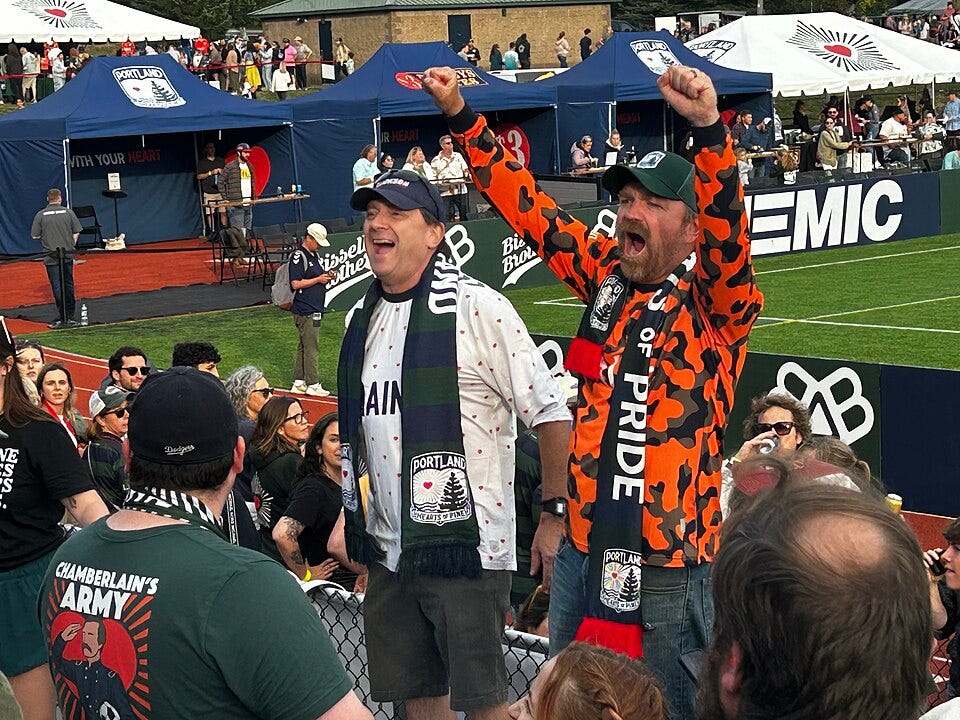
Maine has become the site of one of the highest-profile political races in the United States in recent months, as U.S. veteran and oyster farmer Graham Platner has gained tremendous momentum against Republican incumbent Susan Collins. Hearing him speak, it’s easy to understand why. He is pushing for a slew of progressive policies, including Medicare for All, passing the PRO Act, banning billionaires from buying U.S. elections, ending the Israeli genocide in Gaza, and more.
He has a good pitch, bolstered by what many on the ground have called a sort of natural charisma that is engaging vast swaths of Maine voters in more ways than one. One Democratic political operative I spoke to about his race noted that he had heard countless older women in the crowds at his events fawning over him, citing his voice and generally gruff aesthetic. For many in Maine, they’re exactly what they’ve been looking for: a man who can speak to voters on the ground and possibly even topple the longest-serving Republican woman in Senate history.
What has made this race a national discussion, however, is not Platner’s positions or charisma so much as the seemingly endless controversies his campaign has faced over the last few months. It all started with Reddit. In October of 2025, Reddit comments from an account tied to Platner surfaced. The comments, which ranged from negative statements about Maine residents to the seeming dismissal of conversations around rape in the U.S. military, drew a significant negative response that resulted in a public apology.
Then came the tattoo. In an interview with Pod Save America last October, he showed off a shirtless picture of himself with a tattoo that was quickly identified as the notorious skull and crossbones Totenkopf design associated with the Nazi Schutzstaffel (SS). For most campaigns, this would have been a game-ender. For Platner, this was a roadbump. After apologizing, alongside claiming that he did not know the design had such a horrific meaning, he had it covered up.
The controversies did not end there. In the months since, several high-level scandals have plagued the campaign, centering around Graham Platner’s alleged conduct with women and rumors of infidelity in his marriage. For many around the country, the question has become not if another scandal will emerge, but when. What has been largely left out of all of these conversations, however, has been what might very well be the most controversial element of Platner’s past: his military record.
Graham Platner’s military service has been a longstanding central component of his campaign. His time spent abroad and the mental anguish he has claimed to have struggled with upon returning home have been consistently discussed as parts of his life that give him legitimacy as an outspoken opponent to continued military support for the Israeli colony and rhetorical opposition to the blunder that is the war with Iran. Among the highlights touted by Platner are his time spent in Fallujah and Ramadi during the U.S. invasion of Iraq.
It is critical to note that despite the common misconception that Platner was on the ground during the first or second U.S. operations to control Fallujah, he actually has openly clarified that he arrived on site after the main fight, spending time in the city once many of the horrors noted above were undergone. This does not absolve him of his role in maintaining a notably brutal occupation, especially as a door-kicker (a soldier with a front-line active combat role).
What is of particular interest, however, is his time spent in the U.S. operations to seize Ramadi. ACLU efforts to draw attention to U.S. abuses against detainees summarize some of the horrors of these efforts, with reference to a DVD made by U.S. soldiers titled “Ramadi Madness” in a 2005 press release:
A description of a DVD called “Ramadi Madness” that included scenes of soldiers kicking a flexicuffed prisoner who reportedly later died; using a dead prisoner’s body to “wave hello”; and joyriding in a prisoner’s van while yelling profanities at Iraqi civilians. Copies of the DVD were destroyed in January 2004 by a sergeant after he learned the incident was under investigation. No soldier was charged in relation to the making of the DVD or the incidents depicted in it.
Ramadi, it would seem, fit a pattern of U.S. military conduct that was witnessed in operation after operation as U.S. soldiers were given broad leeway to act with near impunity, as mechanisms for accountability were seemingly nonexistent. Platner was among these servicemembers, at the very least aiding in the operations that led to these abuses. This is before he went to the private sector.
After completing several tours in the U.S. armed forces, Graham Platner went back, this time to Afghanistan as a mercenary working for Constellis, which was formed through larger acquisition efforts that included the purchasing of Blackwater assets after the company collapsed following the 2014 Nisour Square massacre.
Though Platner has clarified in interviews that his work was mostly related to the protection of diplomatic staff and lower-risk embassy support work, he nonetheless signed up to profit from U.S. occupation efforts in yet another nation that had upended the lives of millions. This activity in particular has drawn more criticism than the rest of his record, especially given the unsavory connections between Constellis and Blackwater, a company that is widely understood by many in the public to have been complicit in horrific atrocities.
All of this has been largely brushed over in the public discourse surrounding Platner. The lives of Iraqis and Afghans who lived under U.S. occupation are seemingly absent, with the focus instead only on Platner’s statements and actions upon returning home. The most in-depth discussions of his service oftentimes do not even center on the service itself, either, oftentimes being squarely focused on the PTSD and other issues Platner faced upon attempting to reintegrate into civilian life. Little to no discussion is given to those who had to piece their lives back together in Ramadi, Fallujah, or the other areas that Platner and those like him destroyed in pursuit of U.S. imperial interests.
Is kicking in the door of a family in Ramadi not itself also disqualifying?
This is not a unique case. Americans have had a longstanding blind spot for U.S. servicemembers and the actions they have been complicit in amid U.S. operations over the decades. Victims of these horrific adventures are oftentimes treated as little more than footnotes, with some exceptions, with discussions of these soldiers centered upon the difficulties they have coming home. When critiques are levied, they oftentimes become bogged down in discussions of poverty drafts, the socioeconomic incentives for service, and other reasons that frequently seem more like excuses than adequate analysis of the harm done through participation in the largest, most violent, most heavily polluting, imperial institution in the world.
It becomes difficult to see these discussions and not arrive at the conclusion that to many Americans, the victims of U.S. imperialism ultimately hold less value than those facilitating such violence, even if many have some degree of sympathy for those being harmed. Platner represents a prime example of such a reality. When asked what should disqualify him from becoming one of the world’s most powerful elected officials, the reasons given are Reddit posts, tattoos, and improper statements. Is kicking in the door of a family in Ramadi not itself also disqualifying?
This is a question that is especially important to ask, given that Platner’s positions indicate that he is anti-war (in some limited, unquantifiable circumstances), but far from anti-imperialist. His platform claims that he is against “pointless wars”, without specifying what criteria would define a war as such. This seems like a minor gripe, but it is incredibly important given that other elements of the platform indicate that his issues with the U.S. military are less about its actions and more about where the money is going. He is also fighting for “fair wages” for U.S. servicemembers, arguing that some are making “far less than they would as a civilian”. In his section discussing combating Pentagon waste, he states that we “need to take the funds currently paying for mansions in Virginia and Maryland for defense contractors” and reinvest them in shipbuilding investments to close what he describes as a gap in our naval capacity. That same section ends rather ominously with this final point:
I’ve seen under the hood. I know exactly how much money is wasted, and where. Send me to Washington and I will work tirelessly to rebuild the American military.
And yet, discussions around Platner paint him as an ardently anti-war progressive, with supporters oftentimes seemingly ignoring these positions while they highlight his stances on Medicare for All, supporting unions, and raising the minimum wage. Our domestic comforts are prioritized, all while the past harm he is complicit in and his support for continued U.S. military funding that will no doubt facilitate other horrors go chronically underdiscussed.
What does this say about us then, especially those on the Left so willing to support Platner and those like him, and elevate them to positions of major sociopolitical status? Is our best argument that he may very well be better than his opposition? That he has given some rhetorical nods to other critical issues? Though I can see the merit to these arguments on some level, it appears as if red lines we would almost certainly have for, say, Israeli occupational soldiers, are non-existent for American soldiers, despite their being a part of a volunteer force (and Platner having been an enthusiastic multi-tour veteran).
Are the lives of those in the nations the U.S. has destroyed to be relegated permanently as footnotes to be treated as unfair critiques when acknowledged as possible red lines? Are the men, women, and children slaughtered by those in our own occupational forces only inconvenient truths to be downplayed so long as we can advance our own material conditions? If this race is to be a case study, it seems the answer for many is “yes”.
To that end, we owe it to our brothers and sisters across the world to hold a better line. The Platners of the world may not be a monolithically irredeemable cohort, but that does not mean they need to be lionized and elevated to higher office as they stand on the corpses of millions. Maintaining this blind spot only ensures that we remain unable to truly begin dismantling the very institutions responsible for maintaining U.S. hegemony and stopping the violence that flows from them.
It is worth asking ourselves what it means if we fight for a society that uplifts ourselves at the expense of the lives of millions we may never meet. Are our lives more valuable than theirs? I cannot accept that they are.
Comments
Nothing yet. Say the first thing.
Sign in to join the conversation.