
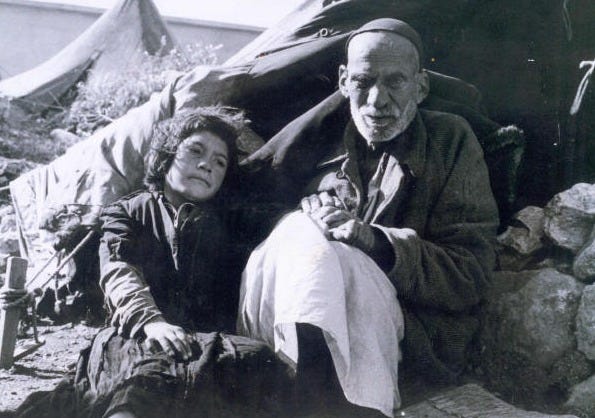
Is there a length of time during which colonial theft becomes legitimized as valid territorial acquisition? Do those ethnically cleansed amid campaigns of colonial expansion at some point become unable to determine the land’s future? It would seem, for some intent on coming across a “nuanced” position on the Zionist project’s existence, that the answer to both of these questions is a resounding “Yes”.
For decades, Zionist propagandists (or Hasbarists) have deployed myriad arguments to preserve the legitimacy of the project, undermine opposition to it, and ultimately explain away the atrocities of Zionism to ensure the long-term survival of the project. There is little doubt that many have come across one of these talking points over the last few years: that the colony has an inherent “right to exist.”
Commonly used to undermine opposition to Israeli territorial claims and to defend so-called “security” operations, the position gives the project a notably exceptional quality by ascribing to it a moral right to exist, one that cannot be challenged or changed. According to the argument, one may be able to criticize in a limited fashion the actions of actors within the colony, but to challenge its claims over the territory it occupies and seeks to occupy, as well as the millions affected by these colonial efforts, is seen as a red line that marks one as a dangerous radical—perhaps even an anti-semite. After all, why would one call for the dissolution of the world’s only Jewish state, a haven for so many millions facing anti-semitism abroad who only wish to build new lives in their historic homeland (one can quickly identify how interwoven many Hasbarist talking points truly are, each propagandistic explanation only reinforcing the next).
This line has met intense criticism, particularly for those suffering under the boot of Zionist colonialism, since well before October 7, 2023. Ali Abunimah, in his 2014 work “The Battle for Justice in Palestine”, deconstructed the myth of an inherent right for a state or colony’s existence, going so far as to say:
"States either exist or do not exist and other states either recognize them or do not, but no other state has claimed an abstract “right to exist.” If Israel is indeed a normal state among the nations, as its Zionist founders wished it to be, then it has no greater “right to exist” than East Germany, Czechoslovakia, South Vietnam, or the Soviet Union. All of these states dissolved, and there is no one with any standing to bring a case in any forum demanding that they be resurrected based on any abstract “right to exist” separate from their legitimate residents’ right to self-determination. Israel, even if its legitimacy were universally accepted, would have no more “right to exist” than the United Kingdom, which would cease to exist in the form it has taken for more than three centuries if the people of Scotland were to vote for independence. Similarly, Belgium has no inherent “right to exist” its people decide to break it up into separate Flemish and Walloon states. Israel has no greater right to exist than its chief sponsor, the United States, whose own Declaration of Independence affirms that “whenever any Form of Government becomes destructive of” the inalienable rights of those who live under it, “it is the Right of the People to alter or to abolish it, and to institute new Government”.
In the period following October 7, 2023, however, the Israeli response to the Al-Aqsa Flood operation by Hamas and other Palestinian resistance actors has only made the criticism louder. Israeli genocide in Gaza, which continues today and has resulted in the deaths of tens of thousands and the displacement of millions, alongside intensified ethnic cleansing operations in the West Bank and military actions that have now resulted in a regional crisis that is quickly becoming a global one, has only further deteriorated the legitimacy of the project in the eyes of many. A larger number of people than ever now are questioning the actions of the Zionist entity, even the merit of the arguments around its continued existence, and the traditional Hasbarist positions are failing to reverse an increasingly negative view of the colony.
This presents a sort of crisis for Zionists who are now seeing global opinion, even within the very imperial core that has nurtured them for so long, turn against them. It would seem that, despite continued military assistance from its imperial benefactors, the project's future is in jeopardy. Maximalist rhetoric and the typical hardline tactics are failing, perhaps even hardening the negative views many hold. How then do they adapt their messaging to preserve the colony itself while conceding to the increasingly widespread criticism?
This question was seemingly at the forefront of the mind of Shadi Hamid, a Washington Post columnist, senior fellow at Georgetown University’s Alwaleed Center for Muslim-Christian Understanding, and author of “The Case for American Power,” as he wrote his most recent piece, “Does Israel Have a “Right” to Exist?”
A sign of the times, the piece immediately concedes that the Zionist project has no inherent right to exist, going so far as to even note that “Israel was born in sin” in acknowledgment of the Nakba, or “catastrophe” in which 10,000-15,000 Palestinians were murdered and another 750,000 or more ethnically cleansed from upwards of 530 cities, towns, and villages. This same Nakba is what Israelis celebrate as the moment of their “independence”. One might expect, given this understanding, that Hamid would conclude that the project itself is illegitimate, with foundations rooted in colonial dispossession that could in no way be legitimized with a combination of force and the passage of time. What he does instead amounts to an academically insulting, deeply shallow analysis that only seeks to shift the rhetoric in such a fashion that legitimizes the continued existence of the project. In his words:
Israel was born in sin. The question is whether that sin justifies dissolving the state.
I don’t think it does. One injustice — Israel’s creation through ethnic cleansing — does not justify another: undoing Israel against the democratic wishes of its citizens.
The explanation that follows is fairly rudimentary. Though he concedes that the project has no right to exist, he argues that the Jewish settler population has a right to determine the future of the project through a democratic referendum, one in which they would likely oppose the dissolution of their project and any seeming elimination of the colonial order they benefit from. More specifically, he notes:
There is no justifiable way to undo Israel short of a majority of its residents freely voting, in a referendum, to fold the state into a broader binational arrangement incorporating both Jews and Palestinians. The genocide scholar Omer Bartov has articulated something like this vision: seven million Jews and seven million Palestinians sharing the land from the river to the sea. It’s an aspiration I both respect and long for. But Israeli Jews will never vote for it. They would have to be compelled into it, and that would be undemocratic. Therefore, I don’t see it as a live option or, importantly, a moral one.
On the face of it, this may seem to be a pragmatic, if disheartening, position that takes into account the reality of the Zionist project’s demographic outlay and attempts to preserve the human rights of all those on the ground within historic Palestine. Upon deeper scrutiny, however, the position begins to fall apart.
It must first be stated that the Zionist project is not simply guilty of a single decade-old sin, nor are the effects of that sin contained to the past. As someone who has openly called the Zionist actions in Gaza a genocide, Hamid knows well that the project never stopped its campaigns of dispossession against the Palestinian people, nor did they start in 1948. As I have written about in past critiques of Zionist propaganda attempting to whitewash the history of the project, the Zionist entity has only expanded and survived through the continual mass suffering of millions of Palestinians and countless others across the region it occupies land within.
This must not be overlooked in analyzing the “sins” of the colony. What brought about the existence of the project was not a single sin isolated within the 1940s, but the culmination of deliberate actions, myriad sins, in the decades prior that had set the stage for such mass expulsions during the start of the Nakba to occur. What followed its creation was constant violence that has affected every element of Palestinian lives as the colony wrestled with its inability to achieve its core goal, the annihilation of the natives.
This is the reality of colonialism. It is not simply a historical event or a series of them; it is a process without end until the abolition of the colonial entity that affects every element of the lives of the colonized and colonizers alike. The violence the colonized face in this context is done with the goal of their subjugation and the reinforcement of the colonial hierarchy, which privileges the settler population. One cannot separate such violence from the colony, as it requires it in the same way a human requires air to remain alive. Without the constant violence and threat of violence that accompanies it, the system ceases to remain solvent.
In the Israeli context, we see this clearly in the decades following the Nakba, which has led many Palestinians to argue, I think accurately, that the Nakba never truly ended. Zionists would later expel hundreds of thousands more Palestinians in 1967, as well as more than 100,000 Syrians, who found themselves occupied in the Golan Heights. The project would later go on to occupy Lebanon as well until their forced eviction by Lebanese resistance fighters – fighters who have continued their resistance to Zionism up to today. Zionist settler presence has continued to grow like a cancer in the West Bank. Those in Gaza found themselves under regular attack by Israeli forces for years in operations described as “mowing the grass,” as they were systematically starved by a siege launched from land, sea, and air as part of a Zionist containment strategy. It must be noted that many of those in Gaza are themselves refugees, internally displaced as a result of the ethnic cleansing campaigns of the 1940s. They, alongside millions around the region and in the diaspora, are barred from returning to their land despite international laws clearly stipulating such a right of return for refugees.
It becomes quickly apparent that this violence is not a bug, but rather a feature, of Zionism and its physical manifestation. The cessation of such violence, then, can only occur with the deconstruction of the entity itself. For Hamid, however, such conclusions prove to be inconvenient, as they do not align with the opinions of settlers. This raises key questions around whose preferences we prioritize, and who is allowed to weigh in on the future of Palestine at all.
Key to the argument posited by Hamid is an underlying idea that Israelis constitute a majority or near majority bloc, and in such elections would unifiably oppose any abolition of the colonial status quo. Such assumptions of the preferences of the settler population are not incorrect today, but looking at the South African context, it is clear that the positions of the colonizers can change rapidly as material conditions change. South Africa provides an interesting example of how such a change can occur. Ali Abunimah states as such in “The Battle for Justice in Palestine”, noting:
In a March 1986 survey, for example, 47 percent of whites said they would favor some form of “mixed-race” government, but 83 percent said they would opt for continued white domination of the government if they had the choice. A 1990 nationwide survey of Afrikaner whites (native speakers of Afrikaans, as opposed to English, who traditionally formed the backbone of the apartheid state) found that just 2.2 percent were willing to accept a “universal franchise with majority rule.”
Looking at these results, it may baffle one to imagine that only several years later, in 1994, tens of millions of South Africans would head to the polls in a nationwide election and vote into power the African National Congress (ANC) under the leadership of Nelson Mandela. This is especially confusing given that the 1980s saw a notable rightward shift in South Africa’s white electorate as their grip on power loosened. What changed, it seems, were the material conditions that brought about the complete loss of legitimacy of the apartheid regime. As Abunimah notes:
Despite ominous warnings, the ANC and its allies insisted firmly on a one-person, one-vote system with no white veto. And ultimately, the combination of internal resistance, military pressure on South Africa from the Cuban-supported liberation movement in Angola, and international isolation did force whites to abandon political apartheid and accept the one thing they overwhelmingly said they would never accept: majority rule.
This could very well be the future that the Zionist colony and all of its settlers are headed toward. As the economic outlook of the colony worsens amid a combination of international boycott efforts and the resistance it is facing both within the territory it occupies and from actors around the region, coupled with its legitimacy reaching an all-time low internationally, conditions could very well begin emerging that force the settler population to the table in a way they might not otherwise have ever contemplated. They might be able to sustain themselves now, largely due to the continued infusion of economic and military aid from their imperial benefactors, but the future of much of that aid is not guaranteed.
This problem only intensifies when looking at the demographic reality of the project itself, which has traditionally attempted to maintain a 60-40 split between settlers and colonized peoples. This need for demographic control has been a core reason for Israeli ethnic cleansing operations across historic Palestine, as many Israeli planners are likely terrified of becoming a demographic minority on the land they control out of fears of becoming the next South Africa. What they must realize, however, is that they already are.
This point is critical in understanding the absurdity of Hamid’s position, as he cites democracy as a justification for maintaining the colony. His core argument seems to stem from the idea that Israeli settlers make up at least a near majority of the voters in an election regarding the future of their project. This may very well be the case if one is to only consider those in the 1948 territories, where there exist only 1.8 million Palestinians, around 20.8% of the total population. It may even be the case if one considers the 1948 territories and the 1967 territories, home to 7.3 million or more Palestinians, as compared to the roughly 7.2 million settlers.
There is a critical group of Palestinians being left out of these discussions, however: those victims of the historic Israeli “sins”, particularly the mass expulsion of Palestinians in the 1940s. Hamid mentions the sin as a historical footnote, but the effects of such historic violence are represented today in the 6.6 million Palestinians residing in nearby countries in the region, primarily as refugees, and the roughly 1.2 million in other countries worldwide. When accounting for these groups, the outlay looks much different. With over 15 million Palestinians, the total settler population is a definitive minority in any democratic deliberations, only accounting for roughly 32% of the total observable population.
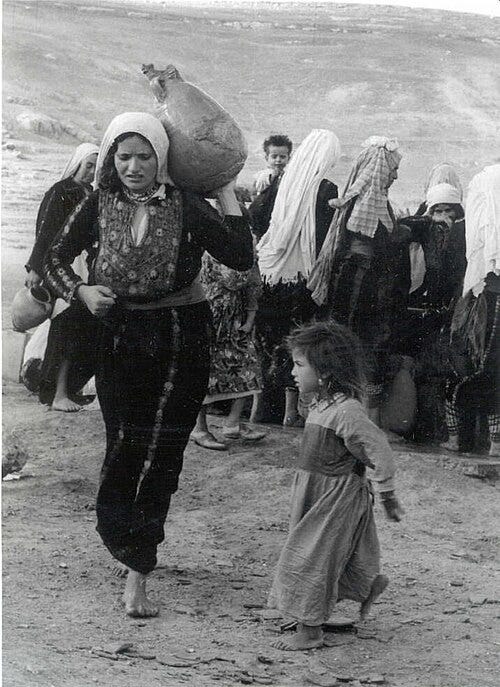
Those millions should, according to international law, be allowed to return to the land in which they were expelled, their rights only being blocked by the same colonial regime that ethnically cleansed them years ago. Do they not deserve to have a vote in the future of their land? Are only those who weathered the mass displacement campaigns of 1948 and their descendants able to place a vote on the future of land that those in refugee camps only miles away have generational ties to? Is their displacement to be normalized, their dispossession legitimized, through their exclusion from a democratic process that would affect their futures as well?
These questions are seemingly answered by Hamid, who is in effect arguing not for the respect of the democratic rights of all people, but the prioritization of a settler minority’s positions over the majority body. Though framed as a more “just” outcome, it only replicates the colonial condition and ensures that the violent status quo continues until the settlers themselves decide to throw their hands up and surrender their own status atop the hierarchy they have fought so hard to maintain. Coming back to South Africa, we can begin to see the problem of this rhetoric, as it would have functionally argued for the continued domination of the white minority of the apartheid regime if applied to such a historical context.
It seems Hamid, knowingly or not, is engaging in a sloppy attempt at justifying the continued existence of a colonial order, and by extension, the continued daily violence millions face under its boot, all under the guise of respecting the right of the individual (which means the individual settler in this context). Far from respecting the democratic rights of all people, he is arguing that the democratic rights of some matter more than others—that some people’s rights are to be elevated over others for the sake of “justice”.
What we must instead recognize is that the future of Palestine cannot be determined by a settler minority if it is to be a just future for all those who inhabit Palestine. Settlers will, as in the case of South Africa, be the last people to recognize that the end of their regime is necessitated, as they are the direct beneficiaries of the violence that maintains their positions atop the colonial hierarchy. They rule by raw force and raw force alone, not through any democratic process or determination, and it will ultimately be the resistance to such violence, coupled with their loss of international legitimacy, that brings about the end of their project.
God willing, that will be in our lifetimes.
Comments
Nothing yet. Say the first thing.
Sign in to join the conversation.