
Tomorrow, August 15, is Acadian Day. One of the most popular modern Acadian artists is a singer who went by the name of Cayouche (né Réginald Charles Gagnon who died in ‘24). He was beloved of most regular Acadians selling albums in the 100s of thousands in Acadie, Quebec and Europe, regardless of what critics may have thought of him.
Cayouche was a drinker, a smoker, a joker, a self-identified “old hippy”. He was a bit rough looking. His beard was stained of cigarette smoke. He sang nostalgic ditties about dirt roads, about growing up poor, about drinking and driving, about old trucks, about collecting welfare stamps and other such rural Acadian concerns. His sense of humour resonated with the common folk.
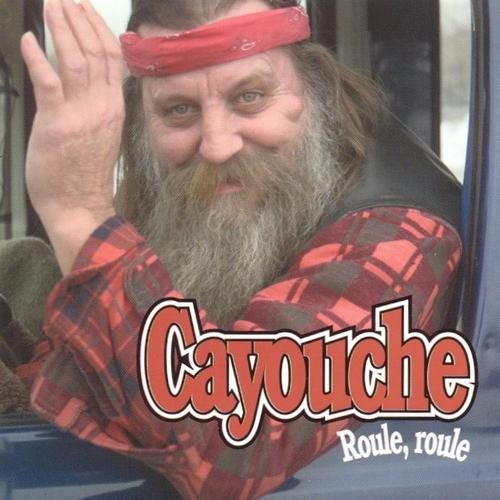
There is one particular song of his I think back on from time to time. The title is:
“Not From Here, Not From Anywhere Alse.” (Pas d’Icitte, Pas d’Ailleurs - I want that on a t-shirt). In it, Mr Gagnon sings about how he was born in Acadie but at a young age went to work in America - as was the fashion of the day - and even served a stint in the American military. In the song, Cayouche labels himself as a “failed Acadian” and discusses returning to Acadie after a long time away. He implies that locals are somewhat put off by him, as if he’s now an outsider. He responds with: “Don’t be afraid. I’m not from here, but I’m not from elsewhere either.”
This resonates particularly with me as I am am mixed ethnicity Acadian and have been away for over 15 years now. Cayouche, for all his faults, had a knack for a turn of phrase.
The Acadians are now primarily defined by a single historic event which took place in 1755: the expulsion from their lands by the British army. The Acadians are descendants of the French who settled mostly in Canada’s Annapolis Valley - a fertile land with access to the ocean’s riches - in the 17th century. They came to call this valley their home and named it Acadia (land of Plenty) and saw themselves as Acadians, not simply French settlers. All the while in Europe, tensions were mounting in the lead up to the 7 years war. In relation to these affairs, Acadians declared themselves neutral** but the British got anxious and bet that the Acadians would side with the French crown if push came to shove.
We’ll never know if the Acadians would have held true to their commitment to neutrality. The British decided to take offensive action and hastily began expulsing the defenseless Acadians from the valley. It was a botched affair. Many families were separated. A lot of Acadians were simply put on boats and sent off. Acadians became a dispersed people with many ending up in Louisiana. They are now known as the Cajuns. Some fled north instead, allying themselves with the Miqmaq tribes in the Province we call New-Brunswick. Some tried returning home, finding their lands completely occupied by British subjects.
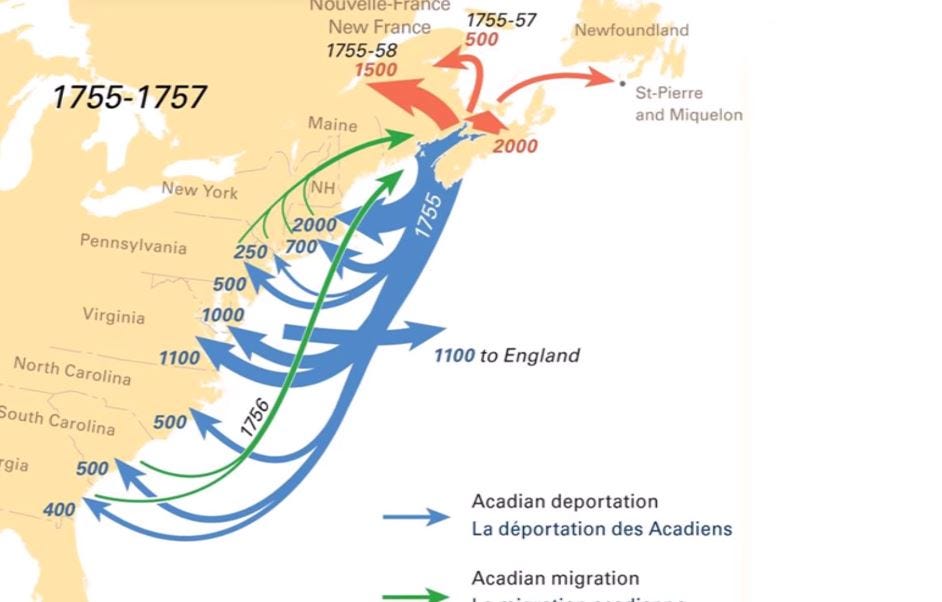
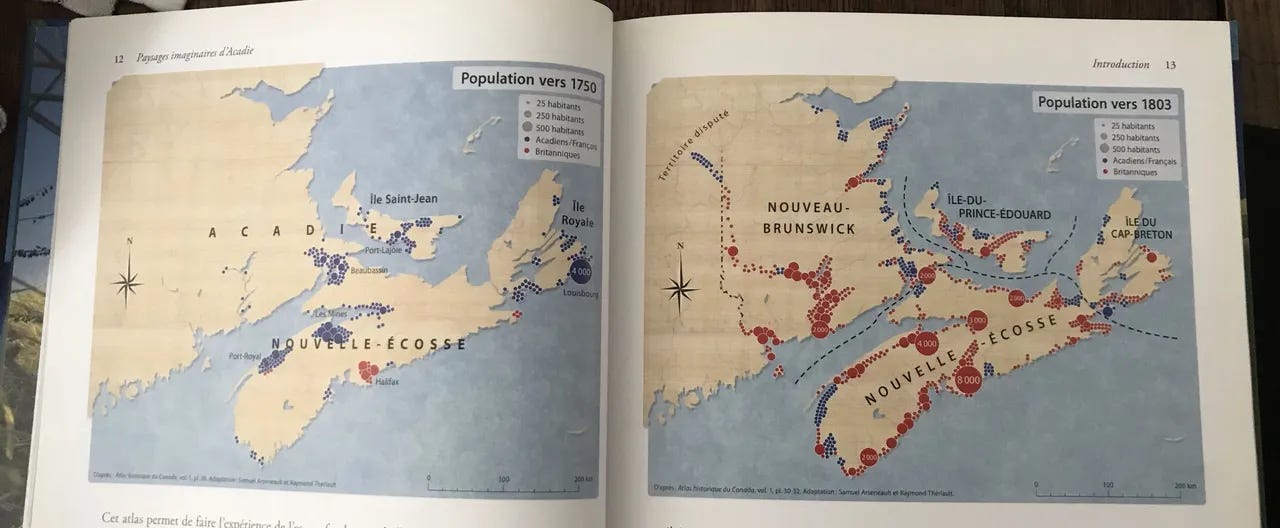
For years the British policy was to shoot Acadians on sight (though not all soldiers complied with such orders). But troops were limited and little by little, the Acadians re-established themselves along the shore of New Brunswick and a few other places in the maritime provinces. Gradually, the English crown’s grip loosened on them and now New Brunswick remains a half and half mixed population with French recognized as co-official language of the province which formally remains allied to the British crown.
This is the unsettled nature of the Acadians. We are a distinct people with deep bonds of blood and heritage, with an undeniable identity, but we remain nationless. We are not from here, but not from elsewhere.
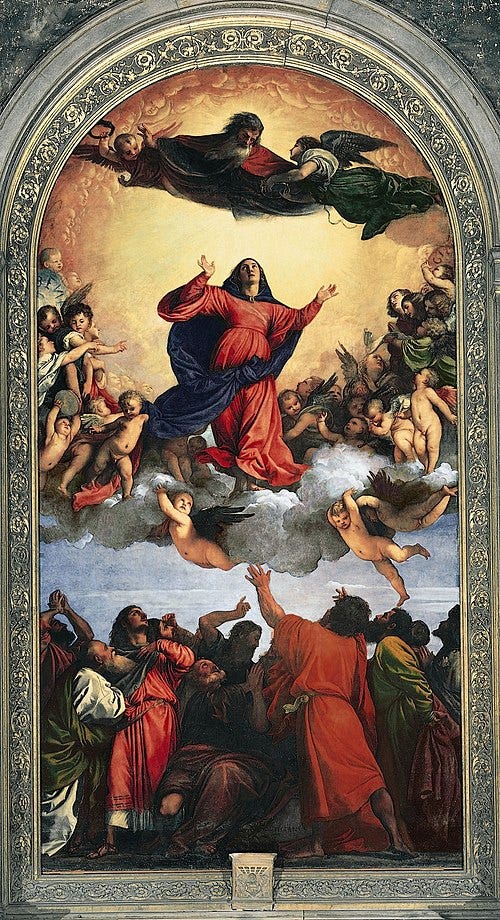
August 15 is also the Feast of the Assumption of Mary - the celebration of Mary ascending to her heavenly home. On this day, Acadians celebrate the “Tintamarre”. This tradition was founded in the mid 20th Century by a Catholic Archbishop (Norbert Robichaud). Acadians were to exit their homes and kneel in prayer upon hearing the church bells. They would then engage in joyful noise making. Here are the original instructions to the Acadian faithful:
“Once the prayer is finished, there will be a joyful “tintamarre” lasting for several minutes, featuring anything, everything and everyone that can make noise, shout and ring: mill whistles, car horns, bicycle bells, squawking objects, toys, etc."
Both of these gestures (public prayer and noise making) served as a message to the Anglo-Protestants that the Acadian spirit was alive and wouldn’t be made to fade into silence.
The “Tintamare” and Acadian Day are still celebrated now. But despite the noisy raucous, I can’t help but feel something is missing to the fête. It seems to me that religion has taken more of a back seat where it used to be front and centre. Has the spiritual aspect of this tradition been gradually expulsed?* Compare against the video below which shows how Acadian day looked in 1955. The central presence of Catholic tradition and religious leaders is remarkable‡ - more on this here.
This is why on this Acadian day - in addition to cooking and eating traditional Acadian foods - I plan to go to church to pray for Acadians, for the dead and the living, for those who keep the faith and for those who have drifted from it. I will also pray in gratitude for our rich heritage and in defiance of the forces that would separate us from it.
There will a part 2 to this article dropping tomorrow where we explore further the concept of returning home.
**They did refuse to pledge fealty to the British crown but also were not rebellious nor were they a threat due to being unarmed farmers.
*If there are any Acadians reading this who would like to correct me on the matter of religion taking a back seat in Acadia, please feel free to reach out to me.
‡In the current day tintamarre we can still hear the Ave Maria sung and the church bells rung.
This article was part 1 of 2. You can read part 2 here.
Comments
Nothing yet. Say the first thing.
Sign in to join the conversation.