
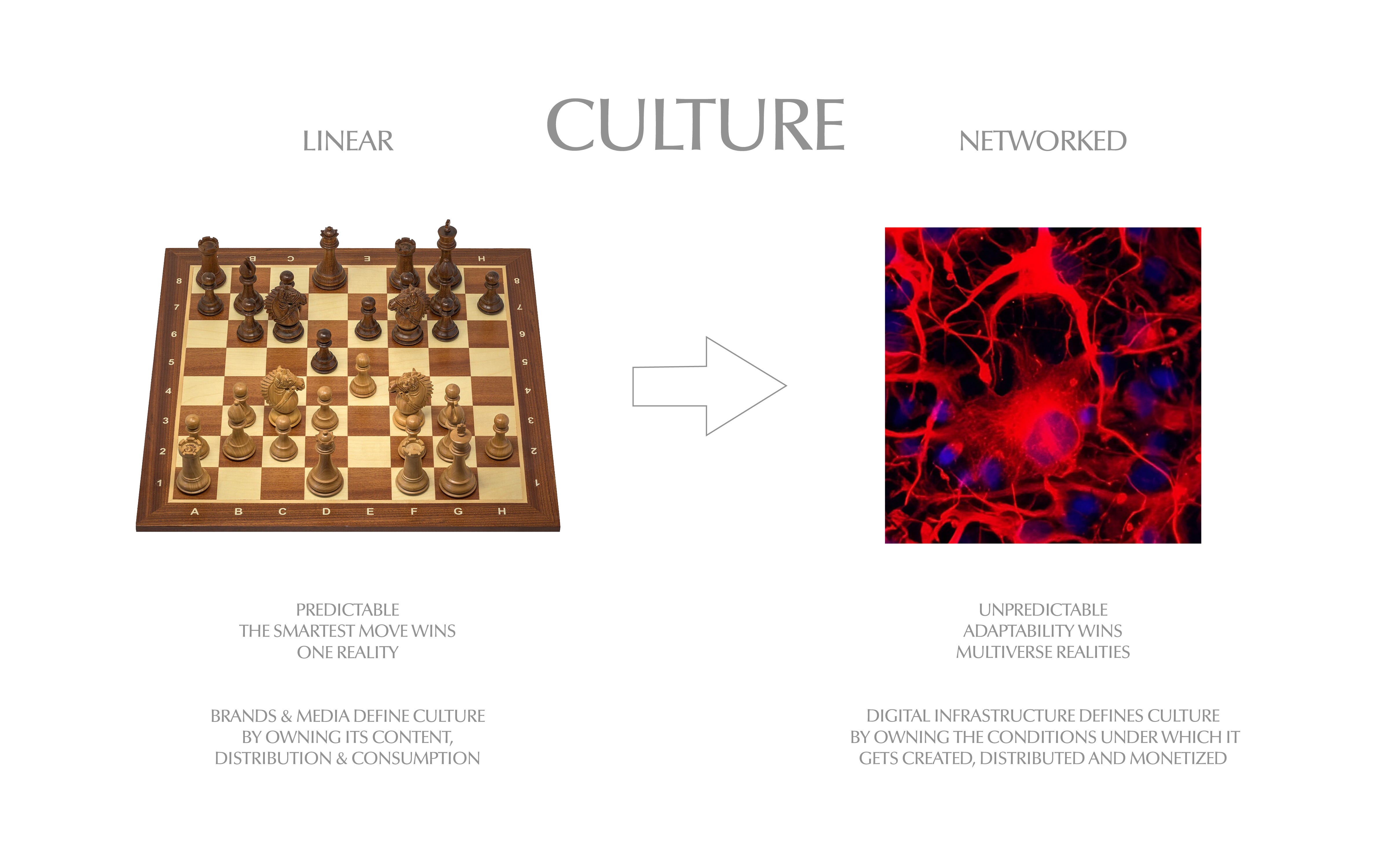
Last week I participated in an expert interview for a global insight consultancy’s 2027 foresight report. As I was reflecting about technology and power, values and imagination, one question I had to think a little longer about was what brands are supposed to do in the shifting landscape.
Now that social media has become para-social media, meaning that both platforms and consumers have no interest in facilitating and finding connection or communities, but rather prefer to entertain and be entertained (as danah boyd aptly described in a recent paper), the ways to reach people through digital platforms is changing.
You either participate in amusing ourselves to death (to quote the ever-prescient Neil Postman) - like Nike spending a trillion dollars on a video that features the world’s biggest football stars - to catch a glimpse of people’s attention before the algorithm recommends the next video. Or you try building an audience yourself in an effort that seems increasingly counterintuitive as not only people have no interest in connecting online anymore, but the amount of work it takes to cut through the noise is at odds with what you get out of it. What we have to come to terms with is that the grand ideal of the social media age - creating a global village to strengthen our relationships, build communities, finding our identities online - has failed. And so it also came to an end for brands that saw it as a means to connect with their audiences in meaningful, personal ways. As a result, the logic of the past 20 years - target people online based on their interests and behaviours - stops working because people do not trust platforms. Even more so, they disdain the culture that results from the digital infrastructure that now owns most of its distribution cycle and lacks the values and imagination to bring forth anything other than maximum shareholder return. Now that the effects of the capitalist technomachine have become so blatantly obvious to most of us (as we described in our
Of course brands can be part of that meaning-making process. They just need to acknowledge that creating content (artworks, campaigns, media, entertainment) inside the machine doesn’t get you beyond that glimpse of attention. When para-social media remains the dominant paradigm of consumption - resulting in the current environment where brands pay to play and consumers scam, hustle and speculate as a means to game the system that everyone knows is rigged - people’s desires of finding connection, meaning and identity moves elsewhere. So what to do? In order to play a meaningful role in people’s lives I believe you either need to
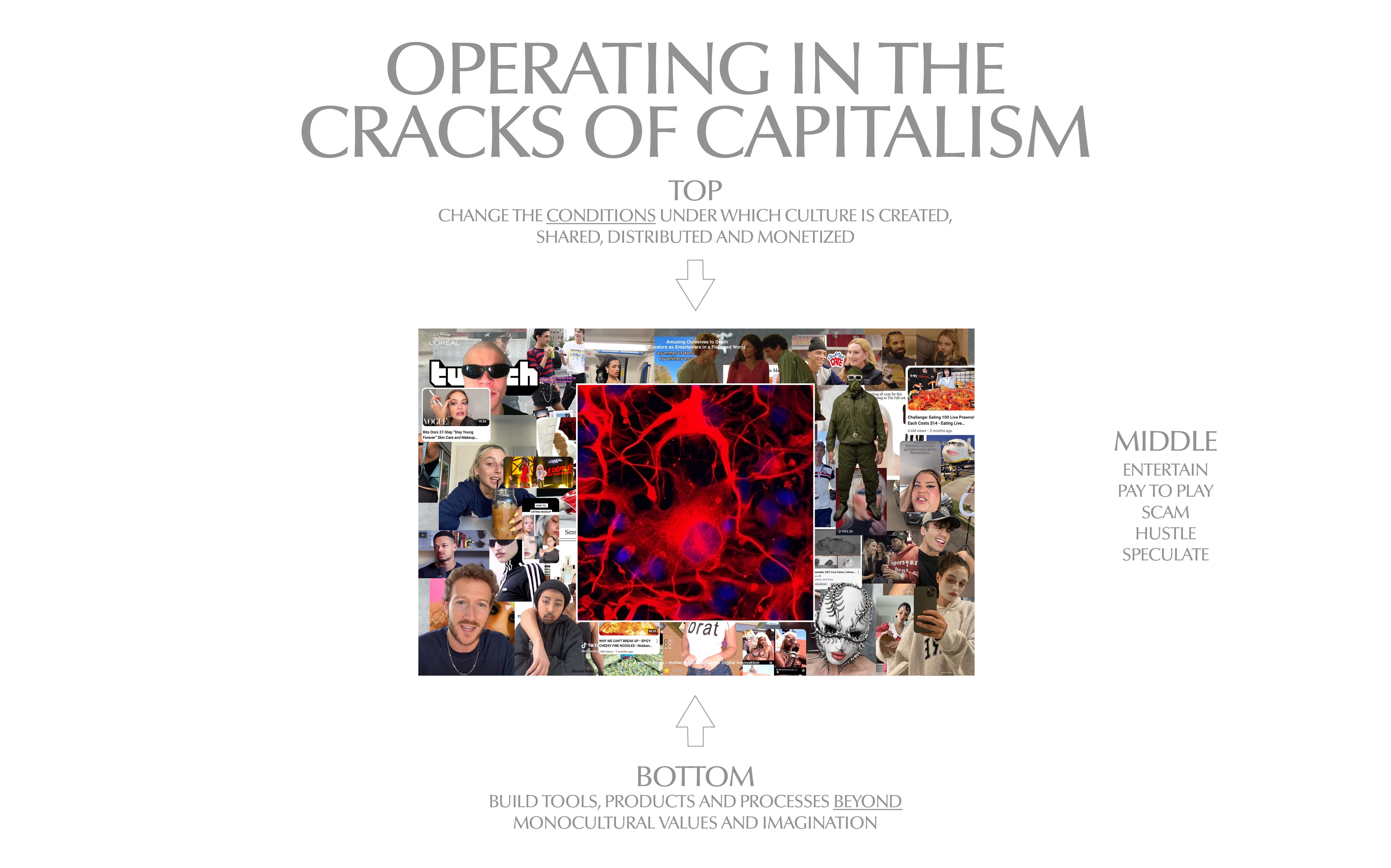
None of this is exactly new. But as the world keeps accelerating in this direction — increasing the gap between its winners, losers and doomscrolling consumers — operating in the cracks of capitalism evolves from a leftist activist strategy to becoming a popular survival mode.
So rather than subscribing to the old saying of “culture moves faster than ever”, which implies a passive understanding of culture as a rolling train that moves forward no matter what, I prefer the definition of the late media philosopher Vilém Flusser as culture being “the entirety of information a society chooses to process and store.” In this framing, the act of making culture is a conscious act we can participate in.
It’s up to us to make it happen.
That being said, we reworked our project portfolio to bring clarity into our offering. See below for the three services we focus on in our client work.
Understanding your audience is vital, but in today’s environment it won’t get you far without the environment in which it exists. co—matter’s approach combines audience insights with cultural analysis, revealing the macro forces that reshape popular culture and the opportunities that arise from it.
Recently we worked with a global consumer brand to:
Identify the changing role of luxury in a new era of athletic performance and self-optimization
Map the opportunities of the evolution of the creator economy into a professional creator class rewriting the logic of entertainment
Create models for understanding how the fracturing of the internet produces entirely new consumer worldviews that travel from the fringes to the center
The output (a series of internal insight reports) equipped the organization with concepts and language to understand current shifts, enabling global marketing, brand and strategy teams to identify opportunities and leverage new technologies.
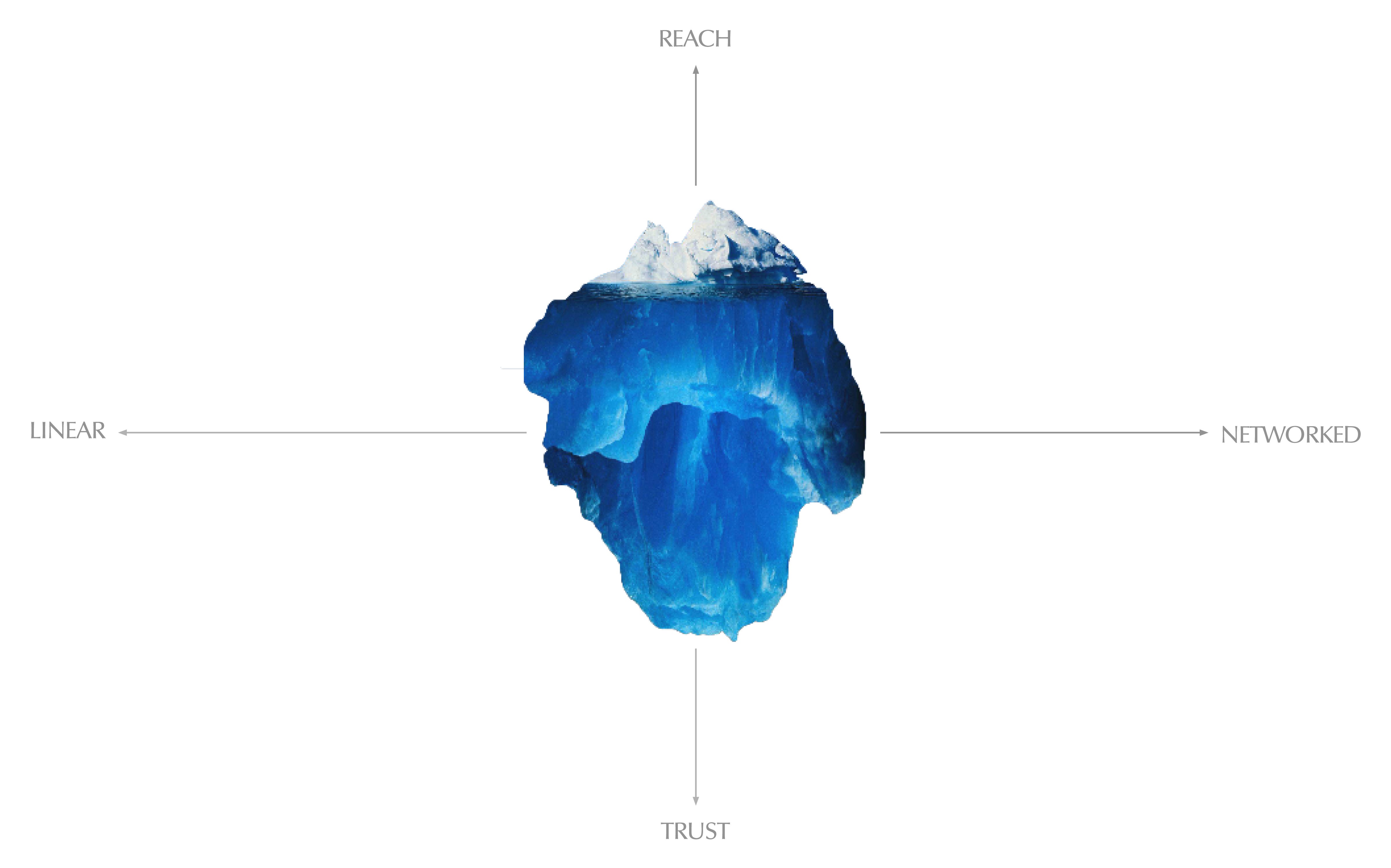
You can approach brand strategy from many angles. In the end it’s always about reaching people. Which becomes exponentially hard in a world where people switch off, go dark, game the system and have zero trust towards established media and distribution channels. Unless you create something that actually matters to them.
Not too long ago we worked with London’s Serpentine galleries to:
Evolve their annual Future Art Ecosystems publication into a living, community-oriented research platform
Develop the brand and community strategy for the launch of FAE4: Art X Public AI
Relaunch futureartecosystems.org as a destination that reflects the full breadth of what the initiative has become
The results are strategic models that can be applied across projects, leveraging internet native dynamics such as knowledge sharing, participation and belonging to create value for a highly specific audience.
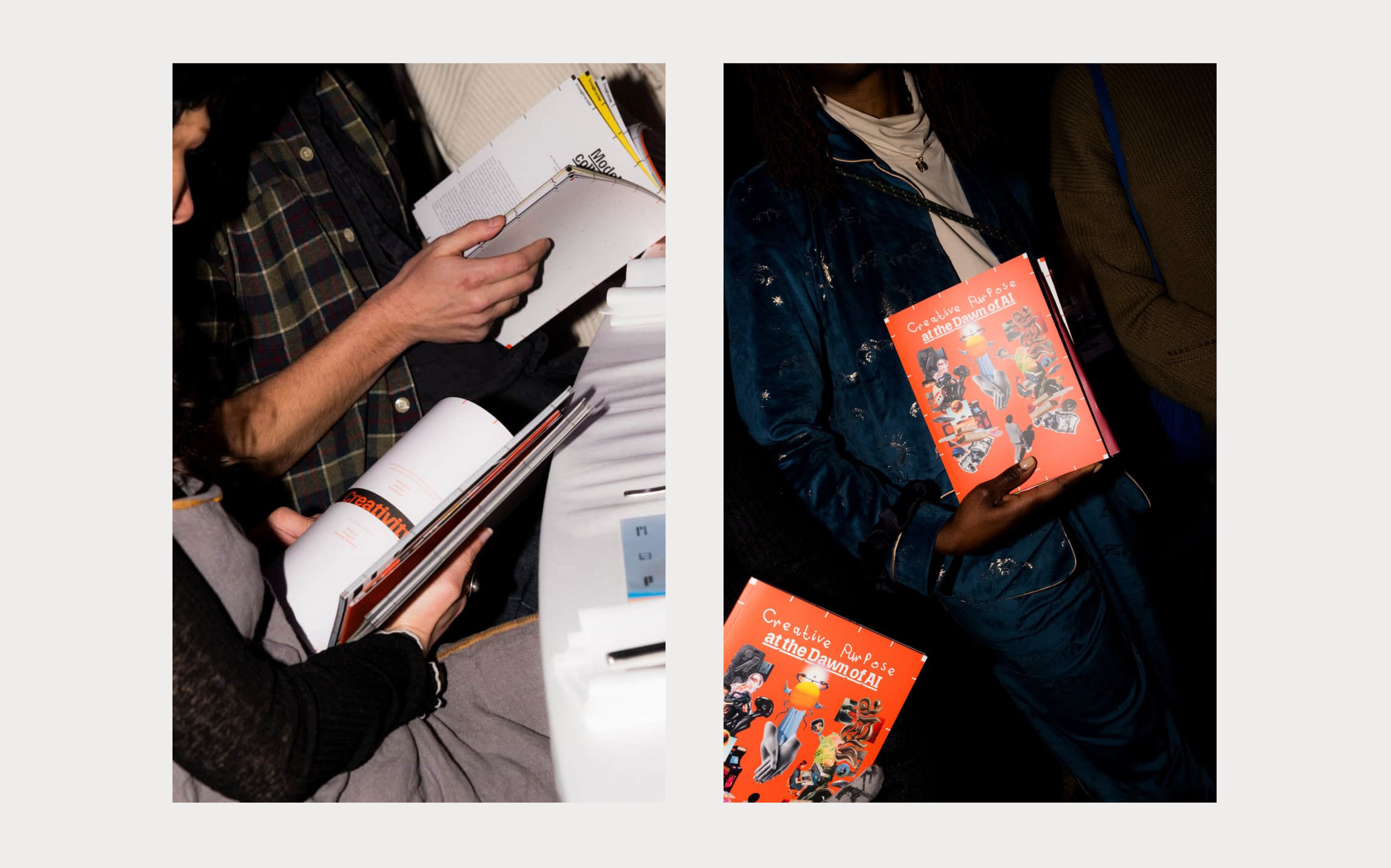
We call our publications, podcasts, video essays, conferences and gatherings cultural objects. What they have in common is that they’re designed to reach a certain audience, create value and represent a specific point of view. You can also call it thought leadership.
Earlier this year we worked with Mozilla Foundation to:
Distill the insights from a series of think tanks that brought together Hollywood’s filmmakers, creatives and cultural producers to discuss the role of creativity in the age of AI
Establish the “sexy middle ground” (a concept borrowed from artists Holly Herndon & Mat Dryhurst) between hype and rejection, proposing a path forward of critical, collective enquiry towards AI
Create and launch the publication Imagine Intel: Creativity at the Dawn of AI as a public resource and limited edition print publication handed out to partners, collaborators and donors along with a launch event in partnership with Berlin’s transmediale conference
The raison d'être for cultural objects is to give people access to ideas, concepts and narratives to shape the world they want to live in. In brand speak that usually results in loyalty, community and engagement.
An extended, printed version of The Post-Naive Map together with Mozilla Foundation; highlighting tools, projects and ideas building alternative digital infrastructure.
A new memo on learning how to live with generated images, taking the vocabulary established by techno-communicologist Vilém Flusser as our point of departure
A strategy project that aims to solve the question of what makes the creative industries survive in the age of AI
About co—matter
co—matter is a research and strategy studio based in Berlin. We operate in the cracks of capitalism, bridging expertise in brand, editorial and community strategy with cultural analysis to develop a unique point of view for organizations.
Services:
Audience Insights
Editorial Strategy
Creative Direction
Brand Strategy
Communication
Community Building
Content Development
CurationContact
hello@co-matter.com
hello@co-matter.com
No posts
Comments
Nothing yet. Say the first thing.
Sign in to join the conversation.