
This is Part 4 of an ongoing series called The Future of Christianity is Communionist. If you’re reading this for the first time, start with Part 1, which lays the theological foundation everything else builds on.
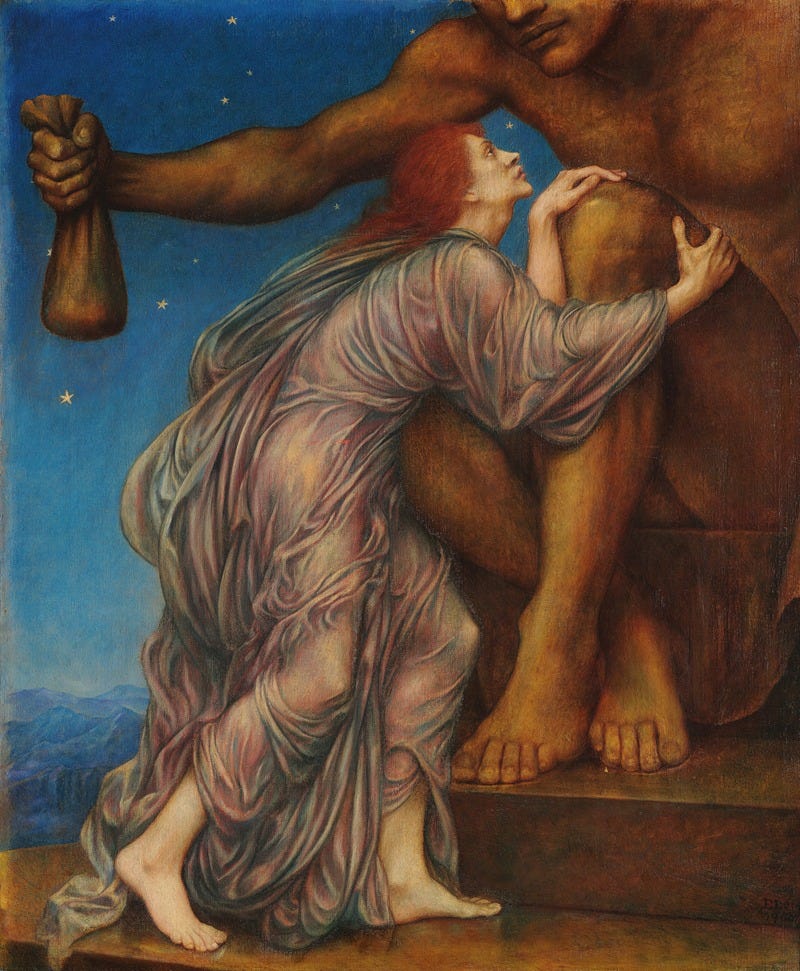
On the first day of Church History 101, our professor Dr. Jim Shelton, a delightful Catholic Pentecostal scholar, invited us to imagine early Christians stepping into our home church and asked if we thought they would know it was a Christian worship service. The student’s answers were all over the place, but eventually most of us agreed they would probably think we were worshiping a strange white sheet with images magically projected onto it. It’s a funny scenario to imagine, and the analysis goes beyond the mere aesthetics.
But, I think an even more interesting version of this thought experiment is to imagine 21st century Christians being transported back in time and, with the help of their AI translating devices, listening in on early Christian teaching about money and property. When they heard someone say “the spare coat hanging unused in your closet rightfully belongs to the man freezing outside,” would they be offended? If that was followed up with exhortations that the bread going stale in their kitchen is the property of the hungry, and that holding on to more than you need while your neighbor has nothing is theft and no different from robbing him in the street…. would they know they were listening to Christian teaching or would they nervously start backing toward the door worried they had landed in some kind of pagan proto-marxist organizing rally?
Somewhere between the early church and the church most of us were raised in, the fundamental Christian perspective on economy came to sound like a Godless alien threat, the kind talking heads on CNN and Fox have been warning you about for decades.
So WTF happened?!
Nobody went back and rewrote the homilies. Basil is still a saint. The lines about the coat and the bread are still sitting in his collected works, still assigned as seminary readings by professors that would call you a communist for repeating them at coffee hour.
But before you can understand how we got here, you first have to understand how wild it was to begin with. You could wave off one fiery bishop on a bad morning as anecdotal. What the record actually shows is that across centuries and continents, in Greek and Latin and Syriac, bishops who never met and who disagreed violently about the Trinity and the nature of Christ agreed on a specific set of convictions about what the scripture taught regarding wealth and how that must shape the Christian life. And what they agreed on would get a pastor fired from most American churches today.
When Jerome wants to explain why Jesus called money the mammon of iniquity, he reaches for a common proverb of his day, saying “For all riches proceed from injustice, and unless one has lost, the other cannot find. So this proverb seems to me most true: either a rich man is unjust or he has inherited from an unjust man.” He offers it as ordinary common sense, the kind of thing that needs no defense because his readers have heard it their whole lives.
In this essay I’m going to cover four claims that recur across these theologians, stated so often and bluntly that they read more like a refrain, born out of the obvious reading of Scripture, than arguments. By no means are the examples provided here close to exhaustive.
"we who valued above all things the acquisition of wealth and possessions, now bring what we have into a common stock, and communicate to everyone in need." — Justin Martyr, First Apology 14, c. 155, Rome
"One in mind and soul, we do not hesitate to share our earthly goods with one another. All things are common among us but our wives." — Tertullian, Apology 39, c. 197, Carthage
“You are not making a gift of your possessions to the poor. You are handing over to him what is his.” — Ambrose of Milan, 4th c., northern Italy
“Not to share our own riches with the poor is a robbery of the poor, and a depriving them of their livelihood; and that which we possess is not only our own, but also theirs.” — John Chrysostom, 4th c., Antioch and Constantinople
“The things and possessions that are in the world are common to all, like the light and this air that we breathe, as well as the pasture for the dumb animals on the plains and on the mountains. All these things were made for all in common solely for use and enjoyment; in terms of ownership they belong to no one. — Symeon the New Theologian, 11th c., Constantinople (Quote continued in the next section)
Like I said in the last installment, the Didache, the oldest how-to manual the church has, already told regular congregations somewhere around the year 100 to “share everything with your brother and call nothing your own.” This is not some fourth-century drift that set in once Christianity got powerful and started overthinking things. It’s there at the root, before there was a canon of Scripture or bishops in palaces. And then it just runs. Clement of Alexandria, writing to the wealthy Christians of Egypt around 200, says God “determined that the use should be common.” Lactantius, in North Africa a century later, says God “gave the earth in common to all... not that mad and raging avarice might claim all things for itself.” Cyril, back in Alexandria in the 400s, says flatly that “it is no man’s own by right of nature that he is rich.” Gregory the Great, in Rome around 590, condemns the ones who “claim to their own private use the common gift of God.” And Symeon is still saying it in Constantinople in the eleventh century, five hundred years after Gregory and nine hundred after the Didache. Syria, Egypt, Italy, North Africa, Rome, Constantinople. A thousand-year span. Men who with vast theological disagreements, and on this they don’t blink.
Before you start clutching your toothbrush, none of this is condemning personal property. Basil and Ambrose still assume you own the coat before you hand it over. But, they take ownership and demote it from a right you hold to a job you can fail. The fundamental premise is that your stuff isn’t really your stuff, it is God’s stuff and possession of it comes with the obligation to steward it on behalf of everyone, and the moment you fail to do that, you are not a thief in waiting, you are already stealing. That’s Chrysostom’s whole point; Holding onto what you don’t need is not a missed chance to be nice, it’s robbery. You are like a servant who was given talents by his master, and you buried them. Yes, you read me right, that passage is not about investing in the stock market.
And look whose in this list. Cyril of Alexandria is not a gentle man. He’s the bishop who ran his rivals out of the city, the name church historians reach for when they want a case study in raw ecclesiastical power. If anyone had a motive to soften the teaching and keep his wealthy patrons comfortable, it was him. He says it too. Nobody is rich by nature, which means it is unnatural. When your most ruthless witness agrees with your kindest one, you’re not looking at a faction. Real lions laying down with the sheep type shit.
Hold onto that word, common, because the economy we live in today is built on the destruction of the commons.
“The bread which you hold back belongs to the hungry; the coat, which you guard in your locked storage-chests, belongs to the naked; the footwear moldering in your closet belongs to those without shoes. The silver that you keep hidden in a safe place belongs to the one in need. Thus, however many are those whom you could have provided for, so many are those whom you wrong.” — Basil of Caesarea, 4th c., Cappadocia
“When we furnish the destitute with any necessity we render to them what is their own, we do not bestow upon them what is ours; we pay the debt of justice rather than perform the works of mercy.” — Gregory the Great, c. 590, Rome
“The superfluities of the rich are the necessities of the poor. When you possess superfluities, you possess what belongs to others.” — Augustine of Hippo, early 5th c., North Africa
“But covetousness, like a tyrant, has intruded into life, so that its slaves and underlings have in various ways divided up that which the Master gave to be common to all. She has enclosed them by fences and made them secure by means of watchtowers, bolts and gates. She has deprived all other men of the enjoyment of the Master’s good gifts, shamelessly pretending to own them, contending that she has wronged no one. But this tyrant’s underlings and slaves in turn become, each one of them, evil slaves and keepers of the properties and monies entrusted to them. Even if they are moved by the threat of punishments… and take a few or even all of these things to give to those who are in poverty and distress whom they have hitherto ignored, how can they be accounted merciful? Have they fed Christ? Have they done a deed that is worthy of a reward? By no means! I tell you that they owe a debt of penitence to their dying day for all that they so long have kept back and deprived their brothers from using.” — Symeon the New Theologian, 11th c., Constantinople (Quote continued from the previous section.)
Notice the emphasis on justice and not simple charity. Charity is optional… you can skip it and still be righteous. Justice is a debt, and refusing to pay a debt makes you a criminal. So when Gregory calls almsgiving “the debt of justice rather than the works of mercy,” he’s not saying that the man sitting on his surplus while people starve is failing some personal spiritual goal of being generous. He is stealing the masters property from those the master created it for.
Even Augustine, one of the softest major voices the early church has on money, hands the poor a property claim. Augustine… the one most willing to let a Christian keep his wealth as long as their heart is right. The one capitalist christians quote when they want permission to be rich. The consensus on this spans the whole ideological range of the tradition, from Basil, who’s family freed their slaves and turned their estate into a common home, to Augustine at his most accommodating. Even the moderate tells you it’s not yours… give it back.
“Whoever has the ability to remedy the suffering of others, but chooses rather to withhold aid out of selfish motives, may properly be judged the equivalent of a murderer.” — Basil of Caesarea, 4th c., Cappadocia
"Not to enable the poor to share in our goods is to steal from them and deprive them of life. The goods we possess are not ours, but theirs." — John Chrysostom, 4th c., Antioch and Constantinople
Those who hoard “walk in the midst of the slaughter of their neighbours,” and “almost daily slay so many persons as there are dying poor whose subsidies they keep close in their own possession.” — Gregory the Great, c. 590, Rome
“Very many rich men are found whose taxes are murdering the poor.” — Salvian of Marseille, 5th c., Gaul
"In vain do they think themselves innocent who appropriate to their own use alone those goods which God gave in common; by not giving to others that which they themselves receive, they become homicides and murderers... they cause the death of as many persons as they might have fed and did not." — Gregory the Great, c. 590, Rome
YIKES! If this one sounds like a stretch you may be living in the imperial core. In reality it’s pretty straightforward. If the excess bread in your pantry rightly belongs to the starving person, and if you steal from them the thing they need to stay alive, and they die, you got explaining to do on the day of judgement. As Gregory the Great points out, if the goods are kept close in the hoarder's own possession while the poor die, and the killing happens quietly, at a distance it can provide the illusion of innocence. If nobody calls the cops and you never see the result of your injustice, your hands may appear clean. But, be not deceived. God is not mocked.
The murder language doesn’t really show up until the 4th century, but that doesn’t mean it isn’t congruent with the church’s teaching from earlier sources. For its first three hundred years the church was marginal, mostly powerless, and in no position to run an economy or to sit on the kind of concentrated wealth that could do real damage. Then came Constantine, and over the next century Christianity went from a persecuted sect to the official religion of the Roman Empire. Peter Brown, a leading historian of the period, pins the real turning point to around the year 370, when the rich started entering the church in serious numbers. This is when we see an explosion of Christian writing about wealth. The people now filling the pews were no longer only peasants, merchants and freedmen. They were senators and landowners. The wealthiest of the wealthy, who literally controlled the grain. Basil is not preaching “you are a murderer” to a room of poor fishermen who accidentally let a loaf of bread go stale. He is preaching it during an actual famine to actual Christian aristocrats who are actually holding grain off the market while people outside actually starve. Equating wealth accumulation with murder is not some extreme deviation from the church’s teaching. It’s just that now the people the teaching implicates have the ability to hoard on a scale that kills.
If you grant, as Matthew 25 suggests you must, that this teaching applies not only to the individual believer but to a whole society that calls itself Christian… a society run by Christians, who’s economy is shaped by Christians, then the stakes are no longer about personal piety, but about the death dealing economy Christians as a group are enforcing. A handful of poor believers sharing their bread is a beautiful private virtue and act of charity. But an entire Christian civilization who’s comfort is predicated on the kind of hoarding the fathers called murder is something else entirely.
“God’s law forbids lending at interest to a brother... The law does not deem it right to collect interest on a loan. Instead, it commands lending freely to those in need.” — Clement of Alexandria, 2nd c., Alexandria
“Why do you scheme to make your idle money bear a return, and turn your brother’s poverty, the brother for whom Christ died, into the source of your enrichment?” — Hilary of Poitiers, 4th c., Gaul
“Because of the fecundity of the evil... As travail comes to the one giving birth, so the appointed day comes to the debtor. There is interest upon interest, the wicked offspring of wicked parents.” — Basil of Caesarea, 4th c., Cappadocia
The hoarder “is pregnant with a purse and begets usury out of desire for gain,” and the lender who fakes kindness “throws an anvil rather than a rope to one who is drowning.” — Gregory of Nyssa, 4th c., Cappadocia
"You shall not lend your money at interest, for it is written: 'He who has not put out his money at usury shall abide in the tabernacle of God.'" — Ambrose of Milan, 4th c., northern Italy
The fathers drew their confidence on this straight from Scripture. The Law forbids it (Exodus, Leviticus, Deuteronomy), Psalm 15 blesses the man who won't lend at interest, Nehemiah rebukes the nobles for "exacting interest, each from his brother," Ezekiel files it beside robbery and idolatry, and Jesus raises the floor in Luke 6, "lend, expecting nothing in return."
And peep the lack of nuance. There is no “usury is bad when the rate is predatory” or “interest is fine for a productive investment.” Those are the exact carve-outs Christians today use to prop up the entire modern financial system, despite the fact that it doesn’t live up to them. The fathers yank the floor out from under all of that.
This wasn’t just a Roman Christian thing. In the 4th century off in the Persian empire, entirely outside Rome, Aphrahat told the members of his covenant that a serious Christian “should not demand interest when lending, nor should he love greed.” The condemnation reached the far eastern edge of the Christian map. In Cappadocia the brothers Gregory of Nyssa and Basil run the same grim joke, did you catch it in their quotes? The Greek word for interest, tokos, is also the word for childbirth, so they turn it into a monster… money getting money pregnant, a coin in labor to deliver more coins, an unnatural birth, while the man who borrowed to feed his kids is crushed under the offspring. Ambrose, over in the Latin West, makes it robbery and cannibalism at once, the lender consuming the borrower as surely as if he had mugged him in the street. Gregory of Nyssa’s other picture is colder still. The lender who dresses a loan up as a favor is throwing a drowning man an anvil.
The consensus didn’t die when Rome did. The early church believed this so strongly that it wasn’t just something they preached about, they made it law. The Council of Nicaea barred clergy from taking interest. From there it only widened in the fourth century and on down through the medieval councils, until the Council of Vienne in 1311 declared that merely defending usury as lawful was itself heresy. This lived in binding canon law, the official position of the Western church for roughly a thousand years.
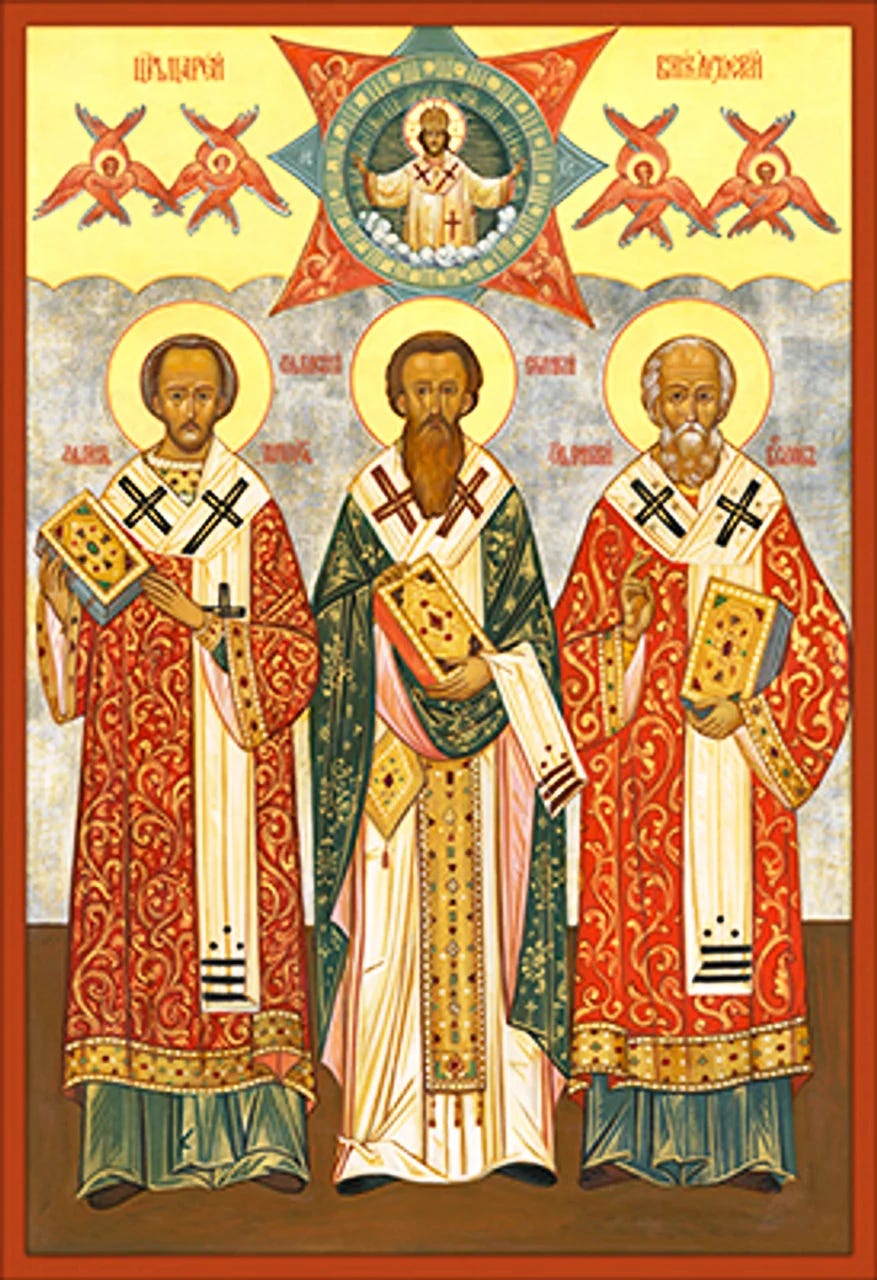
Perhaps my favorite formulation of all of this culminates in the thirteenth century with Thomas Aquinas. He follows it to the end and states out loud the conclusion the four convictions are pointing toward… when a person is genuinely in need, the rich man’s right of ownership doesn’t just bend. It vanishes.
“In cases of need all things are common property, so that there would seem to be no sin in taking another’s property, for need has made it common.
Things which are of human right cannot derogate from natural right or Divine right. Now according to the natural order established by Divine Providence, inferior things are ordained for the purpose of succoring man’s needs by their means. Wherefore the division and appropriation of things which are based on human law, do not preclude the fact that man’s needs have to be remedied by means of these very things. Hence whatever certain people have in superabundance is due, by natural law, to the purpose of succoring the poor.
For this reason Ambrose [Loc. cit., Article 2, Objection 3] says, and his words are embodied in the Decretals (Dist. xlvii, can. Sicut ii): “It is the hungry man’s bread that you withhold, the naked man’s cloak that you store away, the money that you bury in the earth is the price of the poor man’s ransom and freedom.”
If the need be so manifest and urgent, that it is evident that the present need must be remedied by whatever means be at hand (for instance when a person is in some imminent danger, and there is no other possible remedy), then it is lawful for a man to succor his own need by means of another’s property, by taking it either openly or secretly: nor is this properly speaking theft or robbery.”
It is not theft, properly speaking, to take secretly and use another’s property in a case of extreme need: because that which he takes for the support of his life becomes his own property by reason of that need.” — Thomas Aquinas, 13th c., Italy and Paris (Summa Theologiae)
He can be challenging to read so let me summarize it for you. God gave the earth to everyone. Private property is a secondary human arrangement laid on top of that fundamental one to facilitate the distribution of the common goods. So when the human arrangement collides with the divine purpose it was invented to serve, the human arrangement loses. As Aquinas said, the bread the starving man takes “becomes his own property by reason of that need.”
I told you before that the Christian consensus on wealth spanned not only centuries and continents, but also the theological divide. Around 410 an anonymous British Christian writing in Sicily, wrote a tract called On Riches. He sorted people into three groups, the rich, the poor, and the ones who have enough, and argued that poverty exists because wealth does. His solution was simple, get rid of the rich and you will find no more poor. Now, this writer ran in Pelagian circles, and Pelagianism got condemned as heresy. The church split with the Pelagians over how salvation works, not over whether the rich owed the poor. When the people you call heretics and the people you call saints agree, you’re not looking at a fringe position.
The same church that preached against the destructive accumulation of wealth also built an extensive network of redistribution. It started with the Jerusalem church that held everything in common and made sure nobody among them went without, but this foretaste of Heavenly economics did not die in Jerusalem or fade with the first generation.
By the early 200s the church had paperwork for it. The documents scholars call church orders, the Didascalia out of Syria, and the sprawling Apostolic Constitutions, are almost entirely about organization, money, and discipline. How the offerings come in to the bishop. How the common fund gets gathered. How it gets handed out to widows, orphans, the sick, prisoners, the poor. You can dismiss a spontaneous miracle as a one-off Spirit-drunk moment. It’s much harder to dismiss a bureaucracy. Nobody writes standing procedures for a permanent redistribution fund unless they intend to keep doing it for a very long time. By the year 300 the romance of Acts had become something much less romantic and much harder to kill… a working welfare system, run by the church, from each according to their ability to each according to their need, in city after city across the empire.
So how well did it work? The best evidence actually comes from one of church’s enemies. In 362 the emperor Julian, the last pagan to hold the throne, was trying to kill Christianity by bringing back the old gods, and he was losing. “It is a disgrace”, he said writing to one of his pagan priests, “that the impious Galileans support not only their own poor but ours as well,” while “all men see that our people lack aid from us.” He ordered his priests to build charity houses and copy the Christian habit of feeding strangers, because he could see it was winning converts faster than any argument. So yea, it sounds like the Christian economy was working so well he had to plagiarize it to compete.
I’m not going to sell you a golden age, because there wasn’t one. If the rich Christians had simply complied, there would be no need for six centuries of bishops escalating from “share” to “you are a murderer.” The vision and the failure lived in the same buildings, the same years, and sometimes the same sermon. Many Christians today, the kind that are slaves of two masters, will point to that as proof that all of this is a pipe dream. That we aren’t in heaven yet, so we have to be realistic and submit to the logic of a fallen world. But I guess what they say is true, the message of the cross really is foolishness to those who are perishing, but to us who are being saved it is the power of God. The gospel, that is to say the proclamation that the powers and principalities of this world have been dethroned and that Christ is establishing his Kingdom on earth through his body, the church, is not invalidated by our failures to live up to it. Like it said in Acts 4, because of the witness of Christ’s resurrection great grace came upon them, and made it possible for them to embody Heaven’s economics on earth. Maybe what we need today is some of that great grace, though it might be hard to come by when the gospel the church preaches bears witness to the reign of the powers and principalities instead.
But some of them did take it seriously. Macrina, the older sister and teacher of Basil and Gregory of Nyssa, turned the family estate into a shared household, freed their slaves and made them equal members of the household. Olympias, an obscenely wealthy widow in Constantinople, got ordained a deaconess and poured her fortune into the church and the poor and built a monastery that grew to hundreds of women. And Melania the Younger, inherited one of the largest private fortunes in the Western empire, with an income of around a hundred and twenty thousand gold coins a year and land across at least eight provinces. She set out in her twenties to liquidate all of it and give it away. This of course was met with extreme prejudice. Roman aristocrats moved to block the sales and drive the prices down so the estates wouldn’t leave elite hands. Her own father opposed her. Her husband’s brother took her to court to stop her. The propertied class understood, correctly, that a fortune that size flowing out to the poor wasn’t a private devotion, it was a threat to the whole arrangement of who owns what, and they used the law to fight it.
By the end of the 500s, at the doorway of the medieval world, all of it was still standing. When Gregory the Great wrote his handbook for bishops around 590, the teaching hadn’t softened a degree. The church’s ban on lending at interest holds in canon law past the year 1300. Aquinas restates the whole thing in the 1200s and, as we saw, quotes Ambrose word for word to do it. So when I say consensus, I’m not describing a mood that passed through. This was something that held, in its essentials, for the better part of a thousand years before it broke. Which makes the descent into the unholy union of Christianity and capital at once so disheartening and confusing. Don’t worry, the next several essays in this series will be dedicated to figuring out how that happened.
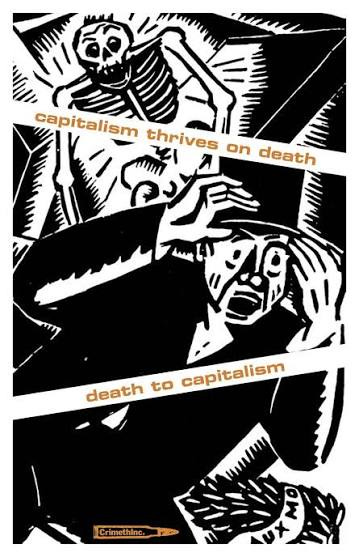
As I draw the first movement of this series to a close… yes, movement one had four parts and there are two more movements coming…I want to make clear that I am saying Christianity is incompatible with capitalism. Christians today, if they want to be faithful to Christ, must reject it as antithetical to their calling. The Scripture and the church’s faithful reading of and teaching on the Scripture bears witness to this. They did not have to say the word capitalism for this to be true. It would not exist for another thousand years. But we can safely assume someone would refuse to eat a baked good they had not conceived of yet if they have been clear that they refuse all of the ingredients used to bake it.
They said the earth is common and every title is an obligation to steward it for the use of others. Capitalism strips the condition off and makes ownership absolute, then drives it into everything, until the water and the seed and the land under your feet are all owned outright, held in fewer and fewer hands, and whatever cannot be fenced and sold is poisoned instead. The commons God gave to all get privatized in a totalized capacity and polluted.
Your surplus already belongs to the poor, they said, and keeping it is theft. Capitalism requires this theft, and requires you to compound it without end, because a firm that returns its surplus instead of reinvesting is a firm that dies.
Letting a man die you could have saved, they said, is a kind of murder. Capitalism turns that murder into a distribution method, creating artificial scarcity by rationing food, medicine, and shelter by who can pay instead of who needs, so that on a planet growing enough for everyone the granary stays locked by design.
And money must never breed money, they said. Capitalism makes breeding the entire purpose of money; the monstrous birth the Cappadocians recoiled from, the coin that that gives birth to coin, is now simply what a dollar is expected to do, what it must do.
Beneath all four convictions lies the appetite they named as the root of the rest, the hunger for more that knows no end. They called it a sickness of the soul to be healed. Capitalism installs it as a law, grow or die.
Capitalism is not just markets and trade, which are older than history. It is production organized to maximize profit, and you maximize profit by driving down the cost of the two things all production runs on, labor and resources. At home, in the imperial core, that squeeze has the potential to hit a wall… workers who will not be pushed past a point and land that will not yield past a point. Which means to continue to function Capitalism must reach outward for what it can no longer take at home, cheap labor and raw material from somewhere poorer, extracted on terms no domestic population would tolerate and held in place by either brute force, or soft power like USAID, the IMF, and the World Bank.
The comfort of the rich world, that many Christians think of as proof that capitalism works, is subsidized, right now, by that extraction, running into the trillions a year. Some would say that this is capitalism gone wrong and that we can fix it, but I believe it is capitalism grown up. Imperialism is not a stain on the model, it is the model, arriving where its logic must inevitably lead. Which is exactly where Jesus is standing, in Matthew 25, sorting the nations by what they did to the hungry, the naked, the sick, the prisoner, the least. A civilization that manufactures hunger, murder, and exploitation at that scale, along with every Christian involved in the project, is standing on the wrong side of that sorting.
When Decius told Christians around 250 to sacrifice to the Roman gods or die, a lot of them folded, and Cyprian of Carthage sat down to figure out why. His answer wasn’t fear, but money. Their wealth “had bound them with its chains… they were no longer free. Their money held them in chains… slaves of their profit.” Handed the choice between their estates and their God, they picked the estates. To Cyprian the rich Christian was a contradiction, a man attempting to walk uphill toward heaven refusing to cut loose the anchor around his neck. Todays Christians are not much different. Only they are more deceived. They have submitted themselves to the gods of empire while believing they are still servants of Christ. All the teachings of Christ evacuated of meaning and replaced with secular doctrine. Spiritualized away into oblivion. Convinced that there is no conflict in their submission to two masters. The anchor around their necks has been forged into the shaped of a cross.
I am not saying you’re damned for using money or holding a job in the only economy there is. You live here… so do I. You can live in Babylon. What you cannot do is call Babylon good or righteous. The Christian who does not merely endure this system but blesses it, who submits to its creeds, who evacuates the meaning of Scripture and replaces it with it’s opposite, is the one tying the anvil around their own neck. An economy does not just govern what we do, it forms what we are, and a life trained toward endless wanting and treating neighbors as instruments is a kind of moral injury, one that falls on believer and unbeliever alike.
Which leaves the one question this whole series exists to answer. If the faith and the system are this opposed, how did we get here? How did the church of Basil and Gregory become a church where the loudest Christian voices proclaim the not-so-good-news of the market as the nearest thing to the kingdom, where the logic of mammon gets read straight off the page as the logic of Christ? It did not happen by argument… there was no grand debate. It happened by a slow rewiring of the Christian imagination, a sequence of moves, each one reasonable-looking on its own, that taught believers to un-see what their own fathers saw in plain sight. More to come on that in the next installment.
Thanks for reading Kensington Koan. If you like what you read, or hate it enough to want to keep tabs on me, please consider subscribing to get my new posts sent directly to you. They are all free for the first 6 weeks. After that the full archive is available to paid subscribers. If you became a paid subscriber, it would really help me to keep producing this work. If you really want access and $8 a month is just too much right now (trust me I’ve been there most of my adult life), send me a direct message and we will work something out. <3
If you want to check out any of the books I recommend in my content, consider purchasing them through my Bookshop.org store instead of Amazon. You can choose a local bookstore to support with your purchase and help support my content as well.
https://bookshop.org/shop/coltenbarnaby
Ambrose of Milan (c. 339–397)
On Naboth (De Nabuthae) 12.53 — “You are not making a gift of your possessions to the poor…” Anthologized in Charles Avila, Ownership: Early Christian Teaching (Sheed & Ward / Orbis, 1983); trans. also in Boniface Ramsey, Ambrose (Routledge, 1997).
On Tobias (De Tobia) — his treatise against usury (the “consuming the borrower” material, paraphrased in the essay). Trans. Lois Miles Zucker, S. Ambrosii De Tobia (Catholic University of America Patristic Studies 35, 1933).
Letter 19 (to Vigilius) — “You shall not lend your money at interest…”
On the Duties of the Clergy (De Officiis) — NPNF, 2nd ser., vol. 10.
Aphrahat, the Persian Sage (c. 270–345)
The Demonstration on the Sons of the Covenant (”let him not lend at interest, and let him not love avarice”), and Demonstration 20 (”On the Support of the Needy”). Trans. Adam Lehto, The Demonstrations of Aphrahat, the Persian Sage (Gorgias Press, 2010). [Cite the covenant demonstration by name; confirm its number against Lehto’s contents — likely Dem. 6, not 8.]
Augustine of Hippo (354–430)
Expositions of the Psalms (Enarrationes in Psalmos) 147.12 — “The superfluities of the rich are the necessities of the poor.” Trans. Maria Boulding, WSA (New City Press); also NPNF, 1st ser., vol. 8.
Basil of Caesarea (c. 330–379)
Homily 6, “I Will Tear Down My Barns” (on Luke 12:18); “In Time of Famine and Drought”; and “Against Those Who Lend at Interest” (his homily on Psalm 14/15). All in C. Paul Schroeder, trans., St. Basil the Great: On Social Justice (St Vladimir’s Seminary Press, 2009).
Clement of Alexandria (c. 150–215)
Christ the Educator (Paedagogus) 2.13 — “the use should be common.” Stromateis (Miscellanies) 2.18 — on lending at interest. ANF, vol. 2.
Cyprian of Carthage (c. 200–258)
On the Lapsed (De Lapsis) 12 — “their money held them in chains… slaves of their profit.” ANF, vol. 5.
Cyril of Alexandria (c. 376–444)
Commentary on Luke, Sermon 109 — “it is no man’s own by right of nature that he is rich.” Trans. R. Payne Smith (1859).
Didache (c. 100)
4:8 — “share everything with your brother and call nothing your own.” Trans. in Michael W. Holmes, The Apostolic Fathers (Baker Academic).
Gregory of Nyssa (c. 335–395)
Against Those Who Practice Usury (Contra Usurarios) — “pregnant with a purse… begets usury”; “an anvil rather than a rope.” Trans. Casimir McCambley, Greek Orthodox Theological Review.
Gregory the Great (c. 540–604)
The Book of Pastoral Rule (Regula Pastoralis) III.21 — “the debt of justice rather than the works of mercy”; “the common gift of God”; and the “slaughter of their neighbours” passage. NPNF, 2nd ser., vol. 12; and Henry Davis, trans., ACW 11. [The blunter “homicides and murderers” wording used in the essay is an older alternate translation, not the NPNF rendering; if you keep it, cite the Latin (PL 77, col. 87) beside it, or switch to the NPNF wording.]
Hilary of Poitiers (c. 310–367)
Homilies on the Psalms (Tractatus super Psalmos) 14.15 — “the brother for whom Christ died.”
Jerome (c. 342–420)
Letter 120 (to Hedybia), c. 406–407 — the “mammon of iniquity” proverb, “either a rich man is unjust or he has inherited from an unjust man.”
John Chrysostom (c. 347–407)
Sermons on the Rich Man and Lazarus, Sermon 2.5 — “a robbery of the poor, and a depriving them of their livelihood” and “to steal from them and deprive them of life” are two English renderings of the same passage (the second is the wording in the Catechism of the Catholic Church §2446), not two separate statements. Trans. Catharine P. Roth, St. John Chrysostom: On Wealth and Poverty (St Vladimir’s Seminary Press, 1984).
Julian (”the Apostate”) (331–363)
Letter to Arsacius (Letter 22) — “the impious Galileans support not only their own poor but ours as well.” Trans. Wilmer Cave Wright, The Works of the Emperor Julian, vol. 3 (Loeb Classical Library, 1923).
Justin Martyr (c. 100–165)
First Apology 14 — “bring what we have into a common stock.” ANF, vol. 1.
Lactantius (c. 250–325)
Divine Institutes V.5 — “gave the earth in common to all… not that mad and raging avarice might claim all things for itself.” ANF, vol. 7.
Anonymous, On Riches (De Divitiis) (c. 410, Pelagian circle)
“Get rid of the rich and you will find no more poor.” Trans. B. R. Rees, The Letters of Pelagius and His Followers (Boydell, 1991).
Salvian of Marseille (c. 400–490)
On the Government of God (De Gubernatione Dei), Book IV — “very many rich men are found whose taxes are murdering the poor.” Trans. Eva M. Sanford (Columbia University Press, 1930).
Symeon the New Theologian (949–1022)
The Discourses — “common to all, like the light and this air that we breathe”; “covetousness, like a tyrant, has intruded into life.” Trans. C. J. de Catanzaro, Symeon the New Theologian: The Discourses, Classics of Western Spirituality (Paulist Press, 1980). [Confirm the discourse number against de Catanzaro before printing: our verification placed it at Discourse 9; other citations give Discourse 35 (~p. 359) or the Ethical Discourses. Open the edition and check which discourse this passage sits in.]
Tertullian (c. 155–220)
Apology 39 — “One in mind and soul, we do not hesitate to share our earthly goods with one another. All things are common among us but our wives.” Trans. S. Thelwall, ANF, vol. 3.
Thomas Aquinas (1225–1274)
Summa Theologiae II-II, q. 66, a. 7 (theft in cases of need), which itself quotes Ambrose via the Decretum Gratiani, Dist. 47. Trans. Fathers of the English Dominican Province.
Macrina — Gregory of Nyssa, Life of Macrina.
Olympias — Palladius, Lausiac History; and the anonymous Life of Olympias.
Melania the Younger — Gerontius, Life of Melania the Younger (trans. Elizabeth A. Clark, Edwin Mellen, 1984).
Apostolic Tradition — traditionally attributed to Hippolytus, but its authorship, provenance, and date are disputed; many scholars regard it as a composite text developed over time.
Didascalia Apostolorum (Syria, 3rd c.)
Apostolic Constitutions (c. 380)
First Council of Nicaea (325), canon 17 — clergy forbidden to take interest.
Council of Vienne (1311) — anyone who pertinaciously maintains that usury is not sinful is to be punished as a heretic.
Decretum Gratiani (Dist. 47), cited via Aquinas.
Exodus 22:25; Leviticus 25:35–37; Deuteronomy 23:19–20 (the usury laws)
Psalm 15:5
Nehemiah 5:7
Ezekiel 18
Matthew 6:24 (two masters); Matthew 25:14–30 (the talents); Matthew 25:31–46 (the sheep and the goats)
Luke 6:34–35
Acts 2:44–45; 4:32–35 (the Jerusalem community)
1 Corinthians 1:18
Galatians 6:7
Peter Brown, Through the Eye of a Needle: Wealth, the Fall of Rome, and the Making of Christianity in the West, 350–550 AD (Princeton University Press, 2012).
Comments
Nothing yet. Say the first thing.
Sign in to join the conversation.