
We spend a lot of time thinking about where the breakthrough will happen. Every discussion prompt is intentional. Every exercise builds on the one before it. Every reflection has a purpose. And then, every now and then, the breakthrough shows up somewhere else entirely.
That happened to me a few weeks ago when we were facilitating a leadership program for a group of senior leaders navigating extraordinary change. The day had been carefully designed around communication in constant change. We worked through simulations, practiced difficult conversations, and unpacked real organizational challenges. All of it intentional and all of it necessary.
But that wasn’t the moment people kept talking about afterward.
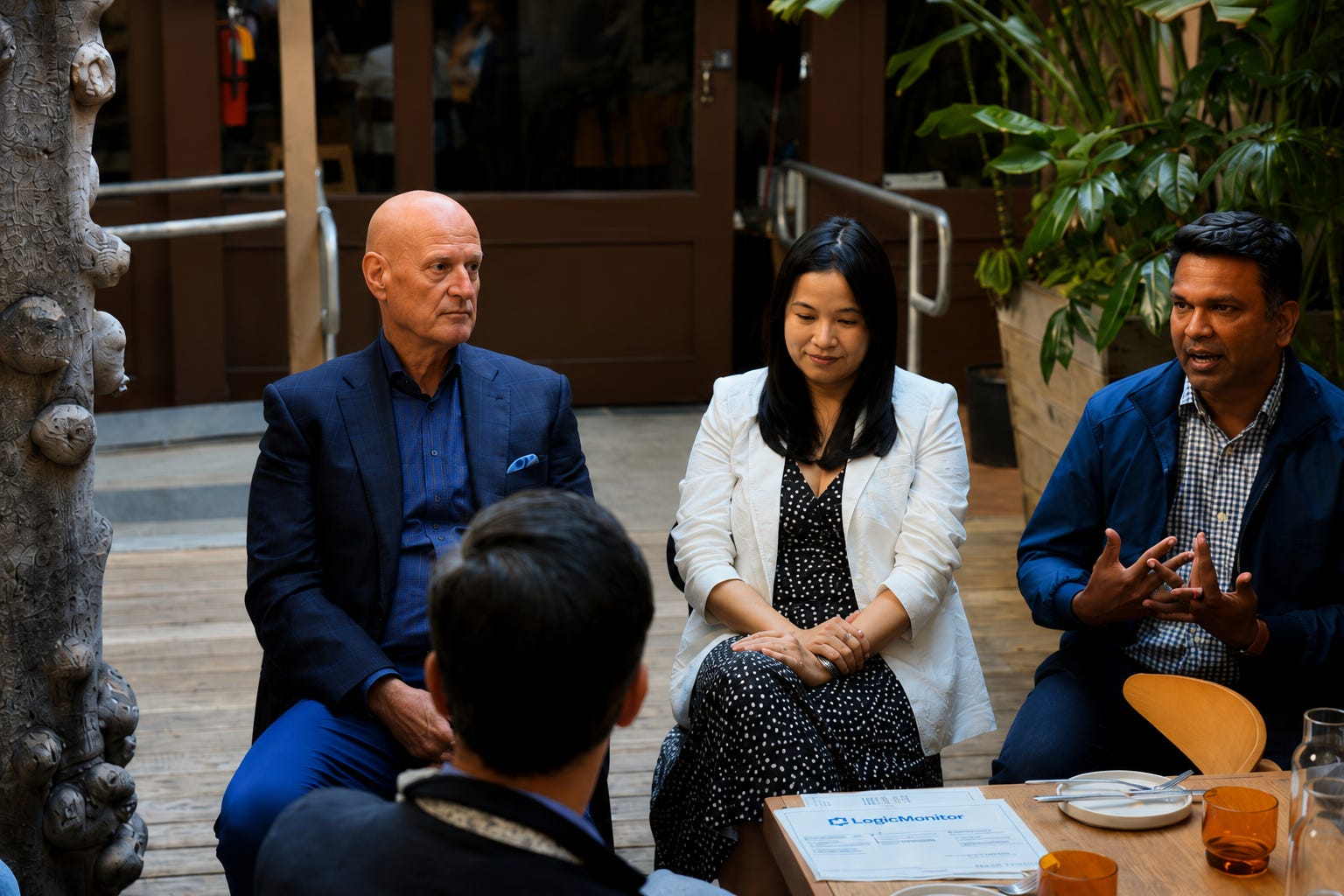
It was a moment that happened over dinner. Three members of the executive team sat down for a fireside chat. No slides. No rehearsed presentations. Just honest conversation. One question shifted everything.
“John and Karthik, your organizations are often described as operating with very different styles, cultures, and leadership approaches. How have you learned to partner effectively across those differences, and why is it important for leaders to recognize that different parts of the business may require different approaches in order to achieve the same mission?”
Everyone leaned in. Not because the question was especially clever, but because it gave them permission to stop pretending there was only one right way to lead. The room was starving for that permission.
The leaders didn’t explain how they’d become more alike. They explained why they hadn’t. One part of the business needed speed, experimentation, and comfort with ambiguity. Another required stability, consistency, and operational rigor. If both organizations were led the same way, one of them would probably be failing.
That’s when I realized what we actually do in organizations. We ask leaders to be aligned, and somewhere along the way that got translated into being the same. It’s one of the easiest traps to fall into. Alignment starts to feel like conformity. Different gets read as divided.
The best executive teams don’t eliminate their differences. They make those differences visible and explain how they work because of them, not despite them.
As the leaders spoke, you could almost feel the room recalibrating. The question shifted quietly from “Which leader is doing it right?” to “What does this part of the business actually need from me?” That’s a much better question. That’s the question that changes how people lead.
After the session, one piece of feedback kept surfacing. Seeing three executives openly describe different leadership styles while remaining deeply aligned on strategy was “genuinely reassuring.” They didn’t need identical answers. They needed permission to lead with intention.
That wasn’t the breakthrough I designed. It was the one the leaders needed.
Maybe that’s the real work of facilitation. Not scripting every breakthrough, but creating conditions where honest conversations can happen. Because people don’t learn from frameworks. They learn from watching leaders navigate complexity in real time. They learn from seeing someone else do it differently and survive. They learn from permission.
And sometimes the most valuable part of a leadership program isn’t on the agenda at all. It’s the moment when the script disappears.
If this landed for you, try this with your team. Ask them these three questions, and pay attention to what happens when you get honest answers:
Where is our insistence on sameness actually making us weaker?
Who’s compromising how they lead to fit in, and what are we losing because of it?
What decisions would change if we stopped pretending there’s one right way?
What would change if your team stopped treating different as divided?
Comments
Nothing yet. Say the first thing.
Sign in to join the conversation.