
This is an essay about what happens to the web when every API endpoint has a price.
The obvious read on x402 is that APIs can now charge per call. That’s true. A developer can add one line of middleware, set a price in USDC, and start collecting revenue on every request. A growing set of endpoints are live today, enough to make the pattern visible even if the market is still thin. But “APIs can charge per call” is the least interesting version of the story.
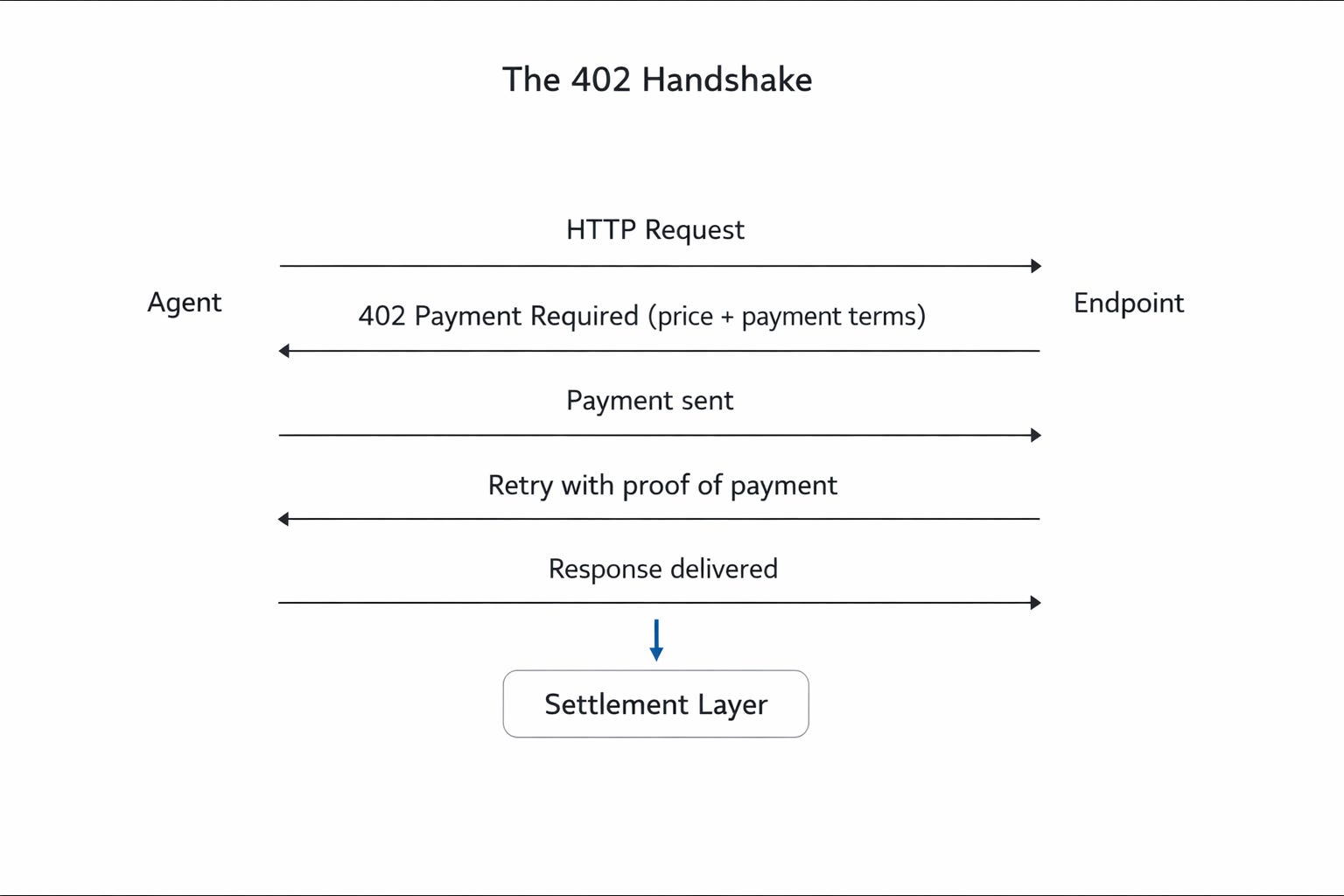
The mechanism is simple. An agent makes an HTTP request. The endpoint responds with 402 Payment Required and returns the price and payment terms. The agent pays, retries with proof of payment, and receives the response. No billing portal, no API key provisioning, no monthly invoice. Payment becomes part of the protocol itself.
The interesting version is this: when every endpoint has a price, every endpoint becomes an economic actor. It has revenue. It has costs. It has margins. And when agents start routing between priced endpoints based on quality, speed, and cost, those endpoints start competing with each other in real time. That’s not a payments feature. That’s a market forming inside the infrastructure of the internet itself.
Most of what I am about to describe is early or doesn’t exist yet at scale. The infrastructure is live, but the market it creates is still taking shape. Many of the earliest examples have clustered on Base because that is where x402 first found traction, but I think the deeper question is which settlement layers are actually best suited to an endpoint economy once it becomes dense and competitive. I work at Solana Foundation, which obviously shapes how I see that question.
One early example comes from Alfred Zhang, who says he built 186 pay-per-call DeFi endpoints using x402 on the EVM side of the ecosystem. Each one is independently priced based on the value it delivers. An ENS lookup costs $0.001. A MEV scanner that detects sandwich attacks costs $0.01. A wallet profiler costs somewhere in between. No subscriptions, no API keys, no billing system. Just a price per call and a wallet address.
This is a small project, and Zhang is candid that paid volume hasn’t materialized yet. But the structure is worth paying attention to. Each of those 186 endpoints is, in miniature, a business. It has revenue (price per call times volume). It has costs (compute, bandwidth, settlement fees). It has a margin. And Zhang is making business decisions about each one: what to charge, how to differentiate from competing endpoints, which ones justify higher prices because they deliver more complex analysis.
This pattern is already visible across the x402 ecosystem. Different endpoints are charging different amounts based on the value, latency, and specificity of what they return. The important point is not any one price sheet. It’s that pricing is moving down to the endpoint level.
The pricing decisions get interesting quickly. A flat fee per call is the simplest model. But what about variable-length inputs? A /translate endpoint processing a 50-word sentence and a 5,000-word document should probably charge differently. What about surge pricing when demand spikes? What about volume discounts for agents that make thousands of calls per day? These are the same pricing questions every business faces. The difference is that an API endpoint can adjust its pricing programmatically, in real time, without a human approving a price change.
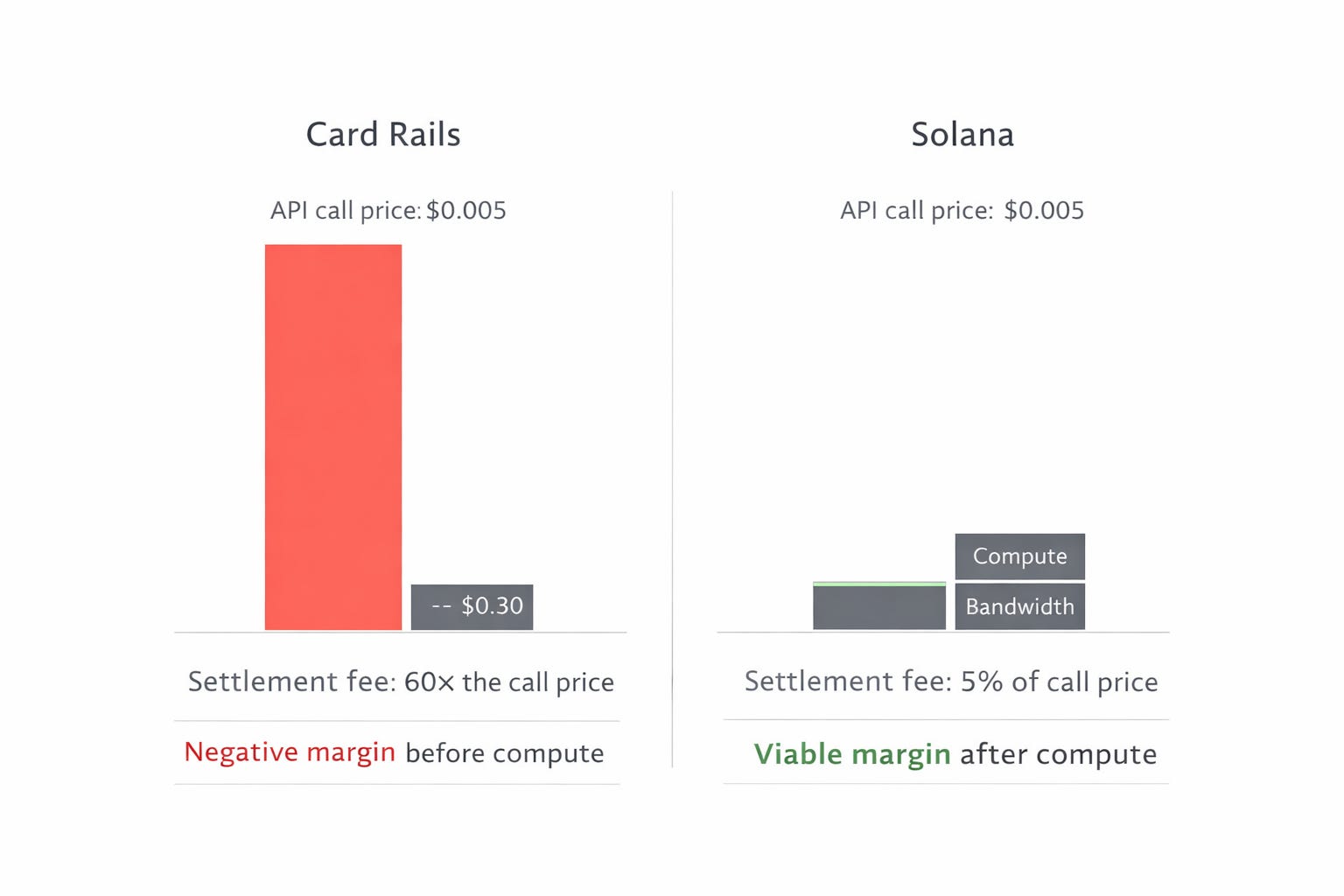
For this to work economically, settlement cost has to be a small fraction of the call price. At roughly $0.30 per settlement on traditional card rails, a $0.005 API call becomes uneconomic before you even account for compute. Low-fee chains, especially Solana, change that math by pushing settlement down toward fractions of a cent.
I think the mental model shift is this: an API endpoint is no longer an interface to a service. It’s a business that happens to deliver its product over HTTP. And when you have thousands of these micro-businesses running simultaneously, each with transparent pricing, you’ve created the conditions for something that starts to look like a market.
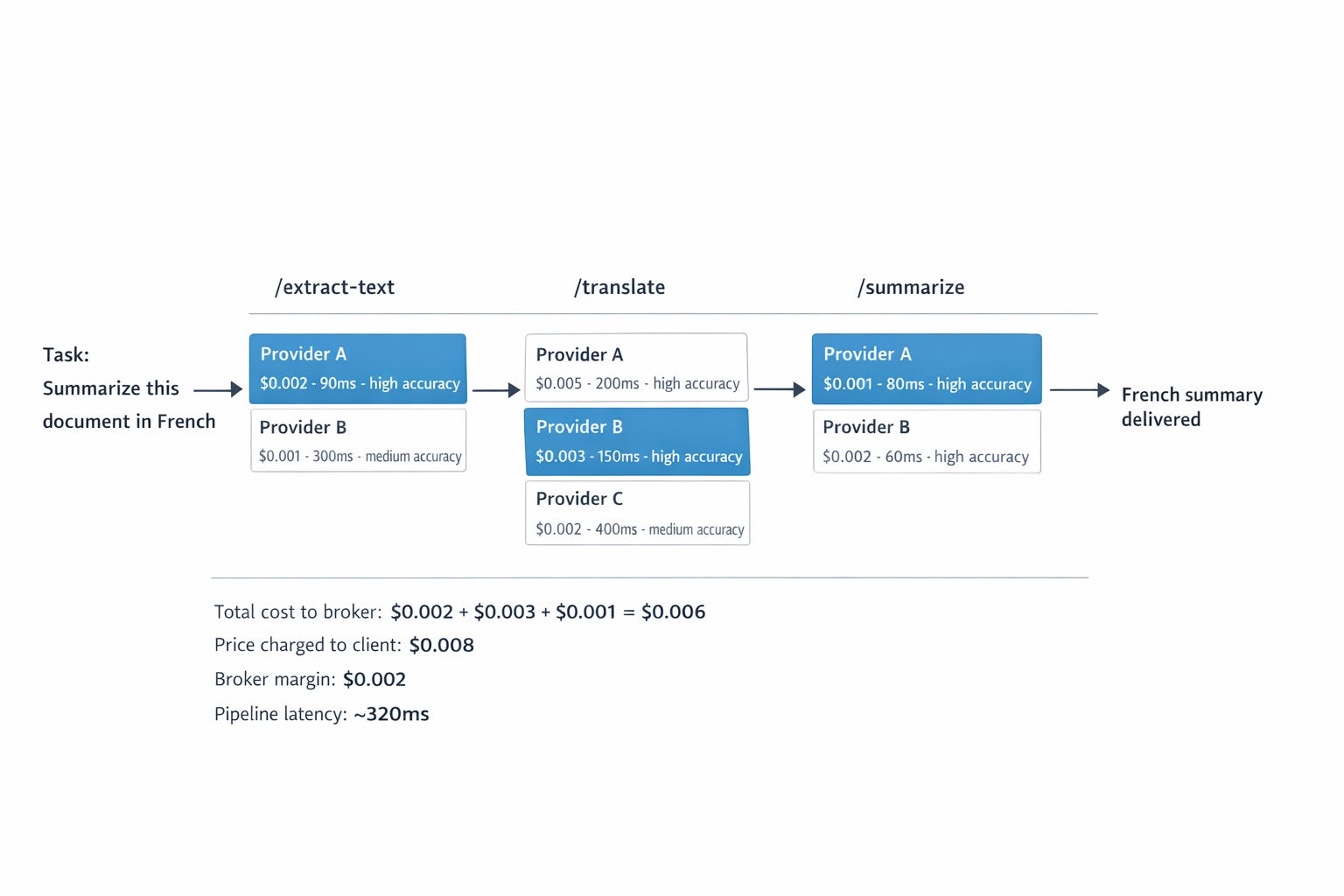
When priced endpoints exist, agents don’t just consume them. They compare them. An agent tasked with translating a document doesn’t call the first /translate endpoint it finds. It evaluates price, latency, and accuracy across multiple providers. x402 makes this comparison trivial because the payment terms are returned in the HTTP response itself. The agent can compare payment terms almost instantly and route based on price, latency, and expected quality.
Comparison is step one. Composition is step two. A single task often requires chaining multiple endpoints. Summarize this document in French might require /extract-text, /translate, and /summarize. Each endpoint has its own price. The agent assembles the cheapest or fastest pipeline dynamically, selecting providers for each step independently. The composition itself becomes a product. An agent that consistently assembles good pipelines is providing value beyond what any individual endpoint offers.
Token Metrics is already describing this pattern in their documentation. Their agents chain Token Metrics endpoints (crypto signals, grades, predictions) with Heurist Mesh (on-chain data), Tavily (web search), and Firecrawl (content extraction) to build multi-source analysis workflows. Each step in the chain is a separate paid call. The agent orchestrating the chain is making economic decisions at every step: which provider, at what price, with what expected quality.
Step three is where it gets genuinely new. When price differentials exist between functionally equivalent endpoints, agents can arbitrage them. Buy a translation from the cheap provider at $0.003. Bundle it with a summarization at $0.002. Offer the combined service at $0.008. Pocket the margin. The agent doesn’t own any infrastructure. It doesn’t run any models. It routes, bundles, and takes a spread. These are broker agents, and they’re the new middlemen of the internet.
There’s a second role for these brokers beyond arbitrage: budget absorption. If you’re a company running agents that make thousands of variable-cost API calls per day, your CFO wants a predictable monthly number, not a chaotic micro-spend ledger. A broker agent that charges you a flat fee and handles the variable x402 costs behind the scenes is a real business. It’s the same value proposition as a managed cloud provider, translated into the endpoint economy.
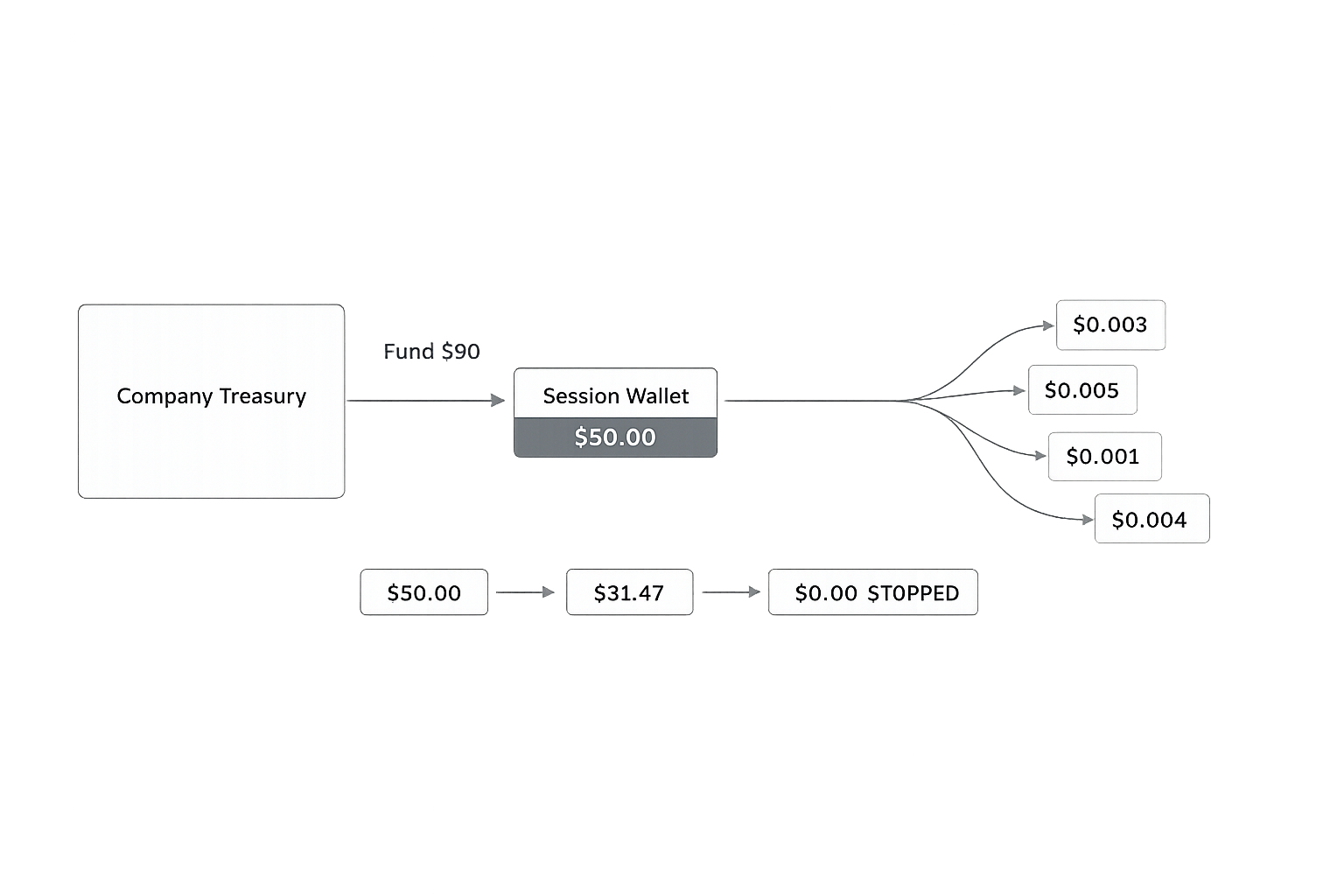
One mechanical detail that matters here: how agents get spending authority. An agent making thousands of micro-payments per day needs a wallet with delegated authority and budget constraints. The emerging pattern is a session wallet, a temporary wallet funded with a fixed balance that the agent can spend autonomously until the budget runs out. The agent operates freely within the cap. When the balance hits zero, it stops. This is how companies give agents economic agency without giving them unlimited access to a treasury. The constraints are financial, not procedural. That is what makes the budget-absorption model operational.
There’s a harder problem underneath the routing question: quality. An endpoint can take your $0.01 and return garbage. The agent doesn’t know the output quality until after it’s paid.
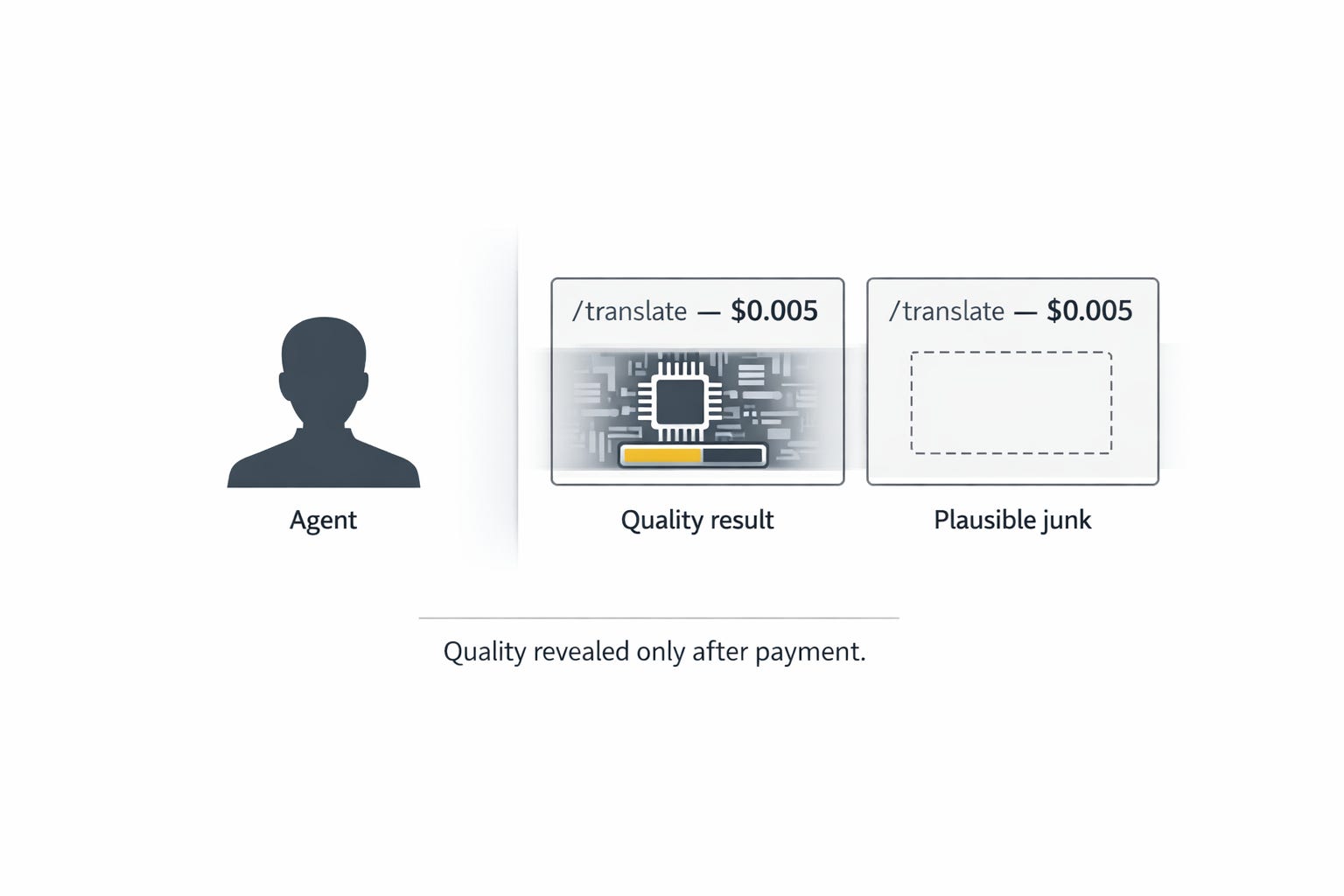
This is the classic market-for-lemons dynamic, and without a reputation layer, cheap junk endpoints can undercut legitimate providers by skipping actual compute. Work on portable agent reputation and cryptographic receipts is trying to solve this, but the trust layer is still early. Until the reputation infrastructure matures, agents will likely stick with known providers rather than price-shopping aggressively. The fluid market I am describing depends on trust being solved, not just payment.
I want to be honest about how speculative this section is. Agent-to-agent arbitrage at scale doesn’t exist yet. But the primitives do. Protocols like A2A, together with extensions around x402, are starting to define how agents can discover capabilities, exchange terms, and settle payments programmatically.
For this routing and arbitrage to function at speed, settlement needs to be faster than price changes. If endpoint A raises its price while your agent is waiting for settlement on endpoint B, the arbitrage window closes. Fast finality and low-cost settlement on Solana keeps that window open. This isn’t a theoretical preference. It’s a mechanical requirement for any system where agents exploit price differentials across providers in real time.
One concern worth naming: doesn’t this just centralize into a few mega-brokers who dominate routing? Maybe. That depends on how much domain-specific knowledge matters in assembling good pipelines. If generic routing wins, you get consolidation. If specialized knowledge matters (knowing which medical translation endpoint handles oncology terminology best), you get a fragmented broker market. I genuinely don’t know which outcome dominates, and I suspect it varies by category.
Zoom out from individual endpoints and broker agents and look at the system this points toward. More priced endpoints. More agents routing between them. More price signals propagating in real time. What you have is not a marketplace (a human-curated directory where you browse and choose). It’s a market (a dynamic system where supply and demand set prices and competition drives quality).
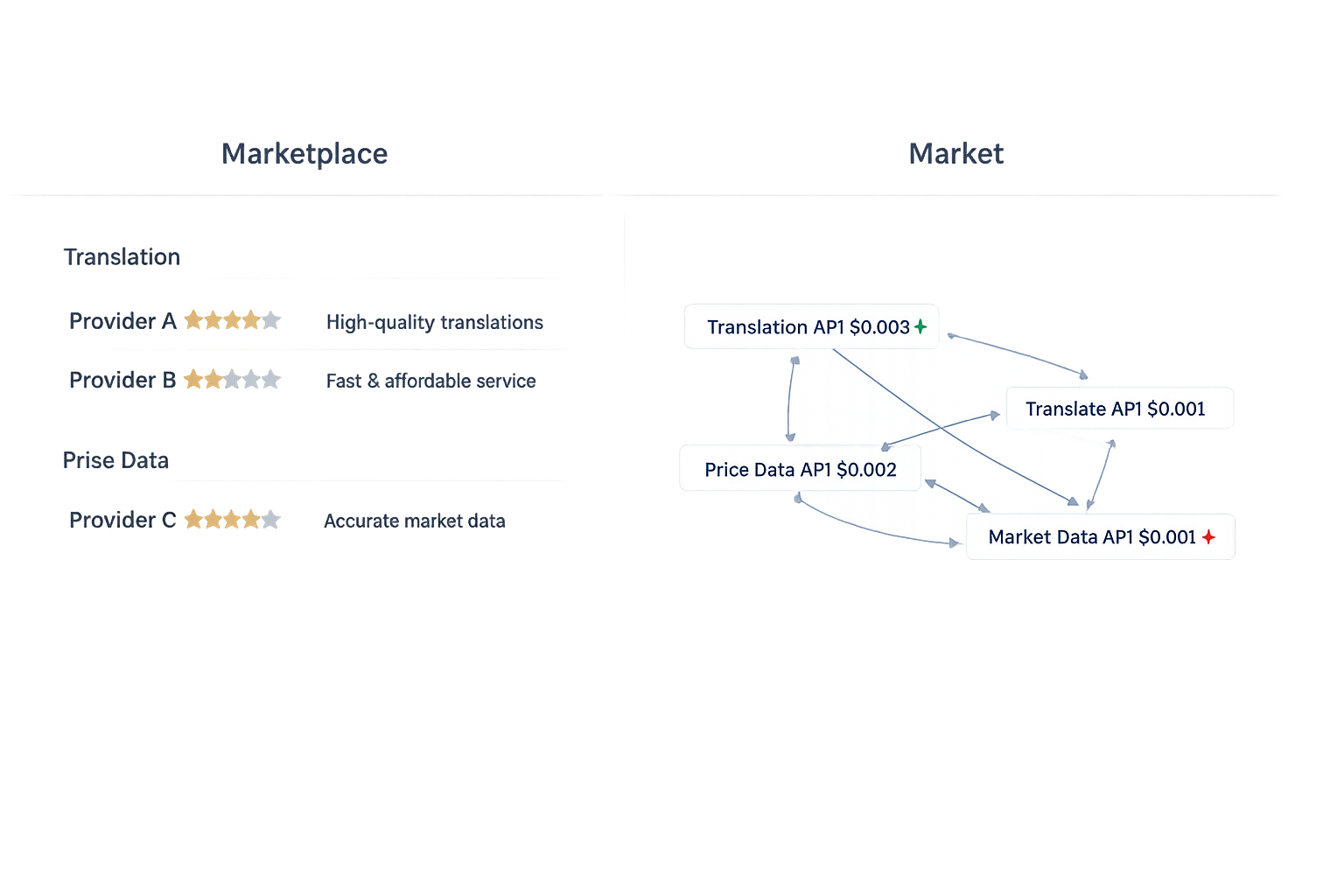
The x402 ecosystem already has the early infrastructure for this. X402scan provides live analytics on endpoints, transaction volume, and pricing. The x402 Bazaar acts as a discovery layer where agents can programmatically find services. The awesome-x402 repository on GitHub catalogs hundreds of live endpoints across categories from DeFi data to AI inference to web scraping, each with specific per-call pricing.
Price signals in this market carry information the same way they do in any market. These are the same dynamics you see in other competitive markets: rising prices can signal scarce quality, falling prices can signal commoditization, and volume tells you whether the market agrees. Except here the “companies” are API endpoints and the “traders” are autonomous agents allocating spend.
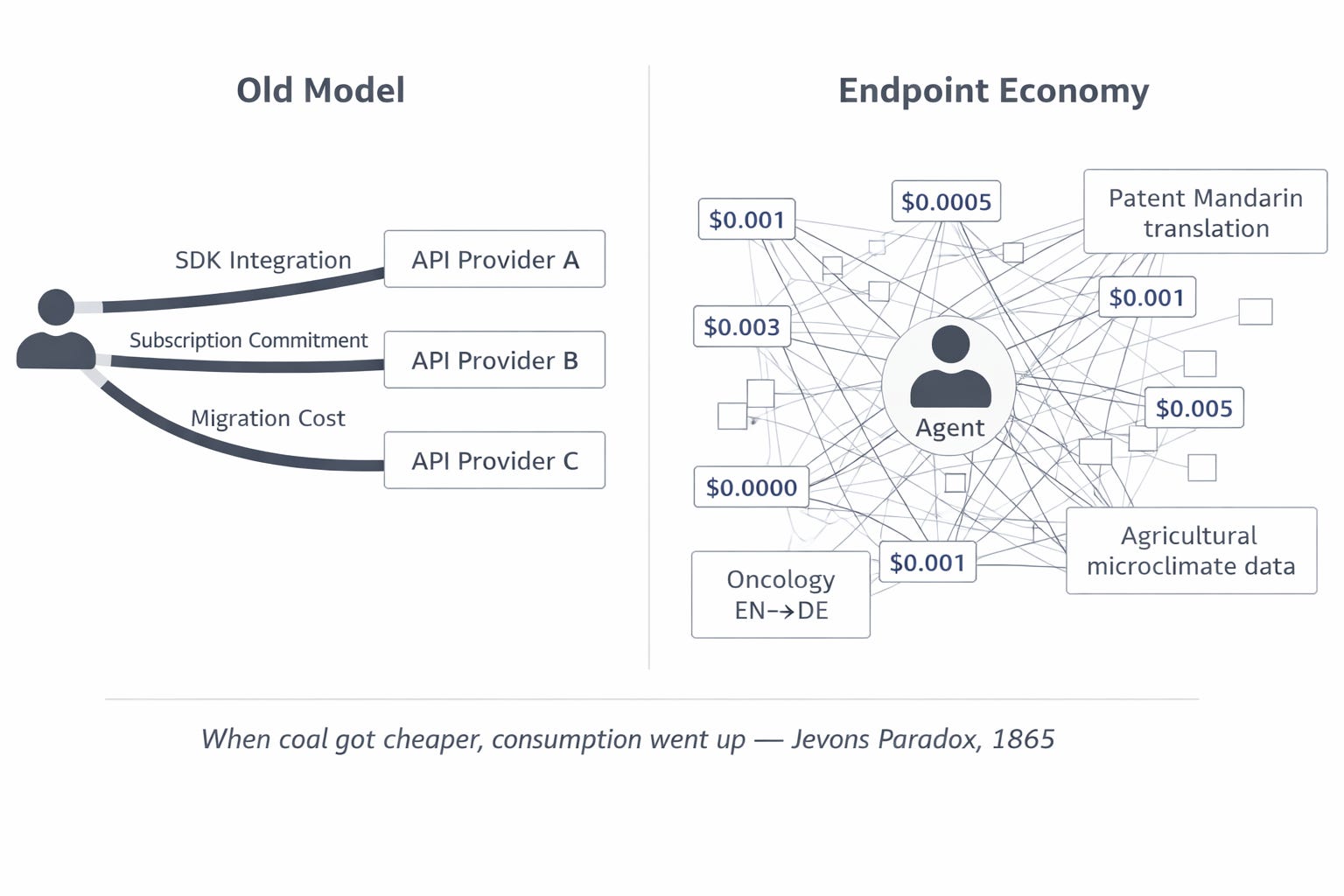
Competition in this model is continuous in a way that subscription-based APIs never experienced. Today, when you choose a translation API, you commit for a billing period. Switching costs are real: you’ve integrated the SDK, your team knows the quirks, migration takes engineering time. In an endpoint economy, switching happens on every single call. An agent can use provider A for one request and provider B for the next. Loyalty is zero. This creates relentless pressure on endpoints to maintain quality and competitive pricing at all times. That’s structurally different from any API business model that exists today.
One honest caveat here: frictionless switching requires more than standardized payment. x402 standardizes how agents pay. It doesn’t standardize what they receive back. Two endpoints offering the same service can return data in different formats, which means an agent can’t seamlessly swap between them without extra work. Until common data standards emerge for popular endpoint categories, switching costs are lower than subscriptions but not zero.
The long tail is what interests me most. When the cost of trying a new endpoint is a fraction of a cent, agents will experiment with niche providers. A /translate endpoint that handles only patent filings in Mandarin at very high accuracy can charge a premium and find its audience, even if that audience is small. A weather API that specializes in microclimate data for specific agricultural regions can serve a narrow set of agents willing to pay for precision. This is a version of Jevons Paradox applied to transaction costs. When coal got cheaper in the 19th century, total coal consumption went up, not down, because new uses became economically viable. The same logic applies here. When the cost of trying an endpoint drops from “integrate an SDK and commit to a subscription” to “spend a fraction of a cent,” you don’t just get the same transactions cheaper. You get transactions that couldn’t justify existing before.
Does this market consolidate or fragment? For commoditized tasks (basic translation, simple data lookups, generic price feeds), I expect consolidation. The cheapest provider with acceptable quality wins, and there’s limited room for differentiation. For specialized tasks (domain-specific analysis, proprietary data, complex multi-step inference), I expect fragmentation. The value is in the specificity, and no single provider can cover every niche.
For the commodity endpoints, margins will compress toward raw compute cost. When 500 providers run the same open-source model behind identical x402 interfaces, the price converges to infrastructure cost plus almost nothing. The margin in this market lives in specialization, composition, and routing. Not in running generic inference.
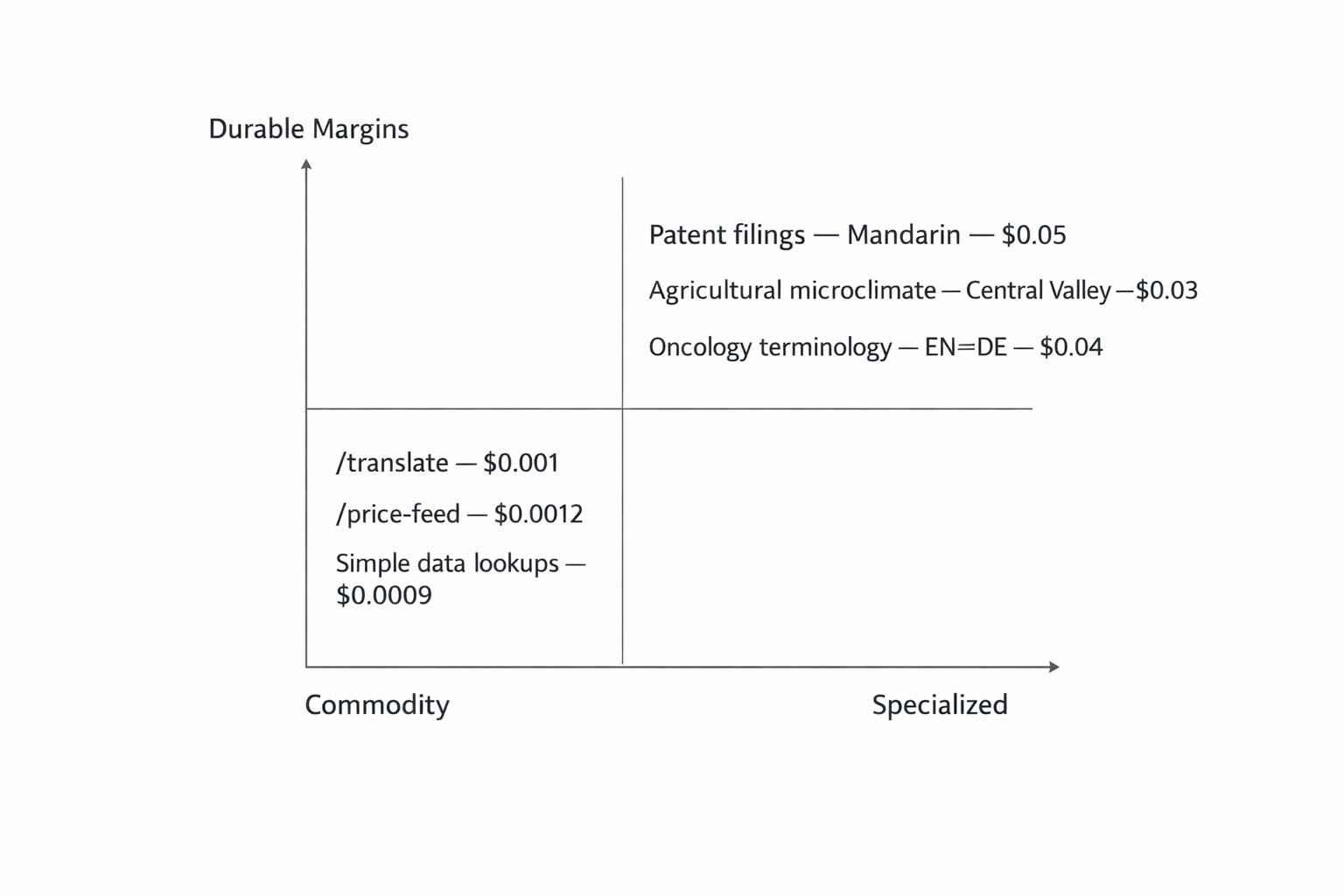
The honest answer is that both will happen simultaneously, in different categories, at different speeds. And nobody, including me, knows where the boundary sits.
The web was built as an information network. Anyone can publish, anyone can read, and the protocols handle the routing. x402 is adding an economic layer with the same properties. Anyone can price an endpoint, any agent can pay for it, and the protocols handle settlement.
That economic layer is still early. Most endpoints today are experiments. Most volume is concentrated in a few categories. The broker agents and arbitrage patterns I described are largely theoretical. But the structural logic is clear: when software can pay for software at near-zero cost with near-instant settlement, you get the conditions for a market. Not eventually. Mechanically.
The internet already runs on protocol layers that most users never think about. TCP/IP handles packet routing. DNS handles name resolution. TLS handles encryption. If x402 follows the same arc, payment becomes another invisible layer: something every endpoint can speak and every agent can understand without custom integration.
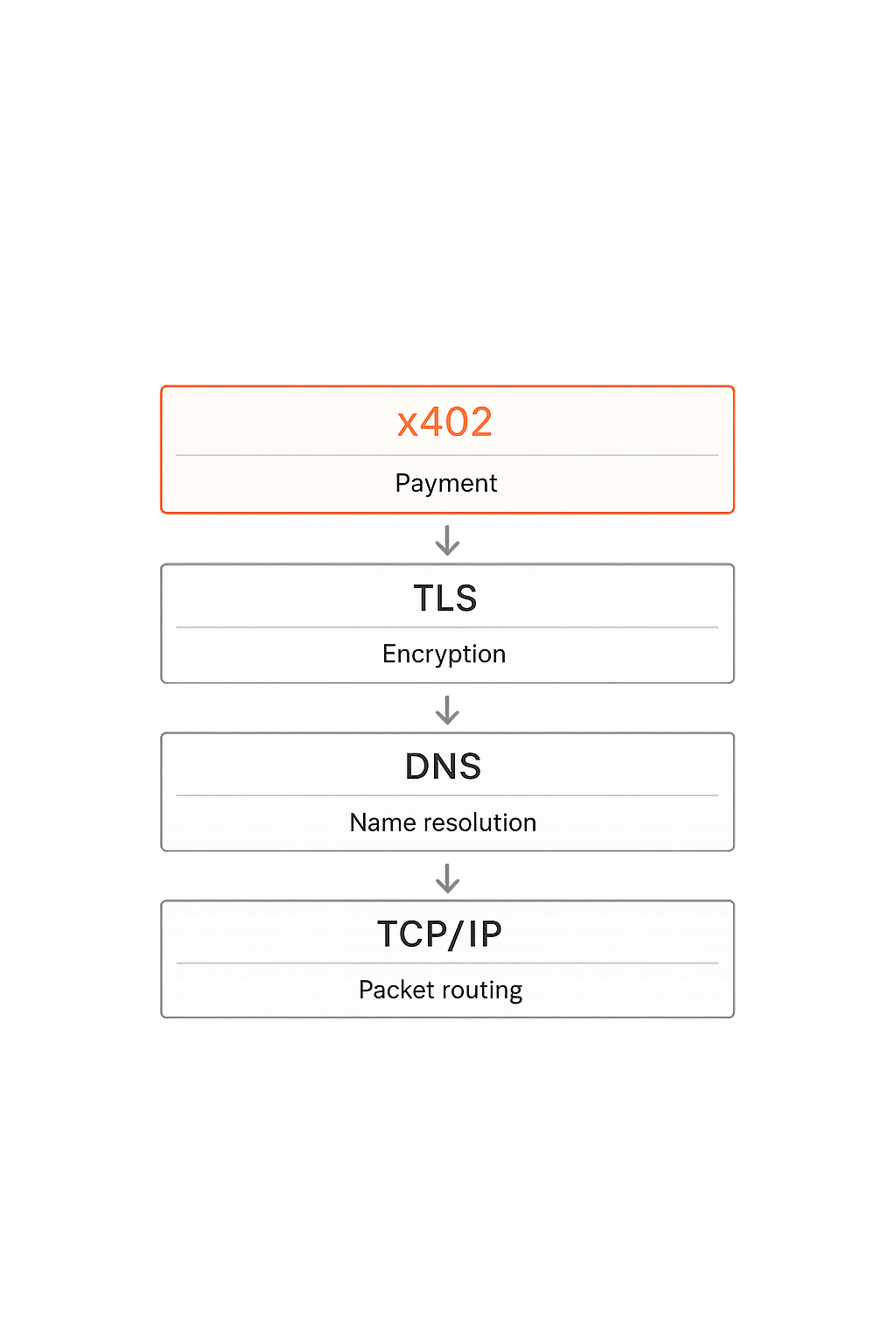
The question, then, is not just whether this market centralizes or fragments. It is also which chains are structurally capable of supporting it once routing becomes dense, margins get thin, and agents are making economic decisions continuously rather than occasionally. I think the open endpoint economy becomes much more plausible if settlement is fast, cheap, and ubiquitous enough to disappear into the background. I am not sure exactly where that leads. I am watching it form in real time.
No posts
Comments
Nothing yet. Say the first thing.
Sign in to join the conversation.