
People spent ~$234M opening tokenized card packs on Solana since Jan 2026, and almost nobody is talking about it.
Not avatars. Not social tokens.
Pokémon cards.
Physical ones. Graded, vaulted, tokenized, and traded on Solana.
And this is not a niche story.
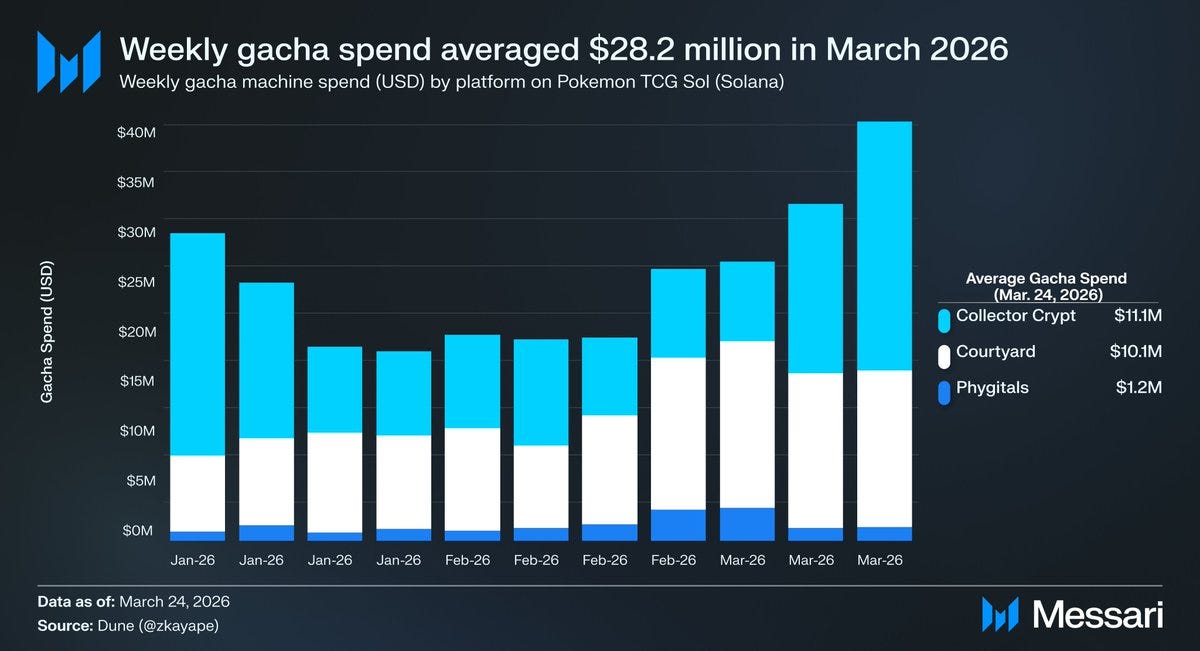
h/t @MessariCrypto
Those are real dollars from real spend. People paying money to open packs.
Crypto often tries to create new behavior from scratch.
That’s usually where consumer products die.
Nobody wakes up wanting to care about wallets and metadata standards. They wake up wanting to collect rare things, speculate a little, flex taste, feel lucky, and maybe make money.
Trading card games already solved this.
A trading card is basically an offchain NFT that people actually understand. It has rarity, provenance, status, scarcity, price discovery, and a secondary market.
The difference is packaging.
NFTs asked mainstream users to learn a foreign language. Trading cards speak in a language people learned at age nine.
Consumer crypto wins when it upgrades markets where obsession already exists.
The strongest metric in consumer crypto is not one-time spend. It’s repeat spend.
Desirable cards sit in a known pool. Users pay to pull a randomized pack. Rarity creates emotional stakes. The platform offers an instant buyback at a certain % of indexed market value.
Bad pull? - Sell it back and rip again.
Good pull? - Hold it, trade it, or cash out and keep playing.
This is the part crypto kept missing.
Most NFT products were basically one-shot transactions. Mint once. Wait for somebody else to show up.
This is different. The product is built around repeat spend. Holding is one outcome, but it is not the center of the loop. More transactions per user. More reasons to come back tomorrow.
This only works if the chain disappears into the product.
A $50 pack rip is fun. Add clunky UX and visible gas fees and it’s broken.
The loop depends on cheap, fast transactions because the margin structure depends on cheap, fast transactions. If every pull, resale, or buyback carried meaningful network cost, the whole thing starts to wobble.
Solana fits this product shape well because confirmation is quick and transaction costs stay tiny, even when users move in and out of positions all day.
The easy post-2022 take was that consumer crypto failed because nobody wanted to own digital things.
What failed was a specific format: PFPs with thin utility sold to crypto natives.
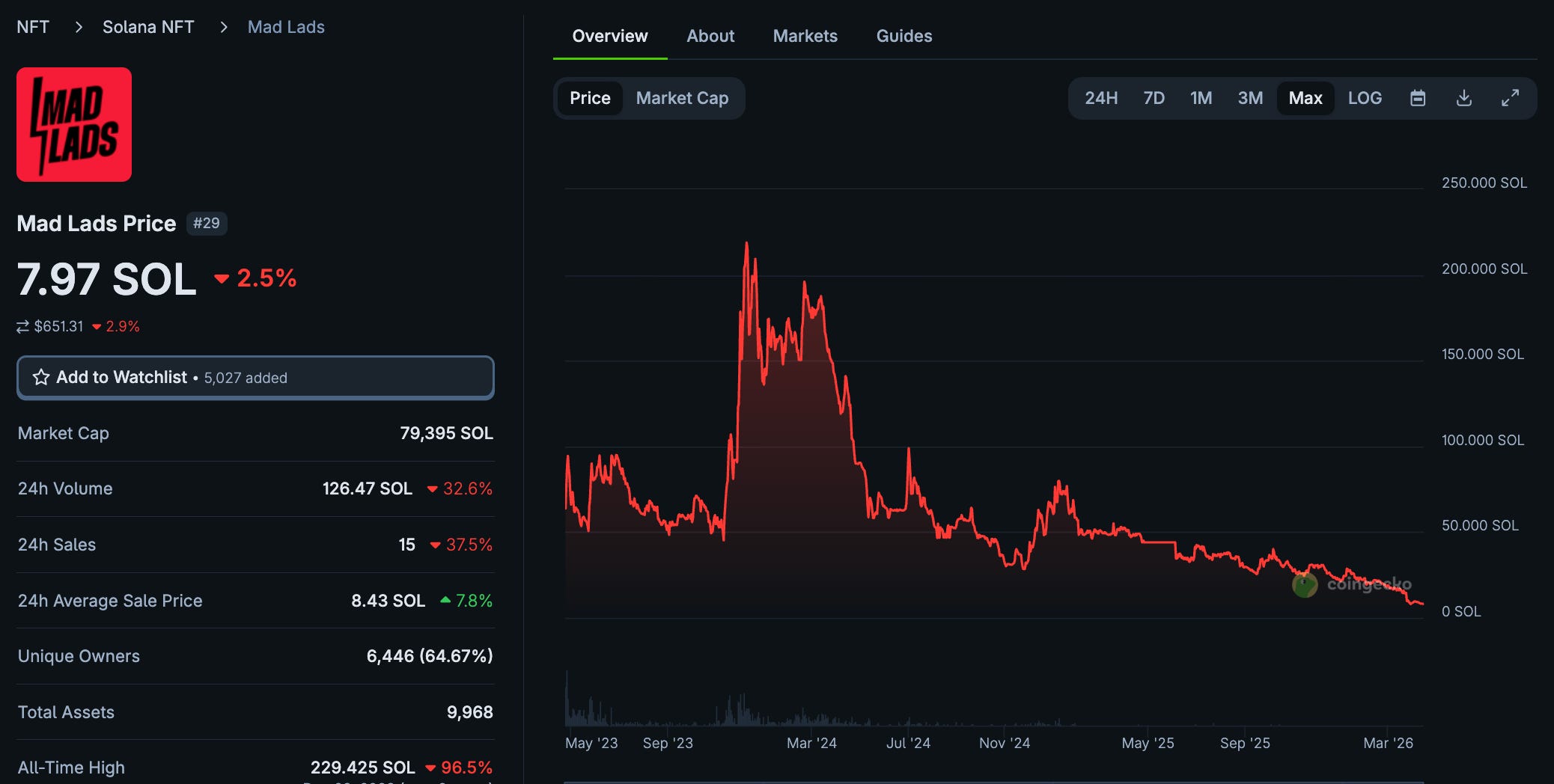
h/t @coingecko
The underlying demand never disappeared. People still want to collect rare objects, show them off, gamble on upside, and transact inside social hobby economies. The best consumer crypto products hide the crypto.
That doesn’t mean every tokenized collectible platform wins. It doesn’t even mean this exact model is durable forever. There are real risks here: custody, licensing, token dilution, platform concentration.
But that’s exactly why this category matters. It is not a clean demo. It is a real one.
Trading card games already had the collectors, the status games, the liquidity, and the dopamine.
That’s the real shift: from speculative ownership to liquid hobby economies.
No posts
Comments
Nothing yet. Say the first thing.
Sign in to join the conversation.