
Hello,
How’s the week going? I hope it has been a good one where you are. Here in Andhra Pradesh, everywhere badly needs rain but we’re getting occasional showers and the weather is bringing our frogs, lizards and butterflies galore. I’m mostly holed up working on publications and really enjoying the opportunity. It includes finally figuring out what to do with a kind of evidence that, until recently, had always seemed just a bit too obscure…
Flows of treasure
For at least a century and a half, a handful of rivers in peninsular South Asia - the River Amaravathi, as it runs through the South Indian city of Karur and the Vaigai that runs through Madurai, in particular - have disgorged treasures. A coin collector from the 1890s noted that the markets in Madurai were a good place to buy Roman coins that came from the river.1 In the 1990s, a newspaper magnate and coin collector began to gather and document one particular type of find from the river: Roman copper coins.2 Also in the 1990s, a scholar working on Tamil rock inscriptions visited Karur for work. He reports talking to people working in the river, hunting for treasure, and asking them to dig a hole in a random spot he pointed at. Within a few minutes they had turned up ancient coins and a golden ring! And in 2011, I visited Karur and met men who made some of their living searching the riverbed. It is seasonal work that fits into the dry months of the year when farm work is scarce. The parched banks of the river can easily be dug and searched and where the water flows it isn’t too deep or fast. I wrote about the journey and a book chapter I later published about it here.
I was going to put in a picture of the Amaravathi River but then I found this wonderful drone clip and it seemed more fitting - to see a river as it moves and get some sense of the landscape around it. Where the water moves more quickly around the pillars of the bridges antiquities often cluster in larger numbers. In the dry season, treasure hunters will dig out the piled sand.
By the time I was in Karur the work had become dirtier and more dangerous than ever before. Treasure hunting in Karur has never been an Indiana Jones type affair. Even the narrowed streams of the river at low ebb could sweep people away, trap them in currents around rocks or bridges, or carry heavy debris. By the early 2000s, pollution from the textile industry in the region added to these risks. The men I spoke to complained of skin lesions and eye damage. But there was still a market for the treasures of the Amaravathi.
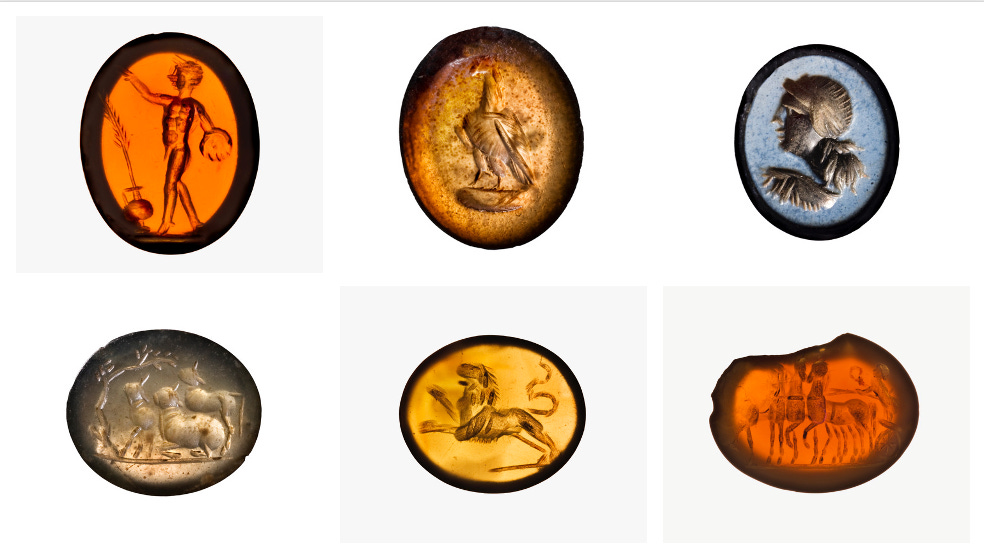
Coins have received the most interest from among the things that gleam in the river, closely followed by intaglios. The coins can usually be identified. Even if we don’t know exactly when or why they ended up in the river, we can place them in a specific time, link them to particular kingdoms or regions. The cut gemstone intaglios, which came from the Roman Mediterranean, most depict miniature images of people and animals. They are colourful and engaging. You don’t need training or to know anything about ancient history to appreciate a dancing figure or a hunter and a lion and, even if we don’t know exactly where in the Roman Empire they came from or when precisely they arrived in South Asia, they provide some physical evidence of long distance trade links that have fascinated scholars for centuries.
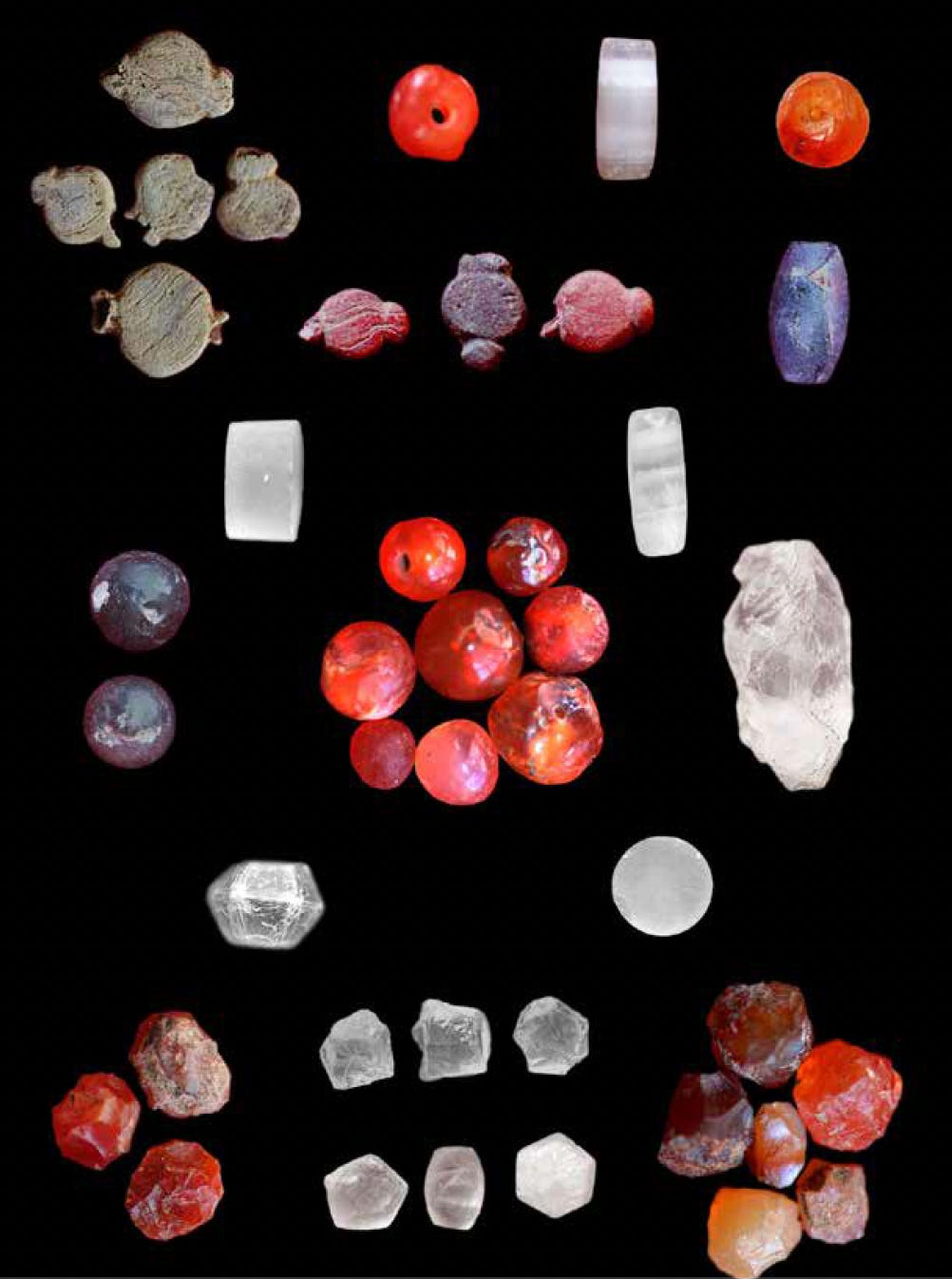
Two other categories of common finds pose a particular problem: they are pretty and immediately recognisable as what they are but they are really hard to do anything more with. One is beads. Glass beads, clay beads and semi-precious stone beads were made at sites along the coast of peninsular South Asia and have been found in rivers and excavation sites all over peninsula South Asia. Manufacturing sites are recognisable from wastage, usually chips or cores from shaping the beads but sometimes whole beads that broke during the process. More and more work is being done to fix some of these styles of bead in time and perhaps link them to places of manufacture but in many cases, this is tricky. A round bead made out of red or brown glass or garnet, for example, isn’t really that specific.
A golden name
The other type of object that, for a long time, seemed to me to be hard to anything much with is rings. When I was a PhD student, I would occasionally come across a record of a new discovery. There were a handful of examples in books about archaeological excavations, including the one big excavation project in Karur. The numbers were small, especially of well documented examples. Over the years, though, the numbers have grown. Some of the rings, like intaglios, have images on them. The most famous is of a young couple.
The majority carry names. They are signet rings. The shape is generally the same: a plain band of gold (ro more rarely, copper), widened into a long oval or circle at the top, with three or four letters cut into the oval space. The letters are in an alphabet called Brahmi. Various forms of Brahmi had been used in South Asia from around the 6th or 5th century BCE. It was an alphabet used to write various languages. On the rings from Karur, that language is Old Tamil, an early form of the language still spoken by the majority of people around Karur and the wider federal state of Tamil Nadu.
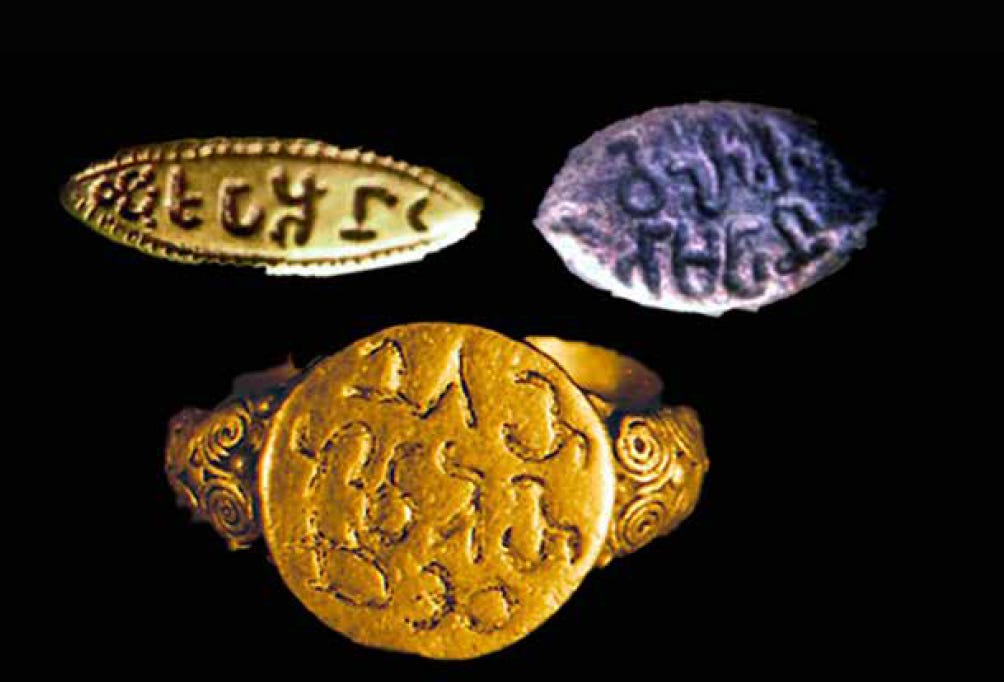
The rings are pretty. It is lovely to have personal names of people who lived long ago, but beyond that, what to do with them? For many decades, knowing exactly how ‘long ago’ those rings were made was difficult to pin down. Most of the finds from the river in Karur seem to date from the last few centuries BCE to the first few centuries of the first millennium CE. Karur at that time was the capital city of a kingdom - the kingdom of the Cheras. Over time, scholars understood better the ways that letter forms in Brahmi, and the particular form of Brahmi used this far south, changed over time. It was possible to say with more certainty that the rings, too, dated from that period around the turn of the first millennium CE. Obviously, they belonged to people who were fairly rich. Gold has always been a symbol of wealth.
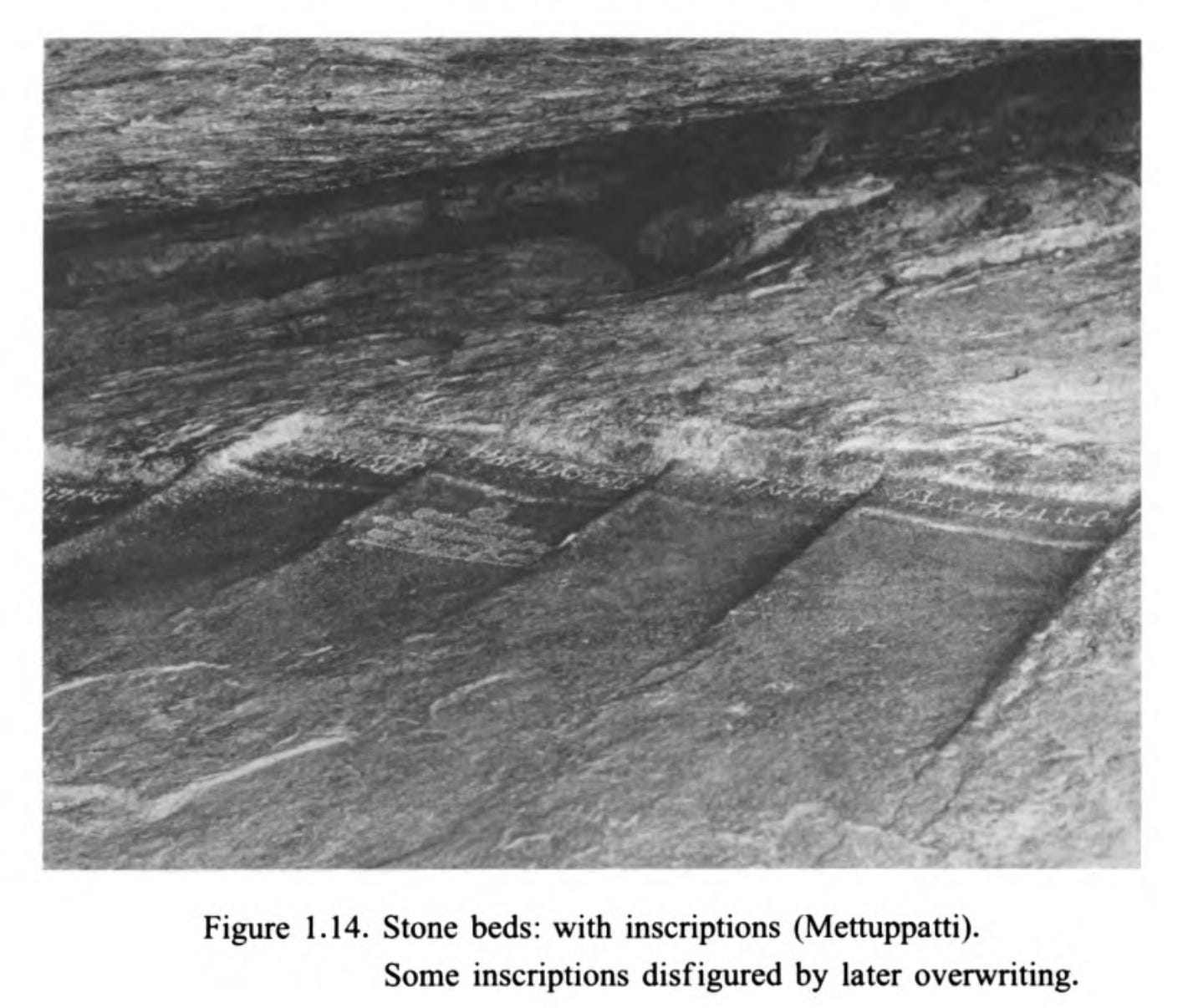
More rings have turned up over the years. At the same time, scholars have pieced together more and more clearly the world they belonged to. Inscriptions on stone have been deciphered, showing that large numbers of Jains (a religious sect similar to Buddhism that also thrived in ancient South Asia) moved into this part of the peninsula from further northwest. They would have preached in the dry months and spent the rainy season in caves that were carved with stone beds and drip ledges to stop water pouring in. Other stone inscriptions record the names of kings who fought battles against one another for plunder and glory. Poetry has been studied and translated in more and more depth, composed by wandering poets who earned their keep by praising those kings for their deeds in war and their generous distributions of wealth. (I’ve written more about these poems here).
Archaeological excavations have been hugely important. People were buried with beads, ceramic vessels and weapons. This has helped to pin down the dates of particular ceramic shapes and bead designs and vividly brings home the violence of the poetic tradition. Villages and towns were equipped with ring wells for water (briefly mentioned in my post last week) and have revealed evidence of bead making, described above, as well as dying vats for textiles that the poems and sources from the Roman Empire, far away across the sea, tell us were hugely in demand across the Western Indian Ocean.
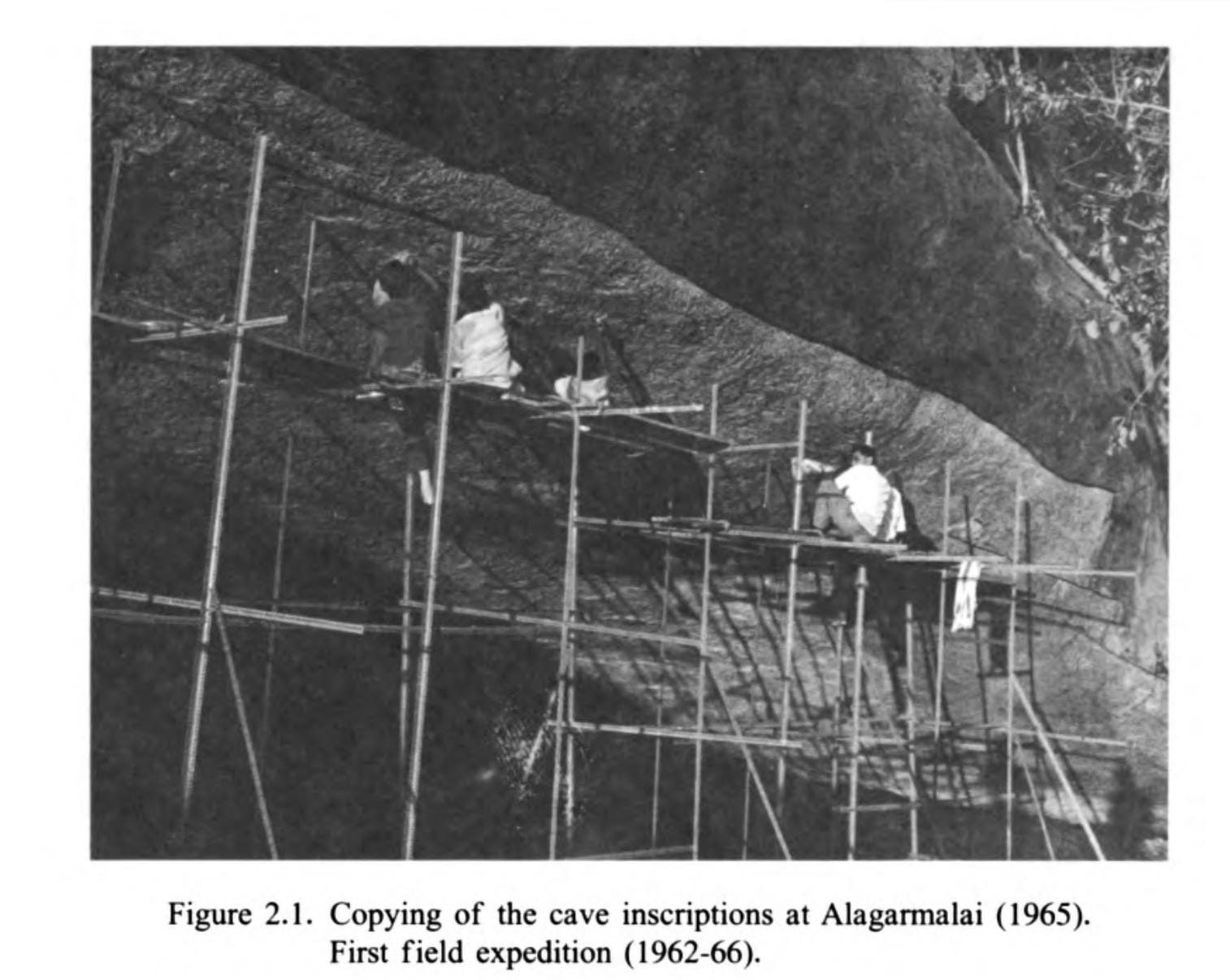
On their own, the signet rings were treasure from the river, glittering and gorgeous but cold and silent as the many myths about the lure of gold warn us. They have grown in value and meaning not based on the shifts in the gold market but because of the quiet, sometimes dangerous work of scholars who have pressed wet paper into stone inscriptions, climbed scaffolding to record messages on the brow of caves, dug under thin awnings under the blazing sun and wrestled in libraries over the meaning of words and phrases recorded millennia ago. Each new piece, like each ring, may be small but together they form a picture.
The charisma of the king
The southern region of the South Asian peninsula at the turn of the first millennium was a patchwork of kingdoms. Some, like that of the Cheras of Karur, were large. Others were smaller, perhaps even very small. The smaller kingdoms made alliances with the bigger ones, which were probably themselves collective terms for these allied networks, under the headship of a powerful king. And the power of a king, as far as we can see, came from two things: success in war and control over moveable and consumable wealth. The poets celebrate kings for their courage in battle and the number and strength of their armed following. They also celebrate them for their generosity. A good king threw great feasts, including fatted meat, foreign wine and honey from the hill country. He gave away gold and gems and pearls and fine cloth. Rice farming was a part of this landscape and kings were expected to provide vats of the stuff to feed their household but these were not, as far as we can see, kingdoms that took regular taxes on big areas of farmland. That would come later. For now, wealth, like fame, was personal. Kings might sometimes pass on their kingdom for one of two generations but each new king was still expected to make his own name. One of the poems from this period is scathing about a young king who tries to tak tax on the farmers near his palace instead of going out and winning plunder in battle like a real king should.3
In a world where royal wealth and generosity depended on access to costly and rare goods, merchants could also get rich and make their name. They would have been responsible for negotiating over goods that came from outside the kingdom, whether that was ceramics coming from other parts of South Asia, beads and glass from Sri Lanka, gold from the Mediterranean or honey and pepper from mountainous regions that weren’t under the direct control of any king. They would also have arranged to transport those goods. As the centuries went on, by the 5th and 6th centuries, some of them also used their wealth to buy credit for their souls by having caves carved with beds and drip ledges for Jains.
It is hard to know whether the gold rings belonged to merchants or kings or both. Their numbers might suggest merchants or both, but then, we don’t really know how many kings there might have been and the rings could have been being made and lost for several centuries. It is now possible to see their importance, though, in a land and a time where a man’s name might carry him from obscurity to fame through feats of arms or religious zeal or commercial success, where poets promised kings immortality through the eternity of their name and where merchants would, presumably, have been able to negotiate better or worse terms based on their reputation. Of course, in every society, people have names and identities. But in some societies other things may matter just as much or more to how people see and evaluate one another: rank or religion or official role or profession. In other societies, even if these categories might have mattered, it was the name, the individual and their unique combination of skills, experiences and the stories attached to them that made a social figure.
One term for this is ‘charisma’, or the idea of individual presence being seen as a person’s most important identity. That didn’t mean categories didn’t matter. Women, for example, couldn’t be charismatic kings or merchants. Being born to a king didn’t guarantee that your own personal charisma would write your name in history but it was definitely a leg up! All societies are a balance between groups and the people who create and inhabit them, but the signet rings of Karur suggest that, if you asked them, the people of the southern peninsula around 2000 years ago would have told you their name before everything else, especially if they had done deeds they expected you to remember, or carried a reputation. They give us another way into the rich poetry corpus, a glimpse of the people who perhaps dreamed as their rings gleamed on their fingers that that same name might live forever in a verse.
Krishnamurthy, R., Late Roman Copper Coins from South India: Karur and Madurai, 1st edn (Garnet Publications, 1994), updated and expanded as Krishnamurthy, R., Late Roman Copper Coins from South India: Karur, Madurai and Tirukkoilur, 2nd edn (Garnet Publishers, 2007). He also identified other non-Roman foreign coins and published them: Krishnamurthy, R., Non-Roman Ancient Foreign Coins from Karur in India (Garnet, 2000).
Comments
Nothing yet. Say the first thing.
Sign in to join the conversation.