
Hello,
Good morning, afternoon, or evening whenever you take your historical coffee break. This week I’m writing to you from Catalonia, in northwestern Spain. It has been a wonderful, historic and slightly footsore week: mountains were involved and although in some places railways and cable cars were available, it seemed more fittingly medieval at least to go up them as people (not that) long ago would have. I have reflections for a couple of weeks time about what this has caused me to think about high places and ideas of safety, comfort and home in a landscape like this, but for today, partly because I’m on the road and don’t have all of the work I’d like to consult for that, I just wanted to show you a very cool place.
This trip has been organised mostly around my husband’s research, which is mainly into Catalonia in the 10th century. We have been scouting places for an article he is writing about historical geographies but it has also been a chance to visit some of the places he has written about in the past but that I have never seen. One of those was the Monastery of Saint Peter at Casserres (in Catalan, el Monastir de Sant Pere de Casserres).
A Lovely Spot…
The monastery was active by the 1030s CE, but there are documents showing that a local noble woman had been trying to set one up there for about 30 years before that.1 Its position is really perfect for a monastic community. It sits on a narrow spur of rock inside a sharp bend of the River Ter. The Ter has spent the last several tens of thousands of years carving itself deep into the local sedimentary rock. Sometimes, as in this view from the Casserres peninsula, it has created soft, tree-covered banks. Sometimes, as in the view I was trying to catch without getting too close, it has created steep cliffs, which surround the monastery.
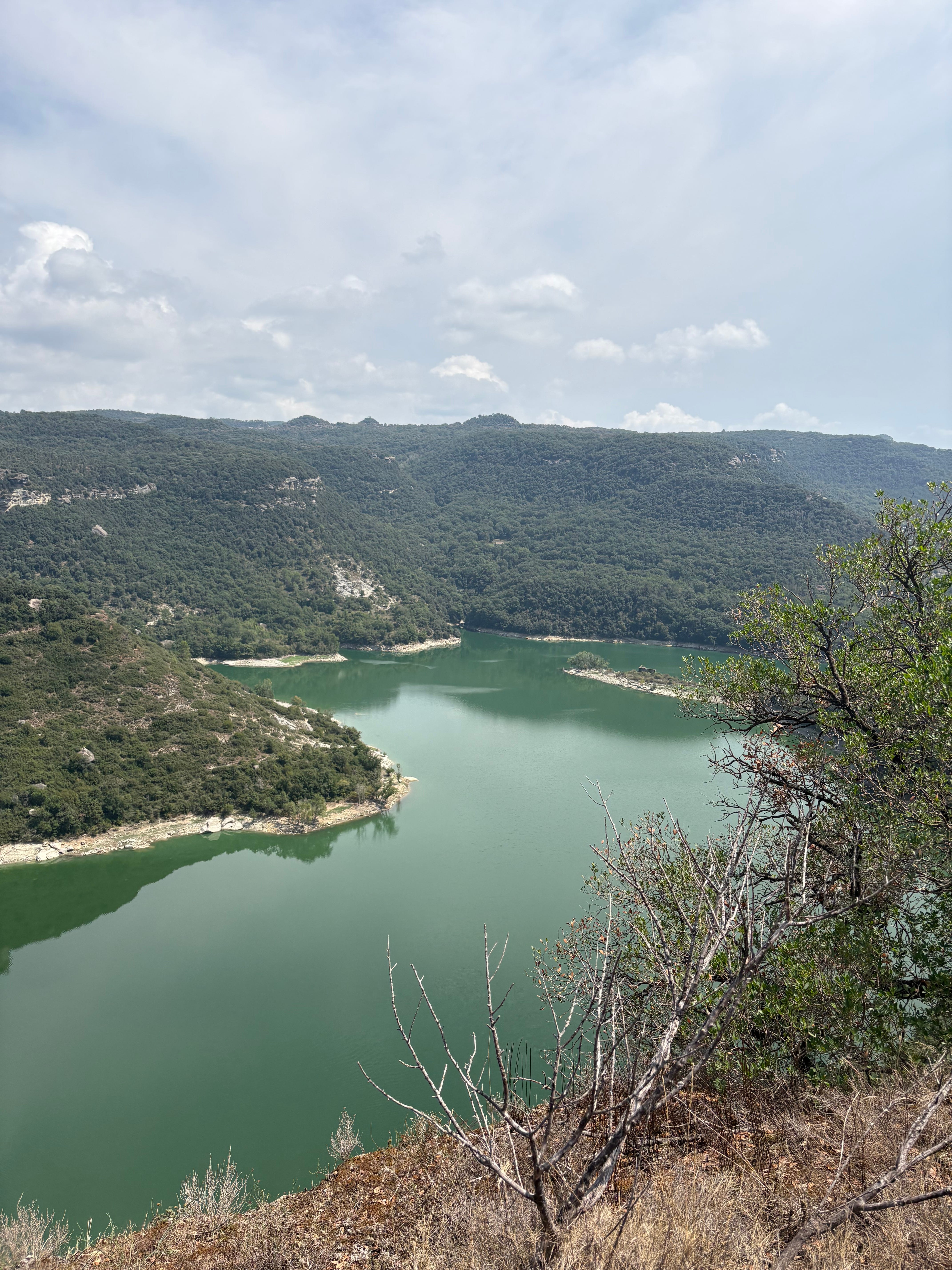
The Ter is a wide, slow river and what this meant for 11th-century monks was that you could be decently cut off from the world on your finger of rock while, at the same time, being surprisingly well connected: apparently right up to the 1940s, a system of rope pulleys ensured that supplies from outside and messages in and out of the monastery could pretty easily be gotten from boats down below.
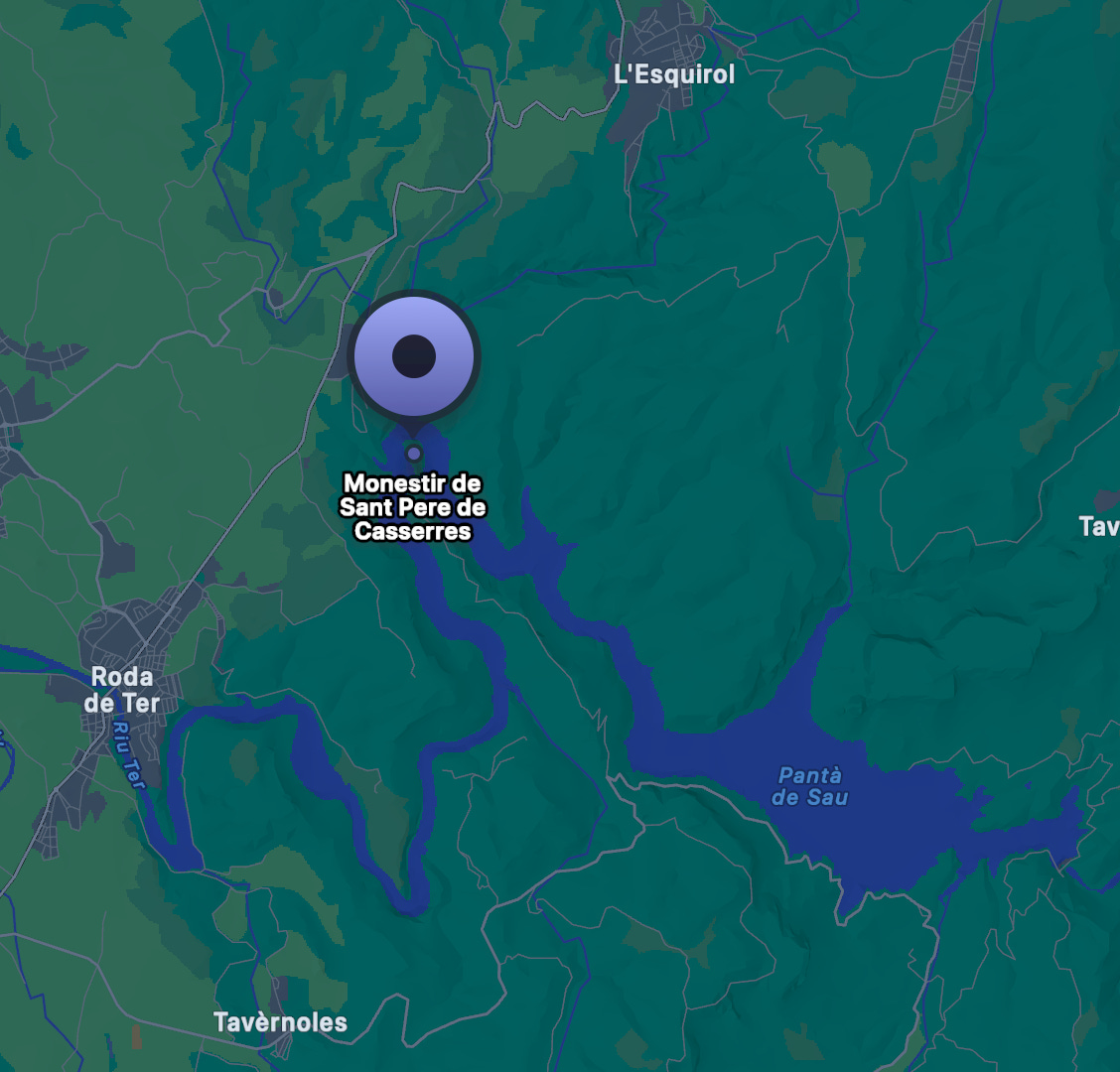
Apart from its glorious location, Sant Pere de Casserres is a fascinating monastery because it is both quite unusual and absolutely typical. St Benedict of Nursia (in Italy), in the 6th century CE put together what became perhaps the most influential document in the history of Christian monasticism: the Rule of St Benedict. This was a clear, fairly short and very practical guide to how a group of people (men) wanting to live as monks, ought to organise themselves. It covered everything from how many of them there should be (a minimum of 13) to how they should govern themselves (consultatively but with one man, the abbot, in charge of all final decision making) to how their dormitories should be arranged, how to divide the day between work and prayer and what to do about disobedient monks. Monasteries following the Benedictine Rule spread over the following centuries all across western Europe. By the 9th-10th centuries, there were debates about whether existing monasteries were following the Rule closely enough, leading to new ‘reformed’ groups, there were other Rules and orders that responded to the Benedictines by saying that Benedict had not given enough attention to some things (like preaching) or had allowed too much opportunity for other things (like monks talking to each other). Sant Pere de Casserres interesting because it is one of the only plain old Benedictine monasteries in this part of the Iberian Peninsula (as opposed to monasteries following other rules) but it is also a completely typical example of a type of monastery common across Europe. (There is more detailed historical information about the site here.
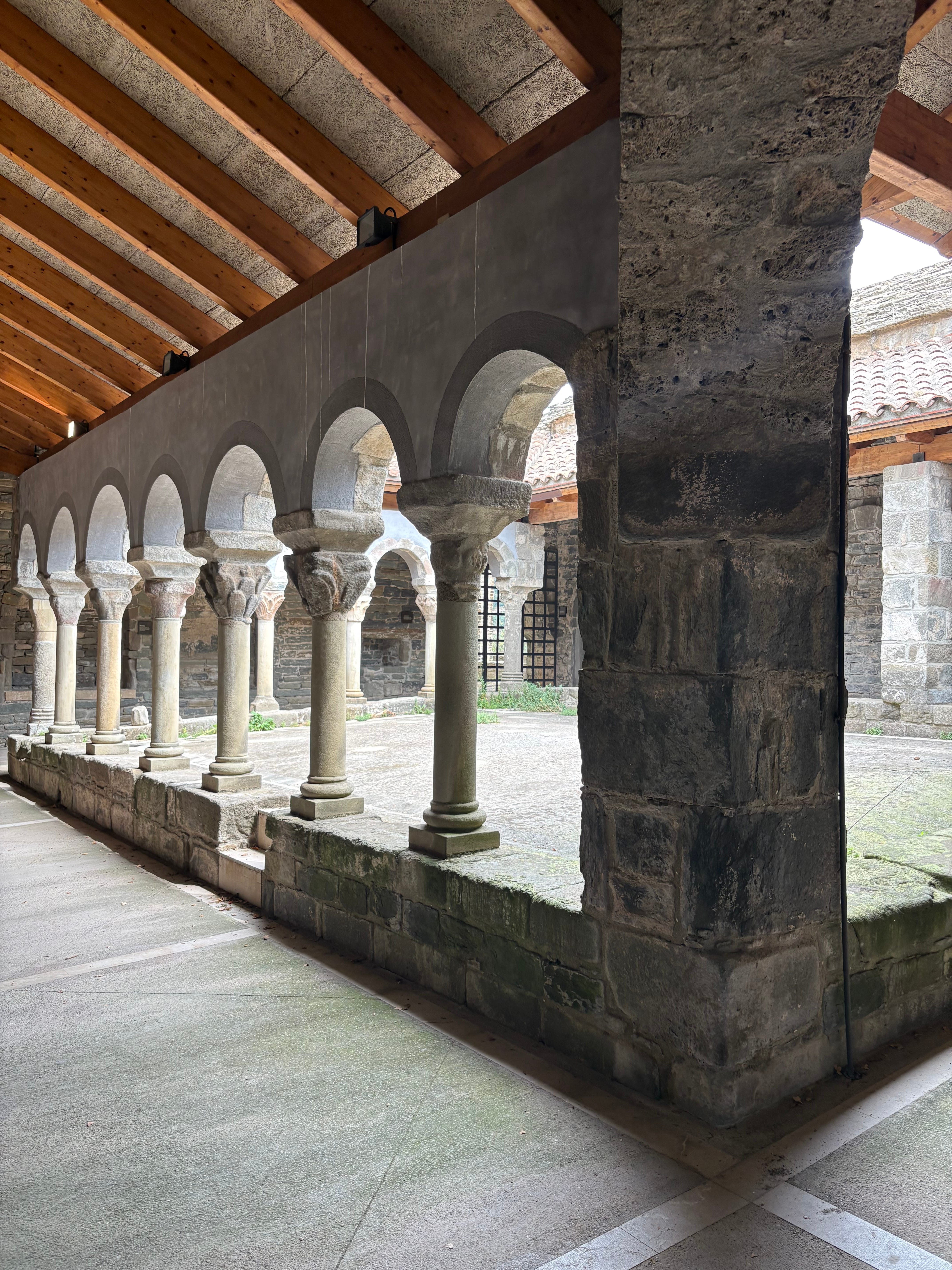
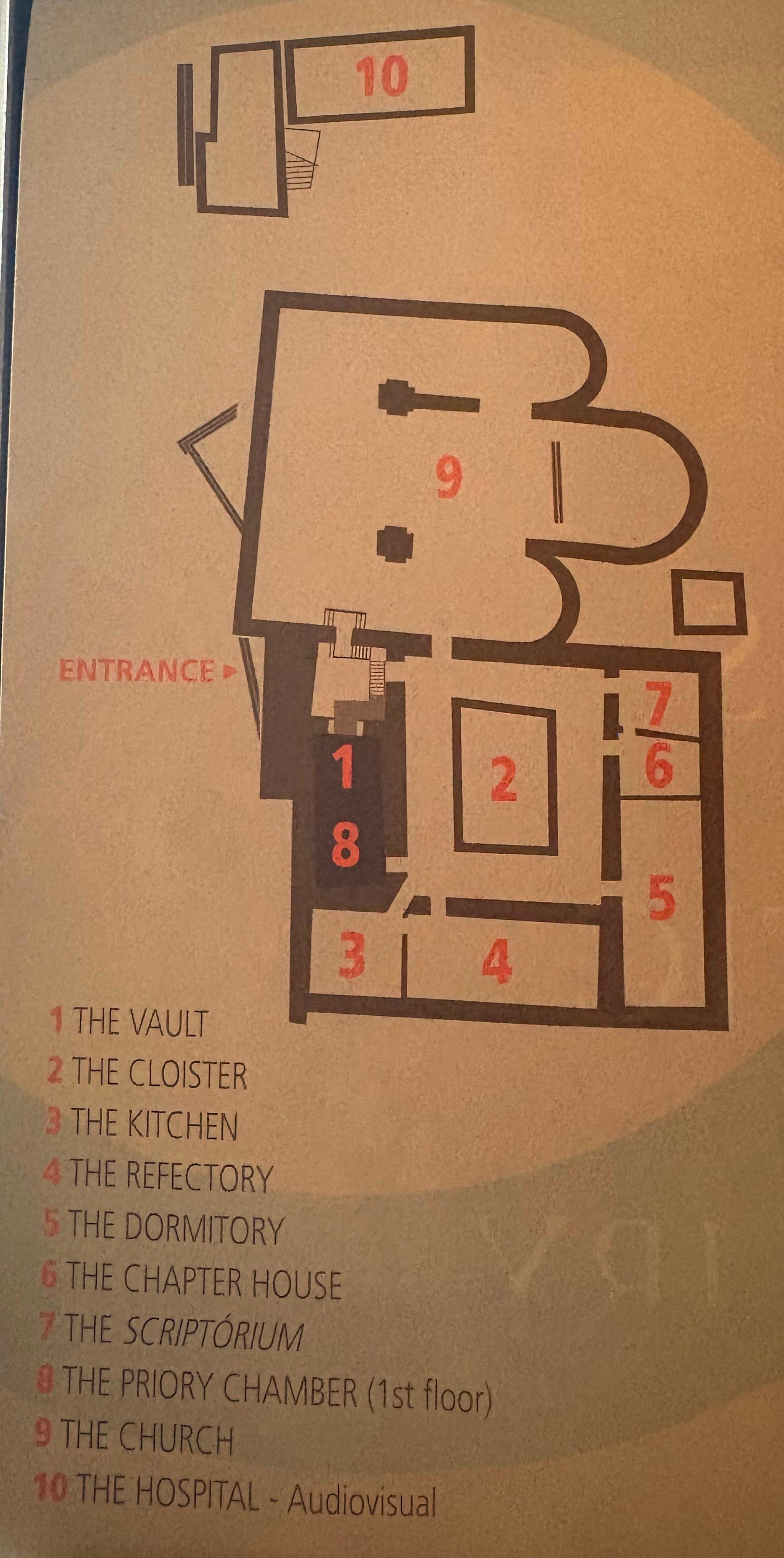
The scale of the monastery is handy for getting to grips with a space where around 13 men would have slept, prayed, written manuscripts (the Scriptorium), laid in provisions (the vault), and consulted on decisions (the chapter house). The abbot lived upstairs in the priory, in a room quite similar to the other monks’, but bigger!
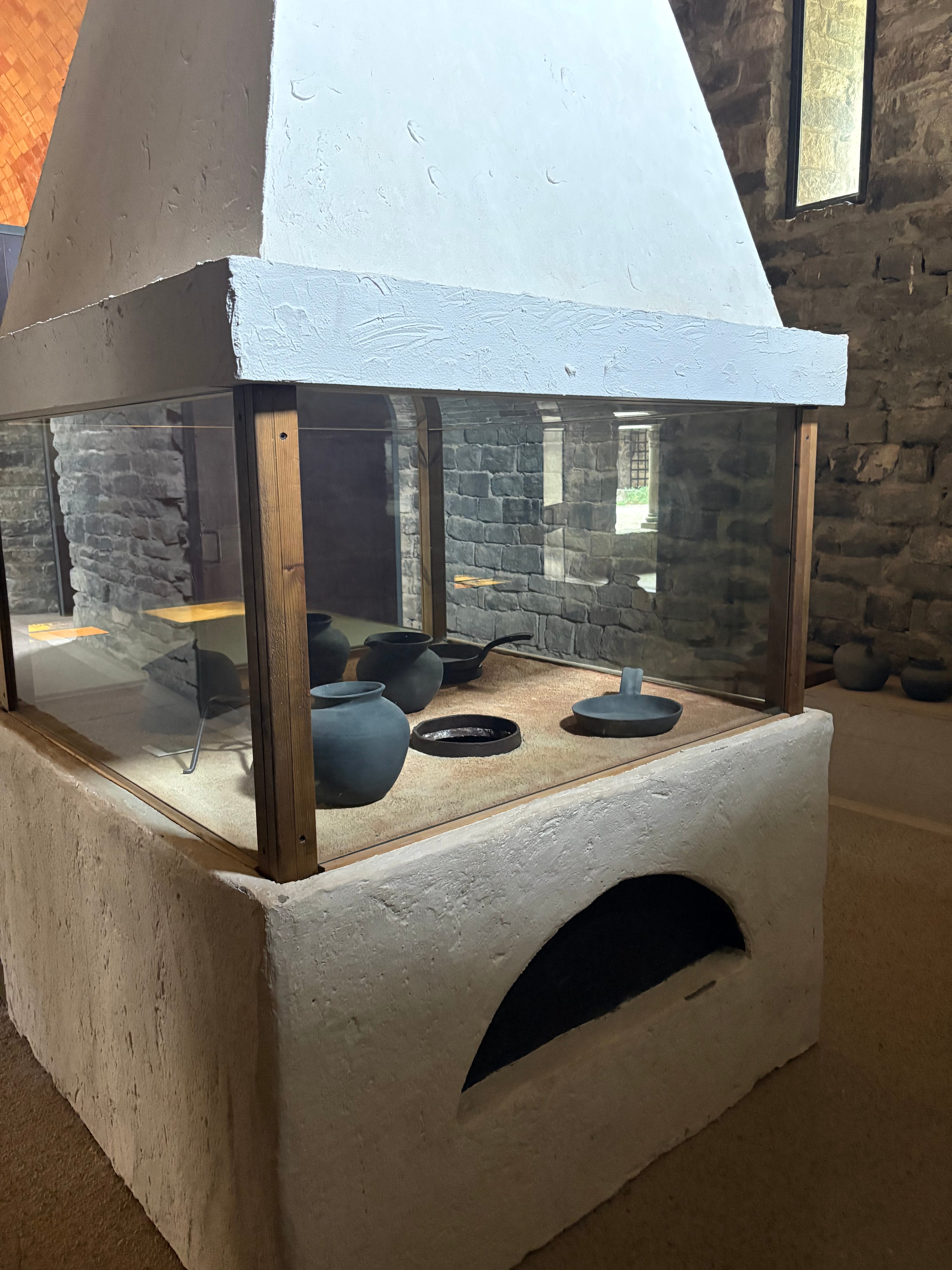
The team at Sant Pere de Casserres have also done a lovely job of bringing that monastic past to life.
Only one piece of interpretation didn’t fully convince me: the layout of the tables in the refectory. They have been laid out like this:
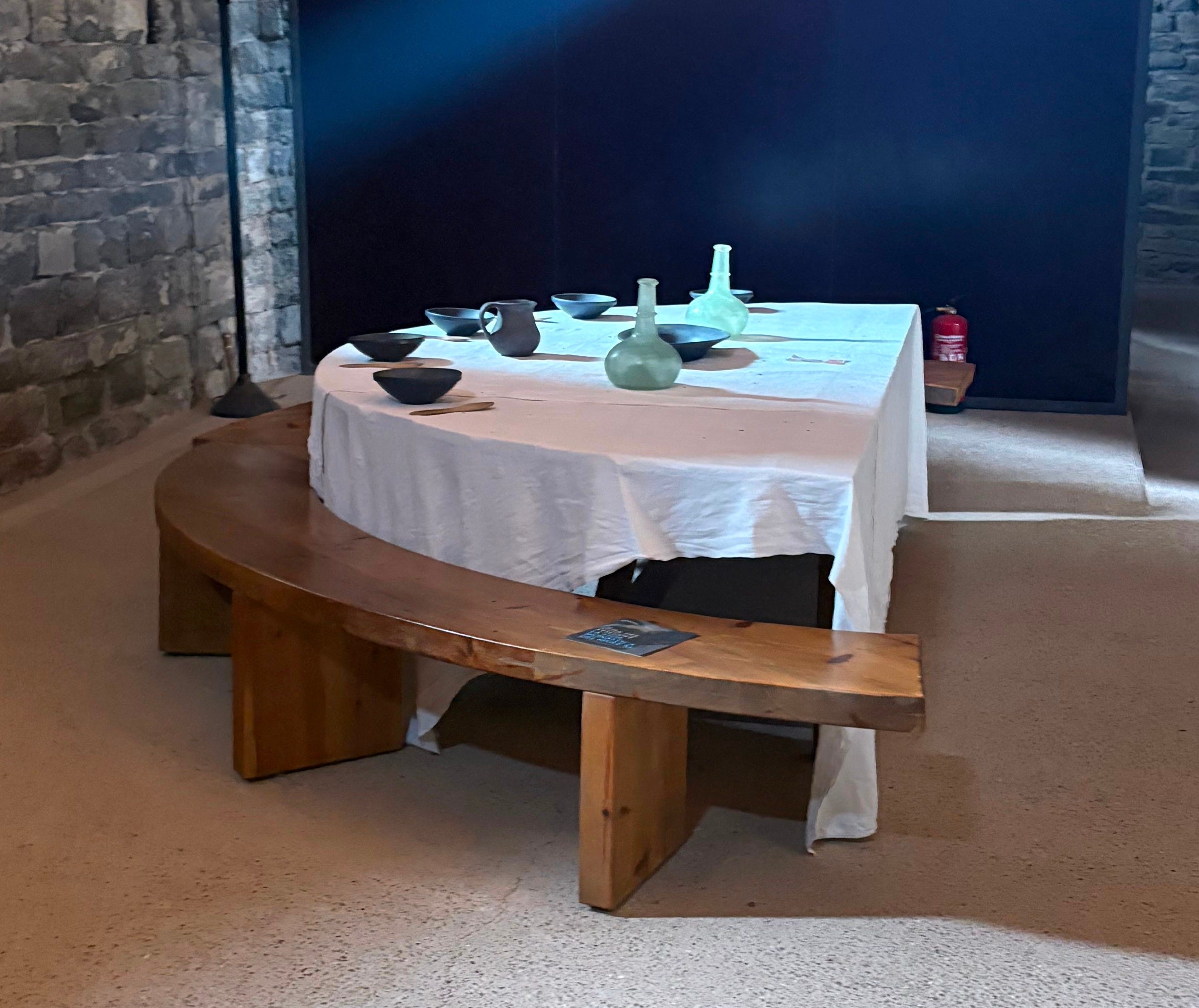
The shape of the tables is based on depictions in medieval manuscripts, and I love that the interpretation everywhere shows you where the curators got their ideas from. For example, these are images showing semi-circular tables in medieval manuscripts:
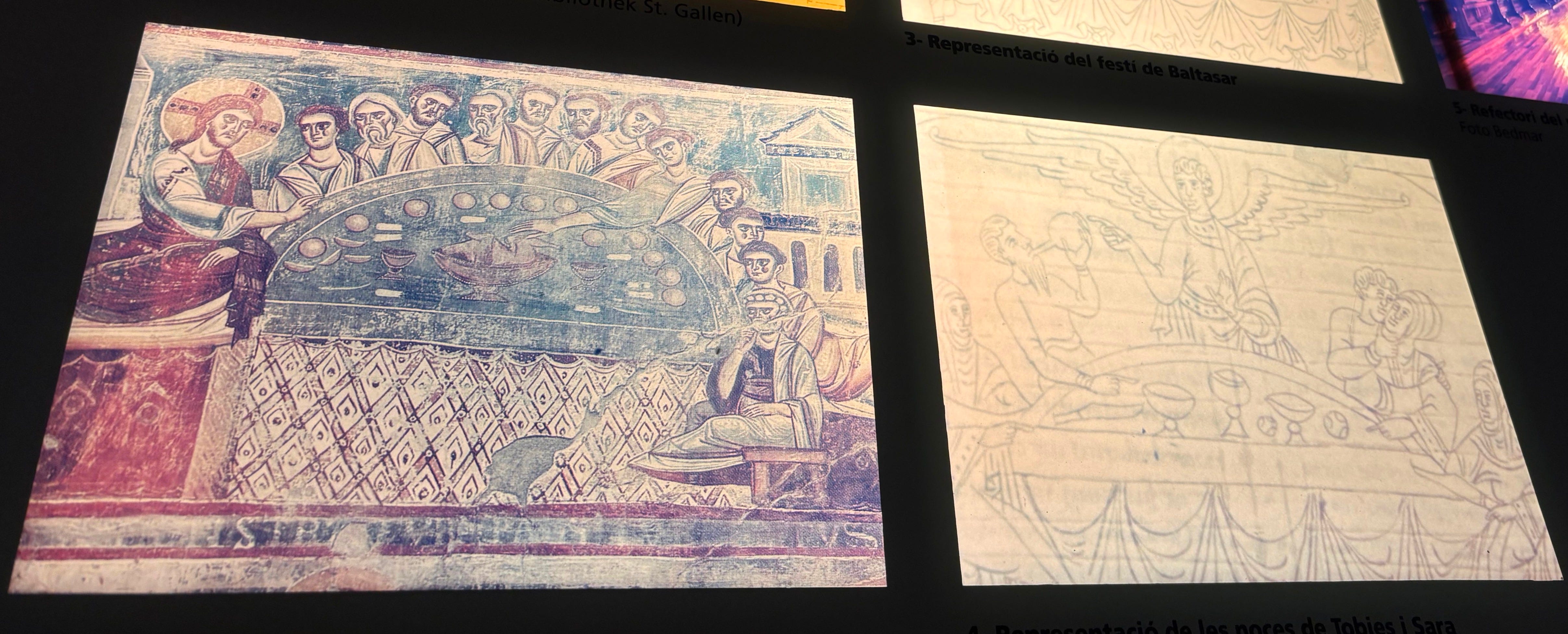
As ingenious as using manuscript images this way is, though, I think that in this case, the pictures in the manuscripts are semi-circular as a way of showing perspective on a round table and letting the artist show everybody who was meant to be present (since the images are usually of the Last Supper with Jesus and his disciplines or of meals described in the Old Testament, so fitting all of the relevant figures in was most important). I think in the monks in Casserres would probably have eaten at rectangular or round tables, but the great thing about people showing the source of their ideas, like this, is that it is possible to come up with different ones and explain why! If there had just been semi-circular tables on display with no explanation, I might have come away thinking there was some documentation or other source sayin that is how it was.
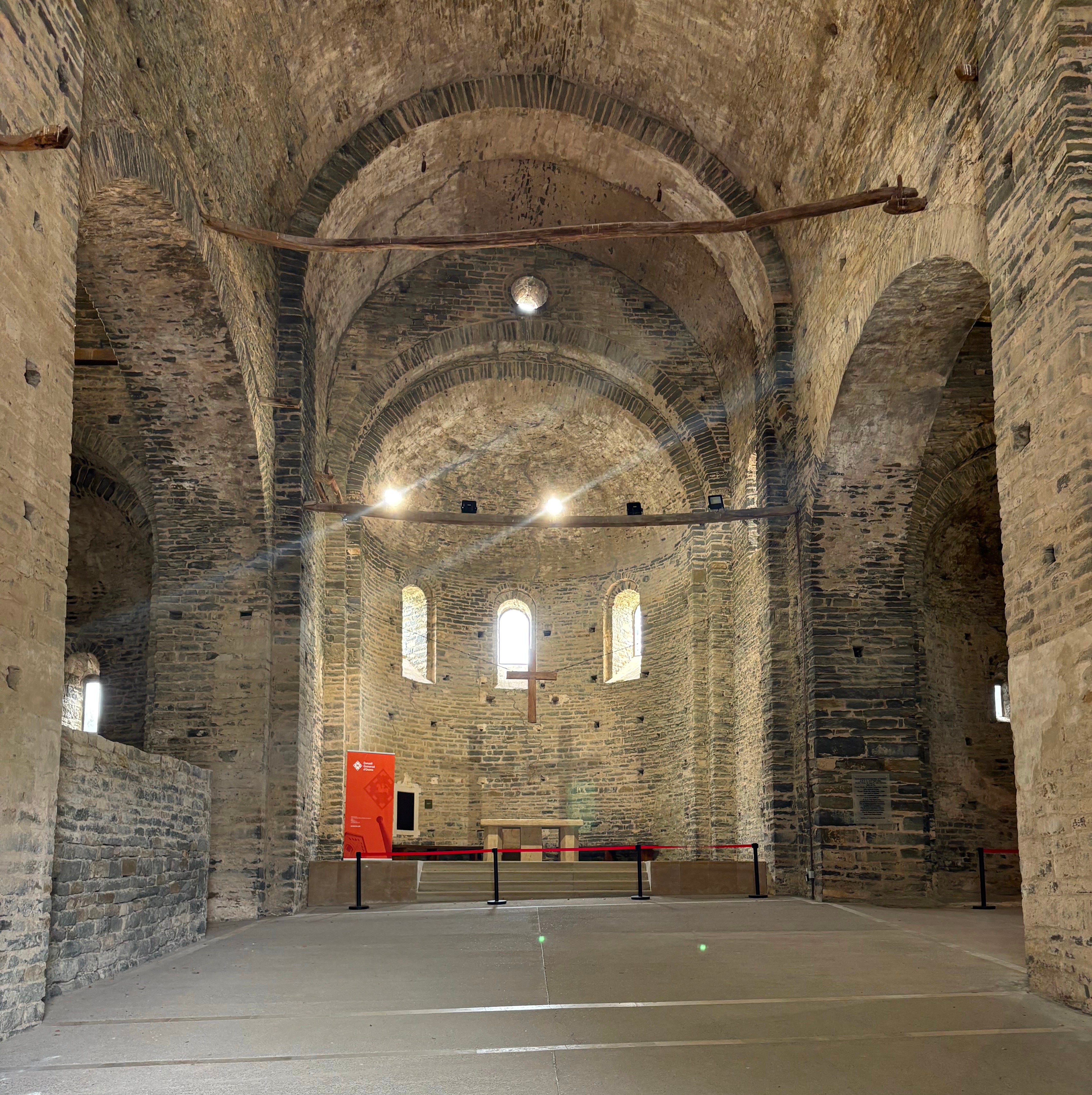
The most impressive part of the building, as befitted a monastic life, was the church, and it really is huge, especially for a small community:
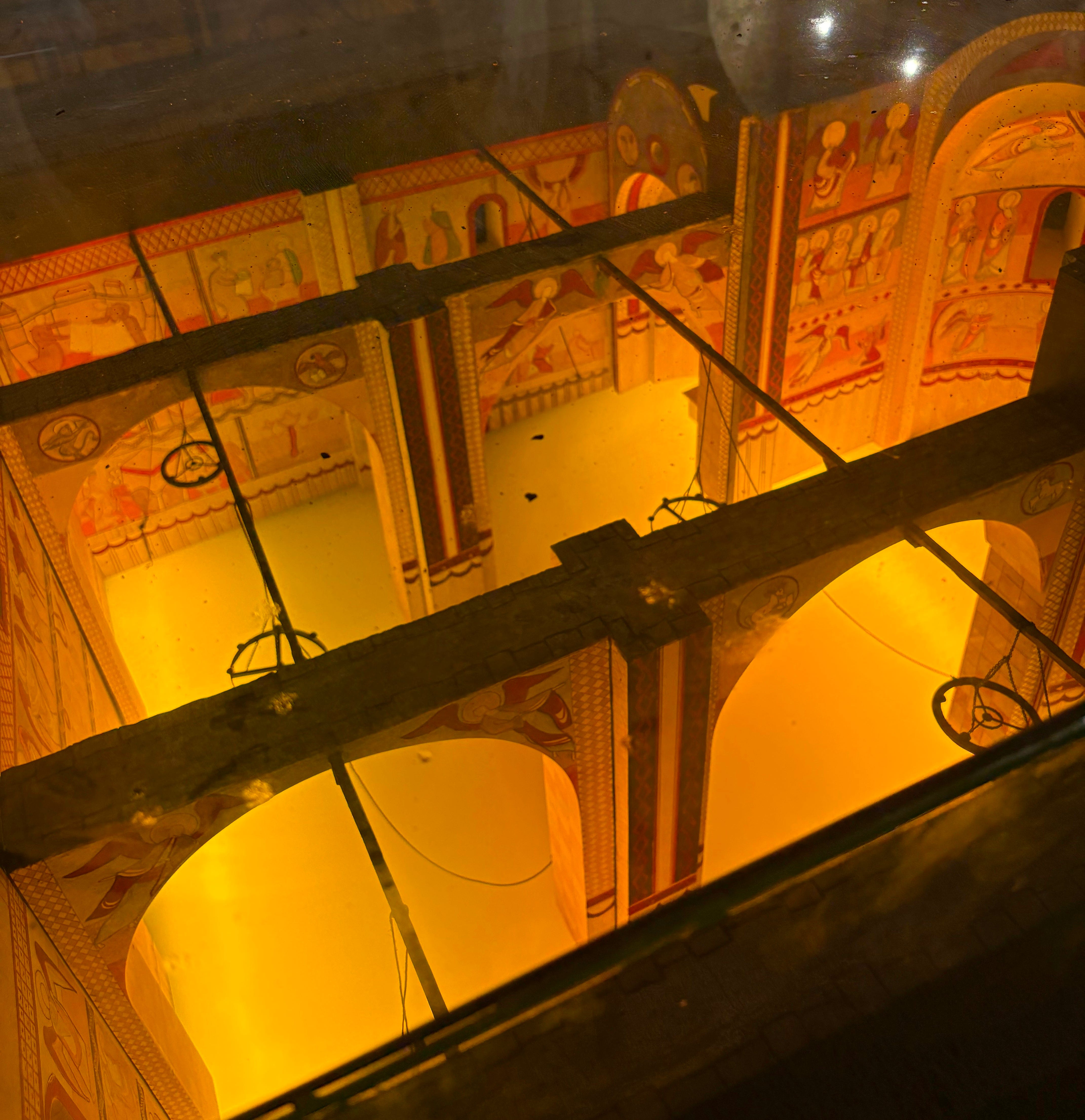
One of my favourite pieces of interpretation was a large model of the church interior with paint on the walls. There is no information about exactly which images would have been where, but this model, using typical images from churches of the right period and region really brings to life how this space must have looked when fully done up:
So, there you have it… a perfect little monastic retreat in a bend of the River Ter. The monastery carried on until the 1500s, under the umbrella of one of those ‘reformed’ Benedictine groups, the Cluniacs (named for their main monastic house in Cluny in France). Then it became the property of a Jesuit community (no longer a monastery but still owned by monks), until the 1700s.
But I leave you with my favourite detail of the monastery, the so-called ‘Armarium’, or, as we might put it, the book nook…
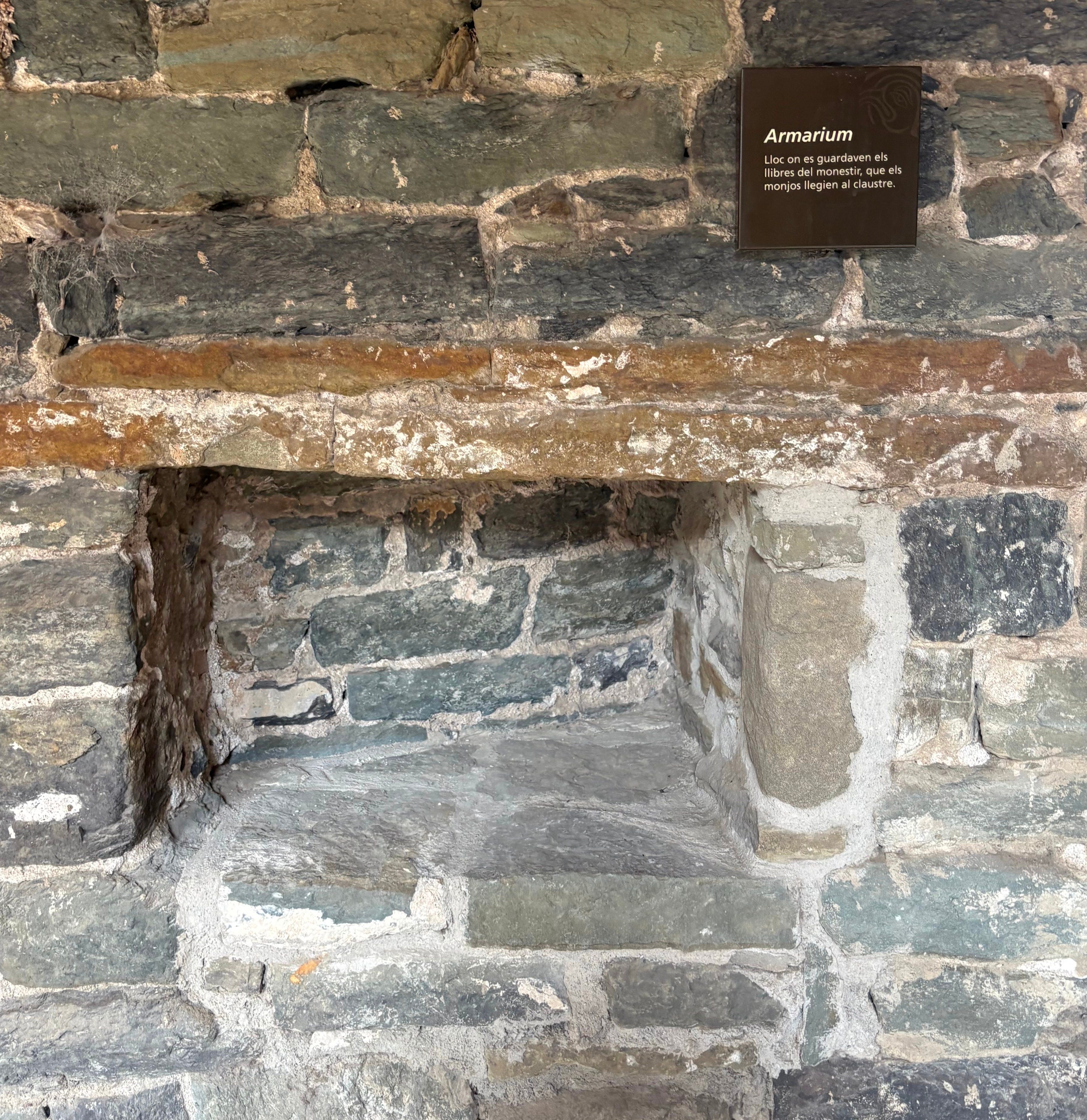
Set into the wall of the cloister, this diagonal shelf, perhaps to accommodate books of different widths, would have been available whenever the monks fancied a bit of (spiritually appropriate) reading, perhaps listening to rain on the cloister roof or sheltering from the sun while the Ter wound its way on, cutting the cliffs ever deeper.
Jarrett, Jonathan, ‘On Stone and Skin: Inscription of Communities at the Foundation of Sant Pere de Casserres’, Studia Monastica, 63.2 (2021), pp. 269–302. And for anybody who is interested in the long and tangly ways in which academic publications come into being, here is the story of the publication!
Comments
Nothing yet. Say the first thing.
Sign in to join the conversation.