
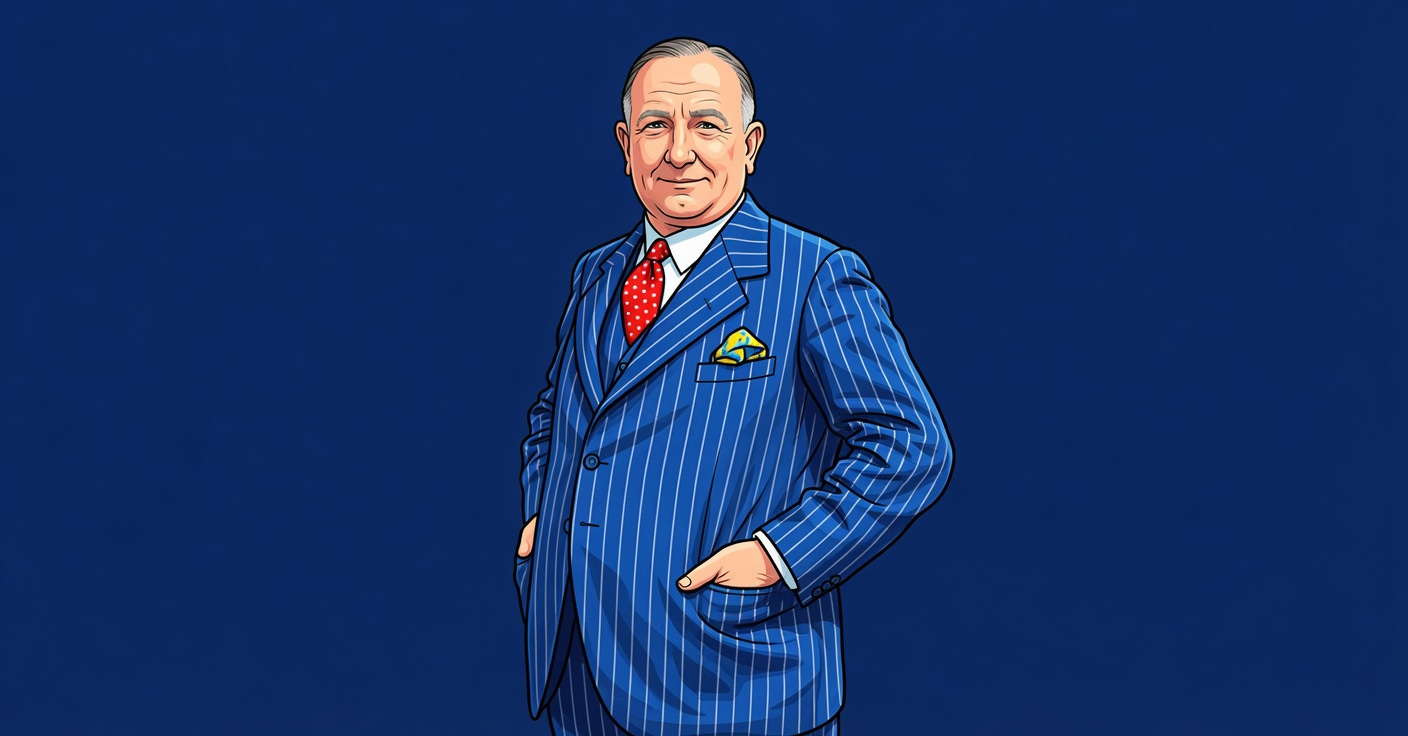
When Arsenal moved into The Emirates, the first statue to be unveiled wasn’t of Arsène Wenger or Thierry Henry or Dennis Bergkamp.
Rather, standing proudly at the Clock End, admiring the new stadium, is Herbert Chapman, the club’s manager from 1925 to 1934.
Chapman was the club’s visionary coach who oversaw ‘The Arsenal’ winning their first three league titles and their first FA Cup.
After he died suddenly of pneumonia mid-season, the team and staff stayed together and went on to win another two league titles and one more FA Cup.
The reason Herbert Chapman was the first statue placed at Arsenal’s new stadium is because he oversaw the club’s greatest dynasty.
More widely, Chapman is recognized as one of the first modern managers, overseeing the entire football program (a rarity at the time).
Here’s a shortlist of the innovations he brought to English football:
Chapman picked his own team (this was done by club boards at the time)
He used physiotherapists and masseurs as preparation and recovery tools
He implemented diets to keep the players fit
Floodlights for training
Signing international players
His most innovative and modern approach to coaching, however, was in how he dealt with his players.
As far back as the 1910s, while coaching Leeds City (the predecessor to Leeds United), Chapman was experimenting with having player-led meetings to dissect the team’s performance and plan for their next game. It went to another level in the mid-1920s when he joined Arsenal.
“Each Saturday morning, when we were at home, the men were instructed to meet at a hotel in the centre of the city. A light lunch was followed by a talk among ourselves. I have since adopted it for home and away games,” Chapman writes in his posthumously completed book.
“I found that players could be encouraged to express their own views, and occasionally to suggest how a colleague might play a more helpful part in the team,” Chapman writes. “Every man should be encouraged to talk and express his views without a fear that he will hurt any one’s feelings.”
While there was some initial trepidation at being criticized, and reticence at speaking freely on areas for improvement, those were overcome with time and strong facilitation — or humour.
“It is no use for the manager to do all the talking, with the players mutely listening, and perhaps deciding that all that is said is a load of bunkum,” Chapman adds.
With Chapman facilitating, the players explored the good and bad of their previous game, and openly discussed their plan for the upcoming game.
Chapman says much of Arsenal’s success owes to one detail of their player meetings.
“We know our opponent before we take to the field, or at least we think we do. And in our discussions on the match, the final detail we study together is the plan by which we hope to win,” Chapman details. “We are prepared, and although the plan may go wrong, it does not follow that it has been ill-conceived. Moreover, it can be altered at half-time.”
The player meetings obviously helped the team to coordinate their efforts, but also helped them quickly seek out weakness in their opponents.
They also ensured players in the stands — particularly the young players — were watching attentively.
“Football is their job, and it is up to them to seize every opportunity to improve their knowledge and understanding of the game. They can only do this provided they are prepared to pay attention to all the details,” Chapman says. “Indeed, they realize at the meeting the following week that they will be asked to express the views they have formed in regard to pertinent features of the play, and reasons the game was won or lost.”
These feedback loops made Arsenal a slick machine.
Most of all, the players meetings helped the coach:
“I freely confess that these match talks have been of inestimable value to me. I have learned much from them. They have given me new ideas which I have put into practice. I am always looking for new ideas. I would borrow one from a programme boy at Highbury, if it were a good one.”
Beyond the posh writing style and era-appropriate slang, these quotes could be pulled from a coach writing in 2025. Instead, they’re written by a coach from 1925.
That’s why Herbert Chapman was the first statue outside Arsenal’s new stadium.
No posts
Comments
Nothing yet. Say the first thing.
Sign in to join the conversation.