
The State of California has been implementing policies that require public school personnel to assist children in “gender transitioning” without the knowledge or consent of their parents. Blessedly, the Supreme Court has recognized parental rights even as the fight rolls on. Most people, in good faith, can recognize the egregious over-step of the state in extreme cases like this. What we do not often consider in the national political discussion are the underlying philosophical debates about education. In fact, as far as I can tell, we simply aren’t having the debates.
Modern, progressive education seeks to provide children with opportunities for “social emotional learning” (SEL). Educators and policy-writers have a notion that the emotional development of students is integral to the task of education. Whether that fundamental assumption is right or wrong, they do so with a radically politicized post-modern vision of the human person, resulting in abuses like what we see in California public education policy.
Many in the center of the aisle and on the political right are rightfully disgusted by the evil of facilitating “gender transitions” without parental knowledge or consent. Their reaction is to argue that schools should just focus on how to fix failing math and reading instruction rather than ask teachers to role play as psychotherapists. While centrists and the right point out an important deficit in intellectual formation, they fail to engage the far left on whether emotional development should be part of our educational vision.
The national conversation around education and the emotions is stunted before it even began. The important question underneath “trans-ing the kids” versus “reading, writing, and ‘rithmetic” is whether there truly is an emotional component to education and what it ought to look like.
The Catholic and classical tradition of education contains essential wisdom for proper development of the human condition. This week, I offer for your consideration the manner in which Catholicism integrates the emotions and education, and then a comparison of this tradition with a very modern account of how to do the same.
Self-promotion isn’t a strength of mine, so if you find this essay valuable, please consider helping spread the word!
Here at CoCrucified, I often make the claim that every suggestion about education is simultaneously a statement about what the human person is. In short, education is applied anthropology. Yet, education is also meant to form students’ decision-making in the future. Therefore, education is also applied ethics. For the Catholic, we define moral theology as “the branch of theology that studies human acts so as to direct them to a loving vision of God seen as our true, complete happiness and our final end. This vision is attained by means of grace, the virtues, and the gifts and in light of revelation and reason.”1 Catholic education is the process whereby we direct our students’ thoughts and actions to a loving vision of God seen as their true, complete happiness and their final end. So Catholic education begins in Anthropology and ends in Moral Theology.
Beginning with anthropology, Catholics believe that the human person is an integrated whole, both body and soul. Our bodily nature include the powers of sensation, perception, and feeling. This is where our emotions come from. Classically, they are called passions, because they are passive. Our emotions are reactive movements of our embodied souls.
When we apprehend something as good, we react with love and desire. If we attain that apprehended good, we feel pleasure or joy. If a good is difficult to attain, but possible, we hope to overcome difficulties in attaining it. If it is difficult, but not possible, we despair at never attaining it. Likewise, when we apprehend something as evil, we experience hate and aversion. We avoid it. When we cannot avoid it, we experience sadness or pain upon having the evil inflicted upon us. For difficult-to-avoid-evils, if we truly can avoid it, we rely on daring to motivate us to overcome the difficulties. If those difficulties are too great, we fear the inevitable evil. When we experience some evil and desire vengeance, this inclination to attack the evil is called anger.
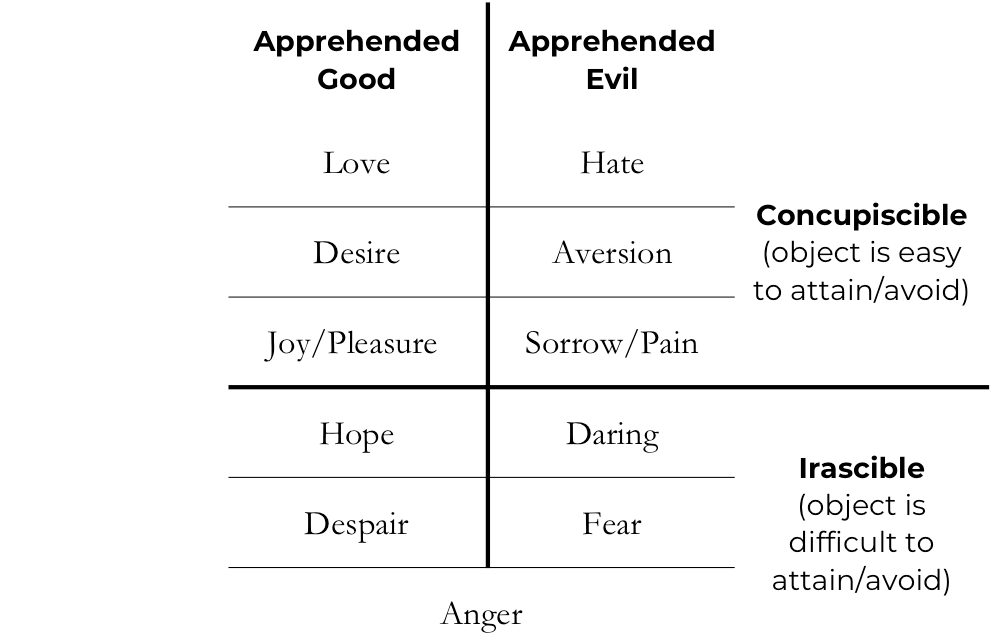
Because they are passive reactions, we often think that these emotions remain out of our control. We believe that someone else is responsible for our anger or sadness. Indeed, common human experience is that we do not choose to be sad or angry, but rather that these feelings happen to us. Certainly, there is important truth to that: our passions are reactions which we do not deliberately control in the same way that we control our actions.
Starting in Ancient Greece, though, man has had the realization that our passions aren’t completely beyond our control. The Catholic Church teaches us that these passions are amoral in themselves, but that the Lord calls us to govern the passions by reason. That word, govern, is important. If the human person were likened to a political community, the intellect is meant to be the king, and the passions governed. The reason makes the laws, the passions obey. Yet, the passions aren’t like actions which are almost synonymous with deliberate decisions. They are passive reactions.
This raises the question: to what degree and in what ways can a man govern his passions?
The Catechism offers us an answer to these difficult questions:
Passions are morally good when they contribute to a good action, evil in the opposite case. The upright will orders the movements of the senses it appropriates to the good and to beatitude; an evil will succumbs to disordered passions and exacerbates them. Emotions and feelings can be taken up into the virtues or perverted by the vices (CCC 1768).
Actions are the things we do deliberately. Passions happen to us. Characteristics (i.e., virtues and vices) are determined and built up by our actions, and they incline our passions. That last part is what is important to us today. My intellect rules over and directs my passions, not by deliberating about how I should feel in any given moment, but by predisposing the proper passionate response.
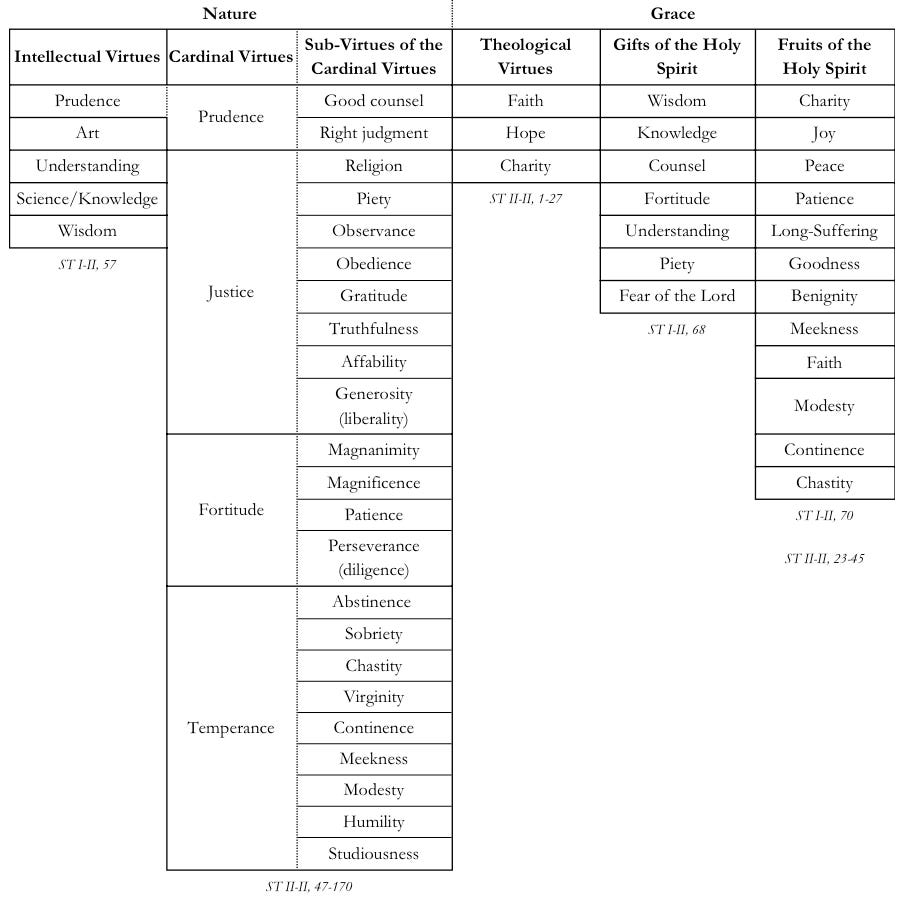
As the Catechism teaches, this is what virtues do. The natural virtues “are firm attitudes, stable dispositions, habitual perfections of intellect and will.” They incline us to act well, so that our moral actions are good. But they also “order our passions” and “make possible ease, self-mastery, and joy in leading a morally good life” (CCC 1804)
Therefore, an education that seeks to build virtue will integrate the emotions into an holistic vision of the human person. It will have a sort of “SEL” built into it.
On the one hand, the progressive leftists seem to be correct that training the emotions is an important part of education. On the other hand, they have missed the essential role that virtue and vice play in managing emotions. Despite this fatal flaw, we cannot dismiss modern progressive education’s social-emotional learning endeavors and ask teachers to merely focus on “reading, writing, and arithmetic” instead.
Classically, and in the Catholic tradition, the moderation of the appetites and passions is essential to the project of Catholic education. In fact, any Catholic or classical educator who claims to form students in virtue should be able to account for how the emotions play into that formation.
This is a lot of wonderful theory, but what does it look like in real life? Here are four essential points made tangible:
The passions serve as a diagnostic tool for virtue and vice. If we react negatively to good things, then we know we have a vice. If we react positively to evil things, we have a vice. For example, consider a man whose desire for money justifies withholding charitable giving to the Church or to the poor. Perhaps he gives, but it hurts. That pain or sorrow at performing a good action reveals the vice of avarice in his soul. The passion of sorrow here provides a diagnosis of vice.
Virtues are built by habit. Cultivating a virtue requires performing actions in conformity with that virtue on a repeated basis to build the habit. For our avaricious man, he must expose himself to the pain of parting with his money for good causes as frequently as he can. If he forces himself to do this, eventually he will find that it becomes easier and easier. With enough diligence, it will become a second nature.
Virtues order the passions. With his new habit of giving to the poor and to the Church, our greedy miser has slowly built up in his soul the virtue of generosity. Generosity, in turn, disposes his passions to take joy in giving his money away to good causes. Now, he may even feel a certain kind of sorrow when he falls to temptation. Passing by the beggar on the road will fill the man with guilt, the passion of sorrow at one’s own moral evil. Here, the passion reveals a virtue and inclines the man to perform the right action instead of negligence.
The passions incline us to action. The passions include our desires. Anyone who is serious about the moral life wants to want to do good. Anyone whose virtues incline their desires actually wants to do the good. The generous man desires to help the beggar. He desires to support the Church. His passions are not a temptation, but a protection against temptation.
What we have above is a synopsis of Plato, Aristotle, St. Thomas Aquinas, and what the whole of western civilization believed from the fourth century B.C through medieval times, until just the last few centuries. Has modern science debunked this tradition? I hear that a lot. On the other hand, I also see with some frequency that modern psychology unknowingly verifies the classical philosophical tradition.
Consider Dr. Kathryn Hecht, a clinical psychologist trained at the University of Minnesota's joint Ph.D. program in developmental and clinical psychology at the Institute of Child Development. While I don’t know her religious beliefs, secular psychology is not famous for being populated by highly religious people. Dr. Hecht gave a TED Talk recently on her impressive work with children that have severe anxiety and OCD.
I’m happy to recommend this TED Talk. It is a marvelous example of how secular psychology has unknowingly rediscovered the virtue-ethics tradition. Several important points stick out to me.
Dr. Hecht is not validating emotions as if the passions had moral goodness in and of themselves. Such validation too easily descends into a navel-gazing sort of exercise that presumes that all emotions are right. On the contrary, emotions are valid and good insofar as they cohere with reality. Is my fear rational? Is my desire truly good?
Her process (the A+B=C equation) shifts our attitude toward negative emotions. Most of us want to either repress those emotions or let them rule over us. Subjecting them to reason by way of habit is much more healthy.
She sees the importance of emotions in attaining the characteristics that we want, whether that be courage (her main focus), prudence, justice, or temperance.
We could also look at this talk with a critical eye because she gets important points of anthropology wrong (e.g., that all these questions are reducible to brain chemistry). But that seems far less fruitful to me than the important points she gets right. Dr. Hecht is advocating (knowingly or otherwise) for a Catholic virtue-ethics approach to child formation.
Pope St. John Paul II famously declared that “Faith and reason are like two wings on which the human spirit rises to the contemplation of truth.”2 Modern psychology, when it gets things right, is going to validate long abandoned notions about the human person grounded in the Christian faith. Of course, we can bypass the errors necessarily part of modern science by studying our classical philosophy and Catholic theology. The attentive reader will not see an insult to modern science here, because error is built into the enterprise. Modern science is always correcting and updating.
As it pertains to education and child rearing, exposure therapy—that is, habituating ourselves to reasonable actions so that we eventually feel the way we ought to feel—saves our children from the destructive effects of disordered passions. Like most dichotomies, we cannot simply bend over for modern SEL efforts that deform our children’s souls and mutilate their bodies. Nor can we simply leave emotions at the door and train the intellect in isolation. Pope Benedict XVI lamented to American educators in 2008, “While we have sought diligently to engage the intellect of our young, perhaps we have neglected the will.”3
Teaching the whole child means integrating his intellect with his emotions. It means forming the intellect to know the truth and the will to choose the good, so that the passions love the beautiful. Education is applied moral theology. As the classical tradition eternally reminds us, this is what it means to be truly educated. C.S. Lewis, a modern voice tethered to the classical Christian tradition, taught us about the true relationship between education and the passions in the 1940s (notice how he uses language of the passions to explain education):
St Augustine defines virtue as ordo amoris, the ordinate condition of the affections in which every object is accorded that kind of degree of love which is appropriate to it. Aristotle says that the aim of education is to make the pupil like and dislike what he ought. When the age for reflective thought comes, the pupil who has been thus trained in ‘ordinate affections’ or ‘just sentiments’ will easily find the first principles in Ethics; but to the corrupt man they will never be visible at all and he can make no progress in that science. Plato before him had said the same. The little human animal will not at first have the right responses. It must be trained to feel pleasure, liking, disgust, and hatred at those things which really are pleasant, likeable, disgusting and hateful. In the Republic, the well-nurtured youth is one ‘who would see most clearly whatever was amiss in ill-made works of man or ill-grown works of nature, and with a just distaste would blame and hate the ugly even from his earliest years and would give delighted praise to beauty, receiving it into his soul and being nourished by it, so that he becomes a man of gentle heart. All this before he is of an age to reason; so that when Reason at length comes to him, then, bred as he has been, he will hold out his hands in welcome and recognize her because of the affinity he bears to her.’4
Servais Pinckaers, O.P., The Sources of Christian Ethics (trans., Sr. Mary Thomas Noble, O.P.; Washington, D.C., CUA Press: 1995), 8.
John Paul II, Fides et Ratio (1998).
C.S. Lewis, The Abolition of Man or Reflections on Education with Special Reference to the Teaching of English in the Upper Forms of Schools (New York: Harper One, 1944), 16-17; emphasis mine.
Comments
Nothing yet. Say the first thing.
Sign in to join the conversation.