
Julia Casadio was in her late teens when her coach said that to her. Cross-country skier out of Calgary, chasing a junior national team spot she wasn’t hitting, and she’d gone to him frustrated.
Here’s the uncomfortable part. He wasn’t wrong. Drop mass, hold power, watch relative VO2max and power-to-weight climb. Julia knew the physiology even then and she agreed with him.
What she didn’t get was a path. No numbers, no plan, nobody checking in. She lost weight. Then she raced world junior trials in Kelowna and wasn’t any faster. So she had the thought she knew at the time was irrational: be lighter. Again.
That was the start of an eating disorder. A couple of years on she was unwell enough to know, physically and psychologically, that she couldn’t ski anymore. She quit, moved to Perth, and that’s where I met her at ECU. She went on to do her PhD with me on periodising heat training, spent three Olympic cycles with High Performance Sport New Zealand, and now consults to campaigns around the world.
Good ending. But she still lost the sport she loved at twenty because of one sentence and no follow-up.
And here’s what I find most telling. Julia still talks about that coach with warmth. “Amazing coach, amazing person.” She says she never needed to forgive him. He just didn’t know what that sentence would set off, and he had nothing else to hand her.
The problem was never his intent. Nobody had taught him what to say instead. That’s where this story begins, and you can go deeper into our conversation here…
Pick your source and the number moves, but never the direction. Canadian Women & Sport’s Rally Report, a national study of girls aged 6 to 18, found one in three girls drops out of sport by late adolescence against one in ten boys. UNESCO’s 2024 Sport and Gender Equality Game Plan puts adolescent dropout at 49% and calls it six times the male rate. Women in Sport surveyed 4,000 UK teenagers and found 43% of girls who once called themselves sporty had disengaged after primary school, against 24% of boys.
From a talent identification standpoint alone it’s absurd. We lose most of the pool before anybody finds out what was in it.
The same Women in Sport survey found 78% of teenage girls avoid sport when they have their period. Not quit. Just skip. Most coaches have no idea it’s happening and no language for it.
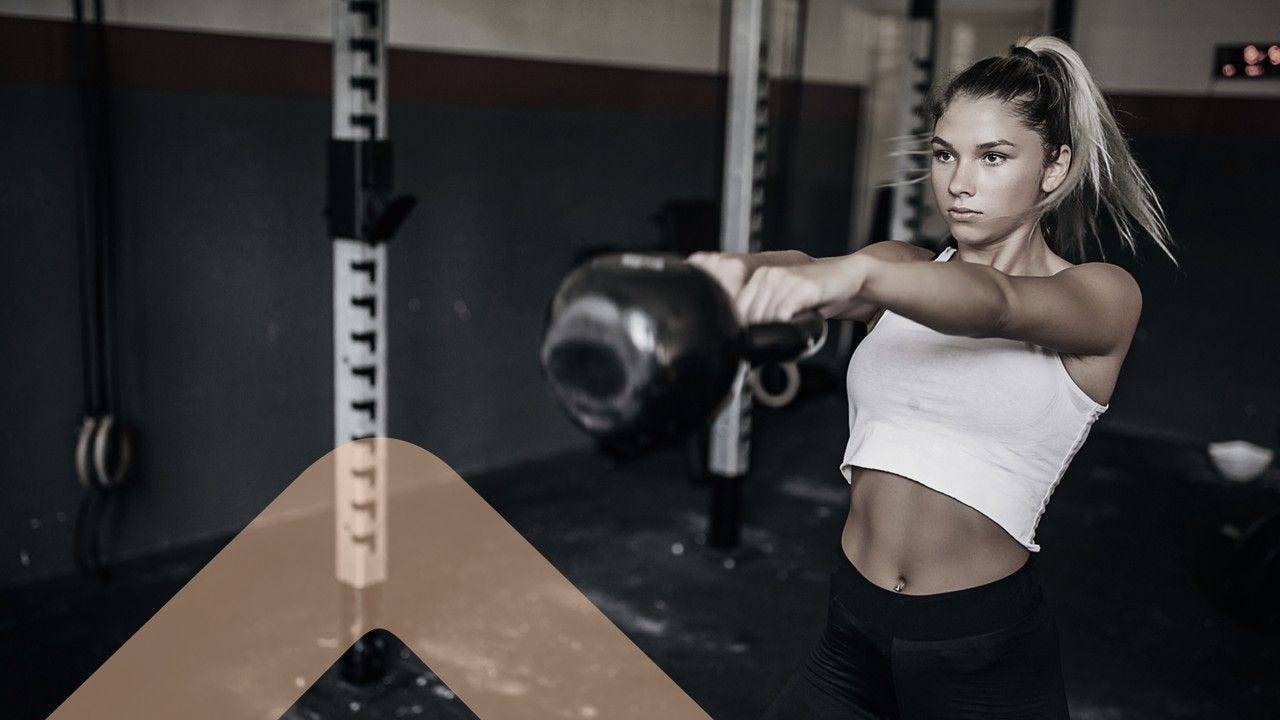
Worth getting specific about mechanisms, because this is where coaching decisions go wrong.
Girls get taller before they get stronger. Long bone growth comes first, and tendon, ligament and bone density lag behind it. Boys, with testosterone on board, get taller and stronger more or less together. Hips widen, centre of mass shifts, and running mechanics, landing and change of direction all change underneath a body the athlete thought she knew.
Some of that shows up in the injury data. A 2025 meta-analysis in Arthroscopy found ACL injury risk about 1.56 times higher in adolescent female athletes than males, with the highest reported incidence in girls’ soccer. Older sport-specific estimates ran higher than that. Either way, a multisport girl carries close to a 10% risk of an ACL injury across a high school career, and for some of them that’s the end of it.
Body composition changes too, and it has to. Female fat patterning is a prerequisite for hormonal health, for menarche, for regular cycles. In endurance and aesthetic sports that turns up as a performance wobble at exactly the moment a girl is most likely to decide she’s the problem. She isn’t. She’s developing the way she’s supposed to, and it settles.
Then confidence. Boys tend to gain it through puberty. Girls tend to lose it. Layer social media on top, where every image is the best image anyone had that week, and you’ve built a fairly reliable machine for driving athletic girls out of sport.
Julia built Her Strength to interrupt that machine. HIIT Science has partnered with her on it, so read the rest with that in mind.
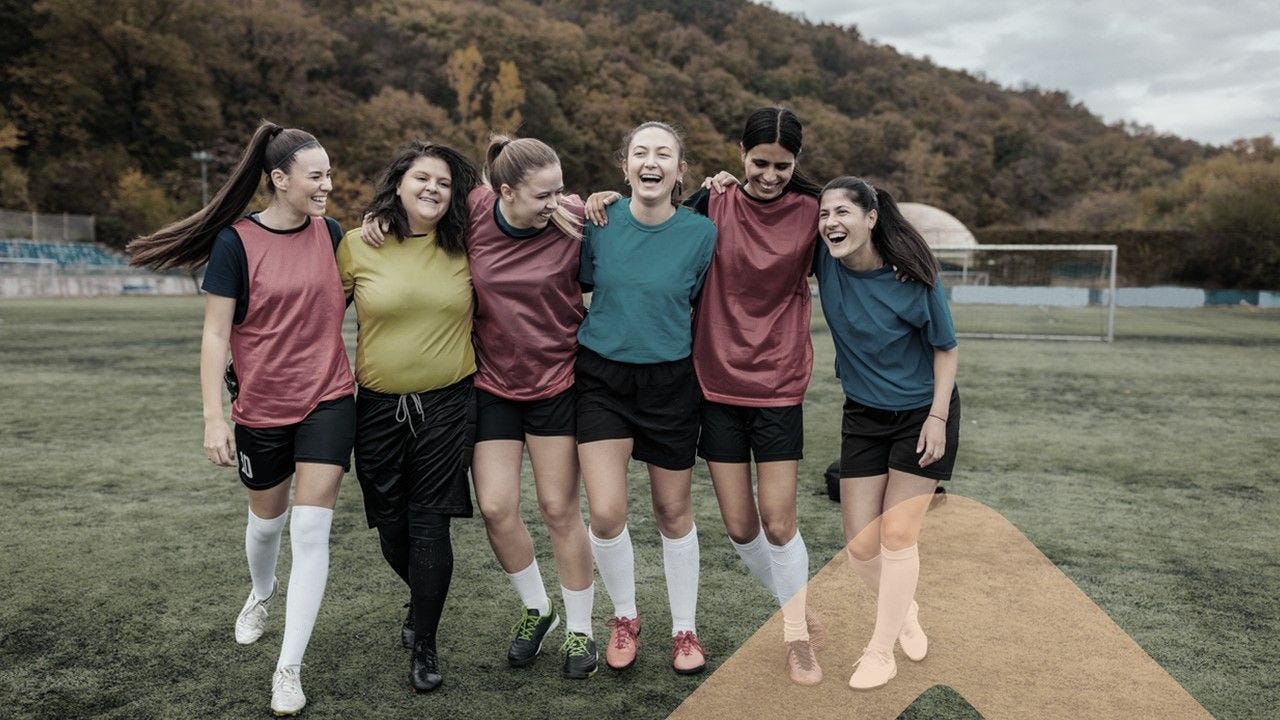
This is the finding that reframed it for me. Laske and colleagues surveyed 1,195 female club athletes in Germany. Around 54% said they’d be happy to discuss their menstrual cycle with their coach. Only 8% could recall a coach ever asking. Athletes said they’d prefer the coach opened it. Coaches, particularly male coaches, mostly didn’t.
So the demand is there. The conversation isn’t.
Here’s what changed how I think about my own role. A coach isn’t being asked to become a menstrual cycle specialist. Enough awareness to notice something and know who to refer to covers most of the job.
Awareness sounds like this. No first period by age fifteen meets the clinical definition of primary amenorrhoea and warrants a look. A period absent for three months or more in someone who had regular cycles is secondary amenorrhoea, same deal. Cycles that reliably wipe out a day aren’t normal either, though plenty of women grow up watching their mothers treat them that way and assume otherwise.
Taim and colleagues studied high-performance adolescent athletes in Singapore and concluded that periodic screening for cycle-related disorders should be routine, because cycle disturbances were common and the athletes weren’t raising them. The barriers they identified were stigma, the training environment itself, and athletes assuming it wasn’t relevant to bring up.
Low energy availability and REDs announce themselves through more frequent injury and illness, trouble concentrating, slipping grades, low mood, fatigue, poor sleep, and performance that drops and won’t come back up. Julia’s point on this one stuck with me hardest: most of it is unintentional. Not a clinical eating disorder. Just a teenager nobody taught how to fuel the training she’s actually doing, or a parent who doesn’t know what to put in the fridge.
Then know your people. Who’s the sport dietitian whose advice you’d trust? Which doctor would you call if a kid dropped five kilos over a summer? That’s the referral network, and having it is most of what competence looks like here.
The bar for doing something is genuinely low. Julia’s example: keep period products in the kit bag, tell the group they’re there, throw in a spare pair of shorts and underwear, and say out loud that this is a thing we talk about in this squad. Coaches who’ve done it report the same response every time. Parents thanking them.
Two more things worth carrying around. Jayanthi’s case-control work is where the rough heuristic comes from that weekly organised training hours shouldn’t exceed the athlete’s age in years, and as Julia points out, a ten-year-old doing ten hours isn’t a great idea either. And a growth spurt is the worst possible window for a sudden load increase, which puts the training camp, the new season, the added sport and the move up an age group all under review if she’s shooting up.
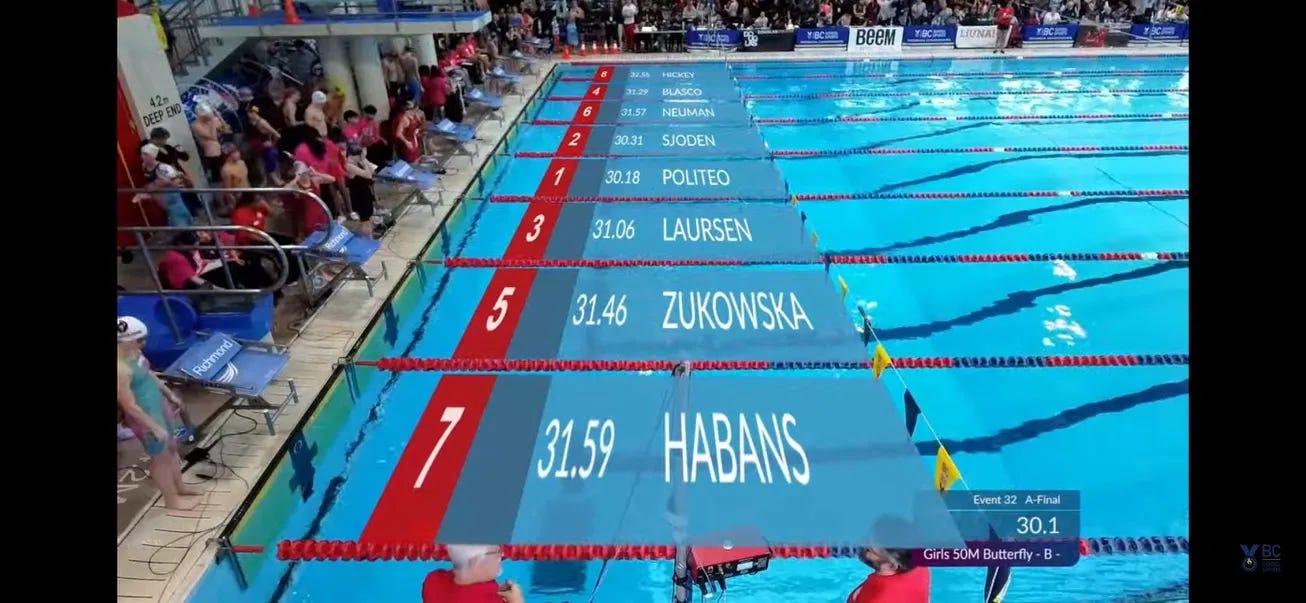
My own daughter is right in the middle of it. Summer swimming, so volume lands hard from the first of May, twice a day with dry land on top. When she wakes up flat and doesn’t want to go, we let her sleep in. I get to make that call because I’ve had twenty-five years in physiology and a few hundred podcast guests worth of education. Most parents haven’t had that. Most coaches haven’t either.
Martin and I have brought a lot of things into the HIIT Science library over the years. This is the first one where both of us have a daughter in the middle of the problem it solves.
Six modules, 32 lessons, five experts across sport physiology, sports medicine, nutrition, strength and conditioning, and sport psychology. Built for real coaching environments, with the scripts and resources to change what you say on the pool deck or the pitch rather than just what you know. Certification when you finish, ongoing access, and it now sits in the HIIT Science library. Check out the sneak peek preview here.
For our launch partnership, the first 30 people get $100 off with code HER100 at checkout. $299 drops to $199. Once those 30 are gone the price goes back up.
Enrol in the Her Strength Coach Course
If you coach female athletes, or you’ve got a daughter in sport, this is the course I wish Julia’s coach had done.
Yours in sport,
Paul
P.S. The years we’re most likely to lose a girl from sport are the same years a coach has the most power to keep her in it. Julia’s coach had that power and no idea he was holding it. You’ve got no such excuse now.
Canadian Women & Sport. The Rally Report (2020).
UNESCO. Sport and Gender Equality Game Plan (2024).
Women in Sport. Reframing Sport for Teenage Girls (2022), n = 4,000.
Childers et al. ACL injury incidence in adolescent athletes: systematic review and meta-analysis. Arthroscopy (2025).
Laske H, Konjer M, Meier HE. Menstruation and training: a quantitative study of (non-)communication about the menstrual cycle in German sports clubs. Int J Sports Sci Coach (2024), n = 1,195.
Taim BC et al. Menstrual cycle characteristics, perceived impact on performance, and barriers to communication: perspectives of high-performance adolescent athletes in Singapore. Scand J Med Sci Sports (2024).
Jayanthi NA et al. Sports-specialized intensive training and the risk of injury in young athletes: a clinical case-control study. Am J Sports Med (2015);43:794-801.
Comments
Nothing yet. Say the first thing.
Sign in to join the conversation.