
Welcome to the second edition of The Heart of Logan. In this free publication, we’ll share a mix of Clan Logan Society news, a short feature, a children’s coloring page, and a little trivia.
We begin by catching up with the Commander of the Name of Logan, J. Kevin Logan.
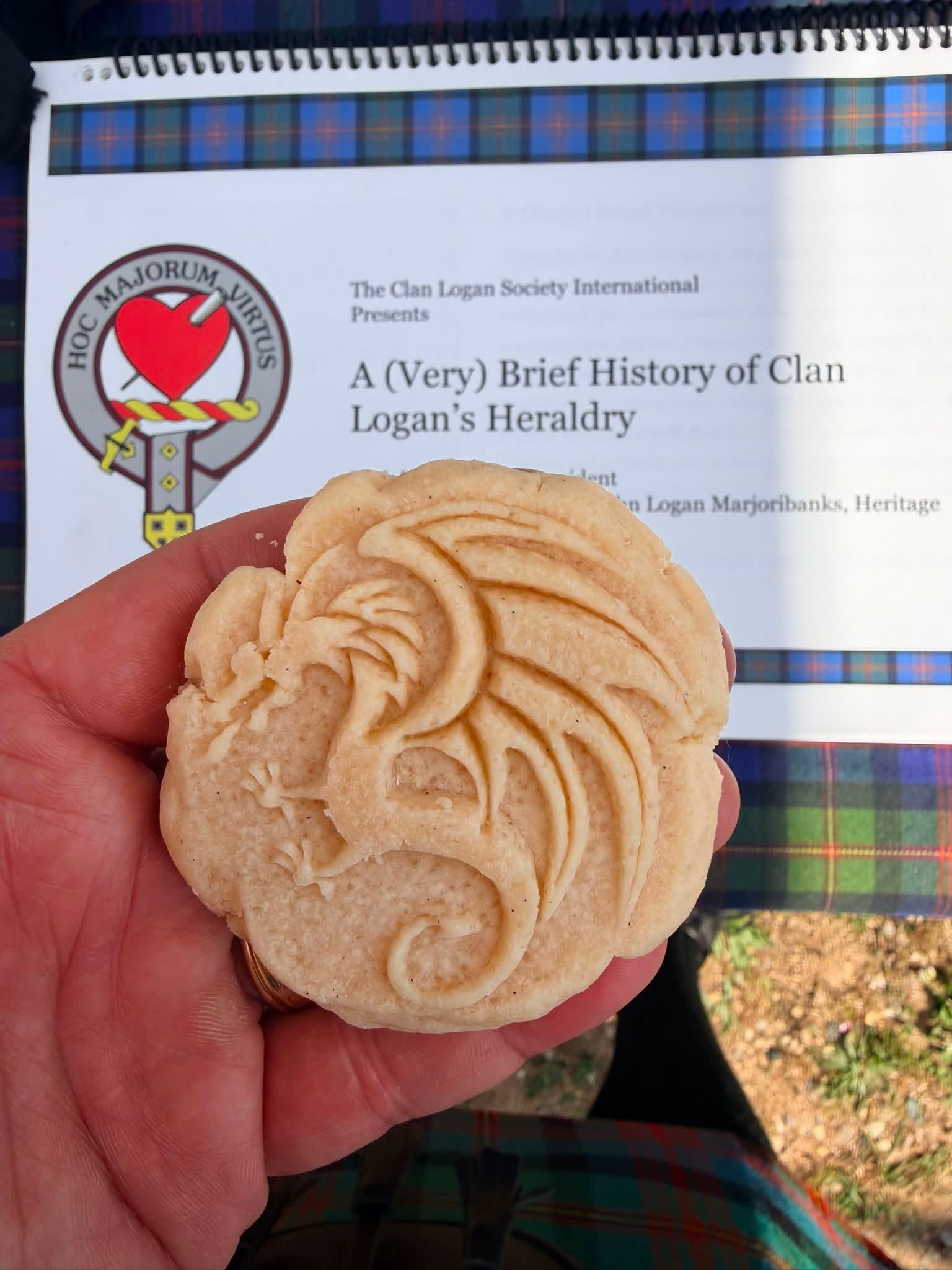
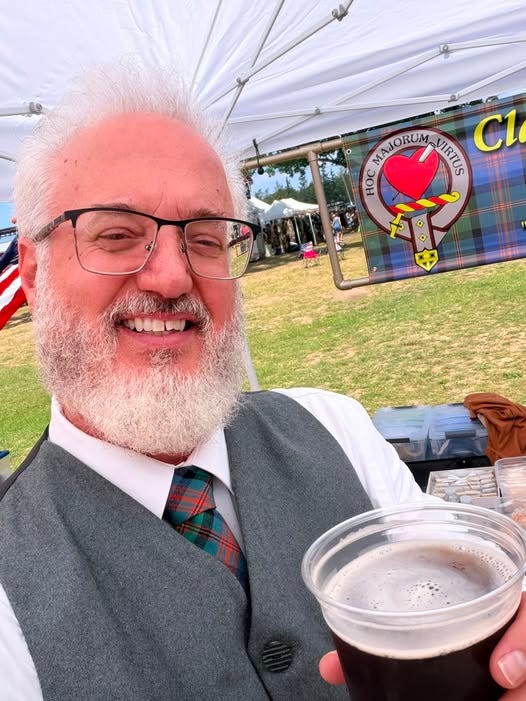
Commander Logan recently hosted the Clan Logan tent at the Holland Celtic Festival. The temperatures were high, but the cool breeze off of Lake Michigan was a welcome delight. The heat did take its toll on the “millionaire shortbread” and its tasty chocolate layer, but the “bare” shortbread cookies were snatched up in short order. The first 30 people got shortbread and other treats - hand made by Mrs. Logan. No other clan offers such delicious goodness!
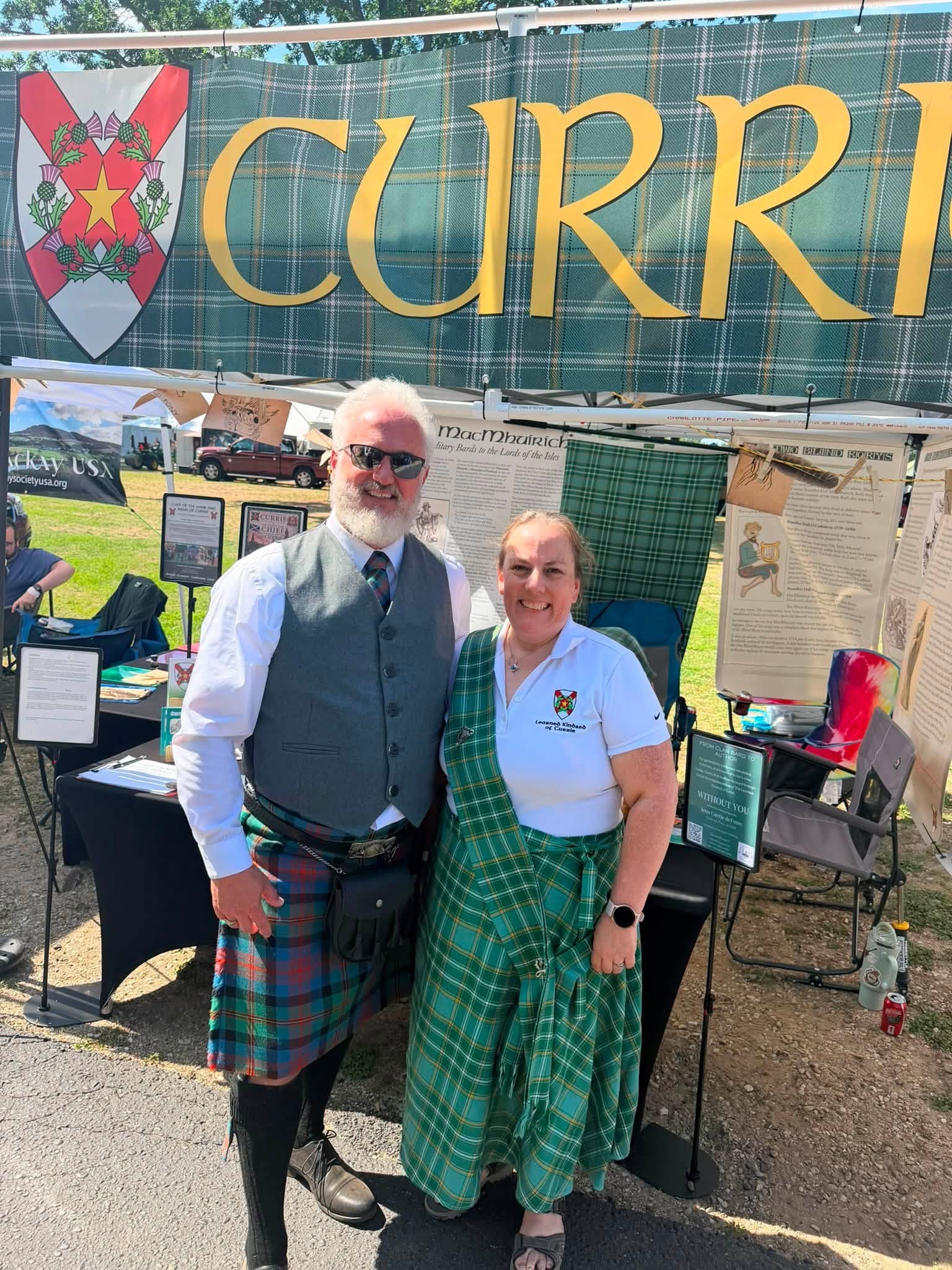
The day got off to a great start, visiting with The Learned Kindred of Currie,
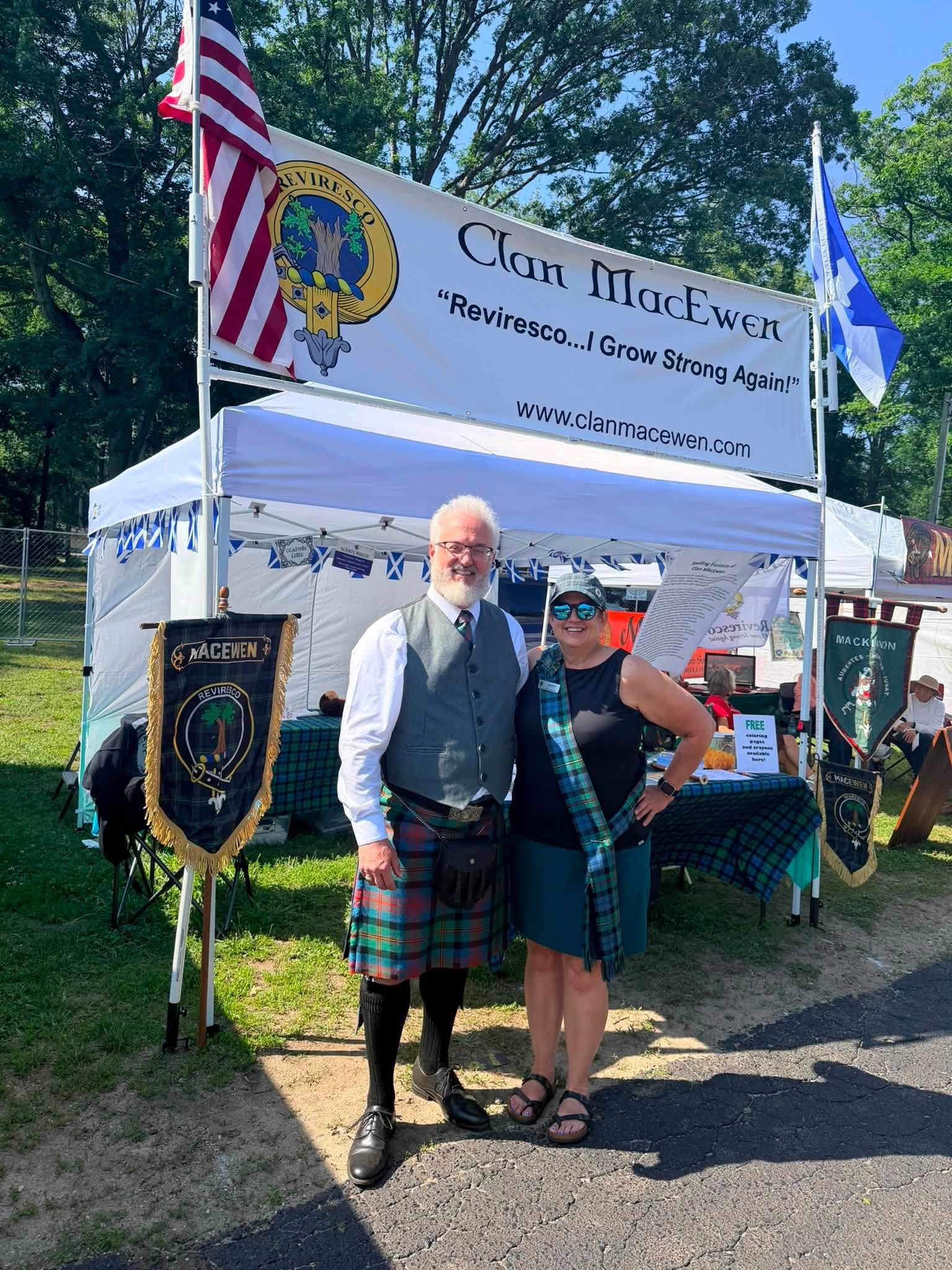
Clan MacEwen,
and one of six consecutively-named Susan Logans! How's that for a tradition that makes genealogists crazy?
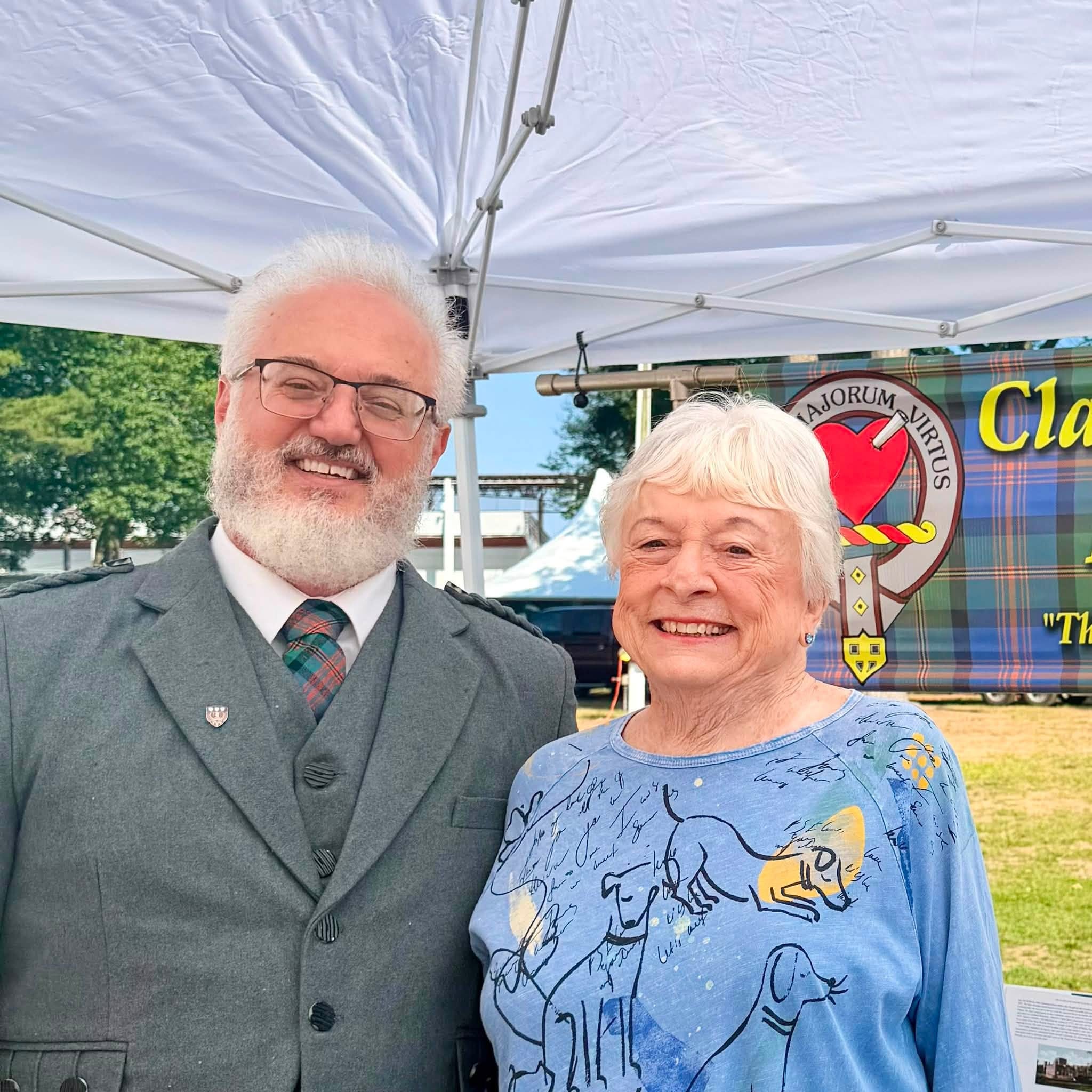
It was a great weekend of Celtic cultural celebration with lots of good friends, great clans, and exciting musical and dancing performances, and Kevin is already looking forward to next year’s festival.
Sláinte!
(Don’t judge. It was 5 o’clock in Scotland.)

Marlee L. Logan, Genealogy Team, Clan Logan Society International
Sharing the story of where we come from is one of the best gifts we can give to future generations.
No matter if your Logan family came from Scotland, Ireland, New Zealand, Canada, Australia, or somewhere else, saving your family history helps keep names, photos, traditions, and stories from being forgotten.
The Logan surname has long associations with both Scotland and Ireland, and many Logan descendants have spread across the globe. Each family branch adds another piece to the larger story of the Logan name.
Many important records never appear online. Family Bibles, letters, photographs, military papers, certificates, and handwritten notes often contain information found nowhere else.
Take time to identify old photographs, label family heirlooms, and record memories from older relatives. A short conversation today may preserve information that would otherwise disappear forever.
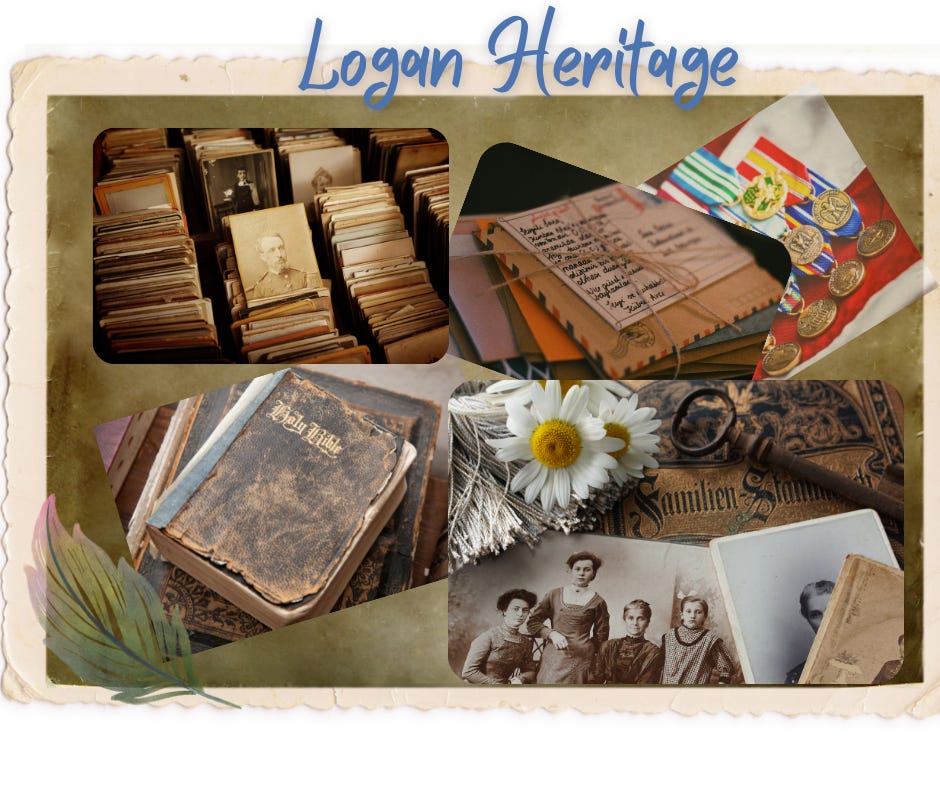
Genealogical records help place our ancestors in time and location.
For families with Scottish connections, ScotlandsPeople, the official genealogy website of the National Records of Scotland, provides access to birth, marriage, death, census, valuation, and church records dating back centuries. The National Records of Scotland preserves records from the twelfth century to the present.
For those with Irish ancestry, the National Archives of Ireland has made several important historical collections available online through its genealogy website. These resources include searchable databases and digitized images from major record groups, providing valuable assistance to family historians. Best of all, access to these records is free of charge.
For descendants whose ancestors settled in the United States, census schedules, immigration records, military records, newspapers, and land records can provide important clues. Websites such as Ancestry and FamilySearch have made many of these records more accessible than ever before.
Family history grows stronger when it is shared.
Consider creating a family tree, writing short biographies of your ancestors, or preserving your research in print. Uploading photographs and stories to sites such as FamilySearch can also help connect distant cousins and preserve information for future generations.
Organizations dedicated to history and genealogy play an important role in preserving family stories.
Clan Logan Society International was established to promote Logan history, encourage genealogical research, preserve traditions, and connect descendants worldwide. The Society maintains archives, publishes newsletters, sponsors historical projects, and continues its work toward restoring the Chief of the Name and Arms of Logan.
Members also benefit from the shared knowledge of fellow researchers who understand that one small clue can open an entirely new branch of a family tree.
Dates and places are important, but our ancestors were much more than entries in a database.
Record family recipes. Save stories that have been passed down through generations. Preserve military service, occupations, traditions, and photographs. These details bring our ancestors to life and allow future generations to know them as people, not merely names.
Every Logan family has a story worth preserving.
The records we save today become the history our descendants will inherit tomorrow.
Logan kids, would you like to send in something of your own to be published in The Heart of Logan?
A drawing or painting related to family, history, or Clan Logan
A story about your family, a grandparent, where your family lives now (these are just ideas)
A photo of a family heirloom or a family gathering (with help and permission)
Have a question about genealogy? Curious about your Logan family history? Submit a question with help from your parent or guardian. A Clan Logan genealogist will answer it in a way that is clear and easy to understand.
Here are some ideas to get you started:
“How do you know who your ancestors were?”
“Why do families have the same last name?”
“How old is Clan Logan?”
“What is a clan, really?”
Submit your art, story, photo, or question along with your first name only (or initials), and if you want, you can include your age and location. For example: “John, Age 9, USA” or “Kristie, Age 11, Scotland.”
We encourage you to be curious about and interested in your Logan heritage!

It may sound unbelievable, but after the Jacobite uprisings, the Highland bagpipe was viewed by some authorities as more than a musical instrument—it was seen as a weapon of war.
During battles, pipers marched with Highland regiments, playing tunes that rallied warriors, boosted morale, and signaled movements on the battlefield. Their music became so closely associated with Highland resistance that, following the defeat of the Jacobites at the Battle of Culloden in 1746, the British government sought to suppress many aspects of Highland culture.
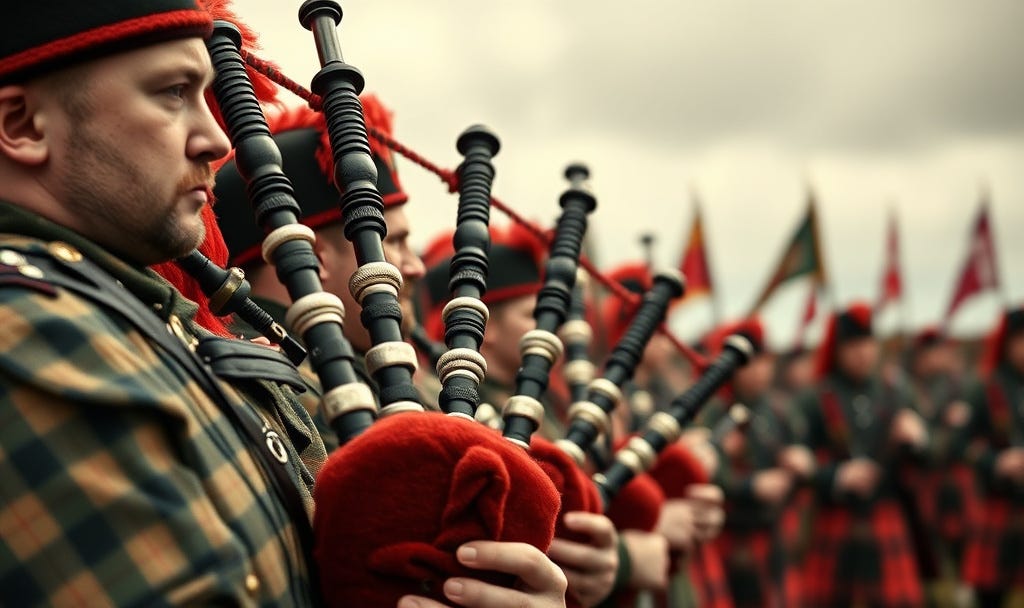
One oft-repeated story tells of a captured piper who argued in court that he carried no weapon because he bore only his bagpipes. The court reportedly rejected his defense, reasoning that a Highland regiment never marched without a piper, making the instrument an essential tool of war.
Whether every detail of that courtroom story can be verified is still debated by historians. However, the tale tells us that bagpipes were considered powerful symbols of Highland identity and military spirit. An instrument capable of inspiring courage—and striking fear into an enemy—could be every bit as influential as a sword.
The next time you hear the stirring sound of the pipes, remember: their music once echoed across battlefields as well as concert halls.
From our Logan hearts to yours, we wish you a safe and happy summer. May it be filled with Highland Games, tasty shortbread, music you can dance to, and many other good Scottish and Irish things.

No posts
Comments
Nothing yet. Say the first thing.
Sign in to join the conversation.