
Love climate content from podcasts but your feed is too long to finish? Read on for a quick summary of new episodes from top climate podcasts, so you can decide which ones to dive in:
by Volts
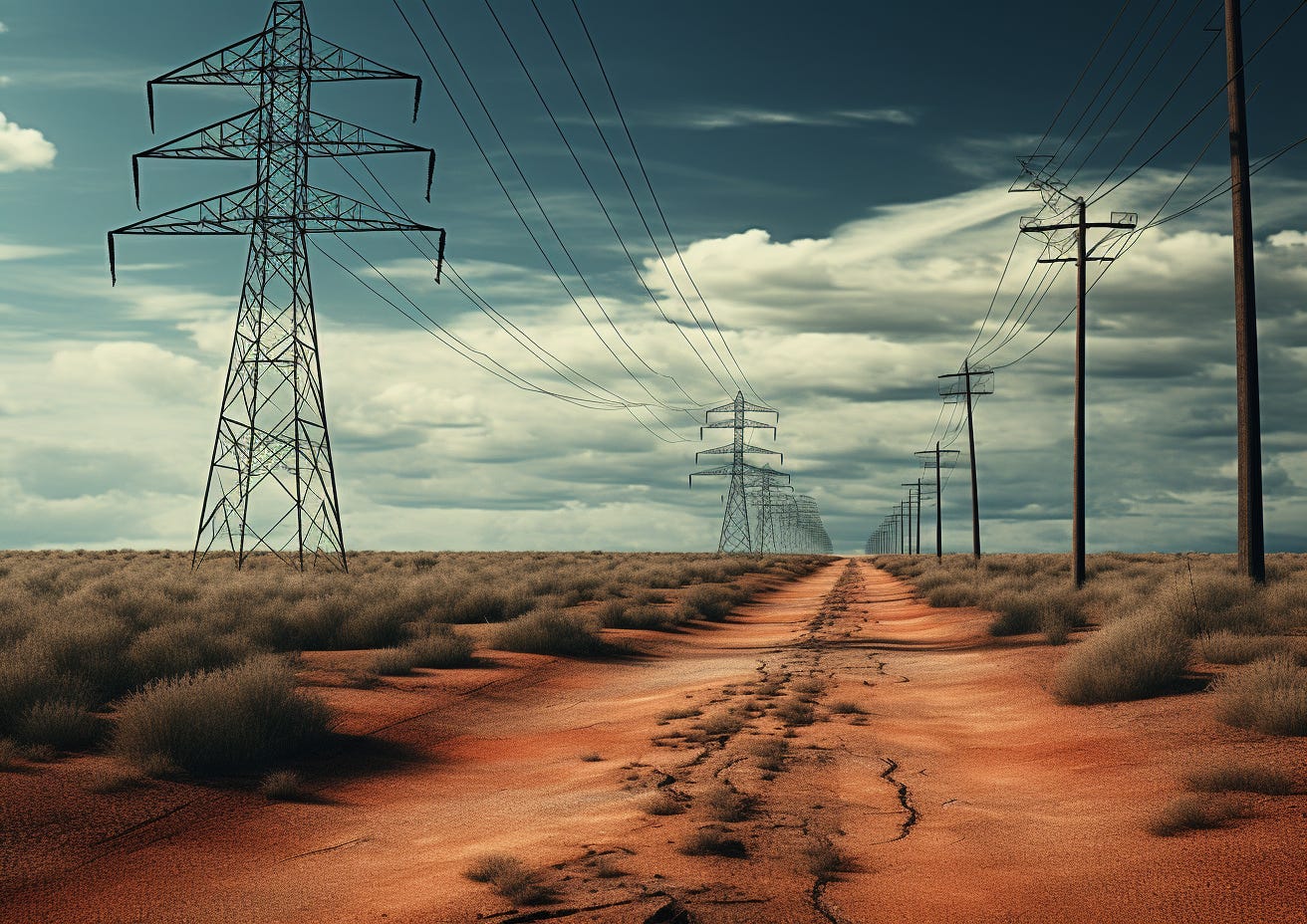
In this Volts episode, host David Roberts and guest Rob Gramlich, a grid policy expert, discuss the critical need for the United States to expand its electricity transmission capacity to meet climate goals and the role of the Federal Energy Regulatory Commission (FERC) in facilitating this expansion. FERC is expected to issue a new rule to strengthen regional transmission planning, which could significantly impact the pace at which new transmission lines, particularly long-distance regional lines, are built. The discussion highlights that while Congress and the Biden administration have made some progress with infrastructure funding and the establishment of the Grid Deployment Office, FERC's upcoming rule presents the biggest opportunity for transformative change.
Gramlich emphasizes the importance of FERC's rule addressing the three P's: planning, permitting, and paying. He suggests that FERC needs to mandate forward-looking planning that accounts for the changing energy mix and increasing demand due to electrification. The rule should also require consideration of all transmission benefits and technologies, not just new lines, and apply cost-benefit analysis to portfolios of projects rather than individual projects.
Cost allocation is another critical area where FERC's rule could make a difference by ensuring that costs are fairly distributed and that decisions on who pays for new lines are made effectively. Additionally, Gramlich calls for more active FERC oversight to ensure compliance with these planning requirements and suggests that performance-based rate-making could be a tool for enforcing them.
Gramlich also touches on the challenges faced by regions without RTOs and the need for bipartisan legislative action to support inter-regional transmission planning and development. He notes that while FERC's actions are crucial, state-level engagement and support from governors and state legislators can also influence the success of transmission expansion efforts.
Key takeaways:
FERC's upcoming rule on regional transmission planning is seen as a pivotal opportunity to accelerate the construction of necessary transmission lines to meet U.S. climate goals.
The rule should enforce planning for the anticipated future energy mix, consider all transmission benefits and technologies, and apply cost-benefit analyses to transmission portfolios.
Fair cost allocation and decisive action on who pays for new transmission lines are essential to the success of these projects.
Active FERC oversight and potentially performance-based rate-making could ensure compliance with the new planning requirements.
State-level support and bipartisan legislative action are also important for advancing inter-regional transmission planning and infrastructure development.
This podcast features Lucy Hochschartner, Deputy Campaign Director for the Pine Tree Power Campaign, discussing the recent ballot question in Maine regarding energy system control. The campaign aimed to create a consumer-owned utility model, replacing investor-owned utilities (IOUs) with a system that protects customers rather than prioritizing shareholder profits. Despite being outspent 37 to 1 by the utility companies, which used a $40 million advertising campaign funded by ratepayer money, over 120,000 Maine voters supported the initiative.
The Pine Tree Power proposal, had it passed, would have established a consumer-owned utility financed by revenue bonds rather than state debt, potentially saving Maine $9 billion over 30 years. This model intended to offer better service, lower rates, and more reliable power. The company's purposes were to include climate action, electrification, and improved reliability, fundamentally shifting from the current IOU model, which aims to maximize shareholder returns.
Hochschartner's background in clean energy and climate work motivated her to join the campaign, which was educational for Maine voters and highlighted the need for systemic change in utility management. Despite the ballot measure's failure, the campaign succeeded in raising awareness and uniting a diverse coalition of supporters across political lines, who are now more informed and motivated to demand better utility services.
The conversation also touched on the disproportionate impact of current utility practices on marginalized communities, and how a consumer-owned model could provide more equitable rates and representation. The campaign's grassroots nature and the lessons learned may inform and inspire similar movements across the country, emphasizing the importance of funding and strategic thinking in the fight for energy democracy.
In this episode of My Climate Journey, Dr. Jen Wilcox from the U.S. Department of Energy discusses the evolving landscape of carbon capture technologies and policies. As an expert in carbon capture, Dr. Wilcox has contributed significantly to the field, including authoring a textbook on the subject. With the Biden and Harris administration, there has been a renewed focus on carbon management, including the advancement of direct air capture (DAC) and the refinement of CO2 storage methods. The episode delves into the technical aspects of DAC chemistries, the importance of point source capture for industrial emissions, and the role of tax credits and incentives, such as the 45Q tax credits, in promoting carbon capture solutions.
Dr. Wilcox emphasizes the need for educational initiatives to train individuals for deployment of carbon capture technologies at scale. She also highlights the DOE's strategy that includes the Carbon Dioxide Removal Purchase Pilot Prize, which sets aside $35 million for direct purchase of captured carbon. The conversation touches on the heat and power requirements for DAC and point source capture, and the potential for capturing other greenhouse gases like methane.
Throughout the discussion, the importance of federal incentives, commercialization progress, voluntary carbon markets, and the need for collaboration across disciplines and industries is underscored. Dr. Wilcox calls for policies that support community engagement and benefits, ensuring a just transition to net-zero emissions. The episode concludes with an optimistic outlook on the continuous progress needed in carbon capture to achieve climate goals.
by Volts
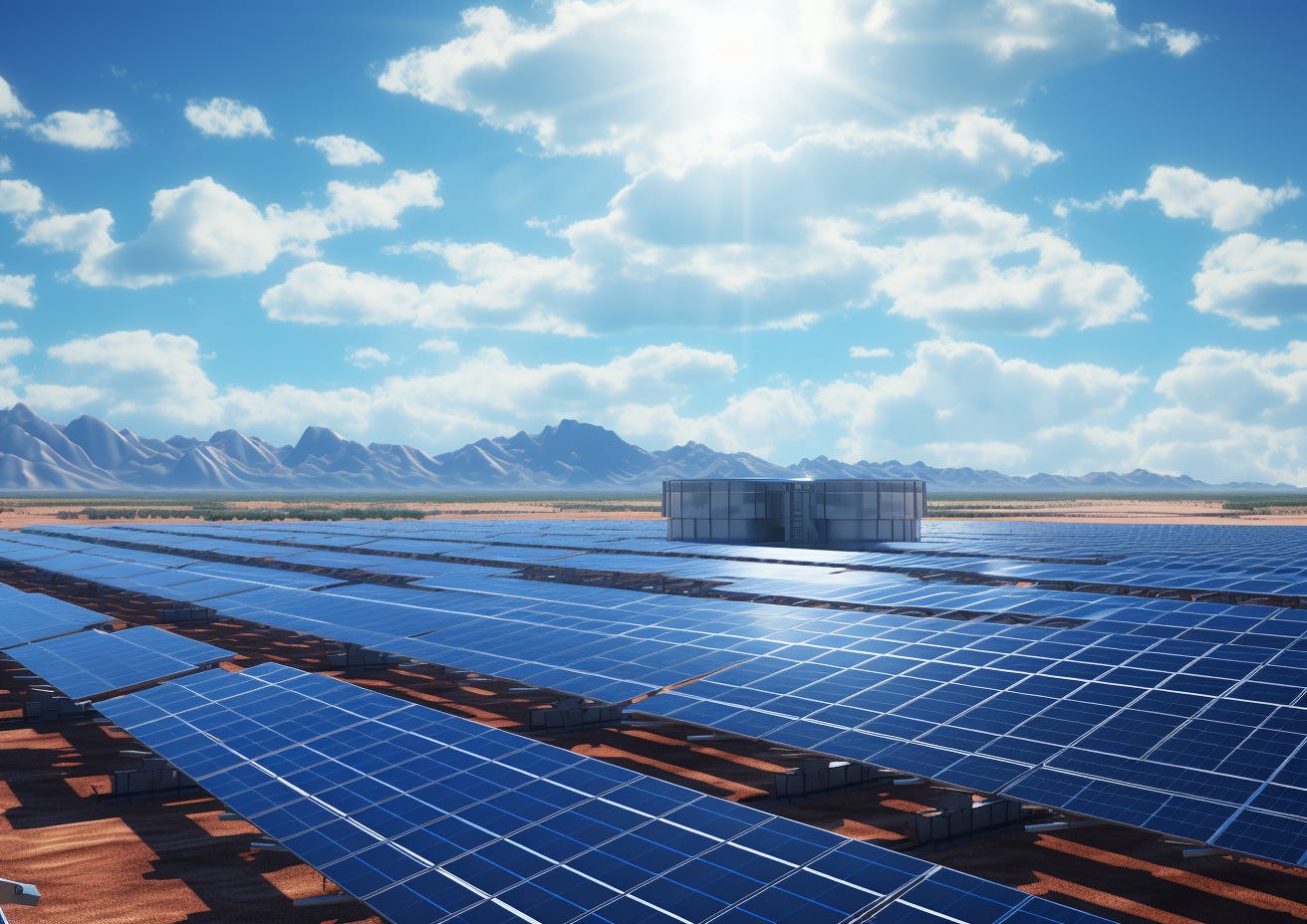
Guest Jenny Chase, a solar industry analyst with Bloomberg NEF, discusses the evolution and current state of the solar power industry. Chase began her career in 2005 and has witnessed solar power grow from a nascent industry to the cheapest source of new electricity in many markets. She has authored a book titled "Solar Power Finance Without the Jargon," which covers not only solar finance but also its history, technology, and policy, offering a wealth of information in an accessible manner.
Chase highlights the incredible cost reductions in solar modules over the decades, with prices dropping from around $100 per watt in the 1970s to approximately 12.8 cents per watt as of the podcast date. Despite the book's recent second edition, Chase laments the inability to include the latest price cuts due to publishing deadlines.
A key takeaway from the conversation is the current challenge of grid constraints, which hampers the ability to connect new solar projects to the electricity network. This is a global issue that has become a significant barrier to further solar deployment.
Roberts and Chase also discuss various "exotic" forms of solar technology, such as thin-film, solar thermal, and perovskite solar cells. Chase expresses skepticism about their commercial viability, emphasizing that standard photovoltaic (PV) technology will continue to dominate due to its proven cost-effectiveness and scalability.
Chase predicts that the future of solar will see higher volumes and lower prices, with technology improvements likely to be incremental rather than revolutionary. She also anticipates a potential wave of bankruptcies in the solar manufacturing sector due to its commoditized nature and low margins.
Finally, the discussion touches on the role of solar in achieving net-zero targets, with Roberts and Chase agreeing that while solar is on track to meet its forecasted contributions, balancing it with wind energy and other sources will be crucial for a reliable and economical clean energy transition.
by Catalyst
Shayle kann discusses the nuances of electric vehicle (EV) charging and the energy transition with Nick Woolley, CEO of ev.energy. They explore the differences between the US and Europe in terms of EV adoption and managed charging programs, emphasizing the importance of aligning consumer charging behavior with grid needs.
In the US, vertically integrated utility markets can offer incentives for off-peak charging, like the SmartCharge New York program by Con Edison. Europe's unbundled markets, where network operations are separate from consumer interfacing, see energy retailers creating customer-focused propositions, such as time-of-use tariffs for specific devices like EVs.
Woolley suggests that the best time to engage consumers in managed charging programs is when they first purchase an EV. He also highlights the potential of vehicle-to-home (V2H) and vehicle-to-grid (V2G) technologies to provide grid resiliency and complement grid services but notes that regulatory and technological advancements are needed for widespread V2G implementation. The conversation concludes with an acknowledgment of the immense capacity that EVs could provide to the grid in the future.
Thank you for reading Climate Pod Digest. This post is public so feel free to share it.
Comments
Nothing yet. Say the first thing.
Sign in to join the conversation.