
Language is a funny old thing.
It can make you laugh, or cry. It can inspire, excite and create curiosity. At the same time, it can make you sad, demotivated and confused.
And at the Climate Majority Project, we put the topic to our guests at a recent difficult questions talk: How should climate action evolve in a world increasingly understood as a polycrisis — and what might be gained or lost by shifting focus from climate breakdown alone to the wider set of interconnected challenges shaping people’s lives?
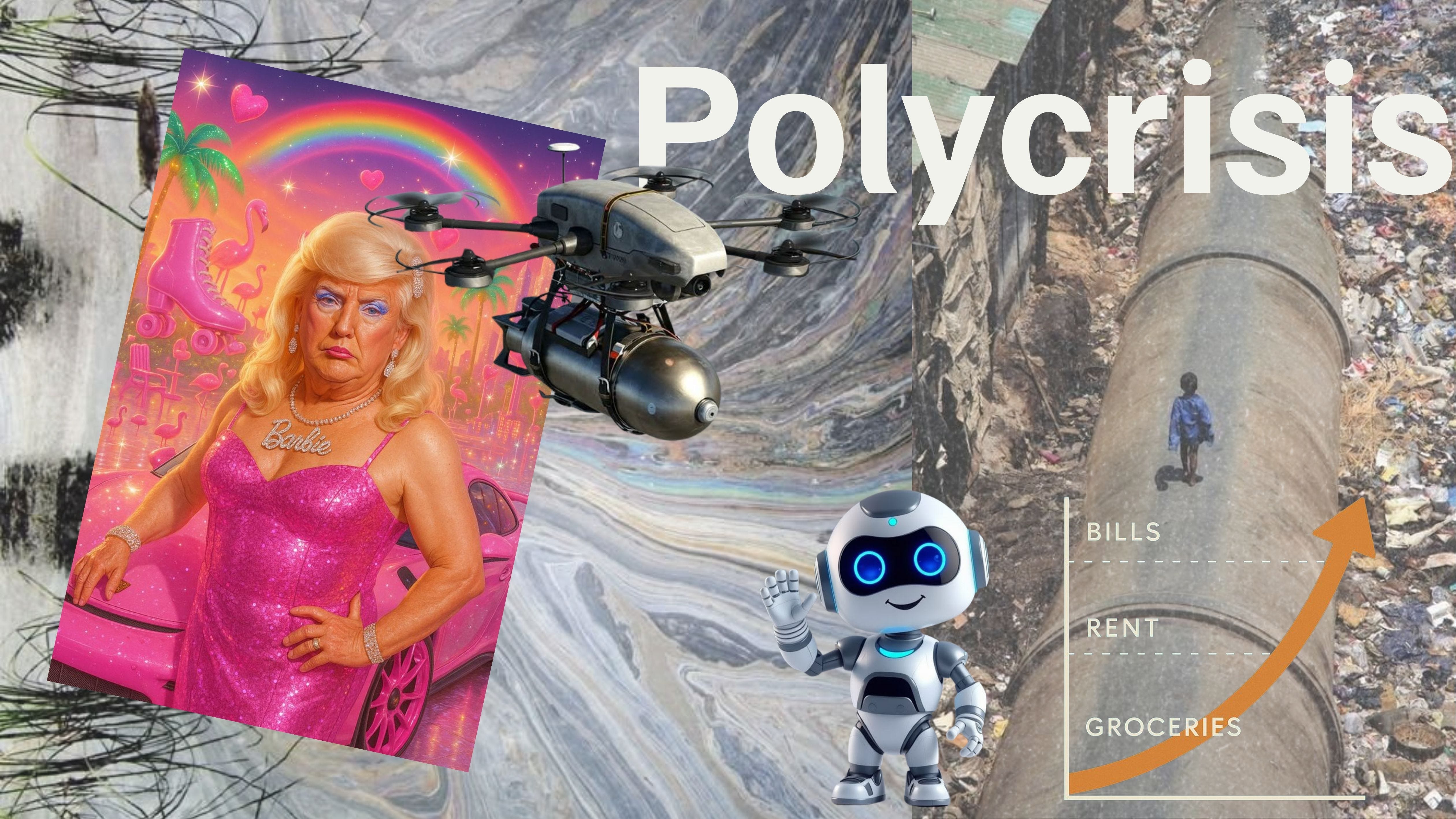
And if you’re unsure, a polycrisis means multiple, connected crises all happening at the same time.
Some of these crises include:
Climate and nature crisis
National security crisis
Threat of escalating war/resource war
Cost-of-living crisis
Trust in public institutions
What’s interesting is that although the topic was more centred on action and focus, a lot of the discussion was language-focused.
So, while the difficult questions call focused on the question above, I chose to reflect the language strand of it in this piece, where we’ll explore the topic and the arguments for each side in more detail.
On one side of the argument, there is the opinion that we mustn’t lose a climate focus in this conversation. The suggestion was that we have to name what is happening and the impacts it is causing.
That being said, you can still join things up with other crises, even with a climate focus.
It was observed that we, as a population, are more worried about food shortages than what’s causing the food shortages.
And that’s where direct climate messaging could come in handy for raising awareness and creating action.

In the discussion, it felt like there was more support for language that connects it all together.
To me, the art of communication is taking complex ideas and making them simple and digestible.
Yes, using complex words and terms makes you sound clever. But in this context, bringing together silent majorities into a force for change, complex phrasing may just alienate those exact people and take them further away from action.
And this is a common feeling among the breakout groups. It was suggested that we should avoid big words and sentences to avoid confusion.
In modern society, there is often an overwhelm of information and priorities. People can’t always see beyond their own problems. They may not have the privilege to do so. So, we need to help them see that their own issues are part of an “ecological overshoot”. In short, this is when we use up natural resources and produce waste faster than the planet can recreate those resources and absorb that pollution.
Across the many crises that people see or hear about, there was an underlying pattern spotted. That was boiled down to extraction (taking things), profit and individualism (self-interest). Based on that, it makes sense to treat them as interconnected.
In the discussion, we heard that phrases such as ‘crisis’ and ‘emergency’ have lost strength as words as the number of events and occurrences increase.
We heard a few times that doom and gloom doesn’t work to mobilise people into action. This brought about suggestions for a different, more ‘everyday’ word that people understand. The term ‘climate’ has been weaponised and has become toxic, some felt. While it was said that people have created division around the term, it was also mentioned that we don’t want to give in to the people who have done that.
Even the phrase of the discussion, ‘polycrisis’, brought questions. We heard that the phrase is too complex and it risks alienating the majority, who need to hear straightforward problems and solutions.
Another suggestion I liked was to tie everything to our local area. Whether that be getting involved in something or looking at how your local area responds to things. Start small. Purposeful contributions are all actions. This can also help the silent majority (the large percentage of people who support ambitious climate action but rarely voice their concerns or assume they are in the minority) to come to action and be aware of their own collective power.

There is no one rule that fits all here. Differing approaches can work for different groups. For example, for people more who are more clued up about climate, more urgent or to-the-point messaging alone about the crisis works better. They are in-tune with the issues at hand and understand them better than the everyday person. This is also true of people who feel they have greater agency and that their voice matters, i.e. elites.1
However, for ‘the everyday person’, urgency and panic create a further barrier to becoming a silent force. It can make them feel stuck or more irritated and push them further away, rather than getting them more involved.
There can be a time and a place for each type of language and messaging. But it has to be used with consideration.
In a study about the language in climate journalism,2 Sir Jim Skea, the current chair of the Intergovernmental Panel on Climate Change (IPCC), was quoted having warned that “apocalyptic” language in climate journalism may inadvertently promote widespread disengagement and apathy.”
Simplistic messaging relating to their everyday lives, whether that be energy bills or food availability matters. Another thing that really matters is whether people see all the other people who are silently concerned around them, which creates the feeling we could actually be part of a movement large enough to make a difference. One person in the groups-wide discussion said that “people don’t experience climate, they experience other things”. And I thought that was a very good way of putting it.
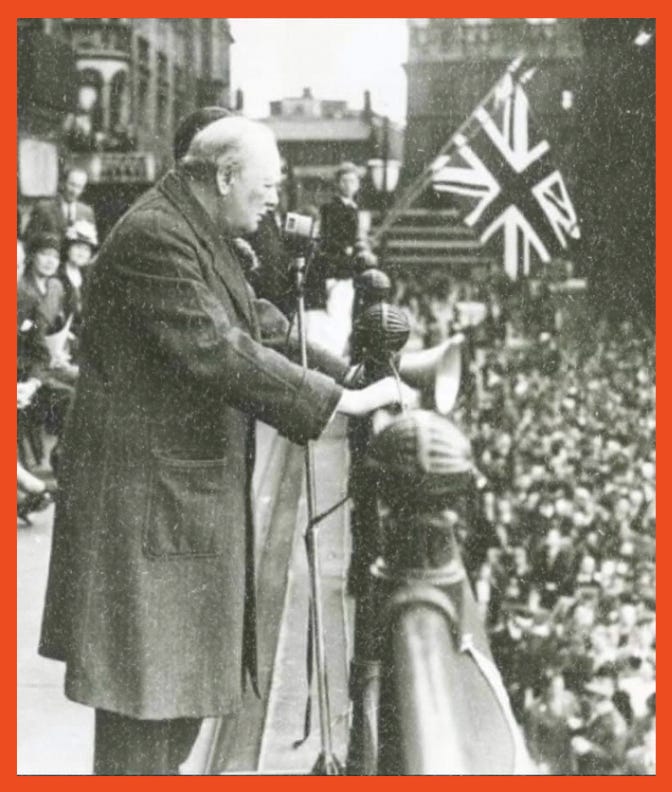
When Churchill was addressing the nation to unite against the threat of Nazi invasion, he was not pretending it would be a walk in the park. But he did make people feel that, together, they could win over that existential threat.
More on Mobilising Silent Majorities
If a similar style national broadcast briefing for the climate crisis was used — as the National Emerging Briefing is calling for — it would be interesting to see the language used and who would give the message. Some theorise that a government approach is going to have more authority.
Ultimately, both the language used and who is giving the message are likely to really shape its effectiveness and ability to foster action.
Only time will tell which approach is used and whether it’s the right one. But I’m curious to see whether the current use of complex language, at times, is more inspiring or demotivating.
Jack Heale volunteers for the Climate Majority Project as a writer. Jack has been writing professionally for six years and his roles span journalism, public relations and marketing. He is inspired by the CMP’s mission and wants to be part of the challenge of activating silent majorities.
https://assets.climatemajorityproject.com/Mobilising%20Silent%20Majorities%20March%202026%20(2).pdf
https://journals.sagepub.com/doi/full/10.1177/14648849251383363
No posts
Comments
Nothing yet. Say the first thing.
Sign in to join the conversation.