
Dear Climate Culinarians,
I’d love to protect small farms. I want to live in a world where I know where my food comes from, how it is grown, and where I know that the people who grow this food have a good life. Reality bites: I see small farms struggle.
Searching for solutions, I recognize systemic problems. And now I wonder if I got it all wrong. Everything needs to change … just so that small farms can stay exactly what they were?
Last week, I looked at a new-ish back-to-the-land movement and followed one farmer’s story to understand the magic – and the challenges (read it here!). This week, I ask the same experts - farmer Peter Treiber and food and agriculture reporter Sarah Mock - for their ideas for a better future. This discussion will lead us to Little House on the Prairie and a gargantuan garlic farm.
Journalist Sarah Mock grew up on a small farm, knowing a system where farms went from one generation to the next and the next and the next. She was excited to see people her age want to start their own farm. Until she observed them give up. “All of these young people can’t make their farms last 10 years? What is it that old farmers know that young farmers don’t?”, she wondered. The journalist went looking: She started research for a book, visiting farms across the United States.
Was the problem about farming practices, like organic versus conventional?
About the kind of food plants these farmers grow?
Or don’t grow?
These new farmers might misjudge local conditions.
Lack management skills.
Or some complicated mix of knowledge and skills.
Perhaps, if she only visited enough farms, talked with farmers and observed and learned from them, she would find the recipe for success.
“The reality of what I found is that it’s just money”, Mock says.
Some people start farming with funds from a previous career or an inheritance of either money or land. “If you had money at the beginning, you’ll probably have money at the end. And if you didn’t have any money at the beginning, you’ll probably just stop farming one day”, says Mock.
Neither the journalist nor her editor had expected this outcome; it pretty much ended her book contract. She published Farm (and Other F-Words) with a hybrid publisher in 2021. Looking back, Mock emphasizes two major misconceptions about small farms:
the price of food,
and the skills to grow it.
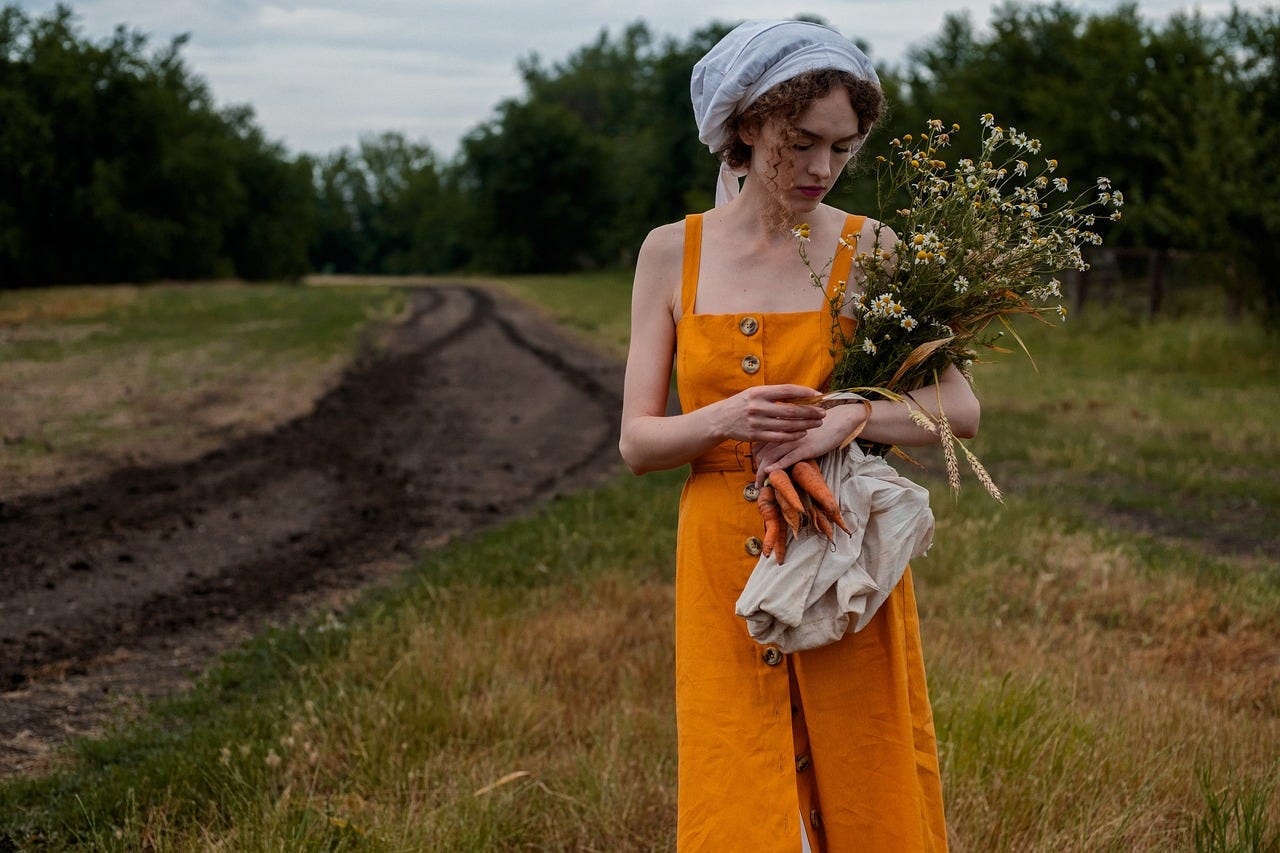
Pretty social media posts make farming look easy. Online offers of workshops for would-be farmers blare at me like a get-rich-quick scheme. “We have deeply devalued the idea of agricultural labor” Mock says. As if there was no difference to child’s play: Put a bean seed in a styrofoam cup, water it and watch it grow. How hard can it be?
“Actually farm work is highly skilled, very hard”, Mock says. One of the reasons is the tight connection to a place: Soil and micro-climate influence what a farmer can grow, when, and with how much yield. And each day is different on the field.
“Just now, after 10 years, I feel like I have a clue of what I’m doing” says farmer Peter Treiber. He is one of those small farmers who started with money. The farm is his father’s retirement passion project.
Treiber may have another advantage: He’s an artist – a profession driven by curiosity and defiance in equal parts. Artists embrace experiments and refuse to give up. In between, they observe what does and doesn’t work. Trial and error is part of farming, too – but with a different frame, as Treiber points out:
“You blow planting a garlic crop, and you’re done for the year, you’ve got to wait until the next year. And there’s only so many seasons that you have in your life.”
I didn’t ask Treiber how much garlic he grows each season. It’s a safe bet to say if you really, really wanted, and you put in some time, you could count the individual bulbs at his farm.
At Christopher Ranch in California, this would take almost 38 years*.
*if each garlic bulb took you a second to count
The farm harvests one billion bulbs, more than half of all the garlic grown in the U.S, according to a report by Business Insider. In our food system, a large scale means a low price. That’s why grocery stores work with big farms, big packing houses and big distributors.
The garlic fields at Christopher Ranch cover land half the size of Manhattan. Large scale farming even looks like the Manhattan grid. These rectangles hold only garlic plants, as far as the eye can see. Monocultures guzzle fertilizer, pesticides, water. They ban biodiversity to some nature preserve down the road. If at all.
In comparison, Treiber Farms resembles nature. Rows of different vegetables and cut flowers mark its land, along with fruit trees and berry bushes. Bees and many other creatures find room to eat and sleep, to have babies and hide from predators. Not all of these critters are welcome, though. Netting floats on a few rows, a fence lines the field’s border.
Small farms like Treiber’s don’t just produce food. They provide public service. With his organic practice, Treiber contributes to clean water and air, to biodiversity, and by extension, to climate mitigation. His cooperative mindset breeds opportunities for local food producers and artists. And like in art, the value of all this is not dictated by scale.
The views alone are priceless. At Treiber’s place on the North Fork of Long Island, real estate agents market the area as “bucolic”. A local land trust buys building rights from farmers to preserve at least some open space.
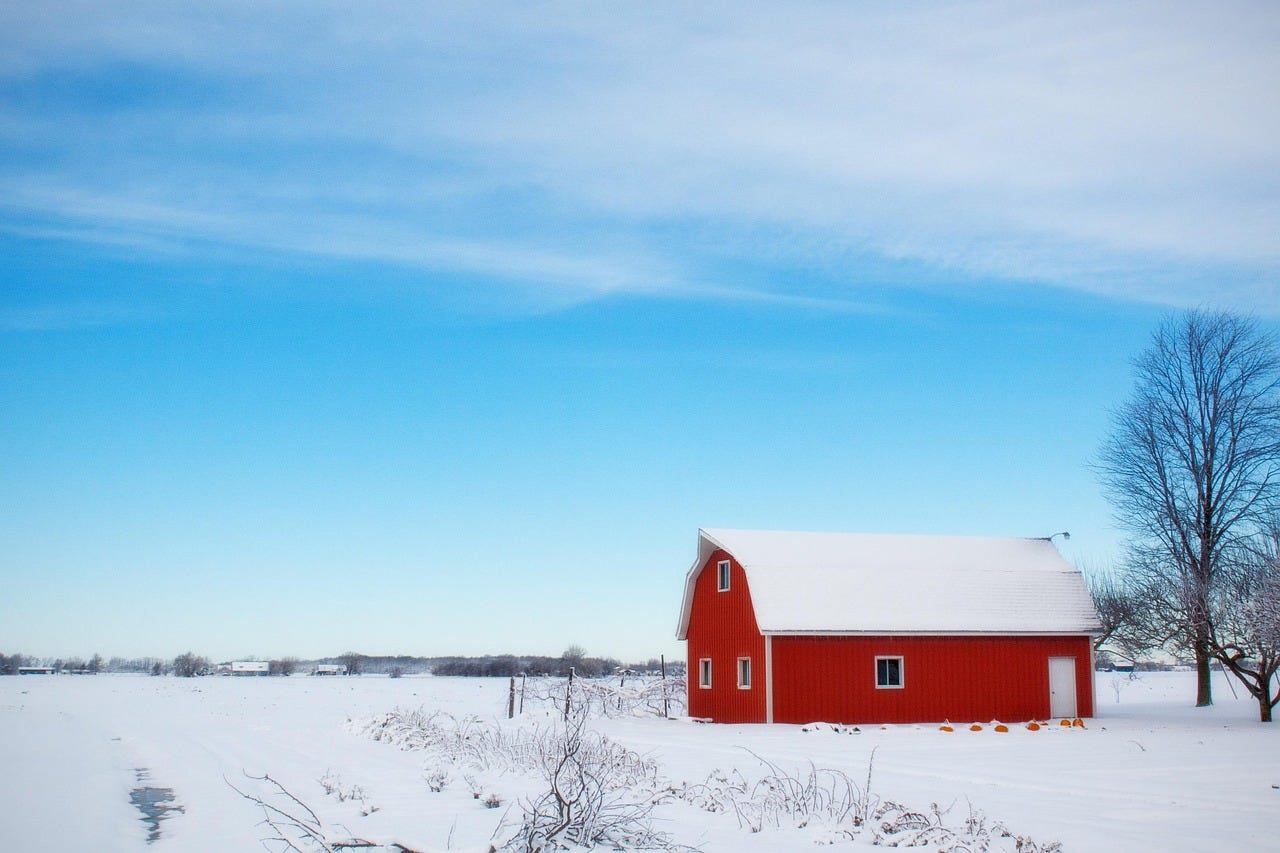
The same open space, of all things, is what Treiber identifies as an obstacle for his farm’s survival. He thinks the landscape doesn’t sustain enough customers. Wistfully, he tells me of the situation on a farm near Portland, Maine, where he gained his first farming experience. Portland’s population density is 3,175.4 per square mile. Around Treiber Farms, it’s 441.
This realization inspired Treiber’s latest idea to make his farm work. Rather than trying to attracting more people to his farm store, he wants to put more effort into making his vegetables and berries available. How? By getting them to bustling places where, as he puts it, “things are open seven days a week, 12 months a year”. And again, Treiber’s thoughts go beyond his farm’s fences.
“If I had a magic wand”, he says, “I would have a van and a driver, and I would be cooperating with other farmers, including oyster farmers and flower farmers, and we’d be moving our goods further up island, further west, weekly.”
Involving more people happens to be a core part of Mock’s conclusion about solving small farm problems. She calls her idea “big team farms”, and she wrote a follow-up book of the same title. Its foundation challenges the ubiquitous small family farm, owned and run by just one or two people. “When you start a startup, for example, you would never try and run the whole business by one person. You would build a team of people with different skills, who can share responsibilities, share the workload, and then share the benefits in the end, too.”
With a bigger team, Mock thinks, a farm could also operate at a bigger scale and bring prices down. A diversity of backgrounds and personalities could help the small-turned-midsize farm cater to additional sets of customers, perhaps new markets.
Therefore, Mock believes it’s worth finding ways to add different voices, different socioeconomic groups, races and ethnicities, people who identify as different genders. “It requires a lot of emotional intelligence and managerial skills”, she concedes. “And I think in a lot of cases, complicated work settings are not what attracts people to agriculture.”
Unfazed, Mock challenges the distinction between owner and employee. To test and back up her own ideas, she looked into family farms that invited partners into ownership, got rid of hierarchies or established employee-ownership models. “The trickiest part of that is that in agriculture, usually one person wants to own the land”, she says. Rather than financial security, the journalist sees emotional reasons behind this desire. Little House on the Prairie.
It’s hard to reason with a sense of belonging.
My conversations with Treiber and Mock are steeped in the love of small farms. We’ve been talking about how to run them succesfully. How to protect them. We dismissed an end of capitalism as unrealistic. We pondered what else, then, needs to change in our food systems. Then Mock says:
“We can’t change the whole world to accommodate small farms. I think small farms will have to change to better fit into the world that we live in.”
In a loving relationship, sometimes the best you can do is to help each other confront an uncomfortable truth. Price and scale. Diversity. Access to markets. “We created farmers markets and we really put all our eggs in that basket, forgive the farming pun”, Mock says. “But why did we give up on grocery stores?”
Perhaps small farms could operate at a slightly bigger scale and get their prices down. Perhaps more small farms could connect with the places where people shop. Once more, our conversation turns to the idea of changing the world.
“My responsibility is not the world”, Mock says. “My responsibility is my community and the spaces that I occupy – not my desire to have control over the whole world.” She warns against focusing on things you can’t control. It will just make you spin your wheels and never get anywhere. She says:
“If you want to change the world, do find something that you love, and do it every day. And that will change the world, in a small way.”
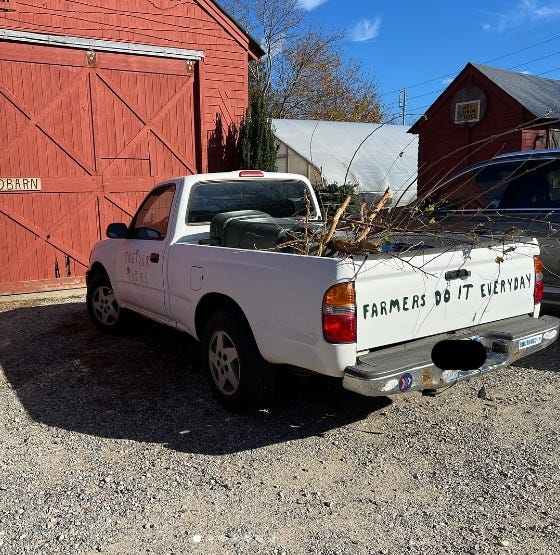
I look at Peter Treiber’s truck. There’s a slogan in the back. “Farmers do it every day”, it says.
Okay, so we won’t try and change the world to accomodate a concept that doesn’t work anymore. We can still stand by the people who grow food - and learn from them.
Pick 2 fruits and 3 vegetables you like and find out which small farms in a 100 mile radius grow them, and in which month they harvest those plants. Bonus round: Find the same five veggies/fruits at your grocery store – and search the names of their growers/distributors online. Talk about your adventure with friends. Or involve them: Who completes all five picks first?
It’s a great place to meet a farmer. On a slow day when they aren’t busy, talk with them about their work. And food, of course.
At a farmers market, a farm stand, or a local advocacy group, build personal relationships with farmers. Let curiosity guide you: Learn about their successes, struggles, and needs. Then attend your local government’s meetings and advocate for policies that support farmers.
The Farm Bill must be re-authorized by Congress every five years, and representatives are very late. Which means there is still a chance for you to have a say! Find out what different advocacy groups are lobbying for, and why (just as an example, look here, there, and there). Which policy would support climate-friendly farming, living wages, young farmers, etc.? Call your representatives and tell them what you do and don’t want them to support.
Read, eat, repeat!
Petrina
Climate Culinarians is a weekly newsletter delivering food for thought to people who care about what they eat. I’m Petrina Engelke, journalist and book coach. I help readers discover links between yummy food and global warming - with a focus on solutions and actions we can take. Read more about this newsletter & me here.
Comments
Nothing yet. Say the first thing.
Sign in to join the conversation.