
This week, it’s a round up from the garden.
With midsummer’s day almost upon us, I have been enjoying the long evenings. As a poultry keeper, I’m out at dusk every night putting the birds away, so acutely aware of the lengthening days. At the moment, we go out at around 9pm, rather than wait until that last moment, so lock up will stay around this time for the next few weeks and then start getting earlier by around 15 mins a week. And one of the advantages of going out at this time of the evening is the wildlife - we regularly see the barn owl, bats, fox, the occasional badger and hear the tawny owls.

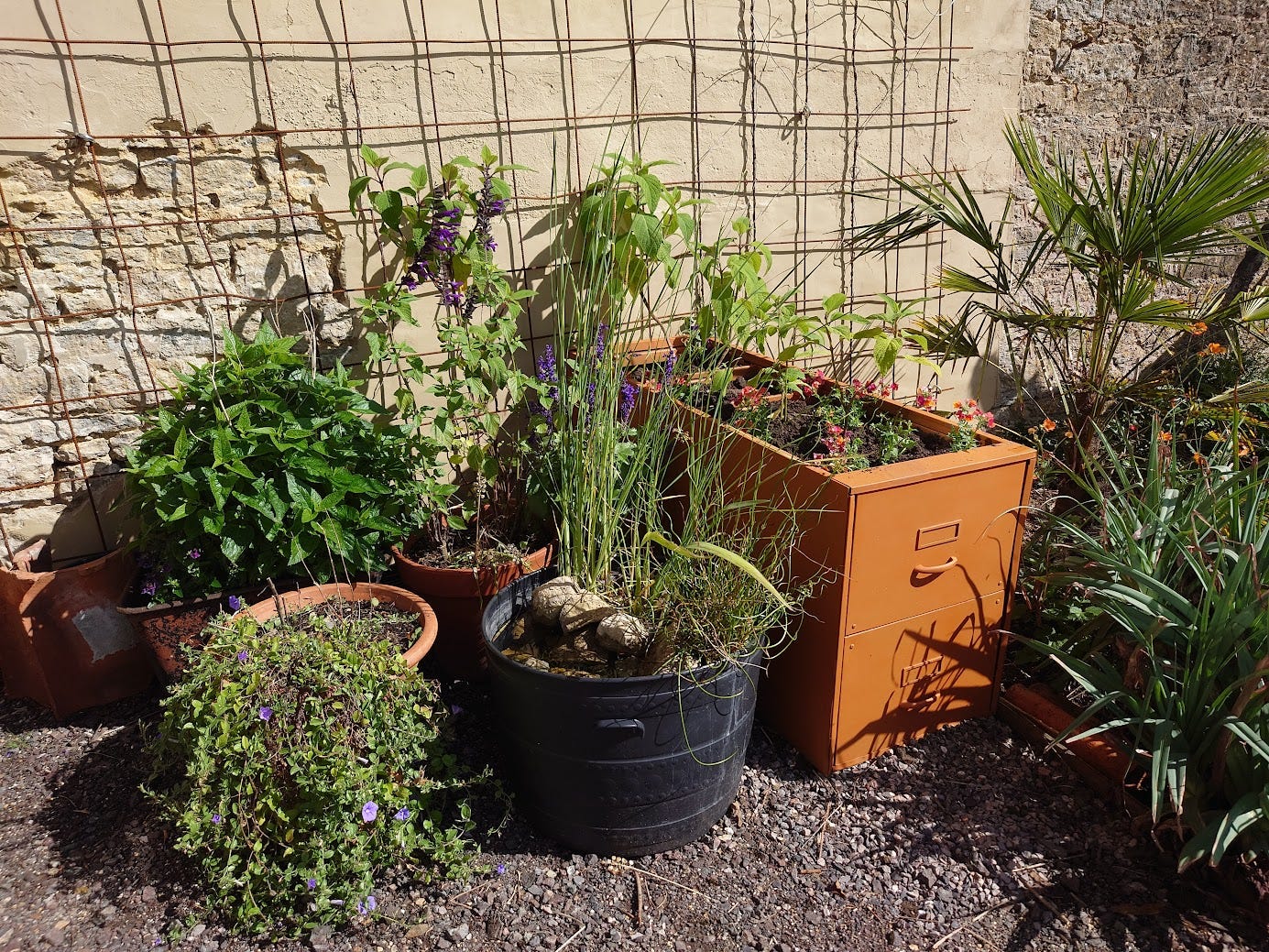
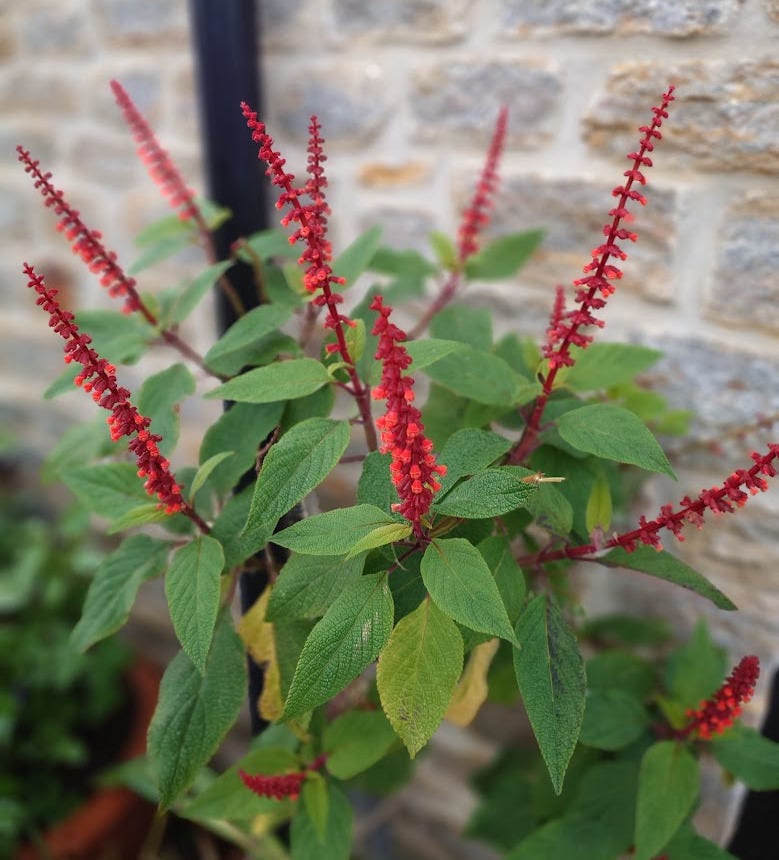
When reporting on my favourite bits at Chelsea Flower Show, I included a photo of the filing cabinets that had been repurposed as plant troughs on the Seasalt Painted Garden designed by Lynn James. At the time, I said I would be stealing that idea and now I can show you the results! So it’s a big thank you to my OH for taking the filing cabinet, removing the drawers, tipping on its side to make a trough, then painting it and attaching two drawer fronts to one end. It took a lot of soil to fill it, but fortunately, I have been clearing some ground for a new path so it was all tipped in here. It’s a Corten steel colour which goes well in the garden and I’ve filled it with my some of my sabra spike sages (Salvia confertiflora). This tender species is a native of Brazil and it grows quite large, around 1.2 -1.5 m, and has wonderful spikes of small rust coloured flowers and I’ve underplanted with nemesia that have orange and purple coloured flowers, so you have to love orangy-rust in this part of the garden!
And I’m not the only one to go the filing cabinet route – check out Yasmin Chopin’s post for some more ideas.
I have taken a few images of parts of the garden that are at their best at the moment.
The front garden is an aggregate bed and now in its fourth summer. I still have areas to fill but I’ve not rushed things, as I like to trial different plants and there have been successes and failures. I tried some plum-leaved heuchera, but they didn’t thrive, despite being in partial shade. I planted several Russian sages (Perovskia ‘Blue Spire) but again I have been disappointed – I thought they would thrive in the full sun, well drained, quite chalky ground, but one died and the other two have been very slow to get going. Another surprise is giant fennel (Ferula communis). I grew several from seed but only one survived the first season, but despite reappearing each spring, it produces 4 or 5 leaves and then stops. I have seen giant fennel growing in rough stony ground in Italy, so I though it would be an ideal spot for it.
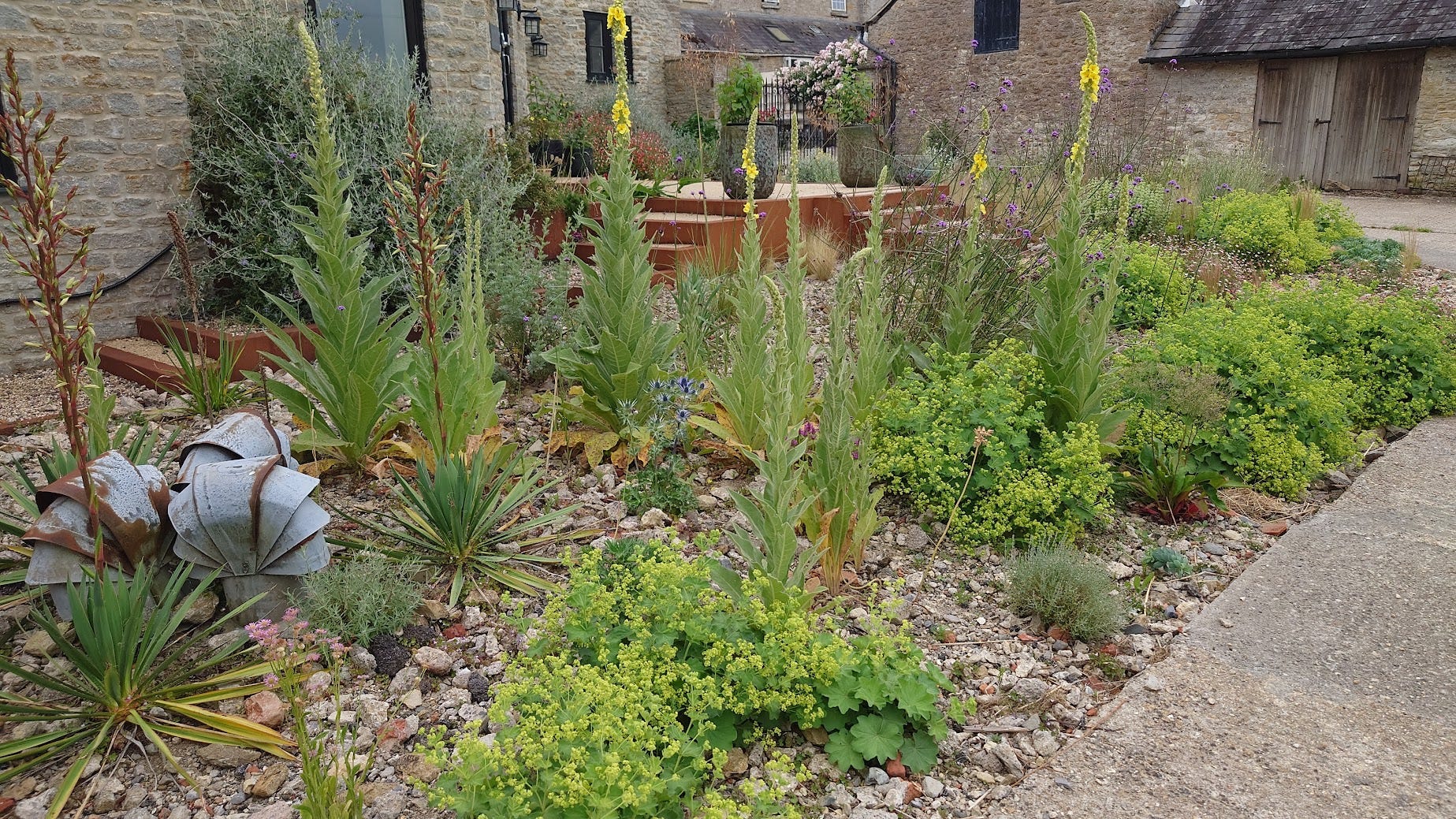
In contrast, the Brachyglottis (Senecio) is thriving as are the masses of mullein (Verbascum), verbenas (Verbena bonariensis), lady’s mantle (Alchemilla mollis), Euphorbia myrsinites, Yucca, and various Eryngiums.

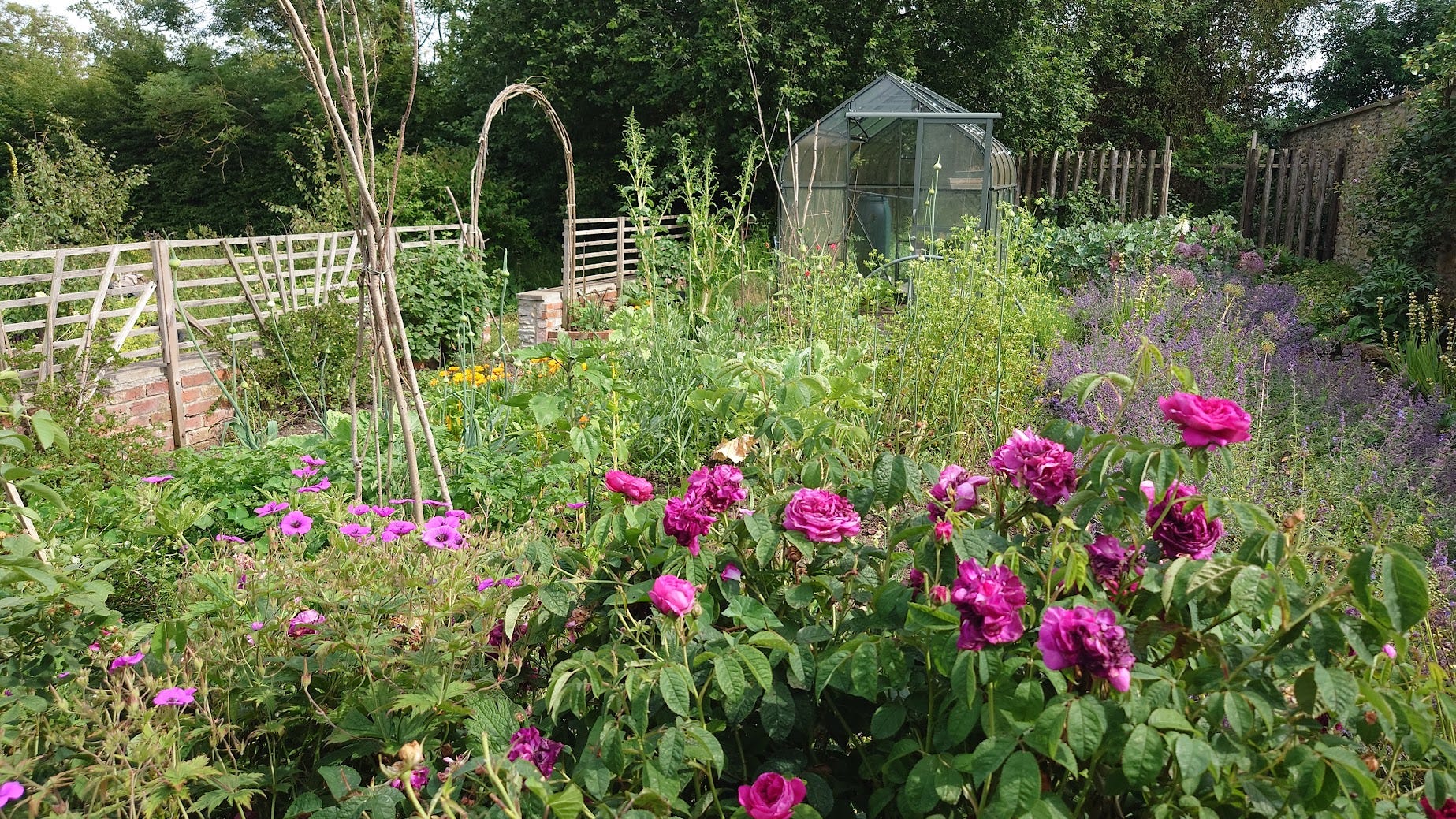
My small potager is more chaotic than usual. I have removed the central path so now it’s a single block and there is no pattern to the planting, just small blocks of this and that. I have added lots of taller plants like tree cabbage, sunflowers, tripods of climbers to cast shade. There is quite a lot of seeding biennials at the moment, including kale, chard and celeriac.
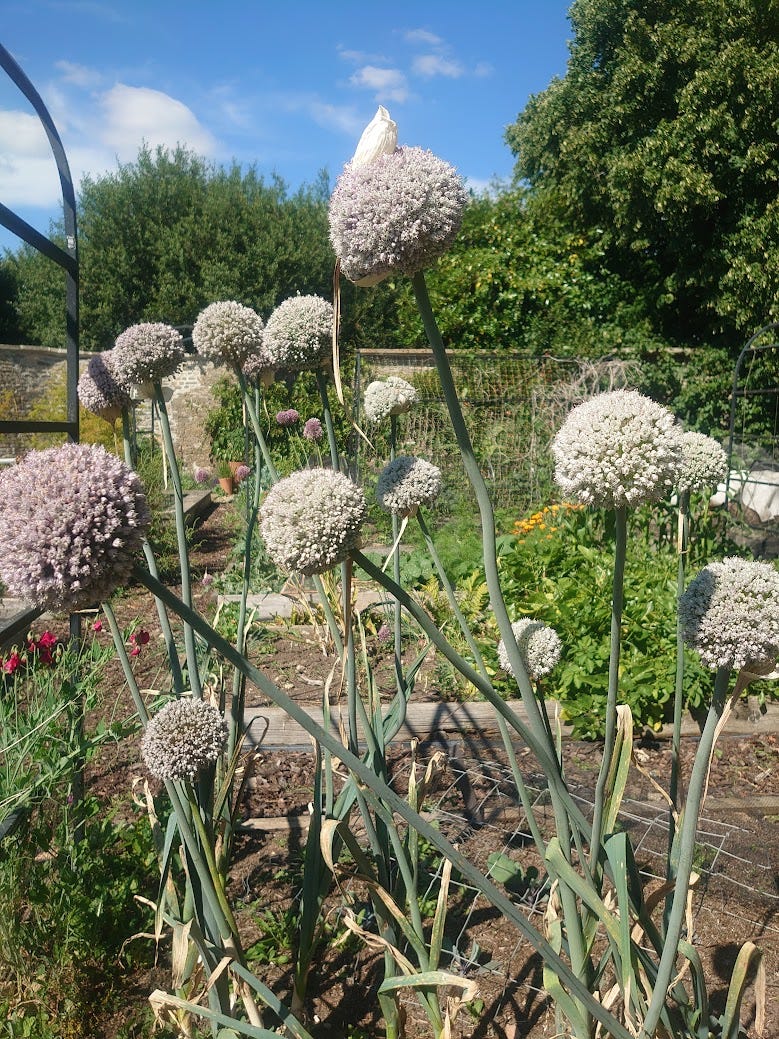
I’m really looking forward to the flowers of the leeks in the coming weeks. They are amazing as they have large flower heads in shades of pink and white supported on long stalks. I try to plant my brassicas near them as their gentle movement helps to keep pigeons away. Here’s a photo from a couple of years ago. It’s well worth planting out leftover leeks in the flower beds and leave them in the ground as they multiple up each year.
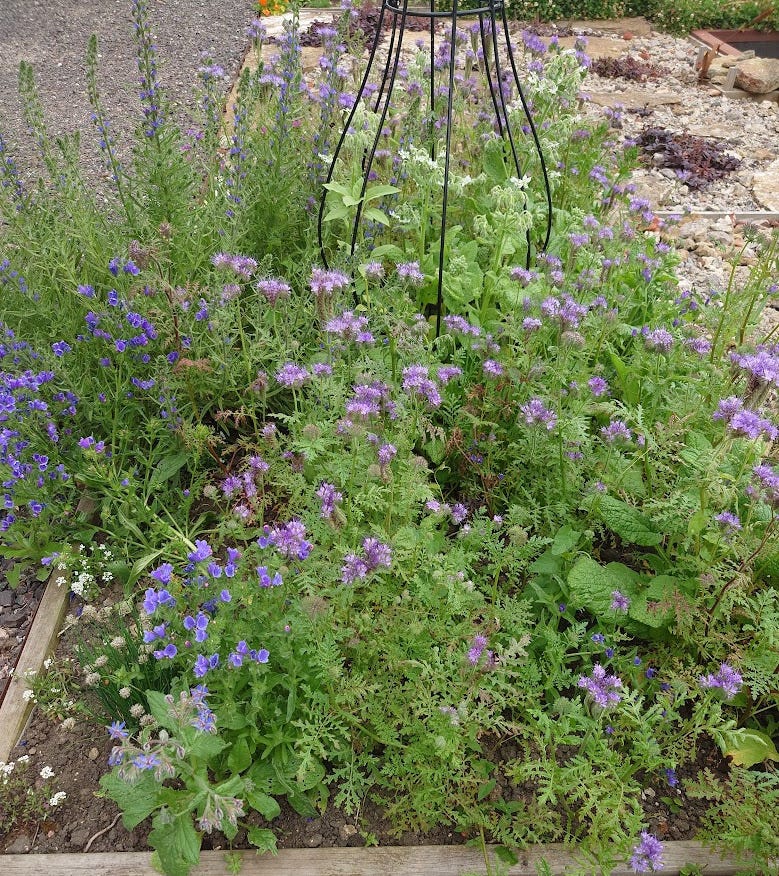
This is one of my favourite beds at the moment – all sown from seed so its really easy and cheap to create. Designed for pollinators and natural predators, there’s phacelia, white borage, lots of vipers bugloss and some alyssum Lobularia maritima along the edges - and there is a real buzz as I walk past.
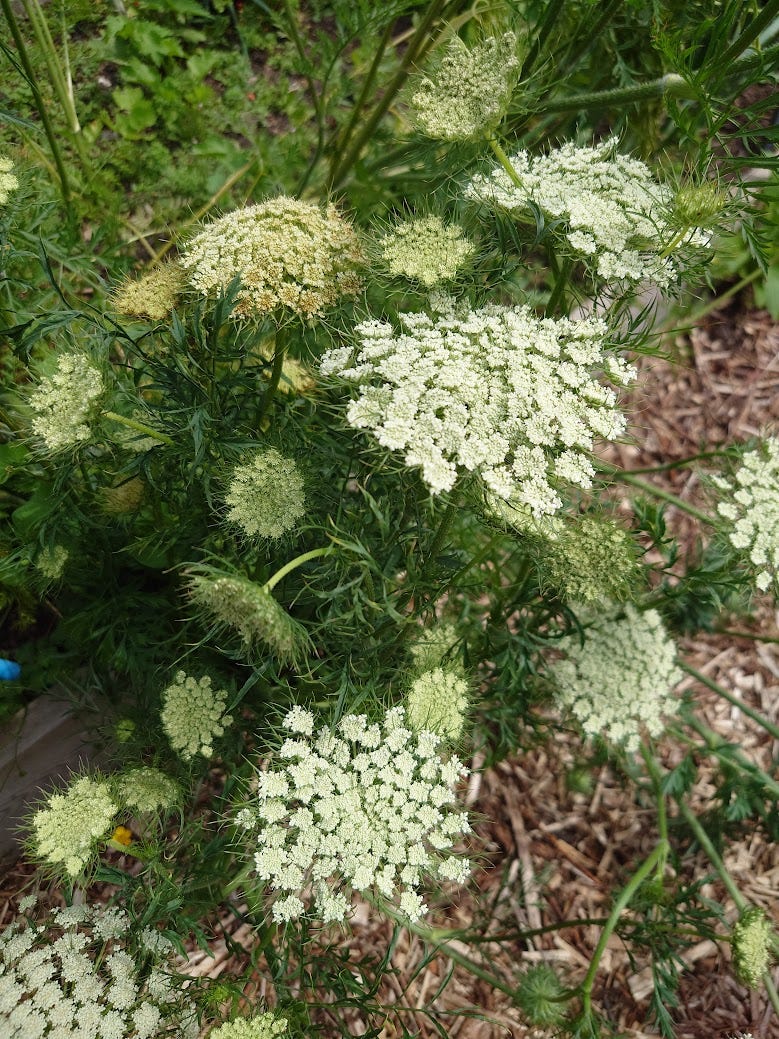
I always leave a few carrots to go to seed so I can enjoy their flowers and they are looking really good at the moment.
Happy gardening!

PS If you enjoyed reading this post, please click the ‘like’ button at the bottom, it really helps make my posts more visible on the SubStack app. Thank you xxx

Talks over the next few months
The garden clubs usually welcome guests, so do get in touch with the club secretary to get details.
8-12 July RHS Badminton - I am speaking about creating resilient gardens on Friday 10th on the ‘Grow Stage’
16 July Trull Garden Club near Taunton- The Kitchen Garden
20 July Bride Valley Garden Club near Dorchester - The Climate Change Garden
28 July Melksham - The Climate Change Garden
5 August South Bristol Garden Club
17-19 September The Yeo Valley Organic Garden Festival is back! I am speaking on Saturday afternoon with a talk titled ‘What’s next for gardening?’ Don’t leave it too long to buy tickets - they sold out quickly last year!
And don’t forget my walled garden is open for NGS on 1 August and 6 September – I’d love to see you !
Comments
Nothing yet. Say the first thing.
Sign in to join the conversation.