
Resilience is my monthly delve into a particular topic or theme for paid subscribers but you will find that there is quite a long preview for all my free subscribers. Once a year, I bundle all these articles together in my digital Resilience Gardening magazine. The link for Issue 1 can be found at the bottom of this post, along with other subscriber benefits.

Over the last couple of weeks, I have been admiring the flowers of my Carolina allspice. Its not a stunner in floral terms, but being a botany geek, I am fascinated by its pollination. So this month’s Resilience is about some of the unusual forms of pollination in the flowers we grow in our gardens.
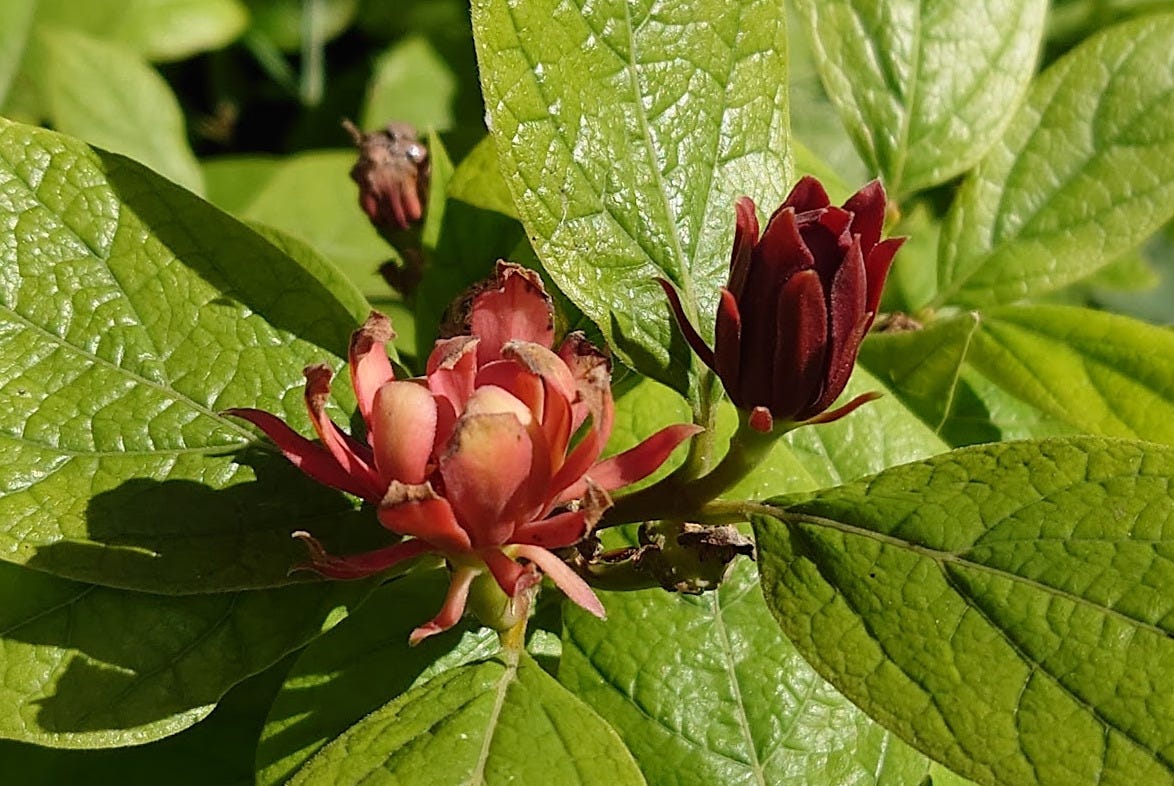
Carolina allspice (Calycanthus floridus) is a shrub that’s native to the Eastern United States where it grows in the understorey of deciduous woodlands. It was grown by early colonists in their gardens and made its way to the UK in 1756, but despite its long history in our gardens, it’s still relatively unknown.
Its an ancient plant that’s pollinated by beetles. Pollination by beetles is called cantharophily and it’s relatively rare in the plant kingdom. That’s because Calycanthus, like its relative the magnolia, is a pretty primitive flower plant that evolved before winged insects first appeared.
Just like the magnolia, Carolina allspice has a flower with undifferentiated sepals and petals, which are called tepals and they are arranged in a spiral. Critical to the successful pollination of its flowers is the spicy scent which draws in the beetles. The scent is produced before the flower opens fully, forcing the beetles to squeeze between the tepals to reach its source, and once there, rub pollen from other flowers onto the stigma. The beetle is held captive within the flower for as long as several days until the anthers are mature. Then the flower opens, allowing the beetles to scuttle away with their load of pollen to visit other flowers. Beetle-pollinated flowers are known for their spicy fragrance and they include the close relatives wintersweet (Chimonanthus) and the ribbon tree (Idiospermum australiense).
Caroline allspice reaches about 2-3m high with a similar spread and is pretty easy to grow as it tolerates most soils and growing conditions – full sun to shade, heavy clay to light sand and it can even put up with a fair amount of wind. It’s hardy to -15C and possibly more, so no concerns about this species surviving hard winters.
Both the flowers and foliage have a spicy fragrance, hence the name sweetshrub and sweet bubbies. Traditionally, the dried flowers where popped into drawers to keep linen smelling fresh, a forerunner of the modern pot pourri, for which it is a good candidate, while the oil from the flower is an essential oil in the perfume industry.
The root has long been used in traditional medicine and I have read that its aromatic bark can be used as a substitute for cinnamon. But there are other reports that say that all parts of the plant are poisonous as they contain high levels of alkaloids that can cause heart attacks.
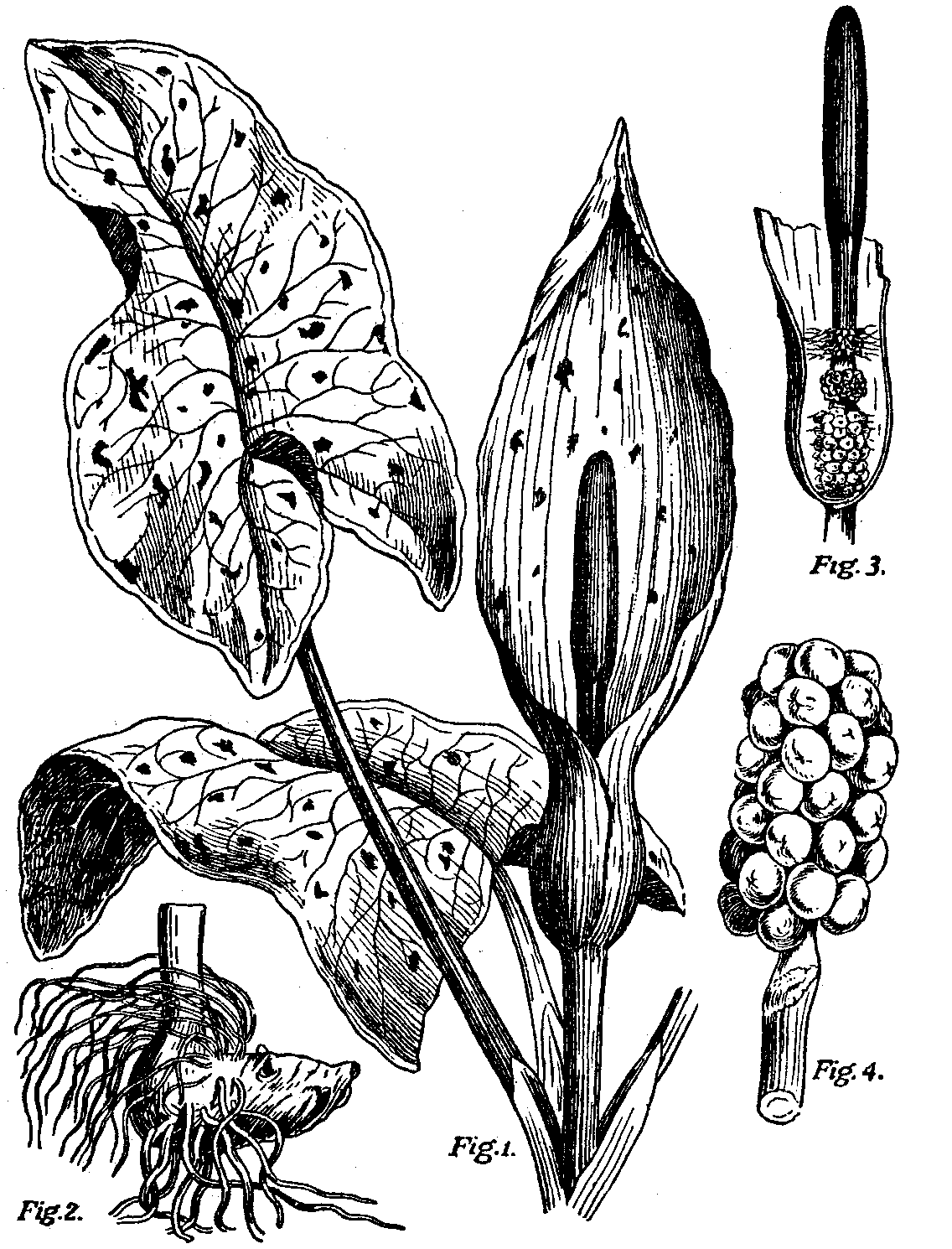
The eye-catching spathe and spadix of the lords and ladies (Arum maculatum) is an insect trap to facilitate pollination.
Members of the arum family have a ‘flower’ which consists of a modified leaf bract called a spathe that is hood like and wraps around fleshy spike, called a spadix, which bears the stamens and stigmas. Despite having both male and female flower parts, the flower has mechanisms to ensure cross pollination.
Two processes take place in the spadix - heat production and the manufacture of a foul smell likened to that of a rotting body. Heat production, a biochemical process known as thermogenesis, occurs at the tip of spadix. So much heat is released that the air temperature around the spadix rises by as much as 15°C and this creates a current of air which distributes the foul stench produced by other cells in the spadix. And that is the lure for its pollinator - a midge that breeds on dung.
The surface of the spathe is slippery, so some midges slide down into a lower chamber where they find themselves trapped by downward pointing hairs. Here they remain overnight, where they crawl over the stamens and become covered in pollen, By morning, the hairs have withered and the midges can escape.
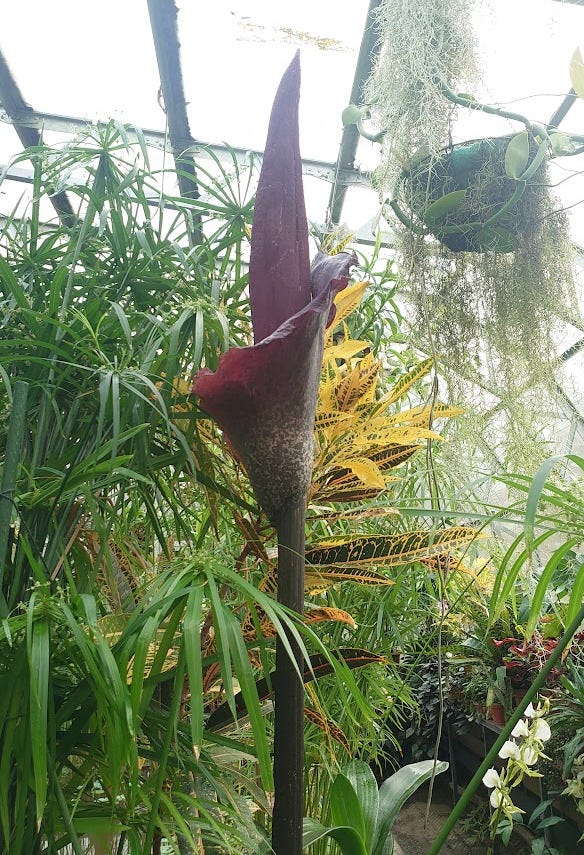
This pollination method is characteristic of the arum family, which includes the calla lily (Zantedeschia aethiopica), flamingo lily (Anthurium andraeanum), skunk cabbage (Symplocarpus foetidus) and the titan arum or corpse flower (Amorphophallus titanum). I saw a titan arum in flower at Oxford’s Botanic Garden a few years ago, and the smell was definitely putrid!
Rafflesia, the amazing parasitic plant found in the rainforests of Indonesia, produces the largest flower in the world. It, too, produces a stench to attract flies. However, its not an arum, so its method of pollination is a wonderful example of convergent evolution.
Coming up below the paywall - how bees produce their buzz and how you can boost the pollination of your aubergine and tomato crops.
Pollen production is expensive in terms of energy, so some flowers are pretty fussy about how much they release as they don’t want to waste it. They have evolved clever mechanisms to control this process and one such mechanism requires a bit of buzz.
Comments
Nothing yet. Say the first thing.
Sign in to join the conversation.