
I’ve just been to the most fantastic “upside down” Youth Assembly.
I walked into a room full of young people at a place called The Hub, part of the Arsenal Football Stadium complex, all super excited about the idea of hosting themselves and the wider community to think through what could be done to support young people in their area.
It was organised in collaboration with Humanity Project via our partners Octopus Communities, who are a collective of independently run community centres in Islington working to strengthen their neighbourhoods.
One of the key partners and hosts of the Youth Assembly was the project Ambitious Academy, a local CIC set up by a brilliant guy called Shawdon Smith, which he set up after university so he could go back to the estate where he grew up and give support to other creative, ambitious young people. His mission is to encourage them to find their full potential, and particularly to forge creative career paths and develop the skills that they would need to be able to do that.
The Youth Assembly was not only about that, but modelled it – which to me is why it was so fantastic.
The process was all built around a film that had been produced by the young people themselves, in a project designed to bring together young people in an assembly from a single estate in Islington. The estate is a notoriously tough place to live, where youth violence is a serious concern.
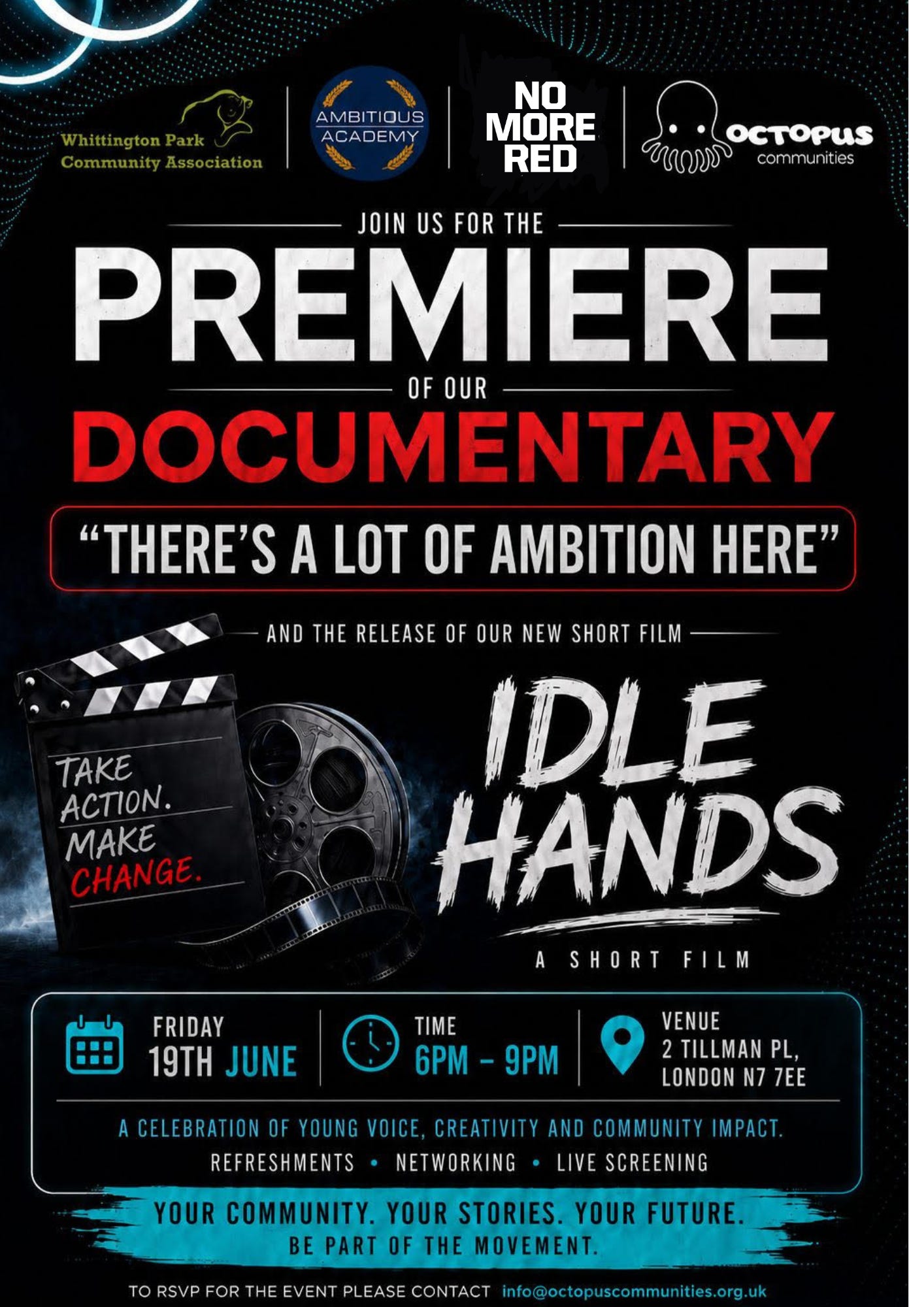
The film is being released on 19th June, and you’re all invited to the launch (address is at bottom).
We were invited by Rosie from Octopus Communities to take a seat and watch the film. Attendees in the room included people from the council, people from youth services, local cafe owners, and even a couple of police officers.
The film centered on what makes the young people from the estate feel safe and what they love about the place where they live. Of course, it’s ideal to start in a place of positivity, but so often, as was noted in the conversation that followed, a lot of processes like this start with brutal checking in on the realities of the problems people face. There isn’t much space for joy, positivity and love in the community when you start with the problems. That’s why the film did such a good job opening the event.
It was so wonderful watching the young people speak about how much love they had for the project and for each other. The film really captured them finding their voices and their confidence, and how much helping each other to express themselves in this way was really the development of them as individuals as well as the community.
The venue we were in, The Hub, is like a community center that belongs to a football club. It was quite interesting walking into such a corporate space to find that there’s all this resource and support to help the people from the local estates. There were obviously a lot of people working in that centre to promote sport and support youth to develop confidence and skills, not just in sport, but also beyond.
There was a mixed bag of attendees from different organizations and backgrounds who came to take part in the conversation. And they knew that their conversation was being facilitated by the young people they were there to support.
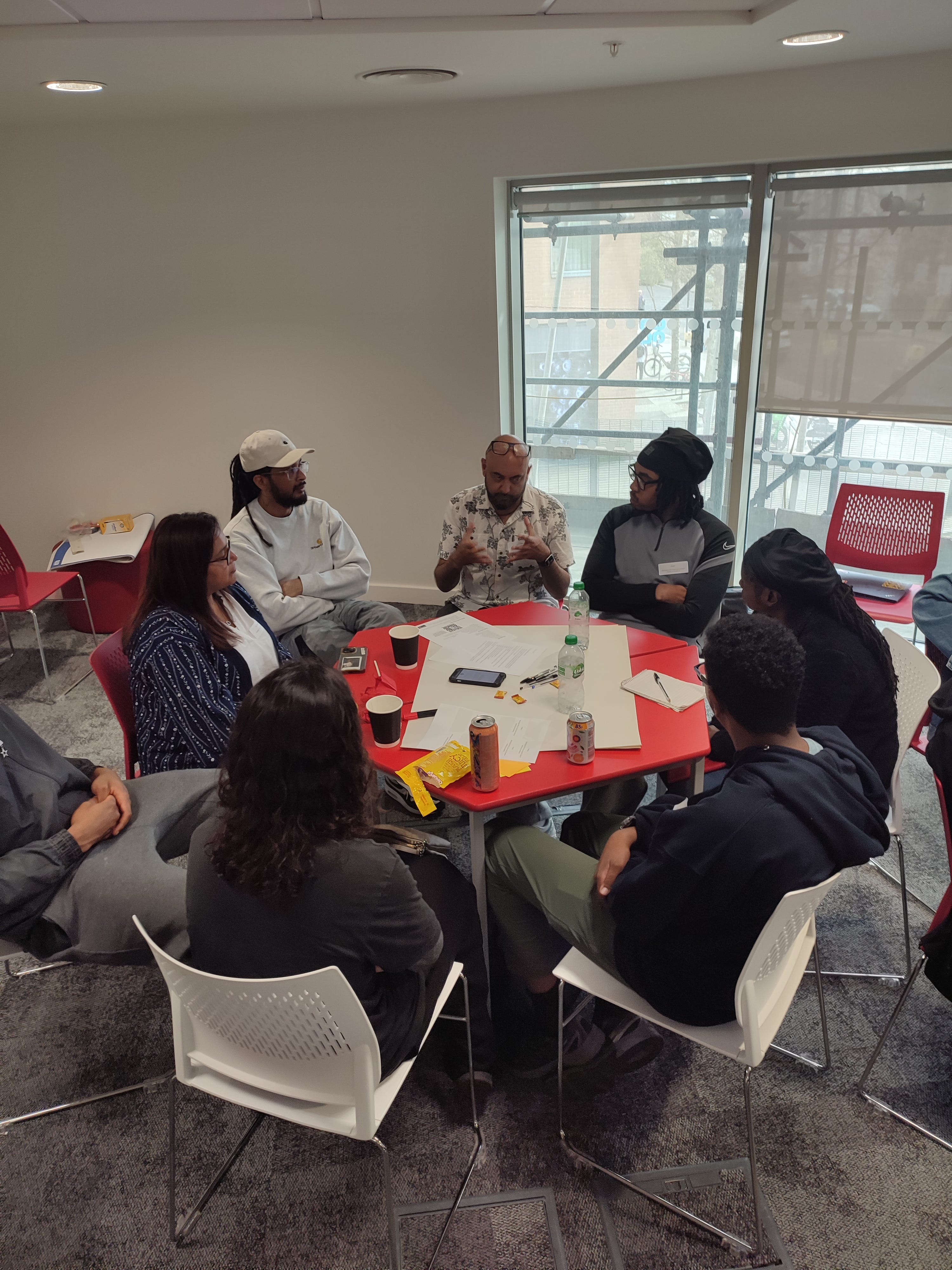
Why was the assembly “upside down”? Because the issue on the table for discussion was young people and what could be done to make them safer and more well – but the young people themselves were the facilitators on the tables. Having the youth-made film as the opening, and then the assembly being facilitated by them too, meant that the assembly itself worked as a process to centre the voices, needs, skills and development of the young people – designed to go upside down or inside out, if you like.
It felt like a huge success. Partly because, I think, everybody there was basically really ready for politics as usual to change, and to become accountable to processes like this. It felt clear to me that everyone seemed to think it was a no-brainer that you’d ask the people who know what they need, how to develop policy or plans to meet those needs.
It was also very clear that the simplicity of hosting well-held meeting spaces, so that people can be seen and heard and learn from each other, is also a total no-brainer.
It’s not really that complicated. People were obviously energised by meeting each other and learning from each other at the same time, in this well-held way. The whole room was energised by coming to totally common-sense conclusions about the best course of action to deal with a problem and making something serious about accountability.
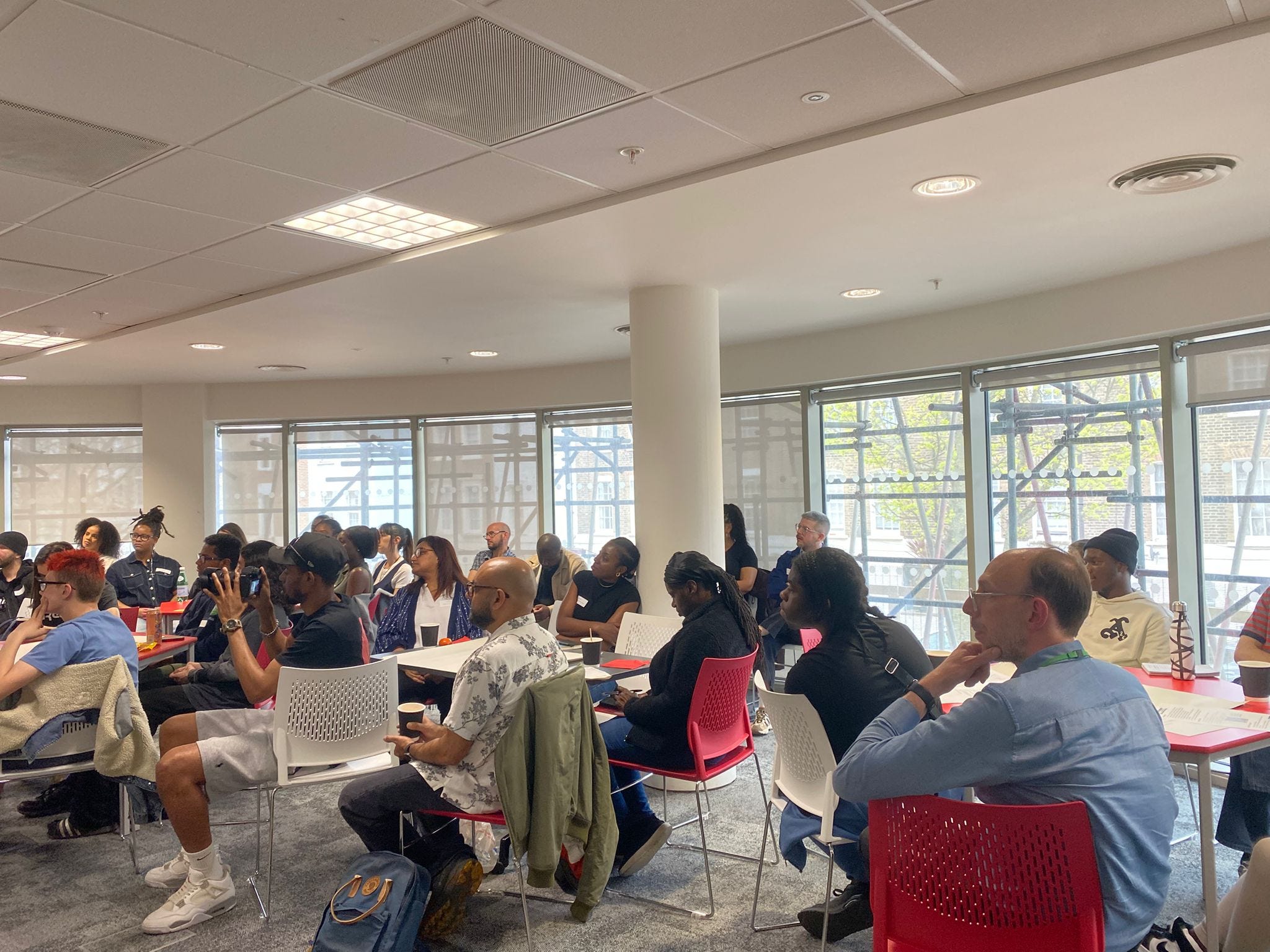
Rosie asked us all to be accountable to her, and she told us from the outset she would hold us to it! It was a really great design feature of the assembly, that at the end of the process, everybody round every table had to state a thing they were willing to do: an action they would take to contribute to the agenda and the ideas that were discussed on their table.
On my table the key issues were around funding and creating space for collaborative work, dialogue, and for politics to listen to ordinary people. As that’s part of my day to day work, anyway, I just recommitted to keep doing that! People also committed to things like keep talking about the importance of youth centres, bring this assembly to the council, keep finding ways to co-create spaces with young people if they are for young people.
Another thing I said I would do was to report back by writing this post, sharing it and helping more people know about the brilliant work that’s going on in closed rooms like this all over the country. Where people are coming together to build their agency, their skills, their leadership, their voice, and especially their capacity to hear one another and to listen well.
Wouldn’t it be wonderful if more of our politics was run off the back of listening to people in this way? (A big think tank just said the same, btw… it’s an obvious no-brainer.)
Well, the praxis is underway. And I don’t think that we have to worry about whether or not more and more people will start to develop this culture with us. At Humanity Project I see this growing every week. I just think we need to hurry it along as much as we can, because it is so desperately needed.
Humanity Project has been slow work, because relationships and trust take a long time to build, especially in places like this estate in Islington, where time after time people get shafted and their life chances are held back. But this work needs to be done, and be done in more places by amazing people like Shawdon and Rosie and Octopus Communities. What Humanity Project can help with is training people on assemblies, connecting with others, and spreading good practice. If you’re already doing this work or interested in it, I’d love to hear from you.
No posts
Comments
Nothing yet. Say the first thing.
Sign in to join the conversation.