
Today’s a big holiday in the United States. My most-trusted news site describes this Fourth of July as “a deeply polarized nation’s 250th anniversary,” but I prefer the great writer Jeff Sharlet’s term for America’s existential state: he calls it “A Slow Civil War.” I never enjoyed the Fourth of July anyway, and to the extent that I’m even thinking about it over here — which I’ll admit is not much — it strikes me as a day of hypocrisy and mourning.
In Portugal, a country that’s 633 years older than the U.S., it would be just another Saturday except for the country’s glee over its World Cup win over Croatia on Friday. Now everyone here is anticipating Monday’s match against Spain, the next-door neighbor with which Portugal’s had an uneasy relationship for nearly a thousand years.
I don’t care much about men’s football, but it’s been fascinating to experience the World Cup from here. Not only because Portugal has been a contender, but also because my former home town of Kansas City is one of the host cities for matches in the U.S. This was huge news when it was announced back in June 2022, and my colleagues in Kansas City’s public media newsroom immediately started following four years of promises and preparations. With the tournament underway, they’re doing a not-surprisingly beautiful job of covering a situation one of them compared to “six Super Bowls.” (For my non-journalists: Covering a Super Bowl is a weeks-long project that’s as profoundly exhausting as covering a deadly natural disaster, except without any energizing or gratifying sense of public service).
By all accounts from Kansas City, the World Cup has brought joy and desperately needed human connection to the midst of the slow civil war. Social media feeds all over the world flowed with orange as tens of thousands of Netherlands supporters marched through familiar downtown streets ahead of their team’s match against Tunisia. The “love affair” between Algeria’s team and the residents of Lawrence, Kansas, also made international headlines. This has made me happy for friends back in KC.
And because folks there know that Portugal is a contender, with one of the sport’s biggest-name players in Cristiano Ronaldo, they’ve asked: What’s it been like over here? Has Portugal been going crazy?
One easy answer is yes. In Lisbon, the Praça do Comércio is an official FIFA Fan Zone, with oceans of red-dressed fans watching an enormous screen against the dramatic backdrop of the city’s historic buildings and the Tagus River.
And Portugal hasn’t been the only team of significance here. There was also tiny Cabo Verde’s storybook run to the knockout stage before its loss to Argentina early this morning. That would have been fun to watch simply because everybody loves an underdog, but Cabo Verde is also one of Portugal’s former colonies. Same for Brazil. The government’s newly released population statistics for 2025 show 76,099 Caboverdianos and 574,195 Brasileiros now living here, out of a total population of 11,424,031. I keep noting that immigration is an easily exploitable topic for politicians here just like it is elsewhere, and I barely understand Portugal’s cultural, racial and historical dynamics, especially when it comes to its former colonies. But as someone from a country that won’t even acknowledge its own history as a colonizer, witnessing the local enjoyment of these teams is a beautiful thing.
But another answer to the “is Portugal going crazy” question might involve more nuance. One night this week I was out tromping around one of Lisbon’s regular, non-touristy neighborhoods. As people flowed off of the subway at rush hour, crowded the sidewalks outside of shops and restaurants and later lounged in a park while the evening cooled down, I saw little evidence of any big, prolonged sporting event. It felt like a city that knew it had much more to offer than sports.
One friend asked specifically whether our town of Setúbal had been gripped by “futbol fever.” Over the past few weeks, I noticed more and more Portuguese flags hanging over apartment balconies and flying from the backs of scooters, draped over counters and pinned to the walls at local shops. More and more people were wearing team jerseys. More billboards and bus-stop ads have gratuitously incorporated images of players. Some shop owners closed early on game days. Big-screen TVs are suddenly out on sidewalks in front of restaurants.
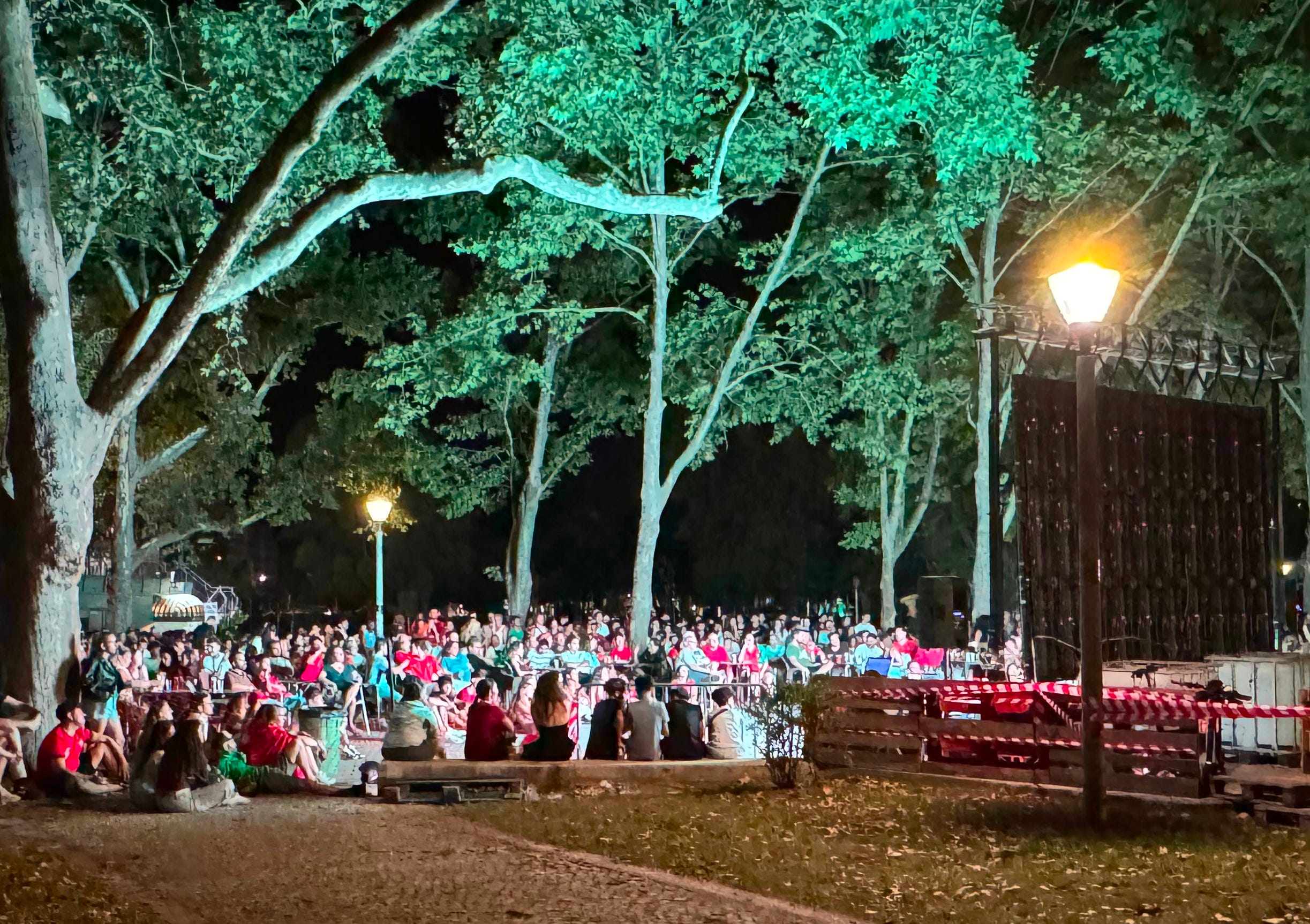
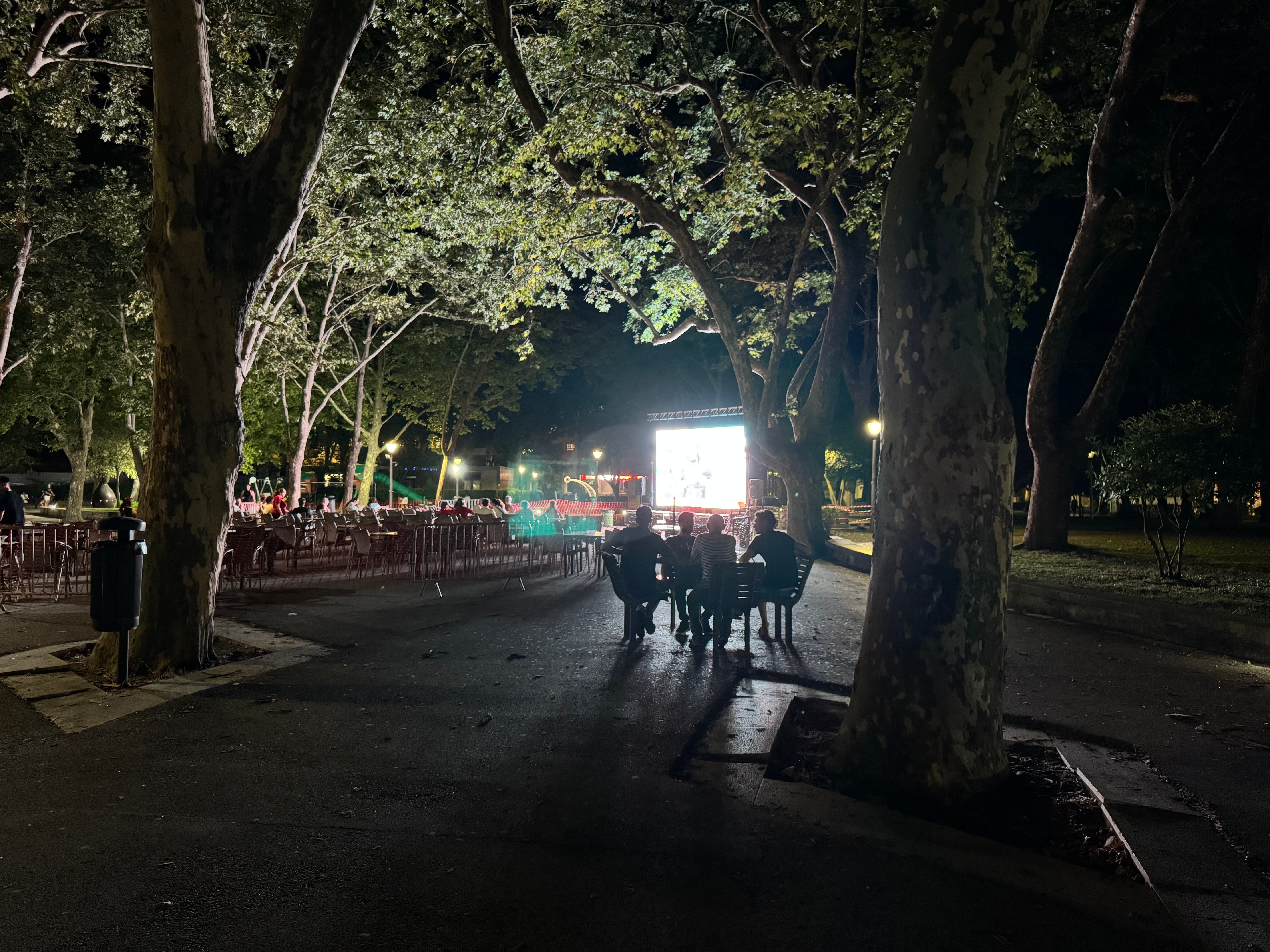
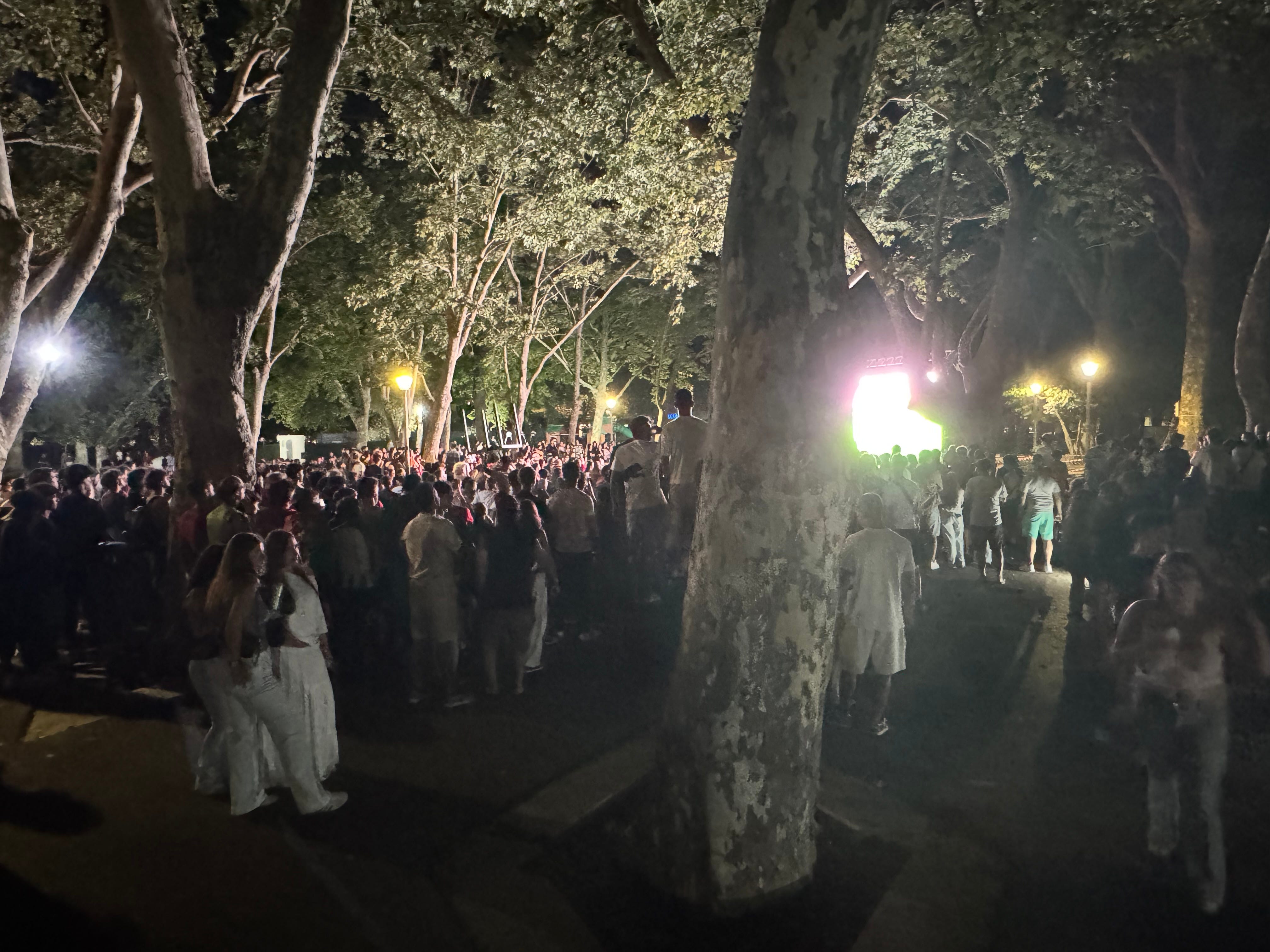
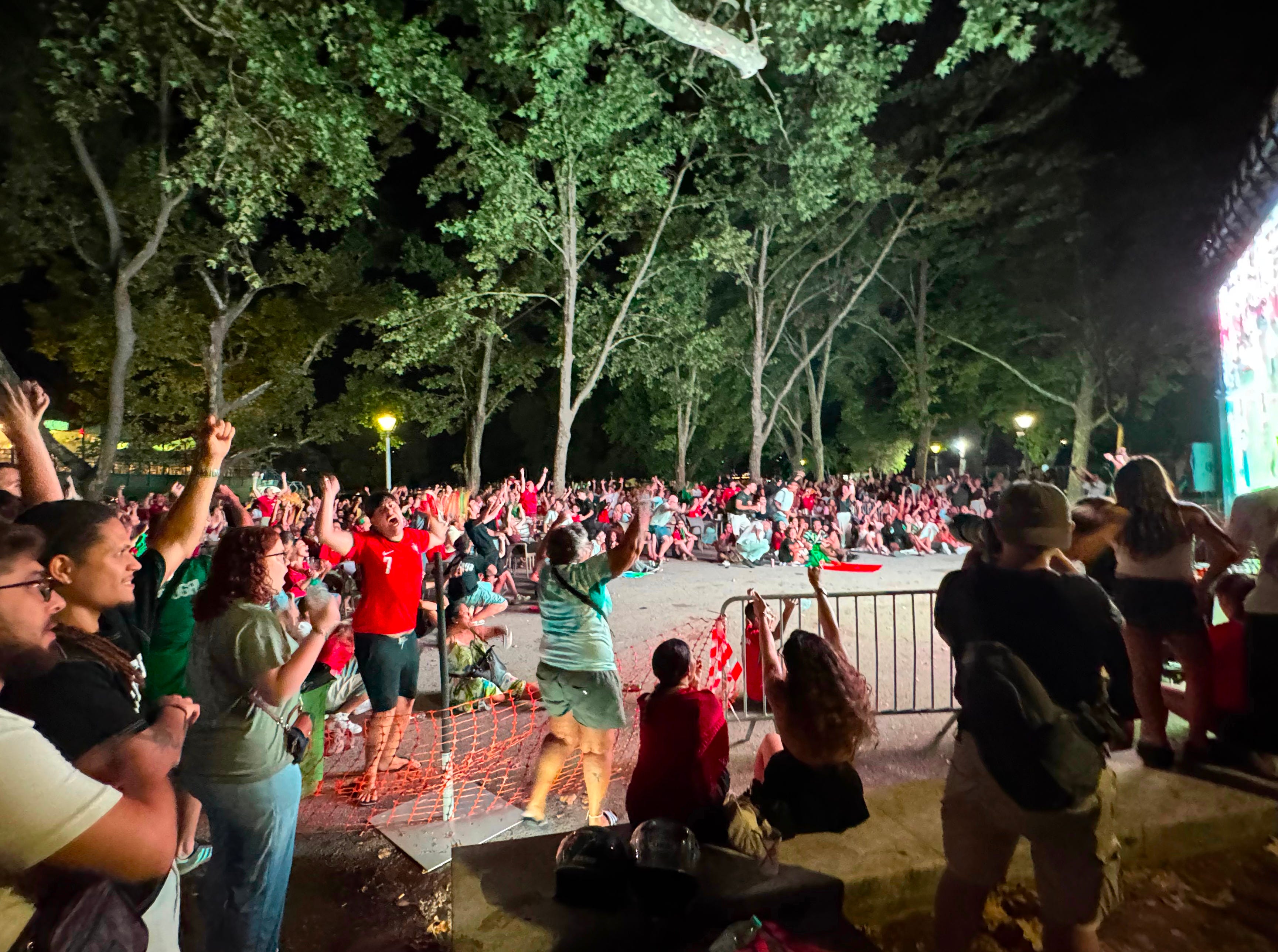
One gathering place for games is the city’s central Parque do Bonfim, where I joined a thousand new friends on Friday to watch Portugal’s match against Croatia. The game began at 7 p.m. in Toronto, which was midnight here. It’s been a long, long time since I started a night that late. But strategic napping, buzzy curiosity and late-in-the-evening gelato powered me to great reward.
I’ve also had fun watching matches at snacky game-night parties hosted by generous American friends who’ve been streaming the broadcasts on Fox. But after nearly a year away from American TV, it’s bizarre to see commercials for Walmart, Jeep, Bank of America, IBM, Dairy Queen, Major League Baseball’s All Star Game, some big Indy car race in Ohio — all sorts of American products wrapping themselves in the 250th anniversary of a country that has little to celebrate. I shouldn’t have been surprised to see Fox proudly hyping a new celebrity competition show called “Nation’s Dumbest.”
Don’t get me wrong. Portugal has plenty of its own products. It’s just easier to tune out commercials when you don’t fully understand what they’re saying — or, better yet, study them to learn the language. Also, watching the games on TV provoked one of the strangest feelings I’ve had here in a while. Obligatory performances of “The Star Spangled Banner” at all U.S. sporting events was another thing I got good at tuning out, but the first time I saw a broadcast of the Portuguese national anthem, I thought: Oh shit. If I’m going to live here, I should know that song. But I’d never even heard it. As of my self-imposed deadline for this column there wasn’t a great version from the 2026 World Cup up on YouTube, but it looked pretty much the same as in 2018:
While the Portuguese people might impress me each day with their kindness, warmth, beauty and calmness, their national anthem isn’t any less jingoistic and militaristic than America’s. “A Portuguesa” (here’s a full version with English subtitles) begins with a standard brag, that “heroes of the sea, noble people” belong to a splendorous, “brave, immortal nation” whose fathers rise out of “the mists of memory” to lead the country to victory. Then the chorus gets aggressively conquesty: “To arms, to arms! Over land, over sea, To arms, to arms! For the Fatherland, fight! Against the cannons, march on, march on!” And so on.
Wars and games throughout history confirm that humans are all the same, óbvio. Watching the World Cup from here has simply reminded me of this fact.
I’ll probably put “learning ‘A Portuguesa’” quite a bit further down on my to-do list, while appreciating how beautiful it was to watch my new neighbors sing it so enthusiastically before the match at midnight.
Afterwards, everyone scattered from the park. From a few blocks away, I sent a text to my sister in Connecticut. “So I’m walking home at 2:20 a.m.,” I wrote from a dark and increasingly empty sidewalk on the way up a long hill.
It was 9:20 p.m. her time. “TV showing scenes of big crowds in Lisbon!” she wrote back. “You ok?”
One thing about living in Portugal is that I was absolutely OK walking home in the middle of the night. A few other folks were still out walking, or zooming past on scooters, while cars flew by making what I now understand to be the universal sound of victory honks. My sis, who works for ESPN, stayed with me, texting how an offsides call had complicated the game’s final moments, until I was inside my building. This walk was yet another example of what it feels like to live in a country that’s safe. I’d kept my wits about me, as any single woman knows to do everywhere at all times. But I hadn’t been scared.
Comments
Nothing yet. Say the first thing.
Sign in to join the conversation.