

One day not long ago, I was heading home from the grocery store when I heard a woman’s voice yell something. I was the only person on the narrow sidewalk, which was next to an apartment building with windows just above my head. Soon I saw the source of the woman’s voice. She was an elder elder, leaning out of what must have been her kitchen window and pointing down to the sidewalk, where I now saw a small white plastic trash bag tied at the top.
I don’t yet know enough Portuguese to understand what she was saying, but I knew exactly what she was saying: would I take her trash to the big public bin at the end of the block. This might or might not have been a question, and might or might not have involved a “por favor.”
I’ve just finished a third round of Portuguese lessons, so it’s time for another report card. (In January, after the first 11-week session, I seemed to have acquired the language skills of a toddler; by April, I felt more like a second-grader). Before I learned any Portuguese at all, would I have understood what my neighbor was asking/telling me to do with her trash? Probably, because it was clear enough. But would I have trusted my instincts and taken the bag to the bin — or would I have scurried away in doubt about what was happening? It’s hard to know. But I’m glad I took her trash.
Having enough confidence to just go with the strange communication flow feels like a genuine accomplishment. Our teacher taught us a lot of words this session, most of which I have not memorized. I don’t think she’d be disappointed in me for this. She often reminded us that much successful communication relies on pointing and other forms of sign language, tone and facial expressions. Despite my still-poor pronunciation, I now frequently have half-Portuguese-half-English conversations with all sorts of folks in as many situations as possible — shop and restaurant owners, folks behind counters at places like the post office and the bank, Uber drivers, fellow late-night World Cup watchers, neighbors.
With neighbors, my most reliable ice-breaker continues to be Mavis. When we’re out walking, every third or fourth person on the street looks down and makes kissing noises at her. (The ones who don’t are clearly not dog people or are having bad days.) Mavis is so low to the ground that she never notices these overtures, but I try to seize the moments. We stopped for one man who asked what breed she was — it took us a few tries, but we established that she’s a dachshund-chihuahua mix — and how old she is (she’s eight). He told me he’d lost his dog a year earlier, and I told him I was sorry. That was entirely in Portuguese. He grew emotional, nodded his goodbye and quickly turned to walk away. Farther down the sidewalk, he gestured with his whole right arm as if to wave away his sadness. That was entirely in universal.
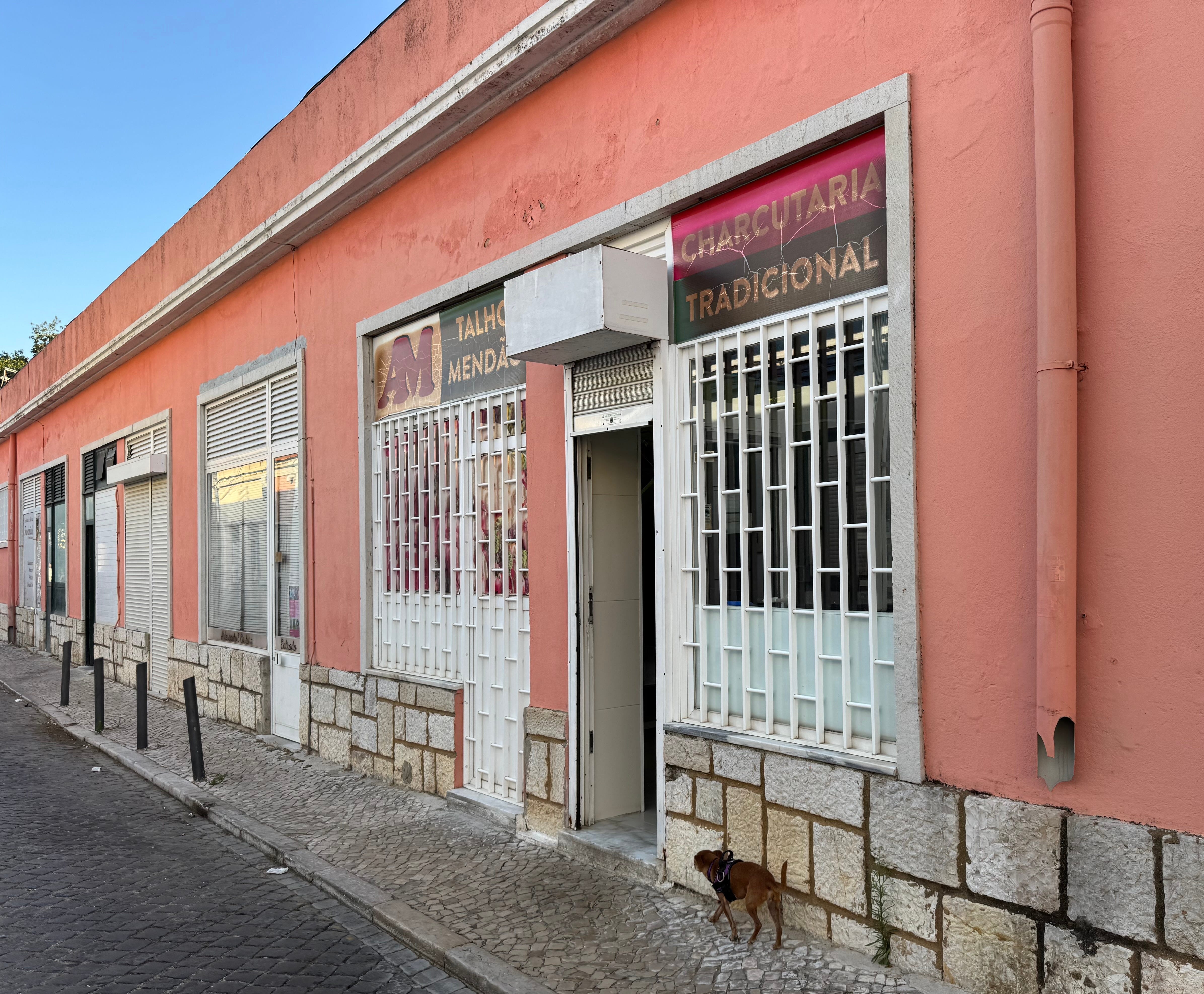
Another time, returning from our morning walk, I exchanged bom dias with a woman who sometimes stands on the corner, presumably to wait for a ride. As I fumbled with the apartment keys, she made the kissing noises. Mavis was oblivious as usual, so I moved her closer to the woman, who bent down to pet her and began cooing and calling her “pequeno vizinho” (little neighbor). Then she told me in Portuguese that she has three cats. I said in Portuguese: “Three cats! Here?” I pointed to our building. She said no, she lives in the next building over. She and I both said something to the effect of: Mavis doesn’t like cats. She said her cats are bigger than Mavis. Knowing Mavis would be scared of these cats, I asked: “Qual é a palavra para — ” (“what is the word for — ”) and did my best to act out “scared.” She understood and told me: “assustado.” I repeated it and she was kind enough to say it again more slowly, and I said it again, maybe pronouncing it just a bit better. As soon as I got upstairs, I looked it up to make sure I had it right, and found one correction/addition for the gals: the feminine is assustada. Not that I have many reasons to be assustada in notably safe Portugal, but it’s a good word to know for when the world is scary.
I can never anticipate where one of these half-and-half conversations will go, but I always look for a chance to ask qual é a palavra para whatever word feels most relevant. It keeps the conversation going a little longer, and people are generous about trying to teach me, and sometimes I actually learn a new word.
I’d estimate that I now understand between 20% and 50% of the words when I’m eavesdropping on Portuguese speakers. That’s undeniable progress, though the fact that I don’t understand the other 80% to 50% of the words renders these conversations meaningless, like patchy broadcasts from outer space.
And in many cases when a Portuguese person is speaking directly to me, I still don’t understand any of it. Even after I ask them to please say it again more slowly. This happened on my recent visit to a new eye doctor. Clearly annoyed with my blank incomprehension, she reluctantly switched to English and said, among other things, that she’s not happy so many Americans are moving to Portugal. I don’t blame her! Despite her feelings, she proceeded to give me excellent care.
Fortunately the language is more beautiful than it is daunting, which is saying a lot for the bonita side. I’m thinking of the verb ficar (pronounced fee-car). It means “to stay,” as in a location: “Eu fico em casa” (first-person conjugation for “I stay at home”) or “Os barcos ficam no rio” (plural third-person conjugation for “The boats stay on the river”; I doubt any Portuguese person would actually say that, but it’s probably a passable sentence for homework). But ficar also conveys states of being, emotions and moods: “fico contente por ti” (I’m happy for you), “fico triste” (I’m sad), “fico com fome” (I get hungry), “fico com calor” (I get hot), and so on.
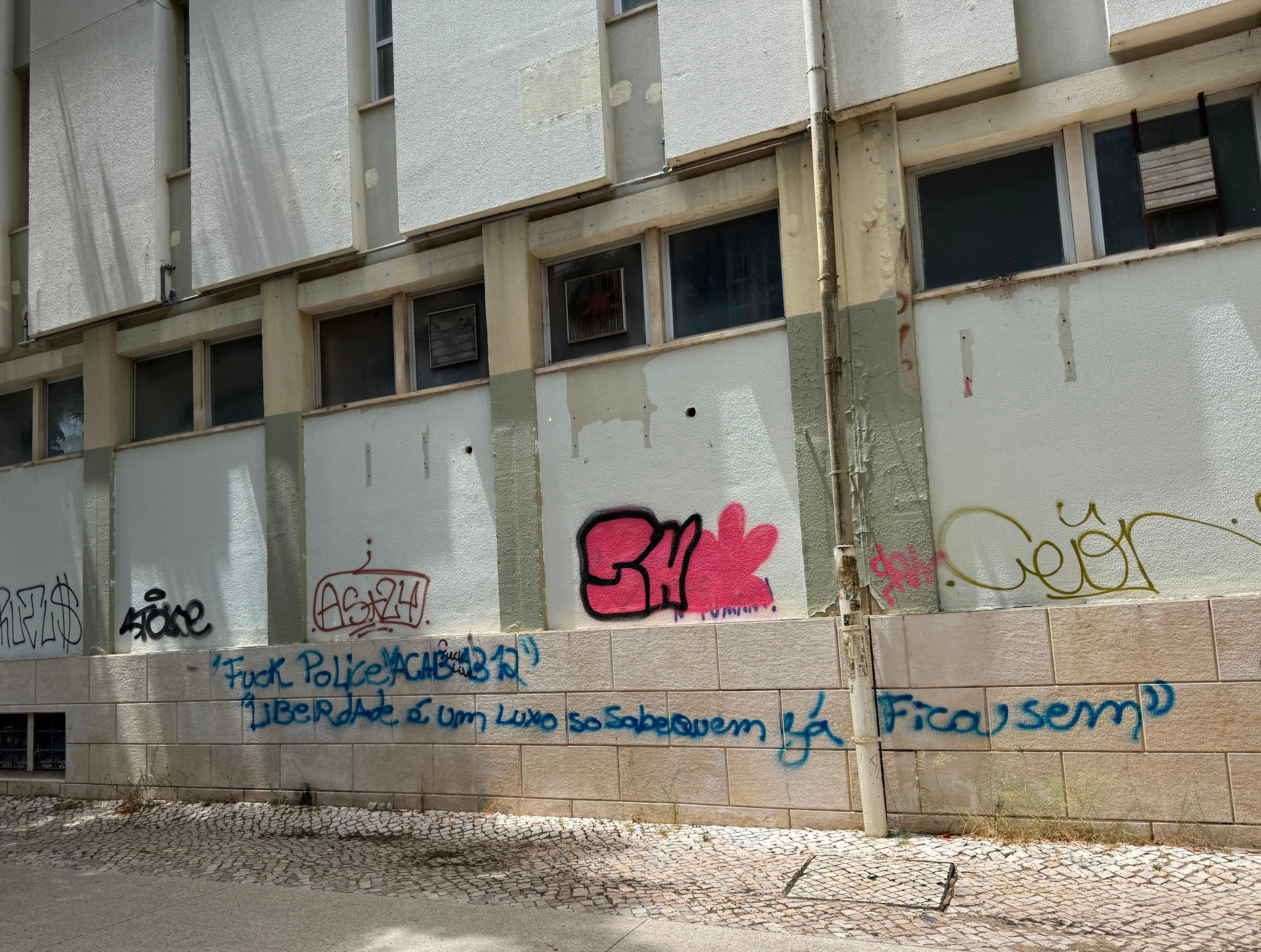
I’m still just a small child with this language, but is there anything more Portuguese than a word for a location that’s also a word for a feeling? I’m trying and failing to think of a similar word in English.
But my brain’s a little melted, because todos ficamos com calor. Portugal missed Europe’s first deadly heat wave last month, but the red warning days caught up with us last week. It’s a warm country anyway, much of it without air conditioning (and where there is air conditioning, it’s not ratcheted down so far that people need to wear sweatshirts inside, like in the United States). In general, people know how to handle the heat here. Even on the hottest mornings, streets were lively with folks out living — buying groceries, having coffees in outdoor cafes, sitting on shady benches, going to the beaches.
At one indoor café where no breeze bothered making it through the open front doors, I struggled to say what I wanted to tell the barista and then just blurted in English: “I’m trying to tell you to stay cool.”
Another woman standing at the counter, who sounded like a native speaker, chimed in to help: “Fica fresco.”
Of course! Fica (stay). Fresco (cool; the o pronounced “ooh” like most Portuguese words that end in o). So, a phrase for “stay cool” that also sounds cool. Fica fresco! What a perfect expression!
But it’s not. (There’s an expression for that too: “Só que não,” pronounced “sock now”).
After learning fica fresco, I was eager to show off and proudly used it in a small group of people from several different countries. Later I texted one of the Portuguese folks to ask if I’d done it correctly.
“You pronounced it right but it’s a bit of a direct translation from English and is missing the plural,” she wrote back. “A more correct way I would say, when addressing a group of people would be ‘mantenham-se frescos’ which is not as catchy, I know 😅”
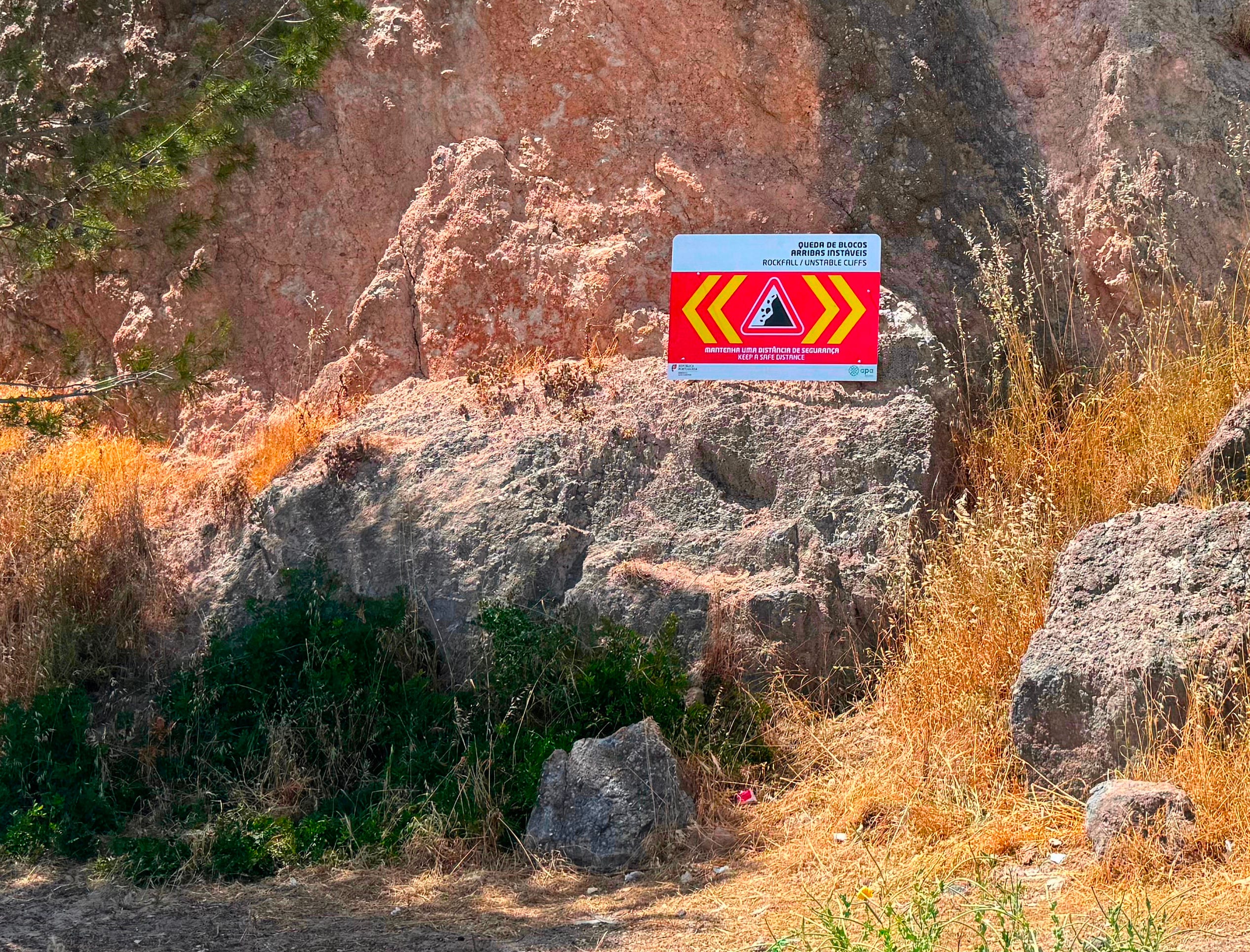
And so I learned the verb “manter” (to maintain or to keep) and its reflexive form “manter-se” (to keep one’s self), as in my friend’s (plural) example. And now I notice it all around.
I thanked my friend and told her I’d rather be correct than catchy.
I’d also rather be cool, as in not saying dumb things in public. But I left that privilege back in the United States with everything else. Getting stuff wrong is a fact of life now, so now I’m not even trying to be cool. Fortunately, the Portuguese have a phrase for how to respond to stressful situations, and it’s both catchy and easy enough for an English speaker. So I’m just over here staying calma calma.
Comments
Nothing yet. Say the first thing.
Sign in to join the conversation.