
As part of their commitment to climate resilience, the Region has adopted the Zero Carbon Building - Design (ZCB-Design) standard for new construction for regional buildings. “ZCB-Design is focused on reducing greenhouse gas emissions by making buildings more efficient to operate and by reducing the carbon embodied in construction materials.”
The City of Kitchener has started gathering community feedback to inform its 2027–2030 Strategic Plan. Early feedback shows:
Overall satisfaction with City services is strong relative to national benchmarks
Concerns about affordability
High confidence in safety
Strong satisfaction with daily life
“We’re hearing clearly from residents that Kitchener is a strong and vibrant place to live, while also recognizing that continued focus on making life more affordable is needed,” shared Kitchener Mayor Berry Vrbanovic. Click to learn more about Kitchener’s Strategic Plan. Review the staff report here.
According to the Region, its recently updated Street Design Guidelines “will help accommodate people of all ages and abilities who are walking, wheeling and rolling, both along roads and at intersections.” Click to read the Street Design Guidelines report.
The following four locations in Waterloo will see new traffic calming measures, including speed humps and raised pedestrian crossings, installed this year:
St. Nicholas Catholic Elementary School
St. Agnes Catholic Elementary School
Keats Way Public School
MacGregor Senior Public School
Starting this fall, a Region of Waterloo pilot project will see 12 new regional intersections restricting right turns on red. Click to read more about the pilot from The Community Edition.
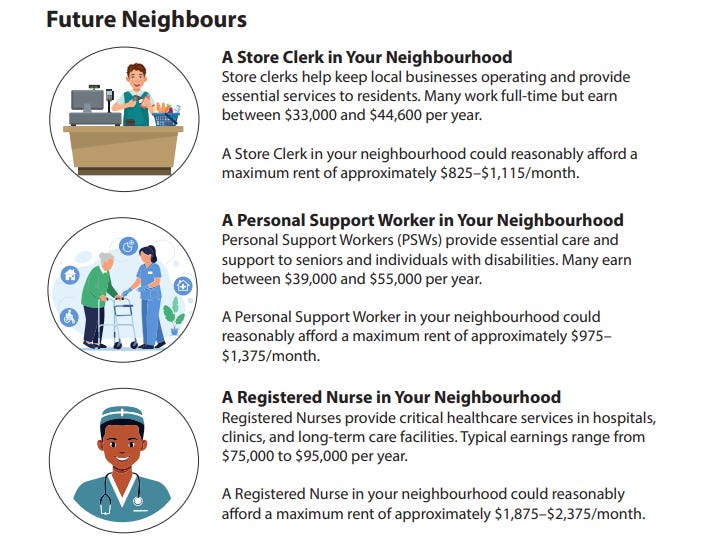
Waterloo continues to work through their plan for affordable housing at 250 Lincoln Road. The city foresees stacked townhomes or a 6-storey apartment which would offer affordable housing. To the surprise of no one, neighbours “are concerned”. If you believe we need more affordable housing in the Region, this project is worth following, which you can do here. Reaching out to Council to voice your support for these housing developments is important because we know council is hearing from those who oppose it.
Even with provincial funding supporting the creation of 221 additional child care spaces from this year’s original target, demand for child care continues to far exceed available child care spaces. “As of March 2026, 33% of children 0-4 years had access to a CWELCC licensed child care space in Waterloo Region,” and the wait list currently exceeds 15,000 children. Click to read the Canada-Wide Early Learning and Child Care (CWELCC) Directed Growth and Child Care Funding Update.
There is some good news though. 176 new spaces will be offered at two Kitchener schools before year’s end: “The Healing of the Seven Generations will operate a new (Indigenous-led) centre at Howard Robertson Public School, and RisingOaks Early Learning Ontario will operate another at Smithson Public School.”
Waterloo Council approved an expansion to Creative Beginnings Early Learning and Care at University Avenue East and Northfield Drive. This expansion will allow an additional 88 child care spaces to be added to the existing child care centre.
The Region’s plan for more than 300 affordable homes on Mooregate Crescent in Kitchener has been put on hold due to project costs and funding concerns. Staff note that, “many large housing projects are challenged by the current combination of high construction costs, interest rates, and lower property values.”
Funding for the nearly $300 million project has yet to be secured and Ryan Pettipierre, the region’s director of housing services, said, “None of those scenarios in the current market environment would be feasible without a significant capital contribution from the region to incentivize it moving forward.”
There are currently more than 11,000 applications for affordable housing in the region. Waterloo Region Housing Revitalization Plan – Mooregate Redevelopment staff report.
101 new apartments, of which 31 will have affordable rents for at least 60 years, are coming to Lauris Avenue in Cambridge in 2028. “The Region of Waterloo will lease its vacant land to the non-profit Central Ontario Co-operative Housing Federation for free in exchange for building and operating new affordable housing on the site.” Learn more with the Lauris Ave staff report and on the EngageWR website.
As Cambridge Council (once again) votes against staff’s recommendation for more housing, I’m reminded of the time Council opposed 30 homes (also in a 5-4 vote and against staff’s recommendation) and had to pay over $70,000 in legal costs only to lose at the Ontario Land Tribunal (OLT). I expect we’ll see Cambridge back at the OLT on the 16-storey proposal as well. Some councillors seem to agree: “If we turn it down and it is appealed to the OLT successfully, we have no control over the height that could be established there,” said Councillor Ross Earnshaw.
There is some good news though, as Cambridge Council unanimously approved several new housing projects this month that “will bring 258 new homes to the city, including 118 affordable homes in Hespeler.”
In 2025, Kitchener saw 2,516 housing starts and 489 additional residential units, for a total of 3,005 new homes added to the city’s housing supply. That housing performance means Kitchener will receive over $8 million from the Government of Ontario through the Building Faster Fund.
Kitchener Council approved a proposal that will see affordable housing and a new downtown fire station built at 450-470 King St. E. “The development would include approximately 280 rental apartments, primarily one- and two-bedroom units, at varying levels of affordability from rent geared to income to market-based units at rents 80 per cent of the average market rate.”
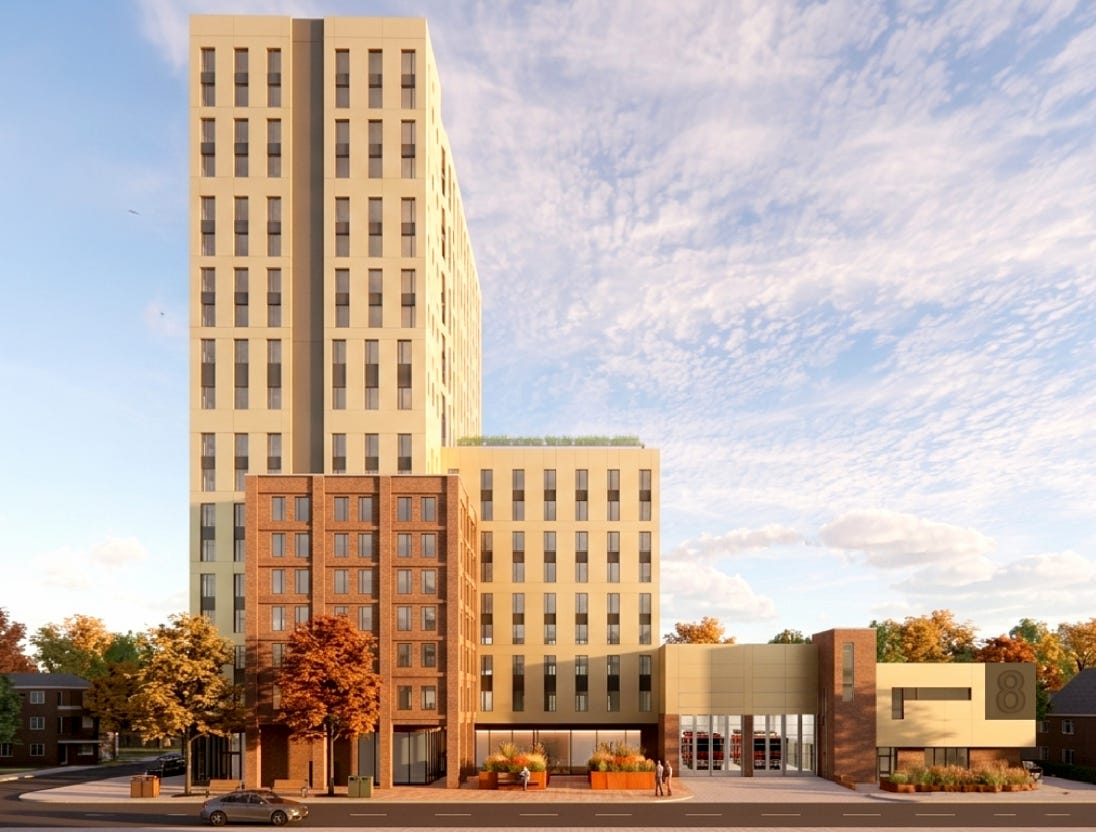
“By bringing essential emergency services and much-needed housing together in one location, we’re delivering smart, innovative solutions that will benefit residents today and for years to come,” said mayor Berry Vrbanovic.
However, ward 10 Councillor Stephanie Stretch heard complaints from residents about height and density. “I’ve heard quite clearly this is too much, and it sounds like there are good plans, but the amount of housing and the amount of pressure put in this small place feels overwhelming to the community,” said Stretch.
Other residents suggested that this land should be used for parkland instead of housing. Councillor Scott Davey said that finding new park spaces is important, but, “if this was to become parkland, we would have to give back a bunch of money and then pay for it ourselves, and it would probably be the most expensive parkland per square foot in the history of the city of Kitchener.”
Construction is expected to begin next year. Click to learn more about the project or read the Fire Station 8 and Housing Development staff report.
Regional Council, with the support of the Ontario government, is appealing the recent Ontario Superior Court of Justice decision that found it unconstitutional to remove homeless individuals camped at 100 Victoria.
In a 10-5 vote to appeal the decision, the Region stated, “The Ontario Superior Court decision raises complex legal questions that extend beyond Waterloo Region. It has implications not only for the Region, but potentially for other municipalities across Ontario and highlights the challenge of balancing the responsibility to support vulnerable residents while delivering essential public infrastructure and services.”
The Ontario government also released a statement, stating, “Our government is appealing this decision in order to provide the certainty and stability needed to advance critical infrastructure projects here in Waterloo Region and across Ontario.”
Councillor Pam Wolf opposed appealing the decision (as did Councillors: Foxton, Rodrigues, James, and Huinink), arguing that, “We have spent far too much money on legal fees, staff and council time. Our chances of winning the appeal are far from guaranteed.”
The Region’s appeal claims the judge made “multiple errors of law (and) should not have ruled that the encampment residents’ constitutional rights protect their choice to live on a specific property they do not own and where they are not tenants.”
In an effort to allow some places of worship to more easily incorporate housing onto their existing properties, Waterloo Council proposed proactive changes to land-use rules to permit higher-density housing there. Some nearby neighbours voiced their criticisms of the proposal at a recent public meeting.
“I think it would ruin the integrity of the neighbourhood. As selfish as it sounds, I would not like to have that in my own backyard,” said Charles Bye. While Heidi Ruttinger argued that a small apartment building would “stand out as a total anomaly. We value the quiet simplicity of living in a house and knowing our neighbours.”
As I mentioned on Bluesky, those of us who live in multi-residential buildings often like knowing our neighbours as well.
If you thought the last two winters have been particularly harsh, a recent staff update to Kitchener Council confirms that. Staff note that: “Kitchener has experienced two consecutive winters marked by extreme conditions that significantly exceeded typical seasonal patterns and historical averages from the previous five winters. The 2024/2025 and 2025/2026 winters brought nearly twice the average snowfall – approximately 210 cm compared to the seasonal average of 121 cm – and more than double the number of snow events, with 10 events declared in the 2025/2026 winter season versus the five-year average of 4.6. Together, these conditions were part of an environment that affected typical service outcomes for residents, created substantial challenges for crews and increased operational demands.”
In May, Regional Council agreed to allow new CCTV cameras on Region-owned utility poles “to support Waterloo Regional Police Services investigations and enhance public safety. Waterloo Regional Police will be solely responsible for owning, installing, operating, and maintaining the cameras.” Read the full report here.
New accessible washrooms are now open in Waterloo City Hall (daily from 8am to 10pm), “helping more people comfortably visit uptown Waterloo, participate in events and activities, and enjoy the community with greater ease and independence.” The washrooms can be accessed from Regina St. or through the City Hall lobby.
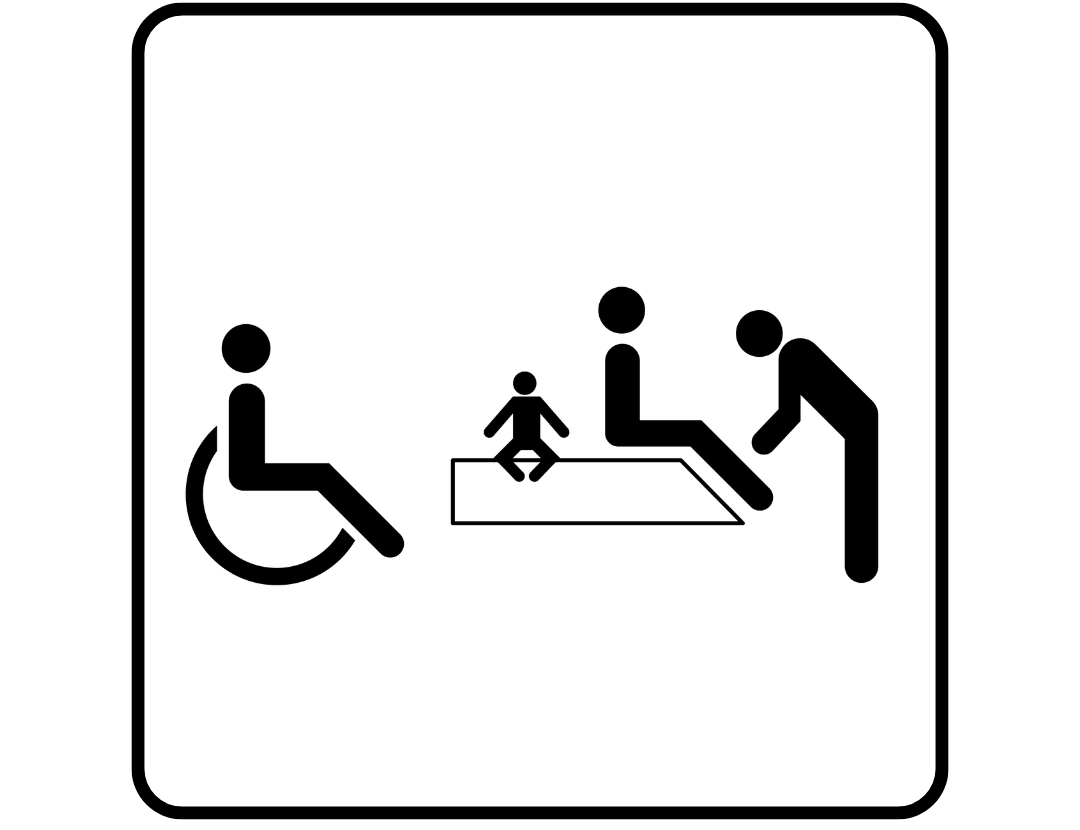
The washrooms are gender-neutral, featuring universal design with an adult change table, tactile indicators, and a tactile map for wayfinding. They are regularly cleaned and maintained.
Last month, BUILD NOW: Waterloo Region broke ground on Union Community Housing at Country Squire, the first residential building to move forward within what is planned to become the largest affordable housing project in Canada to date.
The development will include a mix of studio, one-, two- and three-bedroom
apartments designed to meet the needs of individuals, couples and families. As a not-for-profit housing provider, Union Community Housing will “ensure the homes remain permanently affordable, creating lasting opportunities for low- and moderate-income households.”
“Communities do not have to accept the status quo. When municipalities, non-profit organizations, builders and community partners work together with a shared purpose, we can create housing at a scale that matches the challenge before us. Union Community Housing at Country Squire is the first building, but it represents something much larger, a new way of delivering permanently affordable housing for Waterloo Region” said Philip Mills, Chief Executive Officer of BUILD NOW: Waterloo Region and Habitat for Humanity Waterloo Region.
As part of Indigenous Peoples Day, local artist Maddie Resmer of Western Sky Designs has created a new art installation in Waterloo Public Square. The mural, ‘wànakìwin: harmony between relations’, is “inspired by the Anishinàbe teachings of kinship and interconnectedness, featuring beings that represent the many gifts, perspectives and ways of being that coexist within a healthy community.”
Maddie discusses the piece in a short video, here.
Conversations about the best way to use AI (or not) are happening in many places, including around Council horseshoes. Waterloo will not use AI-generated images or videos. “We made a decision that for the City of Waterloo, staff won’t use generative AI images or videos in our graphic design work, in our communications work,” spokesperson Cari Van Niekerk said.

Cambridge, meanwhile, has been using AI-generated cartoon characters for social media videos (which resulted in backlash from some residents). “There is room for all creative forms in the city’s marketing and promotional work, and that includes both traditional design and emerging AI‑supported tools,” Cambridge spokesperson Alana Russell said.
Beginning August 24th, Waterloo’s McCormick Branch library will close until 2028 as work begins on an extensive renovation that will see the addition of a maker space, an expanded children’s area, new study rooms, and a dedicated program room. A pop-up location is available beginning September 14th.
It looks like Neuron’s orange e-bikes and e-scooters may soon be replaced by green Lime options since Lime Canada’s acquisition of Neuron earlier this month. “The Region and the cities are working with Lime to ensure any deployment of vehicles is consistent with the experience provided by Neuron.”
An update on recent and upcoming Waterloo Park improvements was shared with Council last month, including:
Replacement of the playground at Father David Bauer Drive
Continued implementation of wayfinding signage
Waterloo Park East access, circulation, mobility and lighting study and implementation phase 1
Improvements to infrastructure to support the Wonders of Winter festival
Follow the project on the Engage site.
Kitchener City Council has approved the Victoria Park Master Plan, which “includes 32 recommendations focused on protecting the park’s historic character while enhancing accessibility, park infrastructure and visitor experiences.”
Key recommendations for near-term projects include replacing the former picnic shelter, improving park electrical infrastructure, upgrading the playground surfacing and play areas, and updating and relocating the basketball court.
Longer-term plans include projects such as: upgrading the splashpad; advancing Indigenous connection, placemaking and gathering opportunities; and supporting improvements related to event accommodation, drinking water access, public art, parking, tree canopy management, waste management, and geese management.
Click for more information about the Victoria Park Master Plan.
Regular paddler, Matt Morris, was discouraged to see a new sign in Victoria Park this spring that announced boating was no longer allowed on the lake. However, after working with city staff and elected officials, the ban has been reversed.
Quick Links
Earlier this year, Kitchener Council adopted a renoviction bylaw which aims to “protect tenants from bad‑faith evictions while still allowing legitimate renovation work to move forward.” Read the Rental Renoviction Report.
The Guelph to Goderich (G2G) Rail Trail continues to improve with recent funding from the Region, the Township of Wellesley, and two community donors.
The Region’s new RetrofitWR program will allow eligible homeowners to improve home comfort and energy efficiency. “RetrofitWR offers personalized guidance from an energy coach and low-interest loans that participants can repay directly through their electricity bill.”
Almadina was selected to operate the on-site food service at the new Cowan Recreation Centre, located at RBJ Schlegel park which is opening late this year. Another option for getting my hands on that delicious hummus? Yes, please!
Regional Council has agreed to incorporate A Better Tent City into its emergency shelter system, which comes with an estimated annual cost of $6 million.
Waterloo Council unanimously supported Councillor Wright’s motion “to ask the province to implement a deposit-return program for non-alcoholic beverages, noting that Ontario, one of the only provinces without such a program, has the lowest beverage container recovery rate in Canada.”
Kitchener Council recently approved a one-time $70,000 grant for the Kitchener‑Waterloo Symphony as it rebuilds from its financial collapse.
Beginning this winter, Elmira property owners will now be responsible for clearing snow and ice from sidewalks along their property, a service that had previously been provided by the township.
Municipal Election
October 26th, 2026 is voting day for Ontario municipalities. Click to see a list of who is running where. There are still (too many!) seats where no one is running or only one person is. There’s still time for interested individuals to register; the nomination period closes on Aug. 21st.
A few things to note so far: Current Woolwich Township Mayor, Sandy Shantz is not running again. North Dumfries Mayor, Sue Foxton has also announced she will not run this year. The mayors of Waterloo and Cambridge have filed their papers to run, but there has not been any official word on whether Kitchener mayor Berry Vrbanovic will seek a fourth term as mayor.
School Board Updates
The following summary is generously provided by community advocate and WRDSB parent, Lauren Weinberg. Thank you to Lauren for providing this informative overview of recent WRDSB meetings.
The biggest WRDSB-related news since our last recap is that the Board of Trustees still exists: Bill 101, the Ministry of Education’s Putting Student Achievement First Act, which passed in May 2026, stopped short of eliminating trustees, as Minister of Education Paul Calandra had threatened to do for months.
The new legislation did, however, restructure anglophone school boards so that directors of education (including the WRDSB’s Scott Miller) became “CEOs” primarily responsible for financial and operational matters, who cannot be fired without ministerial consent. Ontario’s education unions—who are currently negotiating with the province—have objected to new requirements that they bargain with the CEOs instead of with trustees (PDF). The WRDSB’s Chief Education Officer (another new position, which must be filled by a member of the Ontario College of Teachers) is Alison Gaymes–San Vicente, who joined the WRDSB as Associate Director for Education Services in 2024. She will primarily be responsible for student achievement.
The MoE has also capped the number of trustees at twelve and reduced their annual honoraria from $16,000 to $10,000. While the reduction in seats affects the WRDSB (which has only eleven trustees) less than a larger board like Toronto’s, which has been almost halved, the cap does not include student trustees, and even the Ontario Student Trustees’ Association seems uncertain whether they will be allowed to serve this fall.
The next election for school board trustees is October 26, 2026. The nomination period does not end until August 21, but it is concerning that as of this writing, hardly any candidates have come forward. (Exceptions include current trustees Kathleen Woodcock and Cindy Watson, who are seeking re-election. Scott Piatkowski is running for Waterloo City Council instead.) If there are no candidates in an area, Calandra has said he will appoint trustees.
If Watson wins again, we presumably will see more attempts to ban WRDSB library books that acknowledge the existence of race and queer people—or, rather, to “reassess [the] book selection and review process,” as her March 30 motion put it, to “identify sexually explicit content or promotion of identitarian political frameworks such as critical race theory and gender ideology.” All of the trustees except Watson, Mike Ramsay, and Bill Cody voted against this motion, with several expressing their confidence in school librarians’ professional expertise. Woodcock noted that, furthermore, "library resources are a component of curriculum,” which is dictated by the MoE, not trustees.
The March 30th meeting also included a staff update on the Board Improvement and Equity Plan in relation to Student Mental Health and Wellbeing. Superintendent Ryan Hume informed trustees that approximately 62% of Grade 1–8 WRDSB students had at least 90% attendance during the 2024–25 academic year: a drop from around 65% the year before. While this rate exceeds the provincial average, the WRDSB is of course trying to increase it. Gwen Le-Phuong, Psychology and Social Work Lead, explained that the board has an Attendance Committee working on solutions, and more than 1,000 WRDSB students are receiving attendance and social-work support from attendance counsellors, Child and Youth Workers, and Educational Assistants.
“We know that attendance is always a symptom of a much larger issue for our students,” said Le-Phuong, who added that support and collaboration with families has been more effective at increasing attendance than “punitive measures.” How will secondary-school attendance (which wasn’t covered in Le-Phuong and Hume’s presentation) be affected by the MoE’s new rules making attendance worth 10%–15% of final marks in Grades 9 –12? Kelly Gallagher-Mackay, a WLU education policy researcher, warns that a “simplistic…one-size-fits-all approach might only make things worse.”
It will be difficult for CYWs and EAs to encourage attendance if there aren’t enough of them. Lisa Weiler Haskins, president of the Educational Assistants Association, recently told CBC Toronto that understaffing prevents EAs from giving high-needs students the help they need, which has led to disruptive classroom evacuations and violence against EAs and teachers. Weiler Haskins delegated to the WRSDB March 30 trustee meeting to share local EAs’ and CYWs’ concerns about evacuations, most of which are happening in Grades K–3. The board agreed to send a letter to the MoE to share its evacuations data and request that other boards collect such information.
Weiler Haskins lamented underfunding in her presentation: The Ontario Auditor General’s May 2026 report on Special Education Needs found that Ontario school boards are spending almost $398 million more on special education than the MoE provides. It doesn’t help that special education funding is based on total enrolment rather than the number of special education students. According to Miller, the number of high-needs students keeps increasing, but in 2026–27, total enrolment is expected to decrease in the WRDSB (by 596 students), the Waterloo Catholic District School Board, and all of Ontario's other public boards. At the June 10 Special Budget Meeting, Superintendent Nick Landry explained that the WRDSB’s decrease is due to Waterloo Region’s stagnant population growth, competition from private schools, and the popularity of post-JK enrolment. Watson suggested the decline is caused by families leaving so their children won't be taught “ideologies,” but Landry emphasized that the dip reflects a provincial trend. "We are investing in literacy, math, and classroom safety. I think those things are attractive to…any parents that I know, being a parent,” added the superintendent. (In 2025–26, the two WRDSB students in my household spent much more time learning about the Winter Olympics than social justice, so I do not know what Watson is talking about.)
The 2026–27 budget includes a deficit of $6,648,753, which would have been $12,571,336 had the board not used funds from its accumulated surplus. (Fun fact: All eight school boards placed under provincial supervision are also running deficits!) Expenses in 2026-27 will be $969,673,031—an increase of 1.15% from the previous year—but “our total funding remains relatively flat” despite inflation, reported Controller Miruna Armellini. The WRDSB will have fewer classroom teachers this year because of decreased enrolment, but more math and literacy intervention teachers, and a few more EAs.
Remember the $750 that the MoE promised every elementary classroom teacher for supplies? The board is actually responsible for $300 of it. Piatkowski pointed out that the MoE does not provide any funding for the CPP contributions the WRDSB is legally obligated to make, “which is costing us $728,000…0.75% of our entire budget. What are we not funding because we have to cover this money?” he asked. Armellini confirmed that the MoE does not fund EI contributions, either. Trustee Joanne Weston proposed sending a letter about the budget to the MoE (with copies sent to the premier, local MPPs, other school boards, and education unions), calling attention to these structural pressures and the underfunding of special education and other crucial resources. All of the trustees agreed except Ramsay, who abstained. “It makes me very sad that we have to send this letter again, after we have sent [so much] correspondence, after the work this board [and] our student trustees have done to share these concerns,” said trustee Samantha Estoesta.
But the news isn’t all doom and gloom: The WRDSB can invest $2.9 million in its Structured Literacy Multi-Year Plan and its Math Achievement Action Plan, which seems to be extremely successful: At the June 22 board meeting, staff data demonstrated significant improvements for students who participated in the MAT1LY program, which provides extra help with math before Grade 9. WRDSB students are thriving in the Specialist High Skills Major (SHSM) program, exceeding the provincial average participation and completion rates for this program, which entails experiential learning through co-ops and apprenticeships. At the April 27 meeting, trustees agreed to develop a new Multi-Year Strategic Plan in 2026-2027, based on Overlap Associates’ final report on its Strategic Plan Consultations. Giinawind Public School in Cambridge is set to open this September; the new Breslau–Hopewell Crossing Elementary School and Elizabeth Ziegler Public School’s renovations should be completed by September 2027, and a new elementary school at 365 Rosenberg Way in Kitchener—which will have 600 new spaces and 88 licensed childcare spaces—is tentatively scheduled to open in September 2028.
As always, a huge thanks to Lauren for reviewing and summarizing these meetings.
Staff reports and resources
Kitchener’s Vision Zero annual update (April 2026)
Digital Kitchener 2026 priorities (April 2026)
Region of Waterloo Airport Growth Plan (June 2026)
Kitchener’s Winter Maintenance Service Review (June 2026)
Comments
Nothing yet. Say the first thing.
Sign in to join the conversation.