
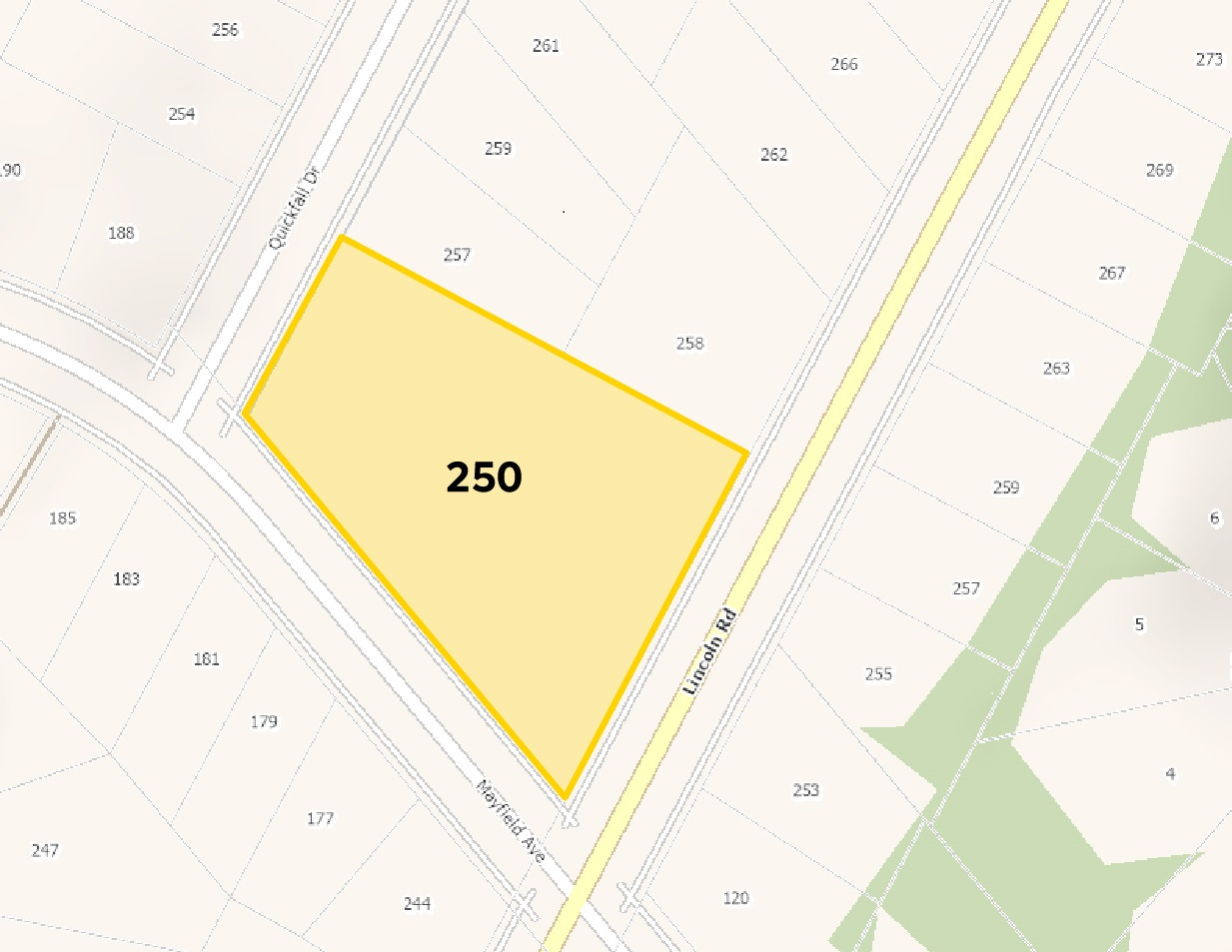
It’s municipal election season so what better time to open up Citified to hear directly from candidates on issues in their ward? Today we’ll hear from the candidates running in Waterloo’s ward 5 about the proposal for 250 Lincoln Rd.
The city purchased the former St. Columba Church lands at 250 Lincoln Rd in April 2025 “with the intent of facilitating a redevelopment of the lands for affordable housing.” The city has hired “a land use planning consultant to review the zoning framework and make recommendations on how to best use the site to deliver housing and other community benefits.” City hall expects to partner with a non-profit organization to build homes on the site, after further public and planning review.
According to the Engage Page, the following timeline is anticipated:
Summer 2026: Preparation of design concepts and technical studies to support submission of a development application.
Fall 2026: Community Meeting #2 and submission of development application(s).
Fall and Winter 2026: Development application circulation to commenting departments and external agencies, such as the Waterloo Region District School Board.
Winter 2027: Informal and formal public meetings for final review and consideration of the design concepts, development application and associated technical studies.
Winter to Spring 2027: Development applications presented to City Council for a decision.
The city is currently working through the engagement process on this proposal which includes mailed notices, the EngageWR page, social media, community meetings, and comment forms. At the first community meeting held on June 18th, 2026, staff noted that “built form, height and density were among the most frequently discussed topics during the meeting. Many participants expressed concerns that a tall, high-density development would not be compatible with the surrounding low-rise neighbourhood and indicated a preference for townhouses or a two- to three-storey apartment building.”
At the June meeting, some participants:
questioned why the site had been selected for affordable housing, how many units would be included in the development, and whether the proposed height would establish a precedent for future developments
were concerned about potential impacts on neighbourhood character and property values and that Lincoln Heights already contains a significant amount of affordable housing
emphasized the importance of ensuring the development integrates well with the surrounding neighbourhood and is maintained over the long term
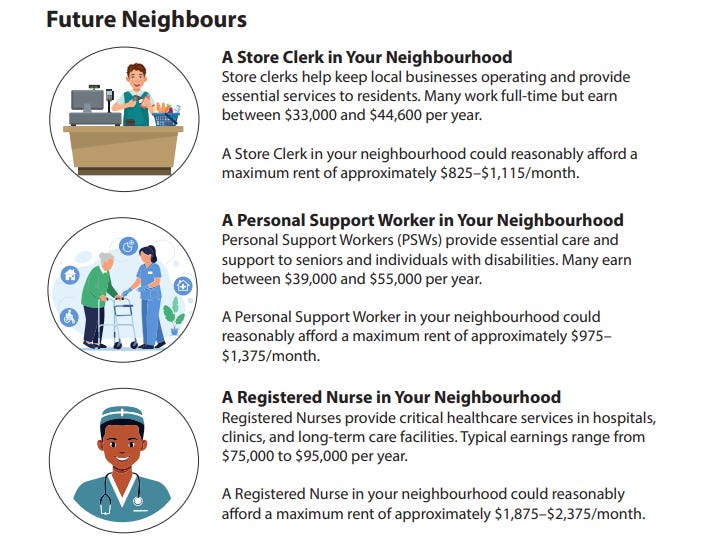
So, let’s hear directly from the candidates on this issue. As today’s title implies, these are the unedited responses as sent to me by each candidate (with any cuts for brevity noted below). I have shared them in the order I received them from candidates. You can find contact information for each candidate at the end of their submission.
From Scott Piatkowski:
Scott shared additional information online about this proposal (which you can read here), but for brevity, I have jumped straight to the core of Scott’s perspective, which follows:
This is a complex issue that can’t be properly addressed through sound bites. What I’ve written below is long, but I hope those who take the time to read it will consider it to have been worth their while.
1. As soon as the congregation decided to cease operating a church on the site and sell the property, it was all but inevitable that the land would be redeveloped for housing. Church congregations sometimes decline in number and often lack volunteers willing or able to take on key leadership or operational roles. When that happens, the remaining members of the congregation have decisions to make about their future and the property that they own. In the case of St. Columba, the remaining members of the church decided to wind down their congregation and sell their land.
The zoning for housing already existed and Lincoln Heights is a desirable established neighbourhood in which to build, so housing was almost guaranteed to be next use. The congregation specifically wanted the land to be used for affordable housing, because that social purpose was in keeping with their faith. My understanding is that they chose the city’s offer over a competing bid from a private developer for that specific reason.
The property was purchased with money set aside by the city for affordable housing or granted to them by the Federal Government on the condition that the property be used for affordable housing. If it is used for anything else, that money would need to be reimbursed.
2. Had the land been sold to a private developer, the City of Waterloo and neighbourhood residents would have had little control over what was built there. The reality of municipal planning in the 2020s is that developers who don’t get what they want (or get it as quickly as they want) can appeal to the Ontario Land Tribunal or seek a Minister’s Zoning Order to achieve their development goals, regardless of what the city or residents may want. The current provincial government has used MZOs seventeen times more often than in the previous two decades and it has used them in ways that were never anticipated.
In this environment, private developers no longer have any incentive to work with municipal planners or neighbouring property owners. The kind of public information session that was held at Lincoln Heights on June 18 would not have happened if the city wasn’t the landowner. For this reason, the city would also have no ability to impose affordability requirements as a condition of approval. The Ontario Land Tribunal or the Minister can also ignore concerns about water supply, while the city has committed to proceed with the development only if there is adequate water to service it.
3. I accept at face value the many assurances that have been offered that no one in the neighbourhood is opposed to affordable housing on the site; that people expressing concerns are simply worried about the scale and design of the development.
Too often, debates about housing devolve into name calling. I’m not interested in labelling anyone who has raised concerns about the development. As indicated, I’m assured that those objections are not about the housing being built to be affordable, and I will believe that unless someone gives me reason to believe otherwise. I am happy to listen to anyone and to work with the neighbourhood on the scale and design of the housing to be built at 250 Lincoln Road.
4. Redeveloping this former church property as affordable housing can be a real benefit to the neighbourhood if done correctly. To be clear, the city doesn’t necessarily lack housing, but it does lack sufficient affordable housing. This proposed development is one of the ways that the city is attempting to address that shortage. Having adequate affordable housing (whether affordable rental or affordable home ownership) is essential not only to repairing the social fabric but also to ensuring the vitality of our economy. People won’t move to our city or stay here if they can’t afford a place to live. And people who grew up in Lincoln Heights won’t be able to stay in their neighbourhood if they can’t afford housing.
5. Identifying and working with a non-profit developer offers the best opportunity to achieve affordable housing goals while respecting the existing character of the neighbourhood. I’ve had the privilege of managing affordable housing communities throughout Kitchener-Waterloo (specifically Bread and Roses Co-operative Homes in Kitchener, Beechwood Co-operative Homes and Beaver Creek Housing Co-operative, both in Waterloo). All of them faced some neighbourhood opposition when being developed (in the 1980s and 1990s), but all of them are a vital part of their neighbourhoods today (Bread and Roses, for example, has won multiple awards for heritage preservation, community involvement, and for its gardens – which are maintained by volunteers). Some of the best people I know grew up in affordable housing or lived there as adults.
6. I am the candidate who is best qualified to ensure that that this development is done right. As noted, I have over three decades of experience in the community housing movement, including managing highly successful non-profit housing co-operatives. I now work as the Ontario Program Manager for a national non-governmental organization created to strengthen the community housing movement. I know a lot about designing, maintaining and operating buildings and I know how to ensure that a new development remains affordable in the long term. While these are operational matters are not the direct responsibility of City Council, I think it would be advantageous to have at least one member of Council who understands the affordable housing file if the city is going to be involved in that file (here and elsewhere throughout the city).
7. I agree with those who say that a six-story building on the site is an inappropriate use for the site. My experience in housing management has included managing a six-story building, so I know what the footprint of a six-story building looks like and I know the economics of running one. I’ve also managed townhouse and stacked townhouse housing communities, with both two and three levels. In my opinion, stacked townhouses would be the best fit for 250 Lincoln. Most people I’ve talked to in the neighbourhood have said that they are comfortable with that kind of housing in the neighbourhood.
8. In my opinion, it is very unlikely that any non-profit developer will come to the city with a proposal to build a six-story building on this site. A six-story building would require an elevator, one of the most expensive pieces of building infrastructure to install and maintain. A building taller than six stories would require two elevators. Non-profit providers are not in business to make money, but they can’t keep operating if they lose money. I highly doubt that any non-profit developer will submit a bid that requires installation of one or more elevators. If elected to serve as Ward 5 Councillor, I would be looking to support proposals from non-profit providers with no more than three stories (note that four stories are already allowed under current zoning).
9. Any candidate who says that they will stop this property from being developed as housing is making a promise that they cannot keep. It’s important to note that the next Councillor for Ward 5 will one of eight votes at Council, meaning that whoever is elected in Ward 5 will not have a veto or any greater say in the decision than their colleagues. The new Councillor will have a specific responsibility for listening to Ward 5 residents but, whatever position they land on personally, they will need to persuade a majority of their colleagues to vote the same way in order to carry the motion.
Even if they vote no and manage to win over a majority of fellow Councillors to defeat the proposal, the non-profit organization could use the same mechanisms available to other developers (as described above) to go over the heads of City Council. It is far better to have a Councillor who can negotiate in good faith with a non-profit proponent to come up with a housing solution that works for everyone (both the people who will live there and the people who already live in the neighbourhood), than one who pretends they can stop it.
10. There is no evidence that property values are negatively impacted by the proximity of non-profit or affordable housing. Since my wife and I bought our current family home in 2013, it has more than tripled in value, even after recent price corrections. That doesn’t make us financial geniuses; it just means we were lucky to be able to buy when we did. Not everyone is that lucky, which is why we support helping those who can’t afford housing in the current market. If 250 Lincoln was on my block, I would absolutely support it being redeveloped as affordable housing.
Property values are affected by a number of factors – such as interest rates, labour shortages, global pandemics, the questionable trade policies of American Presidents, and immigration policy – none of which can be controlled by your municipal government and none of which have anything to do with how close the property is to affordable housing.
The affordable housing that already exists in Waterloo is attractive, well-maintained and well run, as is the affordable housing being developed in the city presently. Take Beechwood Co-op as an example. The co-op was built in 1995, at the same time as the surrounding neighbourhood of single-family homes. A house across the street from it sold for $1.4 million in 2025.
Repeated studies by groups as diverse as the Canadian Centre for Economic Analysis, the Canadian Real Estate Association, and the Wellesley Institute have concluded that fears about lost property values in neighbourhoods with non-profit or affordable housing are not born out by data over time. I have seen no studies that demonstrate the opposite.
Since 2018, Scott Piatkowski has represented Waterloo and Wilmot as a Trustee on the Waterloo Region District School Board. He now seeks election to Waterloo City Council in Ward 5, his home ward. For more information on Scott and his priorities, visit https://www.scottpiatkowski.ca/
From Marty Rempel:
The future of the former St. Columba Church property at 250 Lincoln Road has become one of the defining planning issues in Lincoln Heights. Although the church building is gone, the debate over what should replace it is very much alive. As your candidate for Ward 5, I believe it is important to be transparent about where I stand.
The current City Council has already committed itself to pursuing provincial funding for housing, and that commitment gives this property a certain trajectory that will be difficult to reverse. Nevertheless, I believe the City still has an obligation to ensure that whatever is ultimately built respects both the needs of the broader community and the character of the neighbourhood.
My own preference would be to maintain the current zoning. Keeping the existing zoning provides greater assurance that future development will remain compatible with the wishes of local residents and with the established character of Lincoln Heights.
Within the community there are differing opinions. Some residents would prefer the site remain very low density, perhaps with two large homes that blend naturally into the surrounding neighbourhood. Others recognize the pressing need for additional housing and would support a modest development of less than four storeys under the current zoning.
I believe there is room for a balanced compromise. Given Waterloo’s need for both market and affordable housing, thoughtfully designed low-density townhouses could provide additional homes while respecting the scale of the surrounding community. Such a development would likely have a more manageable impact on neighbourhood schools, parking, traffic, pedestrian safety, and overall congestion than a larger apartment building.
As a city, we have a responsibility to help address the housing shortage, including affordable and subsidized housing. At the same time, we have an equally important responsibility to preserve the character, livability, and reasonable population density of our established neighbourhoods. Those two objectives should not be viewed as mutually exclusive.
The St. Columba site also illustrates a broader planning principle. Every redevelopment proposal deserves to be evaluated on its own merits. Decisions should not be driven solely by provincial targets or financial incentives, but by careful consideration of neighbourhood context, infrastructure capacity, environmental sustainability, and meaningful consultation with local residents.
I also believe Waterloo should place greater emphasis on redeveloping brownfield sites before looking to intensify established residential neighbourhoods wherever practical. We have an inventory of underutilized industrial and commercial lands that offer significant opportunities for new housing while minimizing disruption to existing communities. Brownfield redevelopment should be a higher priority in our planning strategy.
As your councillor, I would advocate for practical solutions that recognize both our city’s housing needs and the importance of protecting the communities that make Waterloo such a desirable place to live. Good planning is not about choosing growth or neighbourhood preservation—it is about achieving both through thoughtful, balanced decisions.
You can learn more about Marty and his priorities for ward 5 at martyrempel.ca
From Victoria Richardson:
I have been involved with the development of 250 Lincoln Road since February 2025. I have been an active community member in Lincoln Heights (and Waterloo) for much longer than that. You can find me running neighbourhood events, supporting connections on the neighbourhood Facebook group, and co-chairing Lincoln Heights School Council. I have attended community meetings, city-held meetings, and city council meetings (even delegating at one in January 2026 about school safety during the demolition). My vision for 250 Lincoln Road:
When it comes to decision making, this is my process: I listen to residents. I learn from community organizations and experts. Then, informed by what I’ve heard, I lead.
Keeping the mature trees on site
This lot is close to a school so I would prioritize fewer but larger units (more bedrooms) to fit with the family feel of this location
Working with a non-profit or co-operative housing unit would be ideal (but dependent on proposals) as they keep units affordable and accountable
Minimum 30% affordable units (this is mandated by funding sources)
Keeping height below the tallest tree (ideally 4 storeys as is currently zoned for, but no higher than 6)
Here’s where you can find Victoria online:
Email: victoria@victoriawaterlooward5.ca
Facebook/Instagram: @VictoriaWaterlooWard5
Website: VictoriaWaterlooWard5.ca
From Eda Dede:
Thanks for reaching out and asking for my thoughts on 250 Lincoln Rd. It’s an issue in Ward 5 I hear about often in the community, on social media, and on the news.
I am a huge believer in building relationships based on trust. I value clear and transparent communication, and listening before taking action. These are the values I would hold with me while making council decisions, as I believe communities thrive when they feel heard.
Like most growing cities, Waterloo needs more affordable housing and what I am hearing at the doors is that most people agree with that. Given the scale of the housing crisis across the region and the province, I do support moving forward with affordable housing here. The land is owned by the city and the location makes sense as it’s close to schools, public transportation, and grocery stores - the kind of everyday amenities that make a neighbourhood livable. But as with any development project, we need to keep in mind the relationship between the city and the residents.
My understanding is that the frustration lies in the communication process. I attended the June 18th community meeting where some residents raised their concerns, some of which were the zoning, the height of the building, number of units, the type of housing it would be, and whether they’d have a chance to give input before decisions were finalized. I am looking forward to hearing more about the community’s concerns and vision about this site as the process moves forward.
I’m currently working at a provincial MPP constituency office, where we deal with a wide range of concerns every day. I know firsthand that it is almost impossible to make everyone happy at the same time, but you can listen to people and put in the work to find real common ground. Clear and early communication is what makes that possible.
Moving forward, my approach would be:
● Communicate directly and promptly, sharing updates as they become available.
● Hold information sessions with residents before a final decision is made.
● Ensure all voices are at the table during community consultations.
I want this project to succeed both as a housing win and as proof that the city can run a development process people trust.
Melissa, thank you for giving me the chance to share my thoughts with you and your readers. This is a pretty complicated topic right now, and if you or any Ward 5 resident would like to talk about 250 Lincoln Rd, or anything else, feel free to email me at hello@edadede.ca.
If anyone wants to learn more about Eda, you can follow along on social media or visit the website. Instagram Facebook Website
I’d love to hear your thoughts on these responses, so please share them in the comments. And a huge thank you to each of the Waterloo ward 5 candidates for taking the time to provide these responses during a busy campaign season!
If you have thoughts about issues in other wards that you would like to hear from candidates about, please let me know.
Comments
Nothing yet. Say the first thing.
Sign in to join the conversation.