
Electronic gaming in the 1980s, with its simplified palettes, coarse abstractions, hidden glitches, and tantalizing atmospheres, can be likened, more in hindsight than at the time, to the hidden riches of the underworld. I can imagine a novel approach to necromancy that aims at reviving the shades of games from past decades, urging them to reveal techniques and secrets that can’t be found through the more straightforward approach of simply playing them. There’s a point at which the halls of Tartarus and the cultural unconscious converge. Such historical detritus as the ZX Spectrum, the BBC Micro, and the TRS-80 could give access to a treasury of stygian wisdom to those who dare to pursue their spirits.
I have no interest in romanticizing the past. If there’s something to be gained from looking back, it’s not the chance to recapture my youth. Nostalgia can be treated not as genuine remembrance, but as something more akin to a haunted house, or an intricate dream of a console game that never truly existed. The Neo-Decadent approach is to imagine the world as an inconsistent ruin, to seek its hidden chambers and explore its depths in ways that are neither intended nor condoned by the architects of society. The past, even your personal past, can be approached as a series of fragmented myths. Console and computer games could be treated like oracles.
The first gaming machine I ever owned was the venerable Atari 2600. One of the most interesting things about this machine, though I didn’t know it at the time, was its necessary interaction with the cathode ray tube in the old-style televisions the games were displayed on. There’s an excellent book by Ian Bogost and Nick Montfort called Racing the Beam that explains these byzantine operations in great detail: electron guns emitting colored beams onto the back of a phosphor-covered screen, drawing out the visuals line-by-line, controlled by a magnetic field. Meanwhile, the weary CPU was forced to take advantage of breaks in the sequence to execute the game logistics in real time. Programming for the 2600 was, by all accounts, a nightmare, though I have to admit to a certain masochistic fascination with the prospect.
Partly as a result of this staggering complexity, and partly due to the fact that the Atari corporation insisted on nearly impossible deadlines, a number of games were shipped with strange and exotic glitches, some of which were more interesting than the games themselves. The first glitch I ever personally found, and maybe the most enticing, was in the 1983 game Mountain King. This game was surprisingly atmospheric for the technology it ran on, making use of a faithful rendition of Edvard Grieg’s 19th-century composition Hall of the Mountain King for its soundtrack. The goal is to retrieve a golden crown from the depths of an ancient diamond mine. Guided by a system of musical cues, the player must locate the flame spirit, which is itself the key to the temple chamber where the crown is kept. Once the crown has been retrieved, the player must race against the clock to transport it to a perpetually-burning flame at the top of the mountain. This premise, alongside the game’s aesthetics, is downright mystical.
The glitch in this game wasn’t easy to find. What made it possible was boredom. After playing through the game again and again in every possible variation, having done the same with every other game I owned or was able to borrow, the only thing left was to experiment in purely arbitrary ways. By performing a series of diagonal jumps from a very specific point on the upper level of the mountain, it’s possible to rise above the playfield into an expansive area filled with random ladders and platforms. Some have argued that this is an intentional easter egg, while others maintain that it’s a result of the graphics pointers running off the edge of the cartridge ROM. Finding it by accident was absolutely mesmerizing to my developing 11-year-old mind. It was as if I’d stumbled into a hidden world by a process I’d later come to know as “rising on the planes,” piercing through the veil of the rational world to explore a place of sublime abstraction. Azure ladders blinked on and off in the devouring black of the celestial abyss while an uneven distribution of tiny platforms hovered in pairs like half-closed eyes. Looking back, I’m reminded of the Kabbalistic palaces described in books like The Zohar, or a glitched-out version of Ezekiel’s vision, or the monstrous forges of William Blake.
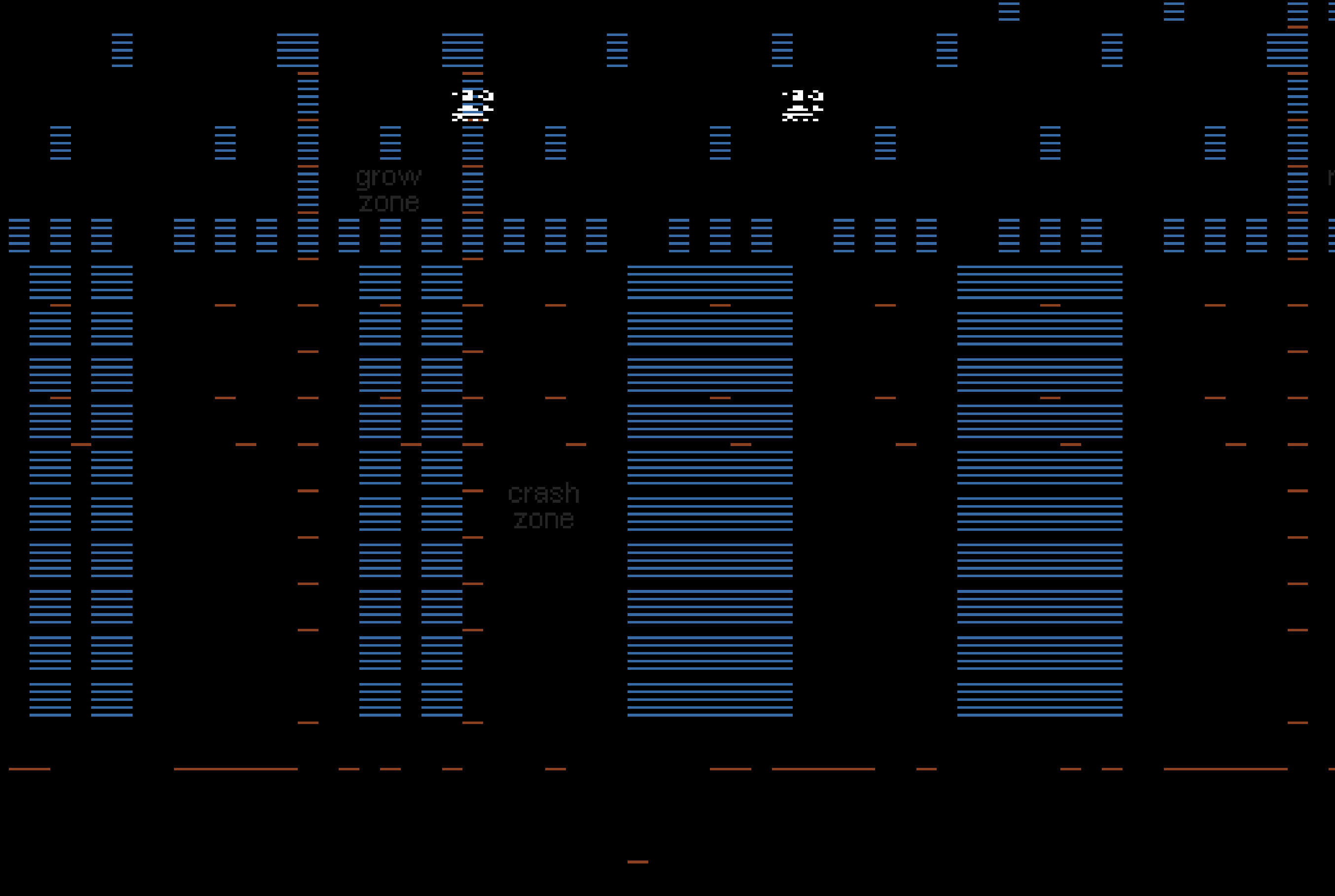
The Palace of the Sapphire Brickwork of Heaven.
Playing a game without knowing the rules is a worthy endeavor in itself. I could write an entire treatise on this principle alone, especially in relation to various occult traditions and practices. When I was young, reading an instruction manual was the last thing I wanted when faced with the possibility of pure, undirected play. Total confusion is the mother of discovery, especially in the case of something so obtuse as the 2600 adaptation of Raiders of the Lost Ark. The beauty of this game lies in its absolute mystery, which is only spoiled by explanations. Its elements are multifarious—seedy merchants and winding snakes, pulsating creatures that transport the player from one place to another for no apparent reason, a baffling monster that, as I later found out, is supposed to be a giant spider, and a collection of items depicted by icons that have mysterious effects on the various game screens. I had several long and complex dreams involving aspects of this game, some of which inspired me to try new tactics that allowed me to push further into its dense machinations, though I didn’t nearly understand what I was doing. The whole comprises a glorious puzzle composed entirely of abstract forms that bear only the slightest resemblance to the movie they’re supposed to be based on. Eventually, I found the solution in a gaming magazine and played through to the ending.
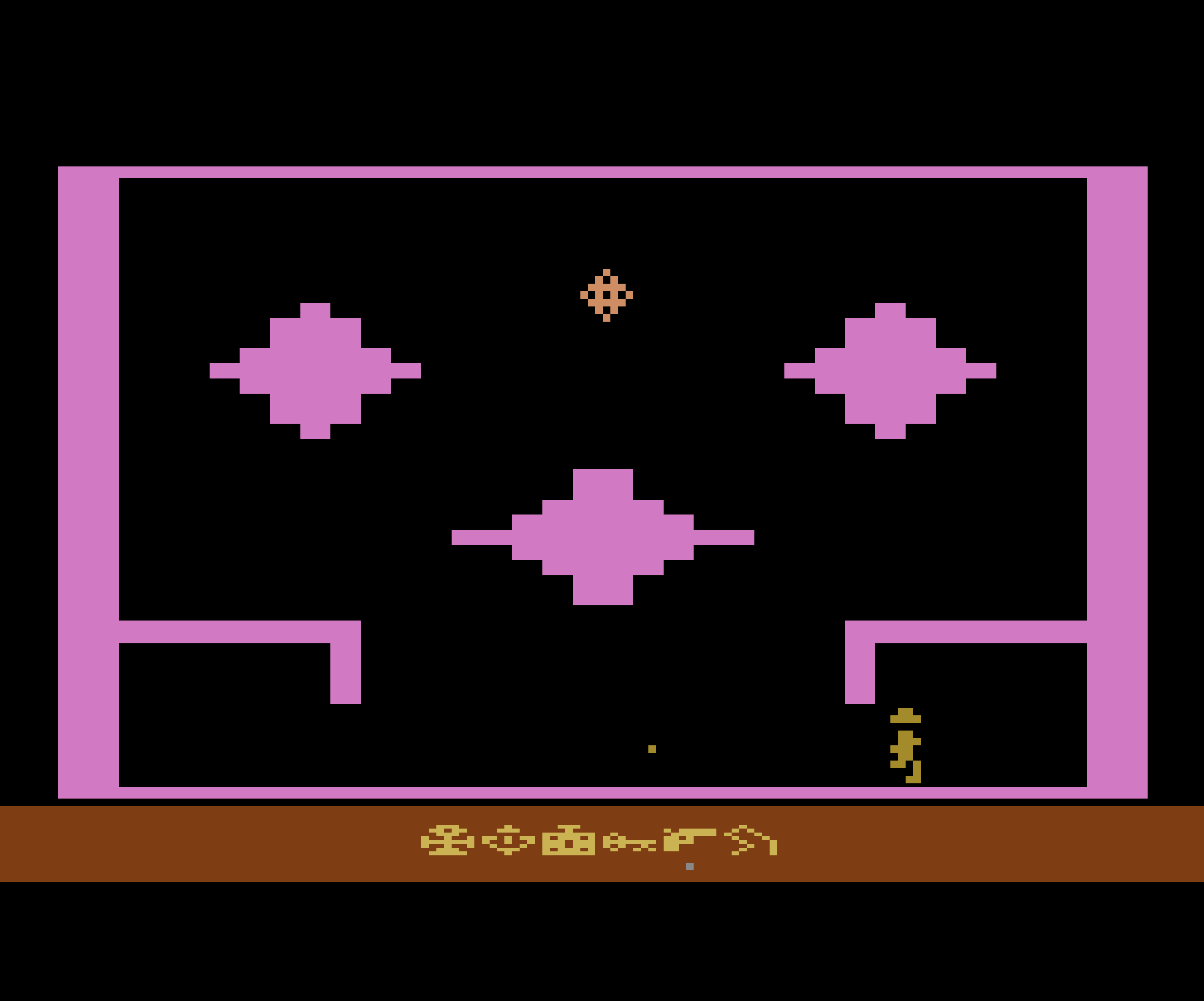
Indy shooting his way through a prison wall.
The games that inspired the most satisfying dreams were the ones that never existed. While the latter, for the most part, were invented by my own subconscious (or, one might argue, by initiating angels), there were a handful of games that I’d heard about from friends who simply made them up. I was guilty of doing the same on occasion. I remember describing an impossible game involving a mansion whose rooms rearranged themselves. Nefarious robots, secret doors, revolving stairways, colored beams, a series of malfunctioning elevators controlled by banks of hidden switches—there was no way all these things could possibly fit into a meager 8KB of ROM. My friends knew perfectly well I wasn’t telling the truth, yet we never called each other out. The unspoken goal was to give rise to an intense desire to play these nonexistent games.
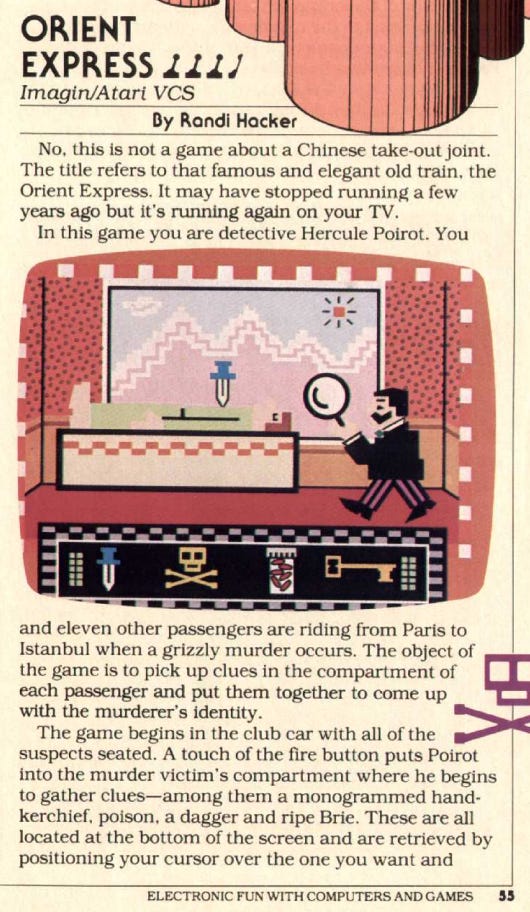
In April of 1983, a prosaically titled gaming magazine, Electronic Fun with Computers and Games, ran a review of a fictitious cartridge called Orient Express. The featured image was just beyond the range of the 2600’s capabilities. The graphic and description were so intriguing that I could have killed to play it. This was exactly the feeling I was trying to produce when I was making up games with my friends. (The name of the reviewer—”Randi Hacker”— should have called this out as an obvious ruse. To be honest, I don’t think I even noticed it.)
Before I started writing seriously, I planned out a series of games in an older style, targeting the look and feel of the 2600. I created a sequel to Raiders of the Lost Ark titled Indiana Jones and the Robots From Pluto, taking pains to make it every bit as inconsistent and unwieldy as the original. That the game made no sense was its highest virtue. I programmed it in Java, which admittedly felt like cheating. After beginning a series of seventeen games based on the chapters in Joyce’s Ulysses, and planning out the initial stages of an even more ambitious series based on In Search of Lost Time, I realized that my approach was flawed. If I really wanted to create something worthwhile, I’d have to program these games in assembly language. From this, I could manufacture physical cartridges, complete with illustrated labels on the front and top. I quickly understood that a project like this would consume the rest of my life. There were simply too many other things I wanted to do, so I abandoned the project.

The Plutonian robot heads were shamelessly stolen from the original 2600 game.
In 1984, when I was twelve years old, I upgraded my technology to the mighty Commodore 64. I’d had some experience with computer gaming at school and at the houses of some of my friends. These inevitably involved cassette decks, with which I never entirely lost interest. The tedious pain of loading games from a tape is well-documented in my story “A Mansion of Sapphire” (included in Electro-Etheric Minotaur). Suffice it to say, it took a high degree of patience. While I scarcely understood the technology at the time, I find it fascinating now. The use of a signal to magnetize tape provides a nearly perfect analog to talismanic consecration. One can imagine a form of the Catholic Mass in which the flesh and blood of the Holy Savior is magnetically imprinted into the substance of the host (magnetism being a common analogy to every kind of astral and spiritual force.) Aside from all this, the limitations of the medium brought a tactile element to electronic gaming, mingling the abstract with the physical and sealing the bond with pure frustration.
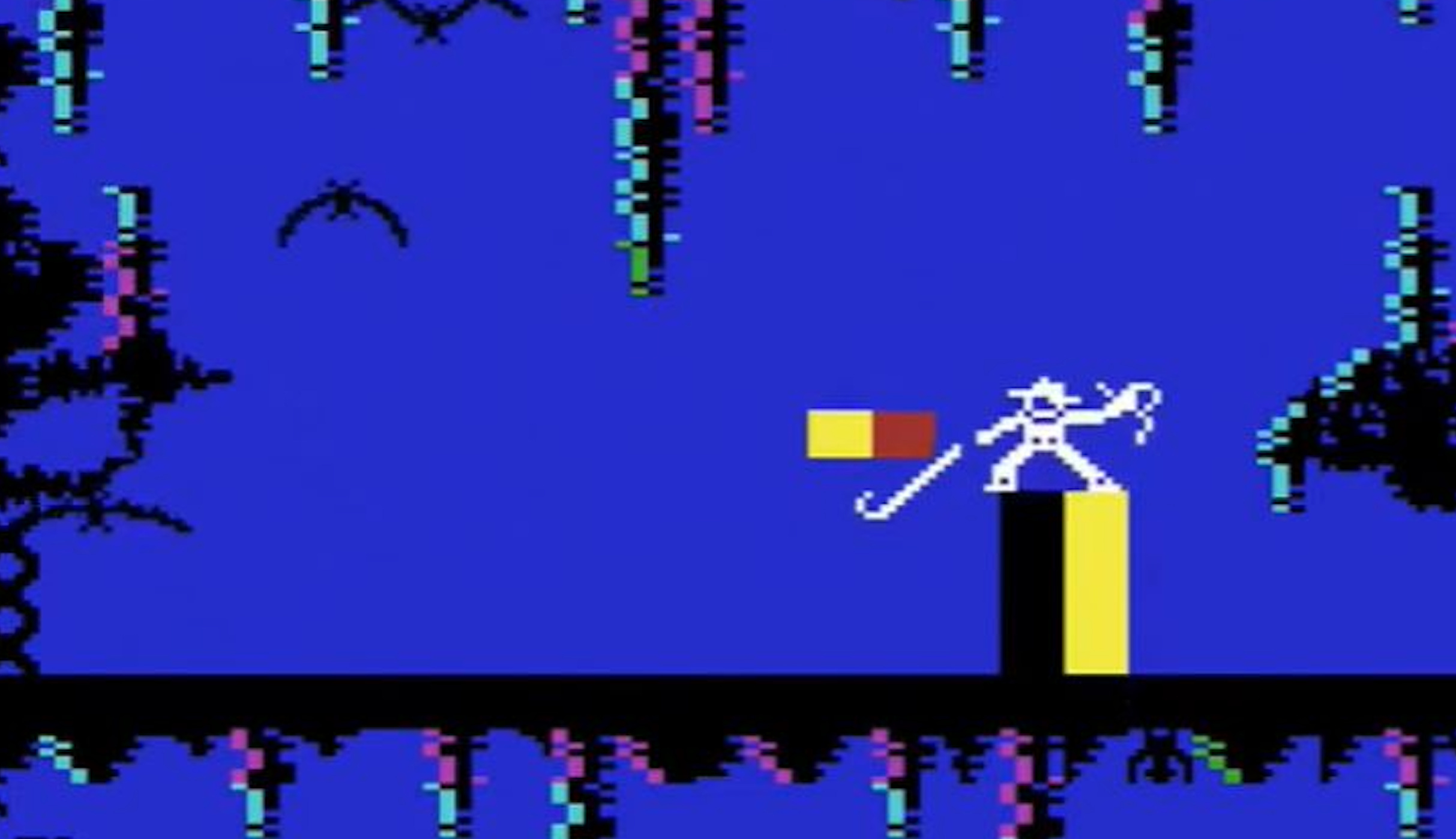
Of all the games played on the Commodore 64, the one that most sticks in my mind is Sabre Wulf. This is not so much for the gameplay, which was mindlessly simple and a little repetitive, but for the deliriously gorgeous scenery which resembled a jungle viewed on LSD. The oversized jewels left lying around like the glittering eyes of gods, the glowing red lizards, the charging pink rhino, the flora and fauna I could scarcely identify—these images saturated my dreams at the time, giving rise to the extravagant astral splendors that I became more familiar with later in life.
One dream in particular which stood out from the rest involved a bipedal leopard who wore a soldier’s uniform. He was inordinately handsome with his sashes and medals and appeared on intermittent screens as a sort of god of the forest. This may have been inspired by a creature from an early Dungeons and Dragons manual which had captured my imagination. The rakshasa, based on a supernatural being that appears in The Ramayana, was impeccably elegant with its luxurious robe and smoking pipe.

The rakshasa at home enjoying earthly pleasures.
As the dream continued, the perspective alternated between the third-person view of the playfield and a first-person experience of the jungle itself, presenting a dizzying array of elements that I only partially remember—shimmering mansions, rotating statues, chandeliers hanging from a canopy of branches; there was something involving a carnival funhouse that promised foreboding erotic encounters. At length, I came across a circle of torches, in the center of which was the body of the slain rhinoceros. Knowing I’d somehow done this myself, but being unable to imagine how, I awoke with the conviction that I’d somehow divined all the secrets of the game.
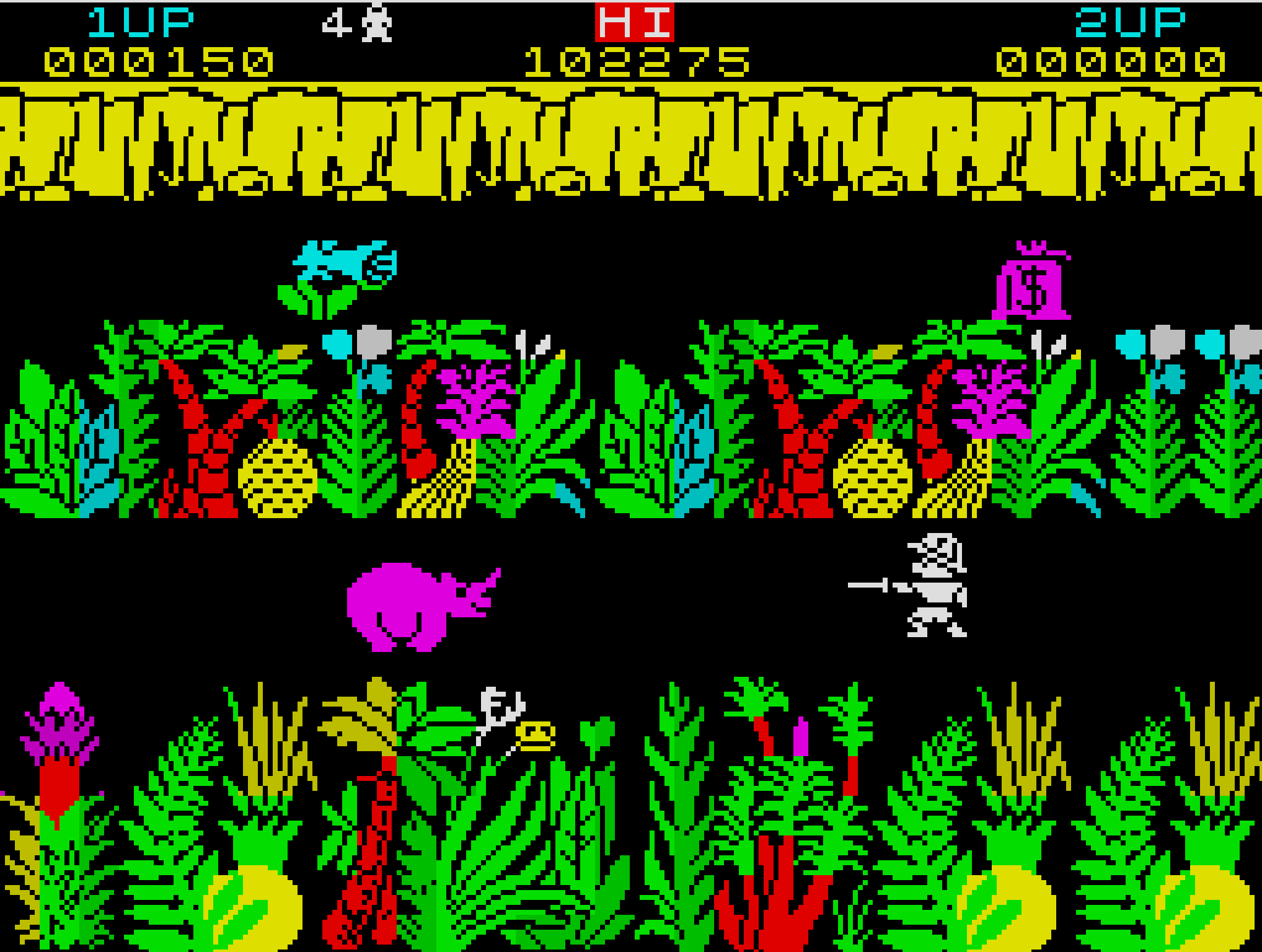
It should be noted that the rhino cannot be stabbed—if you see it, your only recourse is flight.
It was the less elegant games that often captured my imagination the most. Two in particular come to mind—an ill-advised cash cow released by Mindscape in 1984, titled Indiana Jones in the Lost Kingdom, and Hercules, released by Interdisc shortly afterward. The former, as with its predecessor on the 2600, was barely even playable. Its elements, which were perplexing at best, included giant butterflies, colored orbs, candy-striped platforms, and subterranean bells, none of these items having anything to do with The Temple of Doom, which was released shortly afterward. The game dynamics were partly broken. The player icon would shakily sink through the floor if you didn’t keep it in constant motion. The experience was almost psychedelic.
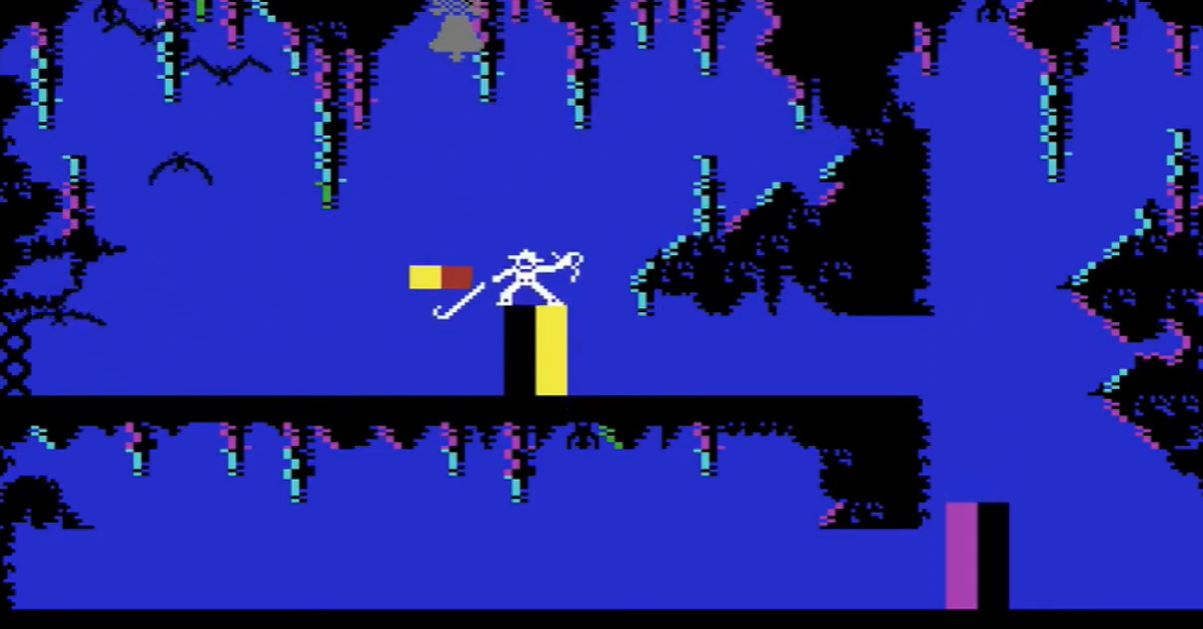
Indy wields a bell-striking cane on a rising, candy-colored stripe.
Both of these games, against all odds, imparted an unshakable sense of place, their simple abstractions and garish colors only strengthening this perceptual aberration. Their various levels felt strangely nostalgic, as if I’d spent time in these places and knew them well. The feeling this imparted could almost be likened to a form of synesthesia. There are a handful of interiors I’ve experienced in life that have struck me as somehow primal, so imprinting themselves on my imagination that they can never be eradicated. A collector’s apartment in Istanbul crammed with sewing machines and erotic prints, an unused section of a boiler room in Syracuse, New York, the dilapidated foyer of a tenement building near the railway station in Hamburg, with its uneven niches, imitation fountains, and crooked chandelier—these places reflect a break in the symmetry between the ideal and the actual. Thus with the colorful, jewel-like chambers in a handful of the games I played in my youth. Among other things, this anomaly has fueled a long-standing obsession with spatialization.
The human tendency to spatialize experience lies at the heart of much of my fiction. This plays a crucial role in occultism in several different contexts, from the symbolic attributions of the cardinal directions to the mutable geography of the visionary world. The French theologian Henry Corbin has written at length about the latter phenomenon, particularly in the context of esoteric Islam and its roots in pre-Islamic Persia. Both common dreams and mystical visions present themselves as a type of “place”: a symbolic environment arranged around a point of view that proceeds through its own architectural logic. Corbin’s term for the visionary realm was mundus imaginalis, referring not to an imaginary world, but to a mode of perception that apprehends what lies beyond the senses—Platonic ideals and archetypes, spirits of every rank, personifications of abstract laws, the heavenly palaces of the Kabbalists. Modern occultists have termed this the astral plane. Jung referred to it as the collective unconscious. It occupies a spectrum whose lower reaches, while fairly accessible to those willing to put in the effort, are given to deceptions of every kind, though even these are not without value.
The connection between the astral plane and the video game world should be obvious, even more so in the case of older games whose imagery consists of abstract forms. The laws of space in both of these contexts are different from those of the physical world. You might pass into the edge of the playfield and emerge on the other side, move through walls, jump between locations, or transform your surroundings by consuming an adversary. The visionary plane is said to consist of an exalted form of “light,” while the gaming world is rendered as illuminated pixels. Orientation in both environments is purely symbolic, as is distance. I’m firmly convinced that older games can give rise to perceptions and associations that reveal something of the psychic roots of both the player and their environment. This is true in both the cultural and individual sense. They comprise a sort of mirror, their simplified graphics activating something that lies buried deep in the collective psyche.
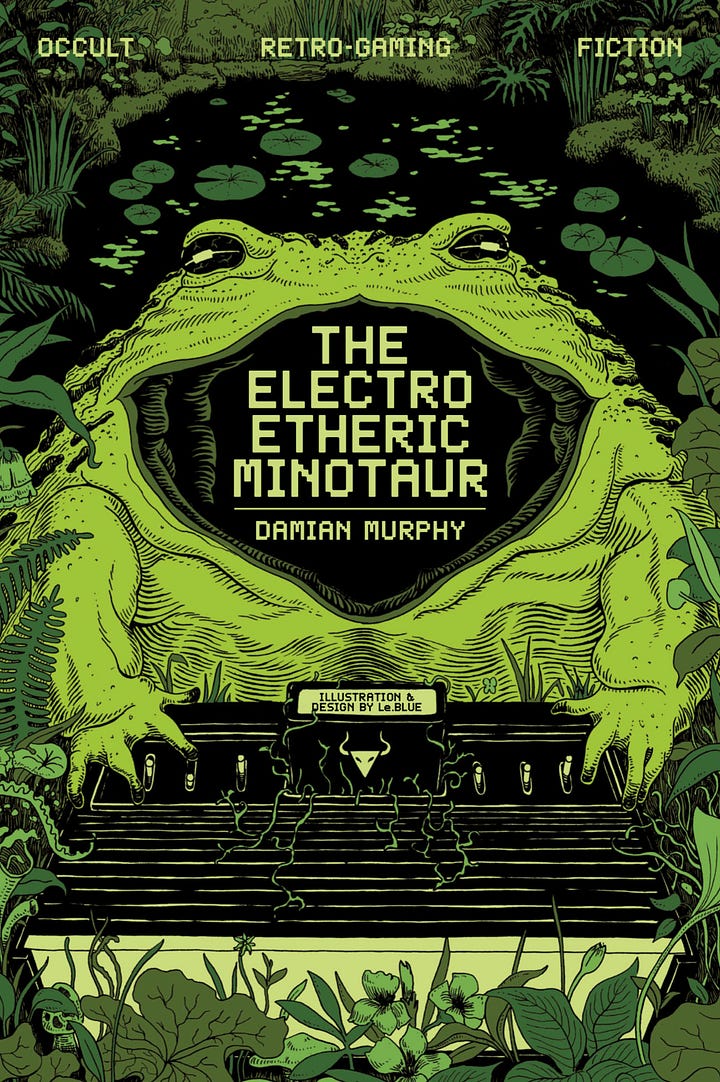
These ideas are explored in much greater depth in the stories in The Electro-Etheric Minotaur, each of which explores a different combination of occultism and retro-gaming. There are things that can only be conveyed with narrative, states of being which defy the rational, relations between objects and entities that can only be expressed through a trick of aesthetics. These stories reject the traps of nostalgia in favor of something more pragmatic: a series of techniques and oblique devices that can be used to explore the truly hidden.
Damian Murphy is an occultist and writer living in Seattle, Washington. Beyond Minotaur, a variety of his titles are also available from Church Ghost’s distro page.


Photograph by Aaron Lange.
Comments
Nothing yet. Say the first thing.
Sign in to join the conversation.