
Diamanda Galas managed to make people listen to what she had to say for the first time in decades by expressing her ignorance about the topic in Spin magazine over the weekend, so I’m reviving this decade-and-a-half-old piece here and now despite it sounding as stiff and impersonal as a ninth-grade book report. When written, it was accompanied by a playlist. And all sorts of Black country artists, some of them immensely popular, have come and gone since.
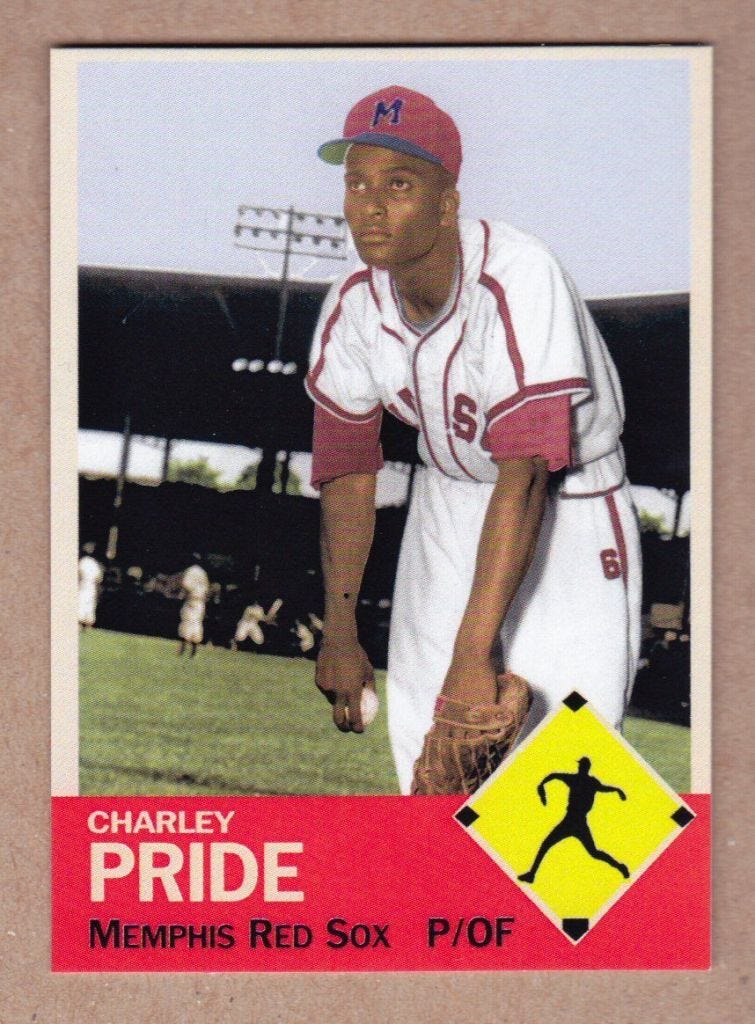
The past few years have been better than average where African-Americans scoring in country music are concerned. First there was Cowboy Troy, the six-foot hick-hop rapper who put out a couple albums after first showing up as a sideshow under Big & Rich’s bigtop in the mid ‘00s, and Rissi Palmer, whose 2007 hit “Country Girl” was the first country-charting single by a Black woman in two decades. A year later, ex-Blowfisher Darius Rucker put out his first country album, which exploded; he’s now had four number-one singles so far, making him easily country’s most commercially successful Black artist since ex-Negro League baseball player Charley Pride’s incomparable career starting falling off in the early ‘80s.
Add in Ray Charles – who played in a hillbilly band known as the Florida Playboys before he was a star, and whose 1962 Modern Sounds In Country And Western Music topped Billboard’s album chart for 14 weeks – and that’s probably the extent of what most music fans know about Black people in country. But actually, the story goes back longer than the genre itself. And all along, from both sides of the aisle, country and Black American music (blues, jazz, gospel, soul) have never stopped interbreeding.
Documented evidence of slaves in the American South playing fiddles – a European instrument, used for the reels and jigs from which hillbilly square dances evolved – date back at least to the late 17th Century; by the 18th, classified ads trying to track down fiddle-playing runaway slaves frequently showed up in local papers, and by 19th, there was no more popular folk instrument among either white or Black Americans. After the Civil War, and especially as the 20th Century dawned and the blues were born, string bands – Black, white, occasionally integrated – performed traveling shows that mixed fiddle breakdowns with ragtime, early blues, comedy shtick, and novelty hokum. Most also featured a banjo, an instrument that originated in Africa. And really, well into the depression years, Black bands like the Mississippi Sheiks and white bands like the Allen Brothers sounded more alike than different.
“Country” was a marketing term, and most of the genre’s pioneers – from Jimmie Rodgers, Uncle Dave Macon, and Charlie Poole, up to and including Hank Williams — were basically white blues singers (or, in the case of Bob Wills and the Texas Playboys, jazz musicans.) So it probably shouldn’t be too shocking that one of the earliest stars of the Grand Ole Opry – in 1928, no other country musician appeared on the stage anywhere near as often – was a Black harmonica honker named Deford Bailey.
Meanwhile, Black people in the mid-century South grew up listening to country music – because in some backwaters that’s all their radio could pick up, or maybe their fiddle-playing dad loved Bob Wills, or their church-going mom didn’t think country was too vulgar, or Hank Williams was just what the white landowner whose fields they share-cropped blasted out of his truck. And when they went to the Saturday matinée, cowboys like Gene Autry (himself a former white blues singer) and Roy Rogers were up on the screen. So when some Black kids grew up, they decided to become country singers: Not just Charley Pride (for years the biggest star on RCA’s country roster), but guys like Big Al Downing, O.B. McClinton, and Stoney Edwards, all of whom had at least some minor success on the country chart.
Others worked a grey region, somewhere bridging country, soul, and middle-class adult pop: Brook Benton, O.C. Smith, Dobie Gray, Bobby Hebb, Joe Simon, often Ray Charles himself. Others – Esther Phillips, Etta James, Joe Tex, Bobby Blue Bland, Bobby Womack, Tina Turner, even the Supremes – made at least one country album. Still others were encouraged to record versions of songs that had already been country hits: labels intertwined with publishing houses might double their money that way. In the end, there’s a good chance that most r&b artists from the ‘50s to ‘70s dabbled in country, in some form or other – from the Staple Singers to the Pointer Sisters, from Clarence Frogman Henry to Clarence Gatemouth Brown to Candi Staton, and way beyond. James Brown even appeared at the Opry, opening with three c&w numbers before commencing to get his funk on. Arkansas-born Al Green, in the course of his career, covered songs by Kris Kristofferson, Ray Price, Willie Nelson, and Hank Williams.
As disco, hip-hop, and the teen-aimed hybrids those styles spawned increasingly pushed soul’s more down-home grown-folks side to r&b’s margins, Black country moves seemed to fade somewhat. But even in the early ‘80s, frequent Kenny Rogers collaborator Lionel Richie crossed to country stations with “Stuck On You”; truth is, country had always been part of his sound – listen to the Commodores’ small-town-boy “Sail On,” if you’re skeptical. Come the early ‘90s, a moonlighting Black Louisiana cardiologist named Cleve Francis landed four hits in the lower rungs of the country chart; appropriately, given his day job, his biggest was titled “You Do My Heart Good.”
Aaron Neville (who, like New Orleans predecessors Fats Domino and Professor Longhair, always acknowledged the genre as an influence), charted country twice in the ‘90s as well. And out on the outskirts, it’s not hard to hear traces of country in the music of Black artists from rap’s David Banner to jazz’s James “Blood” Ulmer to garage rock cult heroes like Andre Williams and Barrence Whitfield. So Darius Rucker, it turns out, is only the latest in a very long line. In a lot of ways, country is just soul music, or the blues, under another name.
Rhapsody, February 2011
No posts
Comments
Nothing yet. Say the first thing.
Sign in to join the conversation.