
Accept, Stalingrad
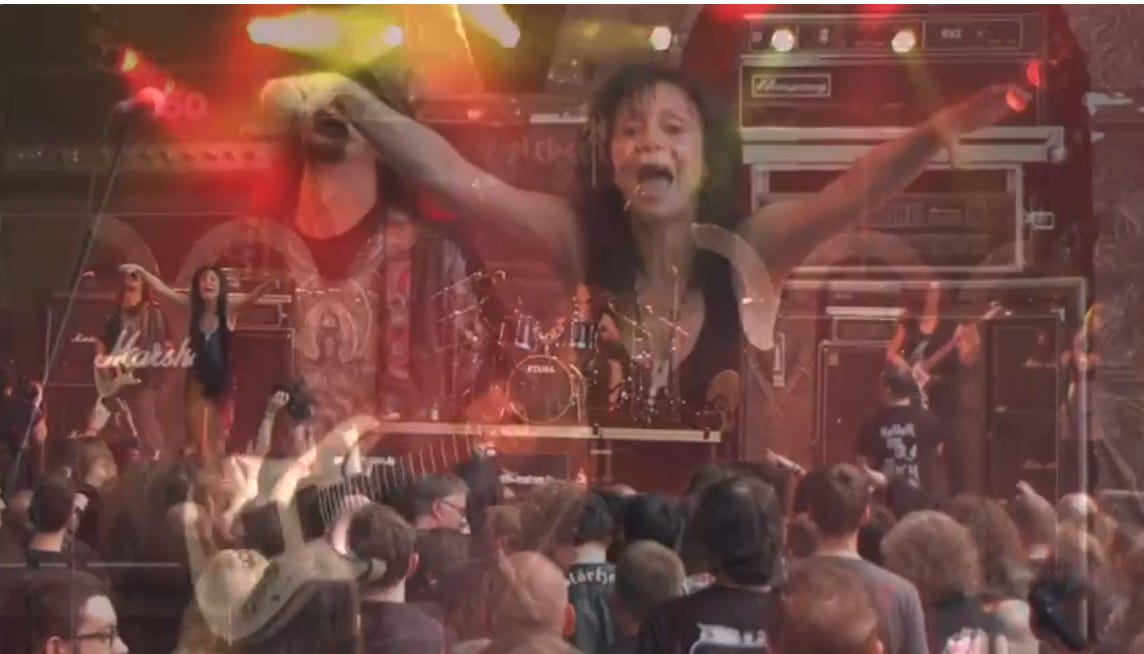
Even with balls-to-the-wall Udo long gone, when metal’s most homoerotic band open with “Hung, Drawn and Quartered,” mentally inserting “like a horse” is a given — especially since such an animal presumably assists the “crowd-pleasing dissection” for “sins of the flesh.” Both that one and the subsequent Luftwaffe-soaring Eastern Front-battle title cut have rousing power melodies, too. Also wunderbar: “Revolution,” a rant against the rich getting richer, rhymed fast as a shark; and “The Galley,” where rugged thugs paddle a big boat, shout “row!” together, get chained up, and encounter mermaids.
Adrenaline Mob, Omerta
With prog-metal dudes from Dream Theater and Symphony X, this quasi-supergroup is heavy but not humble: Too-long songs; wackily explosive guitar noodling; Russell Allen’s operatics getting Sir Lord Baltimore shrieky now and then. He’s got an okay classic-rock croon, too. But more often he raps, sort of, above a bull-in-china-shop klutz-funk groove that’s as much late Gn’R as Pantera. Halestorm’s Lizzy Hale helps him rock up Duran Duran’s underrated “Come Undone,” and things end with a blatant “Train Kept A Rollin’” rewrite featuring Robert Plant-style sex moans. A mess, but at times a fun one.
Ahab, The Giant
Germany’s doom oceanographers aim to evoke the lulling monotony and horrifying danger of an eternal nautical journey – Almost every song here exceeds nine minutes, usually progressing from tranquil stillness to torrential storminess as men fall overboard and the fearless crew encounters ferociously grumbling krakens, plesiosaurs, and a Cyclops or two. There are moments of lacrimose, lagging beauty: acoustic intricacies, clean harmonies, guitars descending “Fathoms Deep Below” (as one title puts it) like sea snakes. But thar be some massive monsters o’er the port bow, and they will eat you up.
Altar Of Oblivion, Grand Gesture of Defiance
Though every song save the brief and very pretty “The Smoke-filled Room” lands around the six- or seven-minute range, there’s something cozily modest in these Danish doomsters’ sound. Maybe it’s how they come off both low-budget and really bummed out, like metal in days of yore. Whatever it is, Mik Mentor’s self-described “stentorian narration and ars melancholia” about his ruined world manages to feel manly without feeling macho. And when they get fancy – classic-rock soloing of “In The Shadow Of The Gallows,” medieval ornateness of crooned closer “Final Perfection” – they get beautiful, too.
Ancestors, In Dreams And Time
They’re still patient yoga masters when it comes to letting their psych-metal advance, retreat, well up, and wig out — five of six tracks surpass nine minutes, and the Hawkwindish space-jam finale lasts 19. But this L.A. quintet is pushing its sound harder these days. The doom in “Corryvreckan” attains a Neurosis-level density, and vocals are more prominent; “Running In Circles” even has proggy harmonies. More than ever, though, keyboards provide the dominant rhythmic voice: especially a candelabra-invoking cathedral organ that occasionally seems to quote “Funeral For A Friend” by Elton John.
Angel Witch, As Above, So Below
These OGs of NWOBHM make their first studio slab in a quarter-century giddily inviting: Just eight songs, all over five minutes, each with a low-incomed but open-hearted tune structure like old times. “Dead Sea Scrolls” and the filthy-riffed “Guillotine” (great titles!) ride an early-Sabbath undertow; “Witching Hour” and “Brainwashed” are built on the same Zep progression Heart swiped in “Barracuda.” Add sweet changes, gothic moods, a singer who can actually sing, and stuff about “genocide to the ozone layer,” and you just might decide metal’s past couple decades were only a bad dream you had.
Baroness, Yellow & Green
Tasteful, mature, and simultaneously exploratory and accessible, Baroness’s longest, most ambitious, least metal album is quite the Rorschach test: Whether you mainly hear psych, folk, classic rock, Southern rock, alt-grunge, or emo in its cascading wide-screen structures and unabashed growl-free harmonies could say a lot about you. The defiantly unhistrionic emotion isn’t immune to whine or gut-bust, and there’s a fine line between beautiful and boring. But sublime wistfulness and heavy sections sprout naturally; “Cocainium” grabs hold right away, and the rest might keep unfolding for years.
Becoming The Archetype, I Am
Eight of 10 songs on these Christian metalcore Georgians’ fifth album have congruently constructed titles: “The Ocean Walker,” “The Sky Bearer,” “The War Ender,” and so on. Each of these may well apply to the deity the band worships (who walks on water, for instance), though they also mirror the highly limited variation in the music’s tantrum-retch formula. To be fair, several cuts do sneak in moments of musicality; “The Machine Killer” even suggests a dainty piano recital, and the title closer gets a bit prog. But mostly, it sounds like the God these guys are praying to is the porcelain one.
Bible Of The Devil, For The Love Of Thugs & Fools
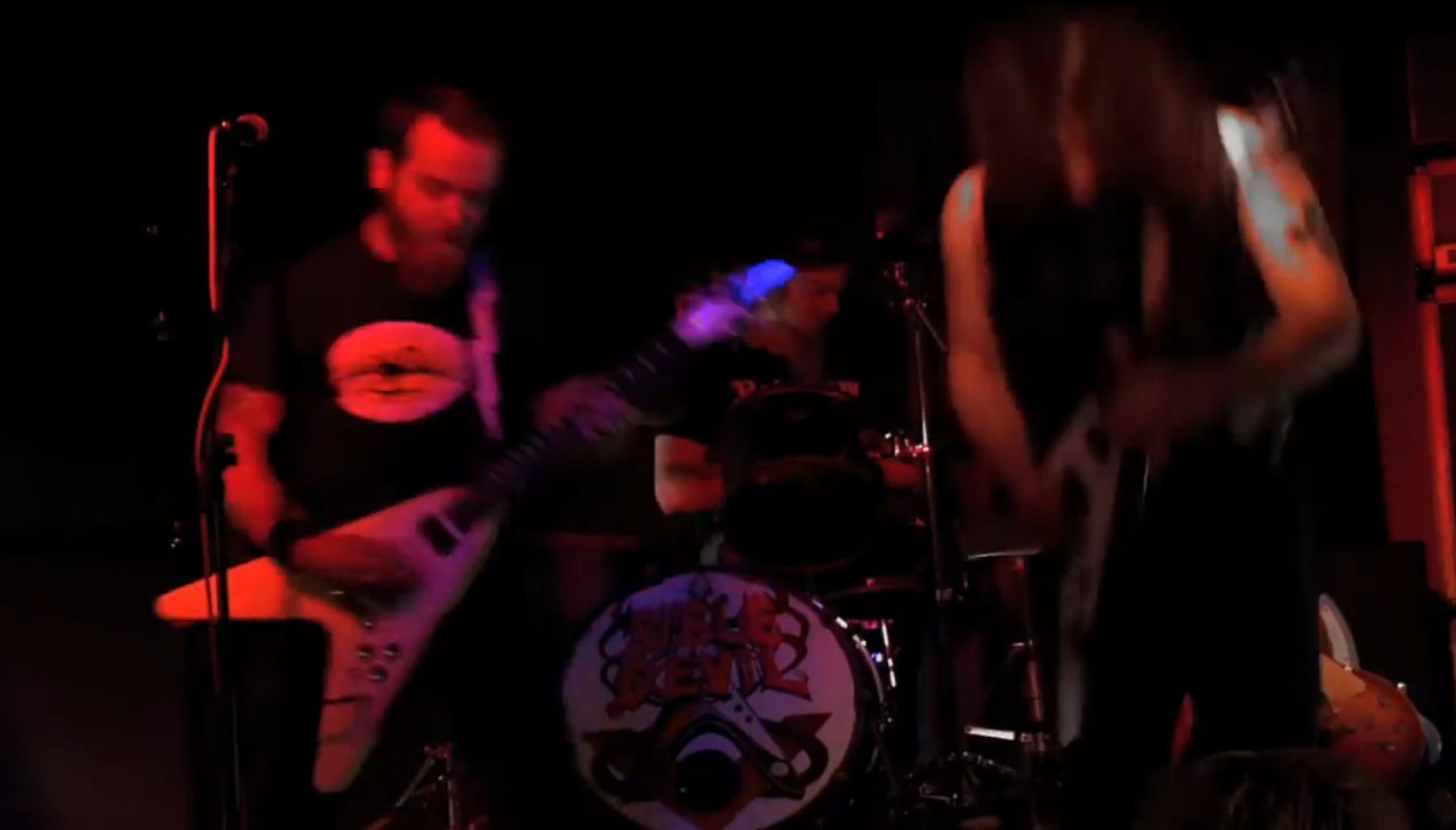
This creatively rip-roaring Midwestern heavy rock quartet’s sixth album would feel like a breakthrough if they hadn’t had to go to Italy to put it out. They rule in Thin Lizzy mode – blatantly in “Anytime,” subtly in “Yer Boy” (who’s “come back into town,” get it?) But Motörhead, ‘70s Kiss, and Chicago predecessors Urge Overkill are reference points too, plus there’s some noisy sax out of nowhere. The raw throats could afford less congestion, but given themes extracting heroism from mundane urban-male nightlife, down-to-earth vocals probably make sense – especially with high harmonies to help.
Bullet, Full Pull
Though these five jolly Swedes clearly love AC/DC, their most blatant rips here rank among the more generic cuts: Dag Hell Hofer is more Brian than Bon. He sounds heartier gargling gravel like Udo from Accept, and heartier still in the bullied-in-small-town escape squealer “Running Away” and amid sunrise solos and hoedown breaks in drive-all-night roadsters “Rolling Home” and “Rush Hour.” By the end – in the goofy-bouncing “Gutterview” as the city closes in, and with boogie-into-NWOBHM battle ballad “Warriors” – we’re somewhere betwixt Nazareth, Saxon and Cinderella. And beer is still flowing.
Children Of Bodom, Holiday At Lake Bodom: 15 Years Of Wasted Youth
Emphasizing 1999 to 2005, when Bodom’s kids first reached the highest rungs of their homebase Finland’s album and single charts, this comp shuffles 18 mostly interchangeable death-ogre tracks from seven albums, then tosses in a peg-legged Dropkick Murphys cover and a silly Rick Springfield one for kicks. The oldest cut (1997s “Deadnight Warrior”) has the coolest sound effects; the mostly amusingly titled one (1999’s “Silent Night, Bodom Night”) throws the most intriguing curveballs. Classical, jig, shred, and nu-metal moments aim to preclude tedium. Recent material often sounds rather screamo.
Christian Mistress, Possession
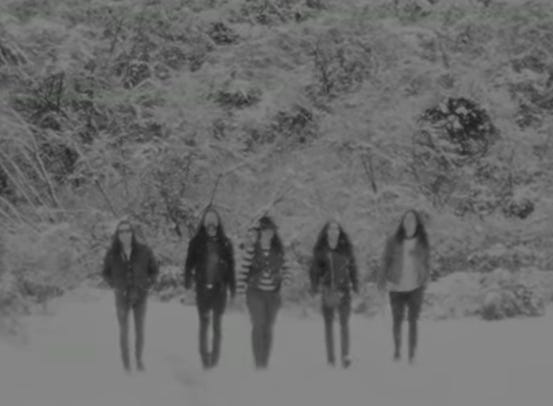
Though it’s far from slick, and you still miss plenty of words emanating from Christine Davis’s bewitchingly world-weary throat, this Olympia, Wash. trad-metal five-piece gets enough of a production budget on this nine-song followup to bring out sharp edges and tune sense obscured on their demo-like 2010 debut mini. Two soloing guitars careen from unicorn-folk intros to power marches, and Davis pits pentagrams against crucifixes then denies Heaven and Hell. Pinnacle: The title cut, for its ritual vowel-chant start, Ian Anderson phrasing, Girlschool chorus shouts, and hook about crystal balls.
Conan, Monnos
Stoner-doom thickened to ungodly proportions, and made disagreeably dank, by three young moptops (okay, maybe not) from Liverpool. The six songs mostly clod-hop at an absurdly slow pace, echoing through a Cretaceous cavern with guitar moss dripping off of a beard that hasn’t been washed for several months. Once in a while, seemingly, an amp shorts out, or wires crisscross, or somebody mows the backyard. “Golden Axe” is a white-noisy instrumental drone, ending pretty much where it starts. And there is something mechanistic about “Headless Hunter” – at least before it turns into a death march.
Corrosion Of Conformity, Corrosion Of Conformity
Back as a trio after seven years off, North Carolina’s old crossover punks don’t sound quite brawny enough to pull off the increasingly blues-based doom-metal they spend much of their 2012 album shooting for: They get decent grooves started, just don’t maintain them long. Partially that’s by design – tempos switch back and forth a lot, and their hardcore has ‘70s boogie body to it. Fast sputterer “Rat City” might work best, when all’s said and done. But the desert-themed instrumental, dead-soldier protest, and anti-sellout number that doubles as a late-Metallica parody are also kind of neat.
Coven, Worship New Gods
These Motor City heshers released their homemade cross between epic heavy doom metal and black-eyelined batcave goth to a few hundred turntable owners in 1987. When it got a proper label release a quarter century later, it still sounded weird: Midwestern kids moaning about Vikings, vampires, dead babies, Merlin’s elves, legends consulted for girl tips, and ruling the waaaaasteland (which Detroit sure is) on a shoestring budget. Plus Sabbath riffs, Celtic Frost grunts, gang yells, sound effects, vowels undulated like an Arabian goat-herd in the Anne Rice-inspired “Kiss Me With Blood”: A doozy!
Cradle Of Filth, The Manticore and Other Horrors
Caterwauling even by bag-of-cats standards of these Brit Halloweenies, the Filthy ones’ tenth album nonetheless has milliseconds that sort of stand out. Between dainty opening and closing funeral-parlor instrumentals, there’s “For Your Vulgar Delectation” (puke sounds and sex pants); “Pallid Reflection” (pop-punk jangle and some semblance of chorus hook plus fretting about a “bourgeois creature”); “Siding With Titans” (something about “rabbit’s flesh”); etc. Bonus titles are inspired by a French decadent poet and a Manchester theosophist; other tracks, apparently, by whips and chains and such.
Crystal Viper, Crimen Excepta
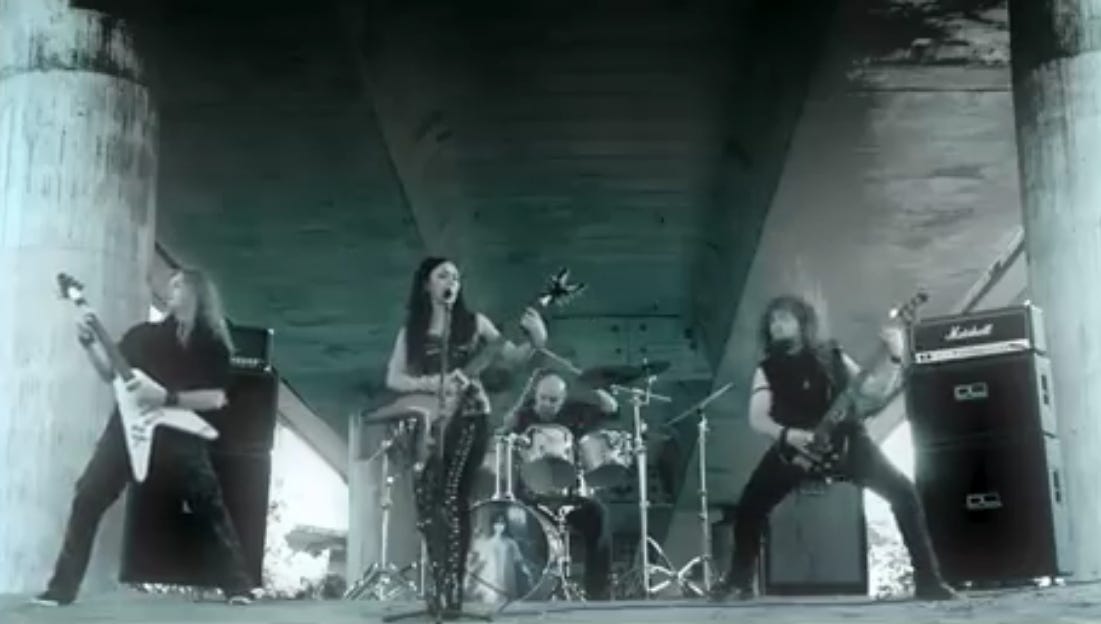
This uncordial Polish power-metal aims for an evil associated with more extreme subgenres. Frontwoman Marta Gabriel has piercingly powerful pipes and a penchant for declaimed operatics, but all the melody comes from the Lizzy-to-Maiden interplay of her and Andy Wave’s guitars. Those parts happen often, but as randomly as everything else; even galloping blitzkriegs like “It’s Your Omen” get lost in the clutter. The band also has a thing for fascist-rally gang yells and gimmicky intros (rattling chains, babies on fire.) But only the paganistic first and last tracks feel much like coherent songs.
Cynic, The Portal Tapes
Recorded by Cynic members under the guise of their side-project Portal circa 1994 — when Cynic’s ambitiously intricate Miami death-metal was self-destructing – release of The Portal Tapes 18 years later comes at the heels of the band’s 2011 Carbon-Based Anatomy, which sounds cut from the same cloth. Which is to say both albums are basically middle-of-the-road space-prog setting diaphanous female vocals to rhythmically static jazz-fusion delusions. No heavier than, say, Porcupine Tree, in other words – albeit with occasional echo explosions (“Endless Endeavors”) and fancy fretwork (“Cosmos.”)
Deceptor, Chains Of Delusion
Most distinctive thing about this ‘80s-style blue-jeaned Brit betwixt-trad-and-speedmetal trio’s 2012 EP is that two of six tracks are cute 20-second “transmissions” (their word) of electro-robot chatter. Which, along with the ginormous purple mechani-dinosaur on the cover, suggests a fascination with future scientific inventions. Little of which translates in the four actual songs, but they pack enough impatiently thrashed low-rent noodling and switcheroos to keep things charming — long galloping closer “Oblivion’s Call” might even sneak in a brief reference to Edgar Winter’s “Frankenstein.”
DragonForce, The Power Within
London’s noodle-metal nerds get a new singer on their fifth album, but their modus operandi remains: Theoretically fantastical, interminably double-kick-drummed song approximations as vehicles to carry gratuitous video-game-joysticked guitar wank. “Wings Of Liberty” advances from Queen balladry toward Maiden declamation; “Last Man Stands” is apocalypse-predicting ‘80s-style Euro-schmaltz. And when the bombast turns Celtic-jiggy in parts of “Cry Thunder” and goes on Viking attack in “Die By The Sword” — which may have some “Puff The Magic Dragon” in the middle – rhythm and tune pick up a bit.
Eluveitie, Helvetios
One of the most blatant European folk-metal hybrids to chart in the U.S., Helvetios is one long album: 17 tracks, including a spoken prologue and epilogue about life, death, and art. It is also very schizophrenic, its personality split precipitously between competently grunted melodic death metal and Celtic jousting jigs that let in tin whistles, mandolins, hurdy-gurdys, and bagpipes. In “The Havoc,” the reeling turns fast and jolly; more often, it’s rather morose. “A Rose For Epona” and “Alesia” veer closer to Within Temptation-type goth-diva unicorn-metal. Renaissance Faire, meet thy future.
Ensiferum, Unsung Heroes
These persistent if not sonically distinctive folk-metal Finns sure get around: The guitarist/vocalist doubles on dulcimer and bouzouki; the lady organist/pianist is also credited with “cooking”; and album notes list more than a dozen outside helper-outers, on everything from “nyckelharpa” to “flirtatious screams, wobbly & farts.” The music’s not as funny. But from sad biergarten croon-alongs to swashbuckling swordfight odes to damsel-in-distress goth ballads, from the almost countrified “Burning Leaves” to a Henry Rollins/Andrew W.K.-type pep talk in the long closing track, Ensiferum get by.
The Fucking Wrath, Valley Of The Serpent’s Soul
These Southern Californians don’t have much room for finesse where their barrel-chested bellowing and barking are concerned – think Lemmy having a bad throat day, or Henry Rollins recruiting for the WWE. Yet on their third album, the Wrath consistently deliver the pile-driving pleasure of an imaginative heavy rock unit expert in multiple modes of metal, from rampaging war-march to hardcore forward-charge to wobbling grind-plod to astronomical blast-offs (see: “Grandelusion.”) Stretching out while shifting tempos and gears, they keep the structures intriguing. Their brains match their brawn.
God Forbid, Equilibrium
This Jersey unit’s sixth album is, in most ways, typically stagger-stepped good-cop/bad-cop metalcore-tantrum fare – They’re fighting for survival in an overwhelming world, don’cha know! What sets it apart somewhat are the two guitars, which show surprising melody and dynamics, sometimes bordering on psychedelic (“Scraping The Walls”), sometimes punkishly straightforward (the backstabbed rant “Overcome”), sometimes daintily pretty (openings of the title cut and “Awakening”.) “A Few Good Men” even tails off into nifty helicopter sounds. And “Move On” is darn near expansive, as such stuff goes.
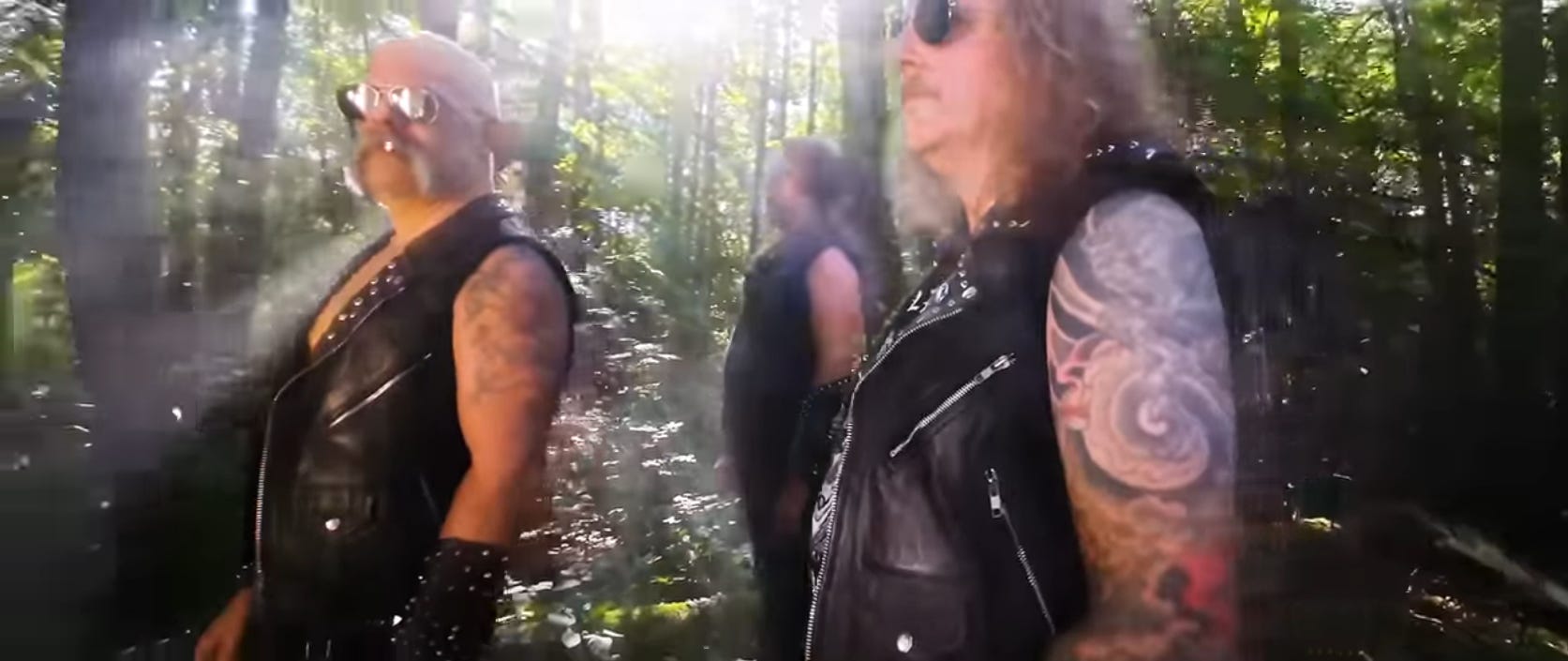
Grand Magus, The Hunt
They’re still fond of Scandinavian folk music’s minor keys – most obviously in the cascading, two-part, seven-minute “Son Of The Last Breath” – but slotting this burly Stockholm power trio as doom-metal no longer rings true. Their songs are faster and easier to tell apart than before, and there’s plenty of Norse mythology: Valhalla, Valkyries, Thor. In fact, the entire album charts some kind of bloody snow-slaughter battle beneath the moon, complete with wolves and maybe a Yeti. Vengeance is theirs – but more importantly, so are majestic choruses, thunderous hooks, and lightning-riding riffs.
Hellwell, Beyond The Boundadies Of Sin
Like the loudest mid ‘70s work of fellow Midwestern prairie-prog dogs Kansas, Styx and Head East, this power-trio spinoff of ageless Wichita, Kansas obscurities Manilla Road draws appreciably on classic organ-based Brits Uriah Heep and Deep Purple. Only, Hellwell push it through power and doom metal, and make the songs about murderous 1893 Chicago mad scientists, Satanic Kansas families and Vikings battling bear-skinned barbarian cannibals. All regally addressed – until at last, in 13-minute climax “End Of Days,” avant-garde synth weirdness marches to the earth’s highest peak of keyboard pomp.
High On Fire, De Vermis Mysteriis
Ostensibly a concept album about Jesus’s stillborn but now quantum-leaping twin brother (not that you’d ever figure that out by listening of course), De Vermis Mysteriis marks a respectably ferocious sixth installment for Oakland’s now-venerable post-sludge/post-thrash institution. There’s a musicianly instrumental that breaks levees; a musket-firing war-march closer; some big-boned, bog-drowned late-Motörhead roaring. And maybe the two strongest constructions – seven-minute lunchbucket lurcher “Madness Of An Architect” and wild-dog stomp “Romulus And Remus” – open with buzzing white noise.
Ignitor, Year Of The Metal Tiger
Now led by shrieking James McMaster – whose resumé includes both sleaze-rock in Dangerous Toys and prog-thrash in Watchtower – this Texas power-metal bunch opens with chutzpah and cheese: Namely, “Heavy Metal Holocaust,” a battle between Ozzy and Satan revolving around references to the former’s songs and a wager about whether metal will never die. That bet won, they pummel through twin Maiden leads, Priest lung-busting and the occasional Sabbath-derived groove, speeding up at times and being inadvertently funny other times (“Smoke is rising! It rises to the sky!”), but not grabbing hold much.
Iron Fire, Voyage Of The Damned
These Danes are all over the map when it comes to vocals: Martin Steene’s Geoff Tate-style emotive high-register prog-metal-croon default mode is countered with thrash grunting, Eurotrashed goth-industrial gutturals, and even a seeming mock-pompous tone reminiscent of Jack Black in Tenacious D. On this apparent sci-fi concept album about aliens lost in “digital darkness,” rousing moments of muscular majesty (“Leviathan,” “Ten Years In Space”), mysterious Tiamat-type symphonics (in the 10-minute title cut say), and overall oddball ambition nearly justify the endurance-test long-windedness.
Jorn, Bring Heavy Rock to the Land
“We’re on a mission for the rock,” the Norwegian journeyman bellows in the title song, incongruously fronting his ponderous prog-metal with a bloated blooze-codger baritone and beating Tenacious D at their own game without trying. He does a Scorpions-style cover of Christopher Cross’s “Ride Like The Wind,” too, and a number called “I Came To Rock,” in case you wondered. The cannonball speed-chug opening a few songs comes and goes at whim, as does the bottom end. But Jorn sounds heartfelt enough – Even ends “Black Morning” referencing Sam and Dave, and opens “A Thousand Cuts” sharpening knives.
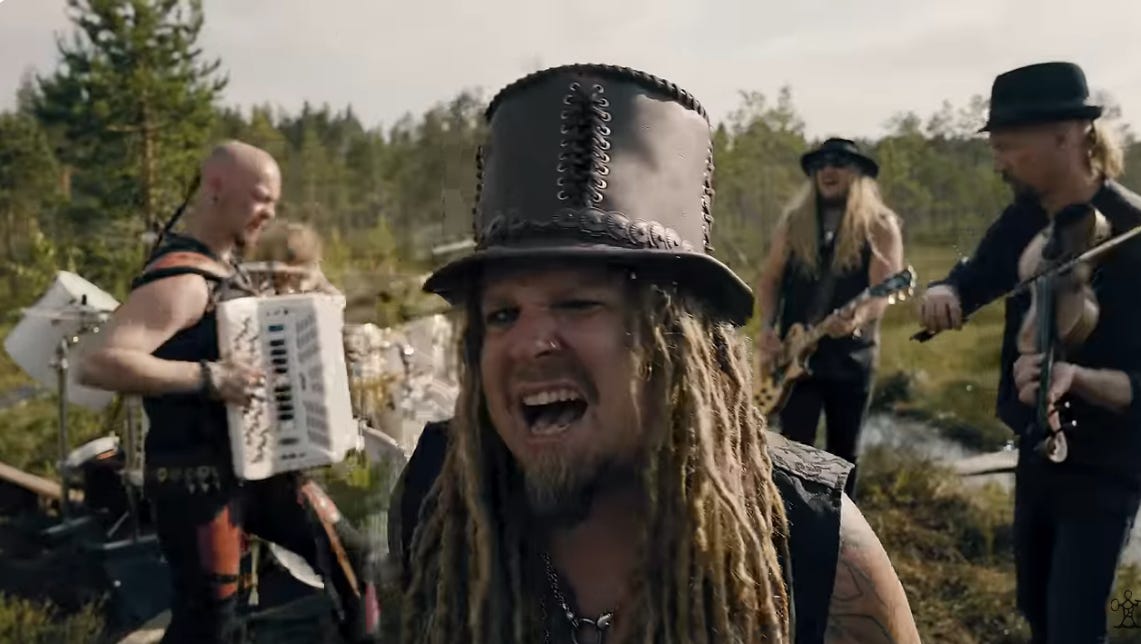
Korpiklaani, Manala
Maybe the least party-hearty album these Finnish forest fauna have made, Manala opens with two songs about the subarctic “underworld” (in Disc Two’s English translations anyway), and minor-key mourners like “Dismal” and “Dolorous” earn their downtrodden titles. Some of the faster foxtrots throw enough ‘bows for a Dropkick Murphys moshpit. “Soil Of The Corpse” ends with Native American-like chanting, and “The Steel” rolls out the polka barrel, but mostly Korpiklaani sound like Gogol Bordello nowadays – and prove even mead-and-mythology-marinated humppa-metal hobbits get hangovers now and then.
Lamb of God, Resolution
Too brutal for thrash, too comprehensible for death-metal, too purist to resort to screamo or rapcore choruses, Virginia’s Lamb of God are just commercial enough to have scored three consecutive Billboard Top 10 albums. On Resolution, their seventh full-length overall, the fivesome lurches into cruel claustrophobia again and again as Randy Blythe hectors angrily at enemies lying, dying, or both: “The walking dead! Living a lie!,” say, in the mosh-pit tantrum “Cheated.” Occasionally – with the foggy instrumental “Barbarosa,” boogie-bottomed “To the End,” and intermittently gothic “King Me” – they branch out slightly. But mostly, Lamb Of God stick to conservative values that metalheads can respect and everyone else can continue to ignore. (Rolling Stone)
Loinclöth, Iron Balls Of Steel
This amusingly titled metal album is the work of three guys from Richmond, Virginia and Raleigh, North Carolina, but has no amusing lyrics to match – in fact, there are no lyrics at all. Several of Loincloth’s 16 instrumentals are over well before they hit the two-minute mark, and only a couple (“Angel Bait,” “Clostfroth”) slip briefly into shoegaze atmosphere. Individual tracks never quite function as discreet units, either. But the sonic architecture certainly stays brawny – marked by grimy guitars, hard-hitting drums, and math-doom rhythms that occasionally hint at harmolodic jazz fusion.
Loudness, Eve To Dawn
The zillionth-or-so album by Japan’s eternal metal institution starts out a mess – clamorous but not at all songful, with way too much aimless cat-bird vocal screech and wank-attack guitar flash. But with the proggish synth-loop intro and gargoyle grunting of “Keep You Burning,” things improve a bit. “Gonna Do It My Way” is dumb stomping fun, with Chuck Berry riffing in the middle and “rock ‘til you drop” pledges swiped from early Def Leppard. And for the last four songs, the rhythm opens up, swinging alternately like “Welcome To The Jungle,” early ‘90s funk-metal, disco, even harmolodic jazz.
Mekong Delta, Intersections
Given their earlier output’s elusiveness, there’s a public service in these German thrash weirdos re-recording a career-spanning selection of old material with their current lineup: Only bassist Ralph Hubert remaining since 1985; other four all new since 2008. For masses who’ve ignored Mekong until now, this serves as a fascinatingly playable de-facto best-of: art-rock structures given speed-metal velocity under power-prog operatics. “Sphere Eclipse” hits like some ingenious higher-math bricolage of Voivod, ‘70s Scorpions, Van Der Graaf Generator, Magma, and Amon Duul II. The songs stick, too.
Meshuggah, Koloss
Decades on, Sweden’s amelodic maestros of extreme graph-paper metal are still obsessed with getting convoluted in a claustrophobic room. Most calculus equations are barely discernible to untrained ears, but it’s instructive that this set starts with its most difficult track: The cold, staccato, defiantly unchanging “I Am Colossus.” From there, though, a window lets in some light, and guitars spurt in the crevices. “Marrow”’s bone-cavity textures beget “Break Those Bones Whose Sinews Gave It Motion”’s vertebrae-cracking beget “Swarm”’s raging beehive. By coda “The Last Vigil,” calm has set in.
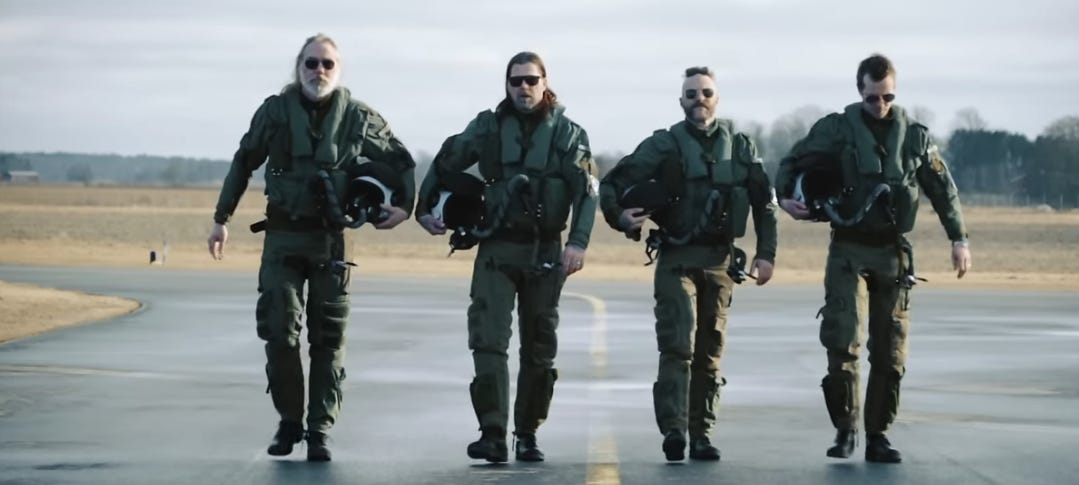
Mustasch, Sounds Like Hell, Feels Like Heaven
Exuberant, good-natured, absurdly catchy, addicted to cowbell, and clearly sons of Scorpions from “Rock You Like A Hurricane” riffs in the possibly parental “Morning Star” to “Wind Of Change” allusion in the seemingly divorced “I Don’t Hate You,” these Swedes are also very funny, and who knows if it’s on purpose? “Here in my garden all the flowers are dead/I am a killer!” “My pain is indescribable/Poor old me!” “Calm down you’re way too loud…Your father he must be so proud!” Also, they sound like their idea of a great glam band is D.A.D. And their “Speed Metal” song isn’t even all that fast!
Napalm Death, Utilitarian
Closer to death-metal in 2012 than to the grindcore they invented, Napalm Death avoid split-second snippets entirely nowadays: These screeds all land between two and four minutes. Occasionally, the gratuitous wall of ugliness gets a brief rest – eerie, crusty, gloomy spans like opener “Circumspect” and the midsection of “Fall On Their Swords,” say. Elsewhere, there are some noises midway between munching and marching, a guitar squeal or two that suggest free-jazz sax, a possible Einstein reference, and – in the chorus of “Think Tank Trials” – what sounds like an ogre growling “Tic! Tac! Toe!”
Nightwish, Imaginaerum
Even before the penultimate “Song Of Myself” – 13 minutes of opera arias and recitations by actors of many ages and genders – the seventh album by Finnish fairly-tale metal troupe Nightwish seems to go on forever. Not necessarily in a bad way, though – at least if you like music boxes, gypsy dance interludes, goth-pop panpipes, Dead Or Alive hooks, Van Halen licks, piano torch jazz, old Disney soundtrack schlock, and Carl Orff. Not to mention whimsical and/or scary bedtime stories about cobwebs, dragonflies, mermaids, spider tentacles, and a naked old man who smooches mannequins in his attic.
Orange Goblin, A Eulogy For The Damned
These Brit stoners have evolved toward biker-metal: Songs like “The Filthy & The Few” (awesome line: “you’re on the dole and we’re on the lam, free to ride and don’t give a damn”) and the 16th-note drum-funked “Return To Mars” could pass for a less catchy, even homelier Motörhead. They boogie down elsewhere, too – “Save Me From Myself” crosses Sabbath with Skynyrd. And it’s cool how you can’t tell whether Ben Ward has hit the “bottom” or “bottle” “too many times.” But he should really step aside and give his band room more, as in the title cut, which breaks up its clod-hop with some “Kashmir.”
Pagan Altar, The Time Lord
Crazy: A totally occult Brit doom metal band (complete with a “Black Mass” ) who sound like they got the idea from that live Black Oak Arkansas LP with the backwards Satanic masking! Alan Jones even drawls like Jim “Dandy” Mangrum, like he’s got Skoal between his cheek and gums. The title cut starts out gurgling like 13th Floor Elevators, then turns into an eight-minute space-motorcycle ride: Hawkwind evolving into Motörhead. Five songs in 32 minutes, recorded in 1978 but left to rot in a root cellar for several decades. Even the big fat Sabbath riffage has a funky Southern boogie throb to it.
Paradise Lost, Tragic Idol
Mature, melodramatic, full of tasteful guitar leads, and straightforward to an almost stodgy degree, the British dark-metal progenitors’ 13th studio set forgoes their past synth-goth damage for a more trad aesthetic – Deliberate and dank, explicitly celebrating “death and remorse,” but not in a hellish way. “Theories From Another World,” for instance, feels fairly conventional despite its tentatively monkish midsection. Especially given Nick Holmes’s Hetfield-humorless grunting, the overall effect can come off a bit dull – But the album is song-conscious enough that it could well be a grower.
Pelican, Ataraxia/Taraxis
A year and a decade after Chicago’s mum-mouthed metalgazers debuted with a four-song EP, they make another one – The main differences being that (1) there are no super long compositions this time out and (2) in 2001, new age post-rock metal seemed a potentially fresh take on the old loudness, whereas by 2012, let’s just say it had been done a few times. Ataraxia/Taraxis starts chimey, spacey, fugey, and foghorny, then gets marginally heavier as it goes. Titles address freedom from worry, living life inconspicuously, eye inflammation, and one “Parasite Colony” – and perhaps the sounds do, too.
Pharaoh, Bury The Light
Given their regal melodies, operatic emoting, and aptitude for sneaking prog-pomp prettiness in through the castle’s back door, you’d never guess this power-metal foursome rarely play live or that they hail from Philly, much less that two of them used to be music critics. All true – and this is one textbook-epic platter of pillage, as consistent as any album by, say, Fates Warning or Metal Church. Excellent forward charge as well, but there’s also an ice-cold lullaby hitched on Who-like chords: “The Year of the Blizzard,” though if you mis-read it as “The Year of the Buzzard,” that works too.
Pig Destroyer, Book Burner
These Virginians’ fifth full-length is your typical bone-rattling gore grossout – supposedly “extreme” even for grindcore, but once the torture passes a certain headache threshold, comparisons are academic. The 19 mostly microscopic tracks are obnoxiously unstraightforward, spiked with violent movie snippets and broken glass, but nothing’s as audacious as 2004’s 37-minute experimental barrage “Natasha.” Riffs (“The Diplomat, “Iron Drunk”) occasionally sneak out, though. “Kamikaze Heart” is even kind of prog, and “Permanent Funeral” ends things with an atypical four minutes of disjointed doom.
Prong, Carved Into Stone
A quarter-century after helping invent industrial metal, Prong still manage to sound like both an art project and punk thugs at the same time. Though what they really sound like is trash-compacted Killing Joke, echoing to an almost ambient extent, but with Tommy Victor’s slogan-spouting New Yawk tuff-guy diction suggesting a more palatable if perimetered answer to Anthrax. It goes down surprisingly easy, with occasional “Children Of The Grave” chug parts (title track) but only one major departure: “List Of Grievances,” a straight mosh seemingly aimed at naively protesting hardcore complainers.
Robot Lords Of Tokyo, Virtue & Vice
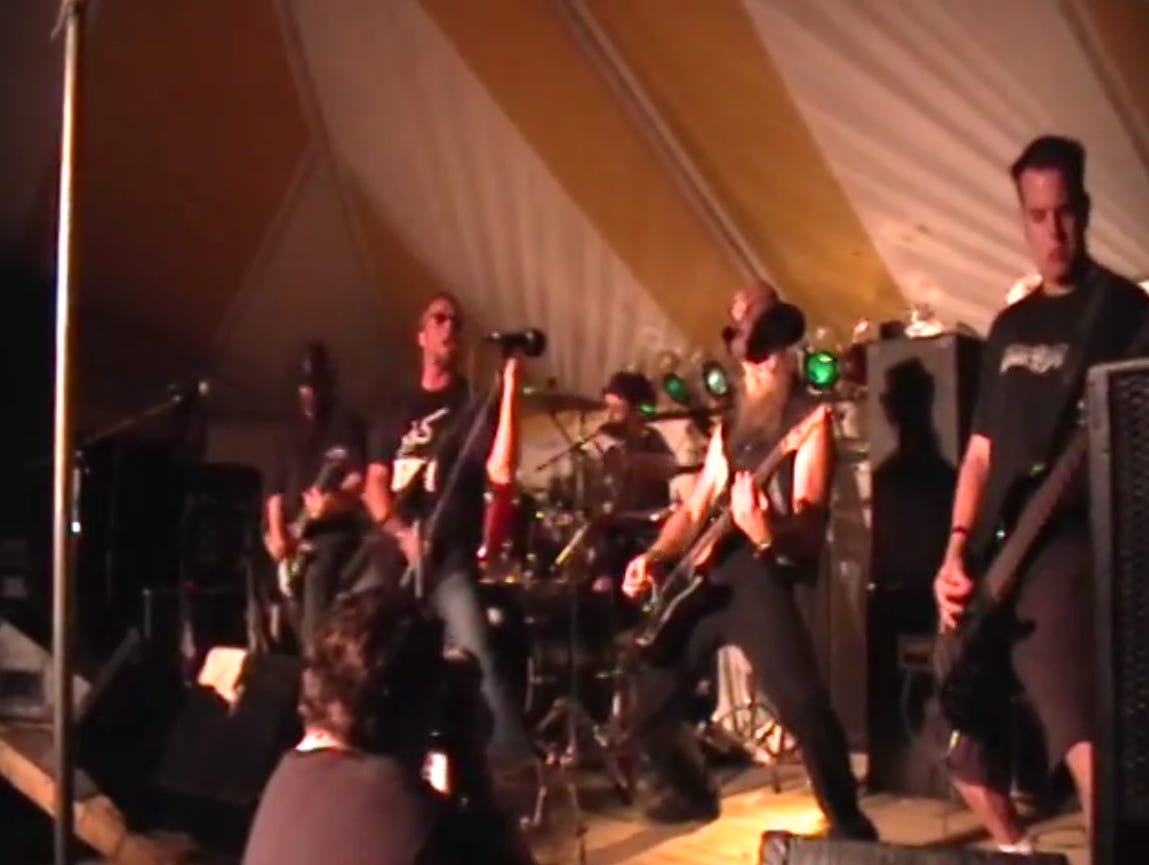
As allegedly grooving Down/COC/Brand New Sin-style sludgers go, this Columbus, Ohio trio-plus-pals stand out for both the gunky chunkiness of Brad Stemple’s axe tone and the coherence of Paul Jones’s macho low-fiber-diet croaking. Rick Ritzler’s drums aren’t exactly funky or propulsive, but he keeps a muslebound beat. They let oxygen in, too, when their doom heads skyward and when backup harmonies turn King’s X frilly. They stay too close to grunge. But “Keepers Of The Night” is quality fake Sabbath, “Chicken Little” swipes a hot Zep riff, and man-handling Cinderella’s “Night Songs” took guts.
Running Wild, Shadowmaker
These once-bloodthirsty Germans – or the two guys plus apparent drum machine now using their name – are winding down their third decade offering up some super-obvious and rather tuckered-out Geritol-metal: Judas Priest Lite, mostly, though opener “A Piece Of The Action” dances closer to ‘80s Billy Idol. That said, there are happy accidents: The bagpipey Big Country guitars and Vatican/maritime punning (“beat of the Holy See is pounding in our hearts”) in “Sailing Fire,” for instance, and the ambivalently crunching AOR anthem “Me & The Boys” (“rock you somehow!,” “rock’n’roll is now a choice!”)
Sabaton, Carolus Rex
Even for power-metal military history buffs, basing your classic lineup’s final album on your 18th Century Swedish countryman King Charles XII is an imposing task. They largely buckle under the concept’s weight, despite sundry operatic, symphonic, Celtic and cathedral-organ interludes, plus gang shouts, martial beats and choral interplay suitable for clanking of beer mugs. Only when they step out of the plot in the modern-day soldier’s complaint “In The Army Now” do they give us a hook straightforward enough to stick. And then, on Disc Two, they tell Charles’s tale all over again – in Swedish.
Saint Vitus, Lillie F-65
Recording with howl-god Wino Weinrich again after decades, California’s prototype doomsters examine the luded-out life: Most literally in “Dependence,” about waking up sick and injured, and the subsequent instrumental coda “Withdrawal,” one of many passages where Dave Chandler’s mildew-toned guitar soloing enters a delirious white-noise realm. Add an opening kvetch aimed at an unnamed “them,” the more serene instrumental “Vertigo,” and two toxic foretellings of environmental dystopia, and you’ve got a wobbling downer of an album worthy of the vintage pharmaceutical depressant it’s named after.
Shattered Destiny, Fragments
Between their lady bassist and (since departed) drummer from Fates Warning and thin-voiced singer who could pass for a moonlighting pop-punk, this is not your typical U.K. prog-thrash band. Sometimes that’s good; sometimes not. Keyboardist JJ’s vocals turn intriguingly goth when they get nasal, but he’s more inclined to bark with forced James Hetfield intensity; the guitars can moon gloomily or shred fancily or opt for weird Piggy-of-Voivod squeaks, and “Oblivion” sounds both triumphant and complex, as power ballads go. But more than these four songs in 24 minutes might be difficult to take.
Sledge Leather, Imagine Me Alive
California metal vets Sandy Sledge and Leone Leather’s latest project might be daunting to re-create live. Maybe half of the tracks are mere interludes, under two minutes each: Spanish guitar solo, 28-second kick-drum attack, scary noises atop an off-kilter keyboard. Actual songs “A Taste Of Night” and “One Glimpse” subject their respective Wiccan cackling and Doro/Vixen schmaltz to almost dubbish studio reverb; other numbers mix gonging bells and broken glass into abrasive guitar wank. There’s also a very short, gentle ballad, climaxing in a spoken German seduction scene and Oktoberfest date.
Steelwing, Zone Of Alienation
Sweden’s Steelwing, as their name implies, aim to soar the friendly skies via clanging appendages, and they do pretty well, acknowledging two alternate energy sources in “Solar Wind Riders” no less. Their bag of tricks ranges from retro-futuristic electro-prog buzzing (“2097 A.D.”) to ’80-dance-craze-inspired squeal-chugging (“The Running Man”) to catchy old-school AOR sexism about gals in heels and leather (“Breathless”) to uncooked over-the-top proto-thrash (“Tokkotai [Wind Of Fury],” “Hit ‘Em Hard”) — Power-metal-platitudinous, sure, but in an exuberant and endearingly anachronistic way.
The Sword, Apocryphon
Neither as stoner nor hipster as they get pigeonholed as, Austin’s the Sword acknowledge metal’s Sabbath and Thin Lizzy beginnings without sounding remotely retro. On their fourth album, a new drummer adds plenty of rock, skate, roll and bounce to the meaty riff duels; J.D. Cronise’s multiplied singing can come off distanced, but lets up lines you’ll remember in almost every song. Pick hits: Goddess epic “Cloak Of Feathers”; matched dystopian-ecology eulogies “The Hidden Masters” (dirge) and “Dying Earth” (banger); staccato alien invasion “Execrator”; analog electro-blipped coda “Apocryphon.”
Testament, Dark Roots Of Earth
Still basically Metallica Junior after a quarter century, and with their ‘80s lineup mostly intact, Chuck Billy and his Bay Area buds spend their tenth album grunting defensively about war and backs against the wall. There’s lots of call and response – opener “Rise Up” has a “when I say this, you say that ” crowd-participation cheer. “A Day In The Death” has a Bill of Rights verse; “True American Hate” is a national anthem. And except the sunless dirge “Cold Embrace,” it’s all pretty fast. Toward the end, they somehow manage more groove covering Maiden than Queen’s once-funky “Dragon Attack.”
3 Inches Of Blood, Long Live Heavy Metal
Though they haven’t abandoned metalcore croaks entirely, this screech-addicted Vancouver bunch are increasingly committed to metal in its power-chunky pre-thrash Helloween/Accept form. They get wholesomely demonic, slay dragons, run with pirates and a feisty “Metal Woman.” Dual guitar harmonies (in the rustic instrumental “Chief and the Blade” say) make up for occasional DragonForce shapelessness, and over-the-top chargers like potential Canucks penalty-box theme “Leave it on the Ice” race full speed ahead. “Storming Juno” might even get them the Canadian Grammy equivalent its name portends.
Thunderkraft, Totentanz
These industrial folk-metal Ukranians manage to employ synths in ways that bolster their music’s organic heavy rock thrust. Both their rhythms and melodies feel unmistakably Slavic, and weirdness and surprises emerge naturally: melancholy blues-rock guitar, back-to-the-land flute and keyboards (played by sole lady member Anna Merkulova), electro-piston and music-box effects, radio interceptions, Neu Deutsche Welle-like intonations, dialogues between elves at wit’s end. The metal takes all sorts of intriguing twists and turns, often gothic and proggish ones. But it never loses its hearty thump.
Torche, Harmonicraft
These metalzine-beloved Floridians keep things concise, especially at the start – Not until the fourth track do they break three minutes; not until the last one do they break four. But despite three under two-minute songs, they’re too sluggish for hardcore. So people call them “stoner” or “doom,” though they’re rarely heavy enough. Really they’re grunge: vocally muffled, even introverted, and somehow vague and droopy yet poppish and upbeat. They improve when the melodies turn kind of Celtic (“Reverse Inverted” and “Snakes Are Charmed”), and when the singing stops (“Roaming” and the title cut).
Tygers Of Pan Tang, Ambush
It’s heartwarming to find these blue-collared ‘80s NWOBHM also-rans still around, at least in name, in 2012. What’s more, they still make totally workmanlike bangers-and-mash heavy rock: four-square, sometimes fast (“Play To Win,” “Speed”), always salt-of-the-earth. By mid-album, they’re throwing in twists: calling some hell-raising “Man On Fire” “the original destiny’s child”; quoting “Stop Draggin’ My Heart Around” in “Burning Desire”; getting talkbox-funky about a dancing queen in “Hey Suzi”; slipping some “Whole Lotta Love” psych-dub into “Mr. Indispensable.” Hard not to smile at all that.
Ulver, Childhood’s End
Compared to say, the Ramones’ 1993 Acid Eaters or Rush’s 2004 Feedback, these black-metal-turned-ambient-experimental Norwegians’ paisley-underground excavation is both obscure and twee: Despite Byrds and Jefferson Airplane covers, there’s only one legit hit (via the Electric Prunes), and several from bands familiar only to collectors. The concept is ‘60s psych in its most callow and naïve guise, with as much merry-go-round swirl, madrigal harmony, and minor-key dreaminess as proto-metal fuzz: The Troggs and 13th Floor Elevators nuggets chug heartily, but Ulver are mods at heart, not rockers.
Unisonic, Unisonic
This German metal supergroup – featuring alumni of Helloween, Gamma Ray, Krokus and Asia – play pumped-up-harmony pomp that’s more endearing for being shamelessly ‘80s- anachronistic, even if no tune’s quite indelible enough to have hit back then. Still, from torch ballads to top-gun anthems, they steal from excellent places: rappy Billy Squier rhythm in the opening theme song “Unisonic”; “Eye Of The Tiger” electro-pulse in “I’ve Tried”; Def Lep Hysteria intros in both “Star Rider” and “Renegade”; blatant A Flock Of Seagulls “I Ran” chorus hook in “My Sanctuary.” And they also dig outer space!
Venomous Maximus, Beg Upon The Light
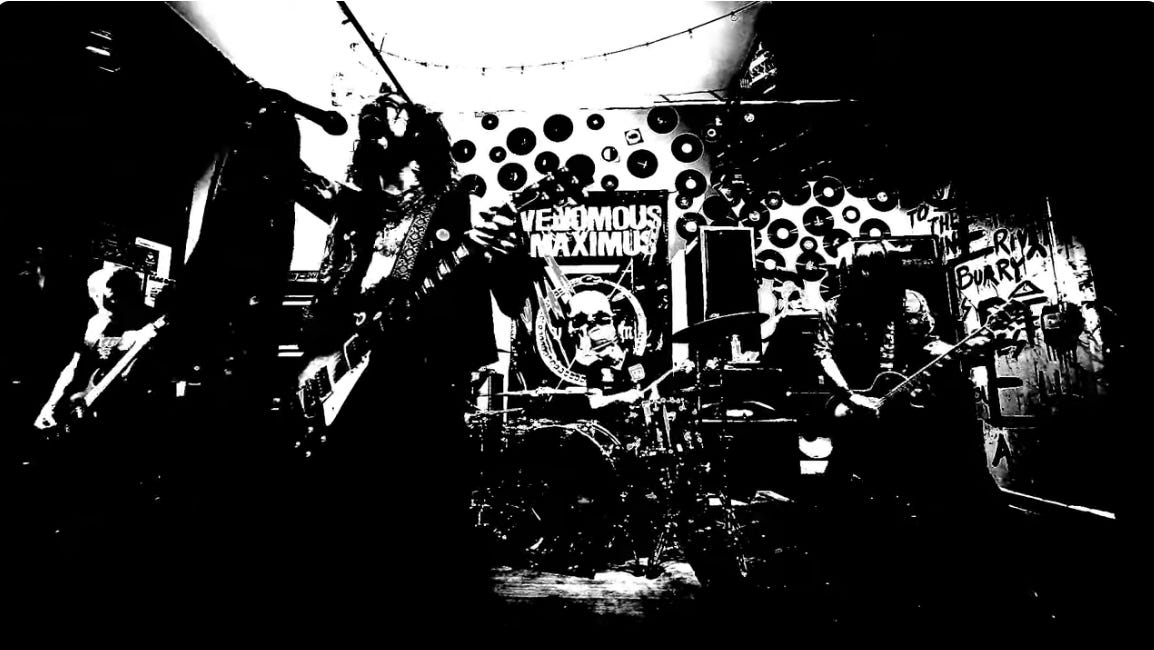
After opening with a foreboding minute-and-a-half of new age pipe-organ minimalism, this Houston foursome goes the super-thick occult doom route on its debut full-length. The trudge-riffs manage a surprising bounce, and given the knee-deep guitar grime, Gregg Higgins’s often-spoken (and once chuckled) words of unholy wisdom are unusually audible. Subject matter is of the maybe-tongue-in-cheek witch-and-blood-ritual stripe, with Danzig an obvious reference point. But war-metal and Celtic Frost nuke-goth are in the mix, too – and even, in “Mothers Milk,” what sounds like mournful Hungarian folk.
Warbringer, Worlds Torn Asunder
This Cali neo-thrash quintet finds some tasty dynamics amid the machine-gunned playing, exclamation-pointed yelling, and gallows humor of their third album – the opening of “Wake Up…Destroy” swings from the drums on up, and then “Future Ages Gone” zooms in real fuzzy-wuzzy-like. But even if they’re now shooting for social protest about Soviet gulags and out-of-control technology, Warbringer still haven’t quite figured out where to take their high velocity, once it starts charging. Worth noting: The most compelling thing here, “Behind The Veils Of Night,” is a rather dainty gothic instrumental.
Woods Of Ypres, Woods 5: Grey Skies and Electric Light
Recording four months before he was killed in an Ontario car crash, singer/guitarist/drummer David Gold clearly had mortality on his mind. He philosophizes about death in nearly every song here: “I only had one life to live,” “shouldn’t worship the dead,” on and on. He and guitarist/bassist/pianist Joel Violette shape forlorn, rainsoaked Joy Division-via-Sisters Of Mercy funeral-metal to match — chiming transcendently in “Traveling Alone” and the black-humored “Career Suicide (Is Not Real Suicide),” slogging through an aptly eternal 1l-minute abyss in “Kiss My Ashes (Goodbye)”: Dust to dust.
rhapsody.com
No posts
Comments
Nothing yet. Say the first thing.
Sign in to join the conversation.