
Publisher’s note: Good morning and welcome to Earlywood, a weekly excerpt from the thousands of pieces I’ve worked on since 1996. Sometimes, it’s from a magazine article. Or a blog post. Or (in this case) “The Anarchist’s Design Book,” which you can download for free here. Many of these entries have been updated with modern context or a new perspective. Enjoy!
If you want to make historical furniture reproductions or pieces that are inspired by vintage work, you must devote yourself to studying old work – in person, up close and without prejudice.
But if you want to make things that are new or modern, you instead must devote yourself to studying old work – in person, up close and without prejudice. Otherwise, how will you know what it is you are rebelling against or rejecting?
In other words, no matter what sort of furniture maker you are, understanding the furniture record will make you a better one. Otherwise you might end up like some members of the Bauhaus, for example, who rejected historical work and set out to reinvent architecture, furniture and other crafts from first principles. As a result, they made a lot of unnecessary and time-consuming mistakes to create a new world. (See armchair F 51 designed for the director’s room of the Bauhaus.)
As I see it, every generation of makers has goals that fall upon these three lines:
1. Exalt old work to revive principles that have been forgotten by our degenerate society.
2. Create new work that rejects the principles of our degenerate society.
3. Make birdhouses.
All three are completely valid ways of approaching the craft. Only No. 3 allows you to skip the furniture record and create something useful with minimal effort.
As I write this, I am surrounded by hundreds of books filled with thousands of pieces of furniture that I’ll never build. Many of those pieces are somewhat ugly or, at the least, too ornate for my taste. Yet I am thrilled to study every line and curve of every William & Mary, Georgian or Seymour piece that I can lay my hands on.
Some of these pieces are brilliant because of their technicality. Their talented makers found clever ways of making extremely complex pieces in a shockingly simple way. (If you have studied furniture bandings, then you know what I mean.)
Other pieces are notable because of the sheer patience and focus of the maker (see French marquetry).
Still other pieces are forms that are perfectly proportioned in silhouette.
In my personal work, I seek to combine all three of those properties (though I rarely succeed). And the only way I can try to reach that goal is to study old work. So every day I open an old book, go to a museum in a strange city (thank you, crazy teaching schedule) or plumb the Internet.
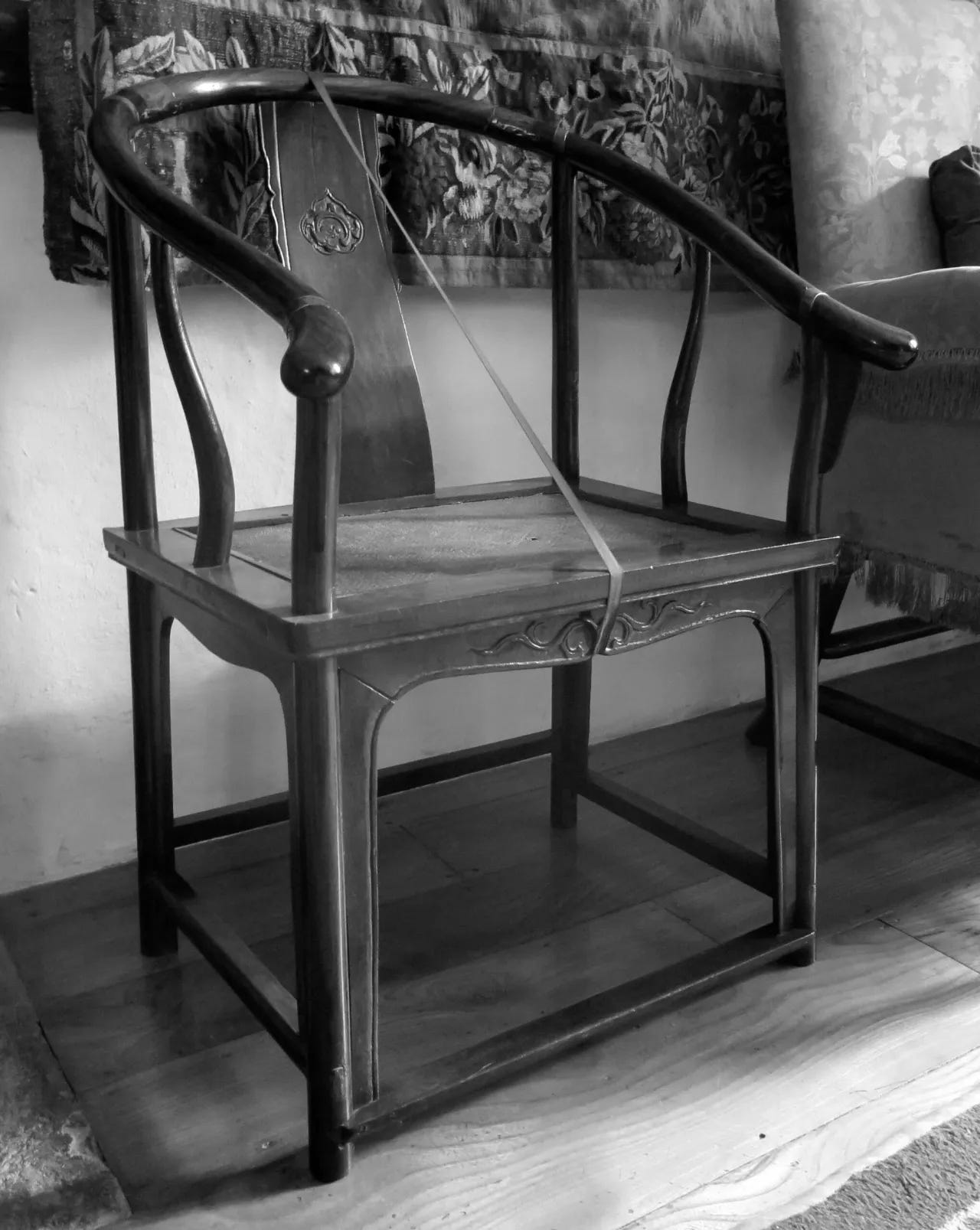
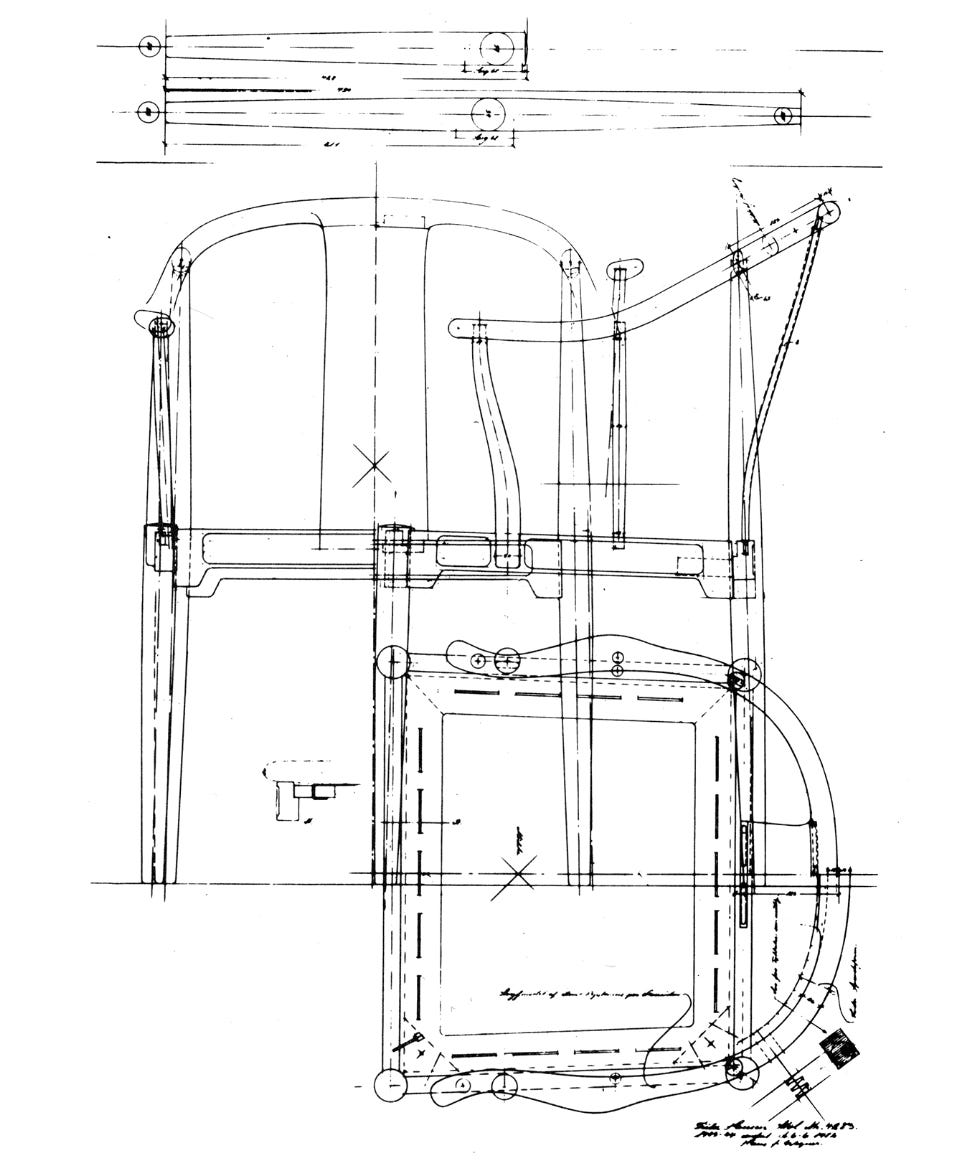
Example: In a manor house in Cornwall there’s a beautiful Chinese chair. Why is it there, surrounded by 300-year-old English stuff? The house’s docents don’t know. So I buy a book on the history of the manor house and its contents. I explore Chinese chair construction on the Internet. I turn up some Hans Wegner chairs in my search and find a bright string from traditional Chinese furniture through Danish Modern.
Suddenly, the curve of the chair’s crest rail makes sense, across time and cultures. What I do with that information is up to me as a designer – but if I decide to incorporate a wishbone shape into a future design, I have a path to explore all the possibilities. And I can embrace or reject the history lesson.
(W)e want an architecture adapted to our world of machines, radios and fast cars. — Walter Gropius (1883-1969), founder of Bauhaus
Comments
Nothing yet. Say the first thing.
Sign in to join the conversation.